Drone flew 30 km - now almost 200: Lviv engineers created a game-changing battery
Ukrainian engineers have developed a new power system for drones that allows them to increase their flight range more than six times — from the typical 30 km to almost 200 km.
Ukrainian engineers have developed a new power system for drones that allows them to increase their flight range more than six times — from the typical 30 km to almost 200 km.
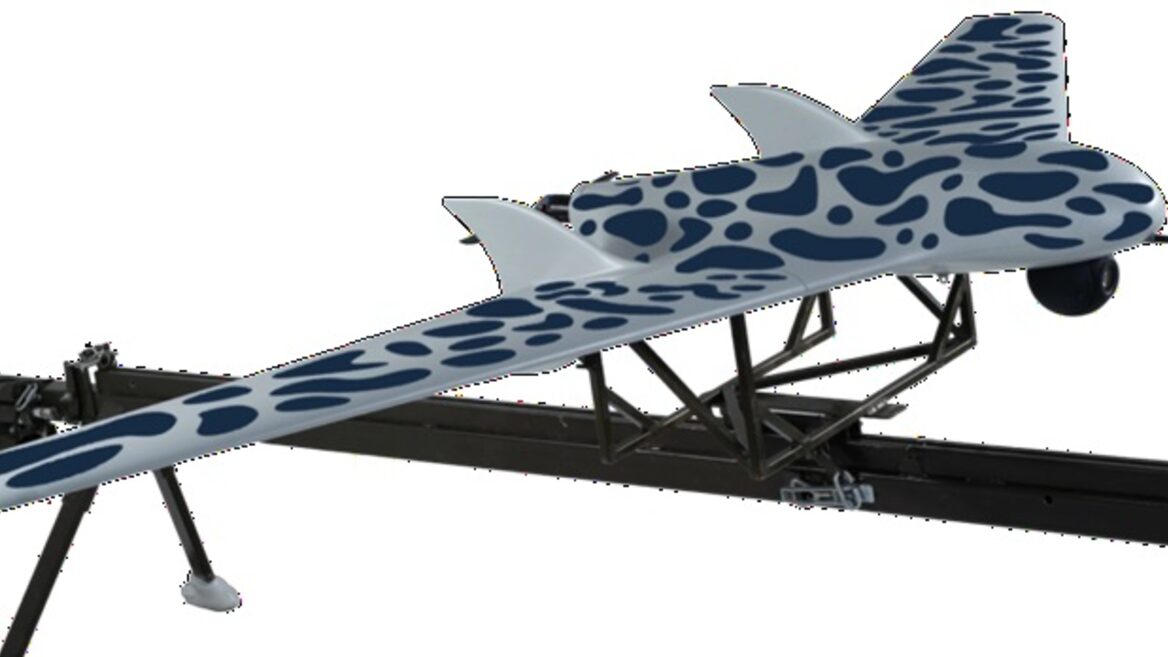
These are aircraft-type UAVs («wing»), which were previously used, in particular, in the agricultural sector — for mapping fields or predicting yields. Now they are capable of operating deep behind enemy lines.
From 40 km to 197 km: how the range was scaled
The first results with the new batteries were recorded in July 2025 in the Sumy direction. Then the Ukrainian drone was able to fly 40 km into the enemy’s rear, detect the Buk-M1 anti-aircraft missile system and transmit the coordinates for destruction. The cost of the target is estimated at approximately $10 million.
Within a few months, engineers had improved the result many times over.
In October, a POSTMAN UAV flew 197 km for the first time. It carried a 15 kg warhead, hit an ammunition depot, and returned with about 10% energy reserve (+20–25 km of potential flight).
For comparison, this same drone could fly approximately 135 km on a standard battery.
What changed: batteries with «automotive» chemistry
The key upgrade is in the battery itself. PAWELL battery engineers have abandoned standard Li-ion and switched to LiNMC cells, which are used in electric vehicles. In fact, this is the same technology used in Tesla and Mercedes batteries.
According to the company’s co-founder, Pavel Esyp, the main advantage is greater energy density at the same weight. «This allows you to either fly further or carry a larger warhead. LiPo batteries are heavier and store less energy, so we switched to LiNMC — they are more efficient and provide flexibility for different types of drones.» At the same time, there is no universal solution. Each type of UAV requires its own balance:
for repeaters critical capacity
for FPV — light weight and high power
for aircraft drones — a compromise between range, weight and cost
The developers' next goal isto cover 400 km.
Drones as the main weapon of war
According to military estimates, drones now account for 80–85% of all frontline casualties. This is changing the enemy’s tactics: instead of armored vehicles, they are using small groups and cheap transport.
«If earlier the kill zone between positions was about 2 km, now it is 5–6 km, and in some places up to 7 km,» says Yuriy «Lys» — the senior sergeant of the unmanned systems battalion of the 24th Motorized Rifle Brigade.
With increasing flight range, a deep deterrence effect is formed: cheap drones ($500–1,000) destroy targets worth tens of millions.
Moreover, UAVs with a range of 200+ km actually create for Ukraine its own A2/AD zone — when enemy airfields, warehouses, or logistical hubs remain under constant threat.
Unlike missiles, drones can be launched en masse, forcing the enemy to spend billions on air defenses that are often many times more expensive than the targets they attack.
The US limits production of advanced chips for China, Nvidia stops supplies, and Intel has its first external customer for 18A-P. What's happening in the semiconductor market?
The US is tightening controls on what advanced chips can go to China. Taiwan’s TSMC is suspending some orders from Chinese customers due to new rules, and Nvidia is no longer shipping some AI chips to the country. Against this backdrop, Intel announced the first external customer for its new 18A-P manufacturing technology.
These three news stories show how the rules of the game for companies that make cutting-edge chips are changing. It’s becoming harder for China to access certain technologies, and manufacturers are forced to take into account new US restrictions.
A Ukrainian developer created the social network VATRA. It is not a competitor to Facebook, Instagram or TikTok, but a Ukrainian digital ecosystem for communication and business development
Ukrainian developer Mykola Kolisnyk is independently creating the VATRA social network. The project has already entered initial beta testing: now the one-person team wants to attract the first users and check whether Ukrainians have a demand for their own social platform.
Have important news to share? Message our Telegram bot
Key events and useful links in our Telegram channel