Хочете будувати кар’єру в Data Science та AI? Vodafone Big Data Lab відкриває новий набір —>
Оксана СтепураWeapon
30 August 2026, 14:54
2026-08-30
Ukrainian Rebel Group has developed a stationary Brama device to combat FPV drones. How does the system combine EPR and EW?
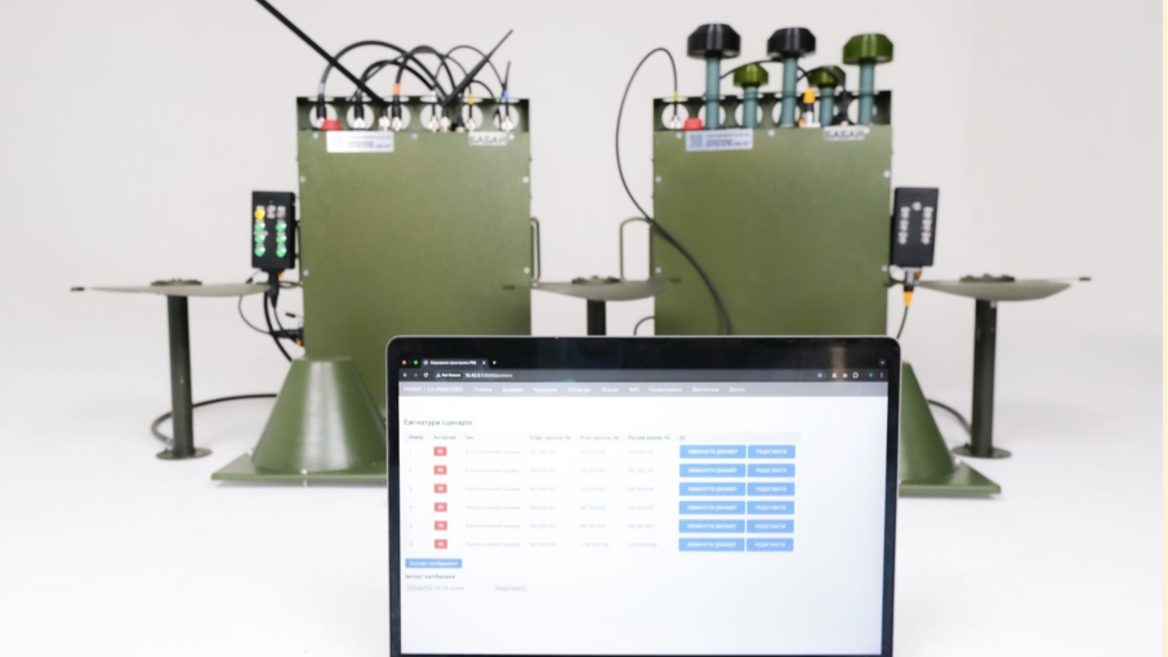
Ukrainian defense tech company Rebel Group has developed a stationary Brama system to combat FPV drones. In one device, it combines radio electronic reconnaissance (RER), which helps find the drone's signal, and electronic warfare (EW), which can suppress it. Brama is currently undergoing codification.
Ukrainian defense tech company Rebel Group has developed a stationary Brama system to combat FPV drones. In one device, it combines radio electronic reconnaissance (RER), which helps find the drone's signal, and electronic warfare (EW), which can suppress it. Brama is currently undergoing codification.
So, Brama first “listens” to the radio and looks for the analog video signal of the FPV drone. The system can determine its frequency and decode the video — that is, receive and reproduce the signal transmitted by the drone’s camera.
After detecting a target, the operator can immediately suppress both the video channel and the FPV control channel. So with Brama, there is no need to switch between separate EOD and EW means to search for a signal and combat a drone. The developers call this reduction in the time between threat detection and response one of the advantages of Brama.
Rebel Group has previously had stationary directional EW systems. For example, SHTORA operates in the 300–6000 MHz range, uses directional antennas, and has a claimed suppression range of 10 km. The company has also previously reported that SHTORA can automatically detect the operating frequency of a UAV and suppress the corresponding signal.
Previously, dev.ua reported on the Ukrainian Smart-EW "Pugach", which is supposed to analyze the situation on the radio, identify threats, and suppress the necessary signals.