Хочете будувати кар’єру в Data Science та AI? Vodafone Big Data Lab відкриває новий набір —>
Марія БровінськаІсторії
1 June 2026, 09:00
2026-06-01
“MIT is not looking for diploma collectors, but people who are growing.” The story of an IT guy from Kyiv who joined the elite of American education and is now teaching the next generation of applicants and developing his own startup
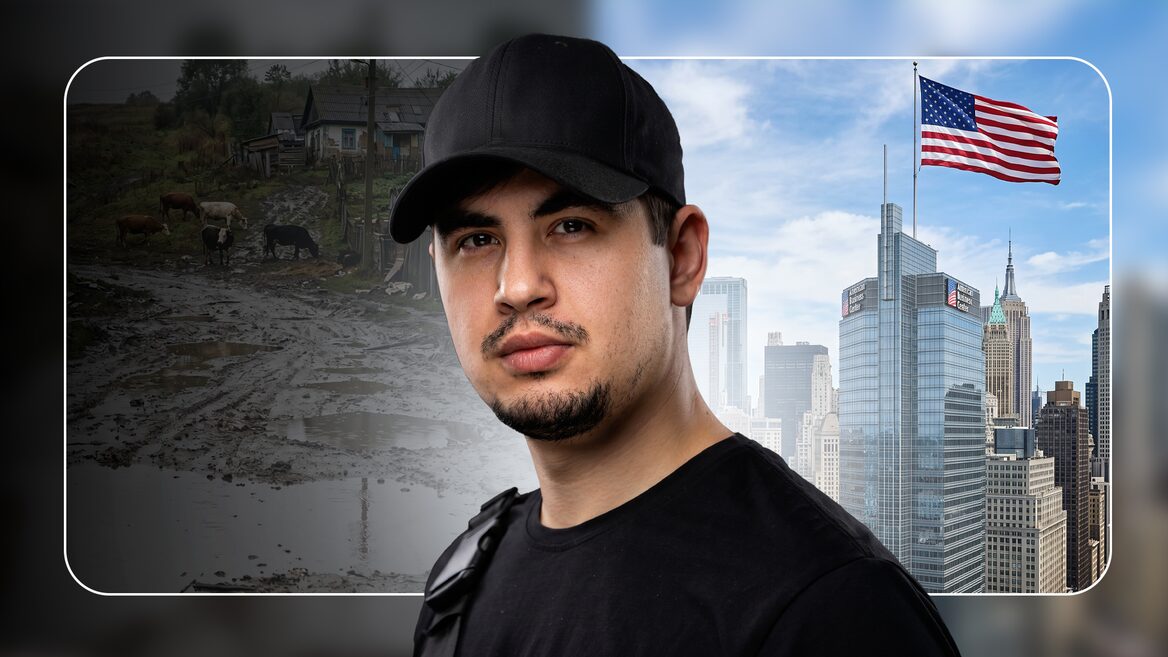
When Dmytro Yanovsky stepped out of the airport in Tempe, Florida, at the age of 18, the first thing he realized was that you can’t survive here without a car. No public transportation, scorching heat, and nowhere to walk. No family nearby, no scholarship, no campus waiting. Just a suitcase, money from Ukrainian freelance work, and the feeling that making mistakes is expensive.
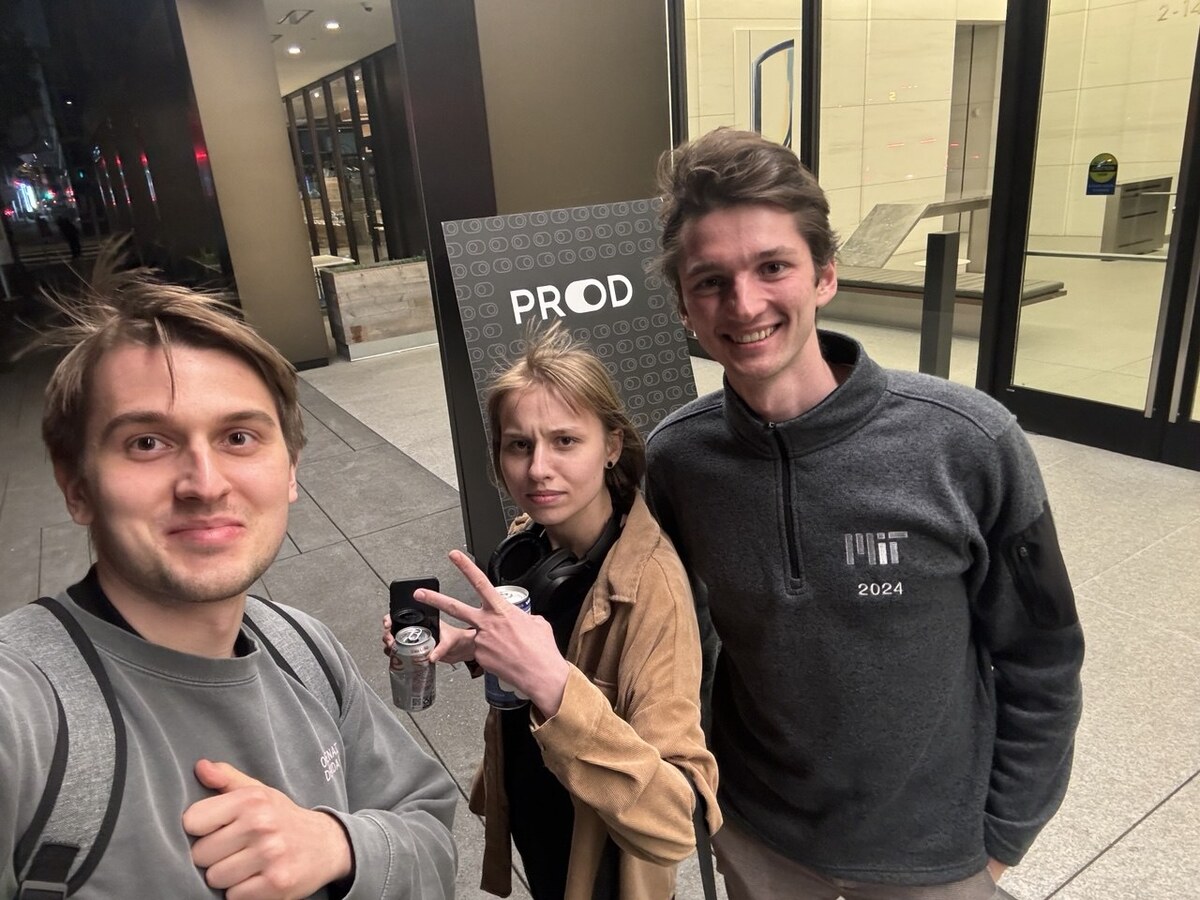
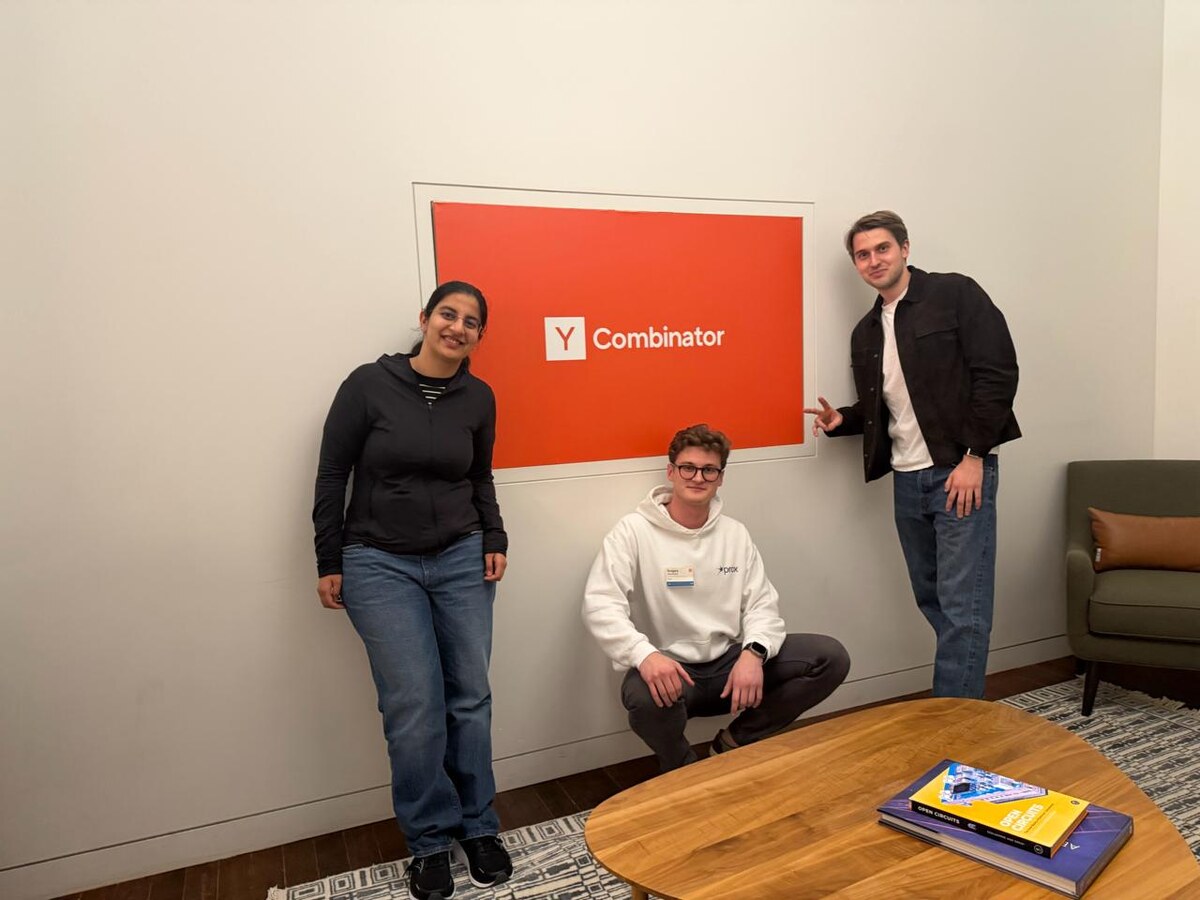
Eight years later, Yanovsky became the first student in the history of California’s De Anza College to be accepted to both MIT and Princeton University at the same time. Then the Ukrainian went on to work at the legendary MIT CSAIL laboratory, interned at Pulley, and launched the Prox startup at Y Combinator. And in parallel, Dmytro founded the ULTA educational program, through which 15% of the first stream of Ukrainian students entered MIT.
dev.ua spoke with Dmytro about his life journey, which included pasta for a dollar, a fateful phone call from Boston, and why he considers Ukrainian defense tech to be one of the biggest opportunities in the world right now.
When Dmytro Yanovsky stepped out of the airport in Tempe, Florida, at the age of 18, the first thing he realized was that you can’t survive here without a car. No public transportation, scorching heat, and nowhere to walk. No family nearby, no scholarship, no campus waiting. Just a suitcase, money from Ukrainian freelance work, and the feeling that making mistakes is expensive.
Eight years later, Yanovsky became the first student in the history of California’s De Anza College to be accepted to both MIT and Princeton University at the same time. Then the Ukrainian went on to work at the legendary MIT CSAIL laboratory, interned at Pulley, and launched the Prox startup at Y Combinator. And in parallel, Dmytro founded the ULTA educational program, through which 15% of the first stream of Ukrainian students entered MIT.
dev.ua spoke with Dmytro about his life journey, which included pasta for a dollar, a fateful phone call from Boston, and why he considers Ukrainian defense tech to be one of the biggest opportunities in the world right now.
$30 a month and a move across America
Dmytro bought his first car right away — not because he wanted to, but because there was no other option. With the money he earned from freelancing back in Ukraine, he bought something on wheels and started settling down.
The newly-minted student looked for housing through local classifieds services — rooms in other people’s homes for $500–700 per month. Over the course of several years, he accumulated about twenty such addresses.
«When I bought a car, paid for my studies, rented a room, and calculated that I had almost no money left until next month. Then I found a life hack: a pack of pasta for a dollar, which was enough for three meals. Thirty dollars a month — and I’m full,» laughs Dmytro.
A year passed like this. But it gradually became clear: Florida is not the place where you can develop in the technological direction. «There was nothing for technology there. No industry, no movement. If you are young and want to be where everything is happening, you have to go,» says Dmytro.
One day, he packed all his belongings into the same car and drove through Louisiana, Texas, New Mexico, Arizona—to Cupertino, California, where De Anza College is located.
Why De Anza and not MIT right away?
De Anza is not a prestigious university. It’s a community college where you study for two years and then transfer. But if you Google «best colleges in California for transfers» — De Anza will be among the first. It says right on the sign: we are the best in transfers. Dmitry knew about it. And he had a specific plan: to transfer to Berkeley, which has one of the strongest computer science departments in the world. He almost didn’t think about MIT at the time.
One conversation changed everything. He talked to everyone who had already gone through this path — got to know them, asked questions, listened. One of these acquaintances went from community college to Stanford.
«I’ve probably talked to twenty people who were transferring to different universities. One guy who got into Stanford said, 'Apply everywhere, including MIT.' I thought it was completely unattainable. But what’s the worst that could happen?» he throws up his hands.
The application to MIT ended up among the others. Dmytro didn’t really expect a response.
Phone call from Boston
Dmytro studied and worked calmly at the reception desk of his college. He answered calls, helped students. The day before the announcement of the admission results, the reception desk received a call from Boston to confirm that a certain student was studying at De Anza. Dmytro specified the name — that student turned out to be himself.
«I transferred the call to the right person and ran to the office to ask for urgent confirmation. I thought: they would hardly check if they didn’t take it,» he recalls. The next day he opened the website with the results — MIT accepted it.
Soon, a positive response came from PRINCETON. And Dmytro became the first student in De Anza history to be admitted to both universities simultaneously. The decision was quick.
«I realized that MIT was more suited to me in spirit,» says Dmytro.
If there is a recipe for admission, Dmytro says that MIT is not looking for A-listers with Olympiads, but for unique stories. «They are interested in when something really brought you down, and then you got out of it. Because if everyone is the same, there will be no progress,» he explains.
What MIT looks like from the inside
MIT is a place of geniuses and Nobel laureates on the outside. Inside, says Dmytro, it is primarily a place of incredibly hard work.
«I thought I was working a lot back in California. But it’s never been as hard as it is at MIT. You just work all the time. You sleep six hours, if you’re lucky,» says Dmytro.
The detail that stuck out the most was the libraries. «Whenever you come — at three in the morning or five in the morning — it’s full of people. Someone is programming, someone is preparing for an exam, someone is solving problems,» he says.
According to Dmitry, MIT students spend up to a hundred hours of preparation for one exam. Up to forty hours a week for a single assignment.
But along with this, the Ukrainian recalls details that are hard to imagine elsewhere. «I remember walking down the corridor with my brother, and a Nobel laureate in chemistry just walks towards us. He’s going to give a lecture. For MIT, this is a completely normal situation,» laughs Dmytro.
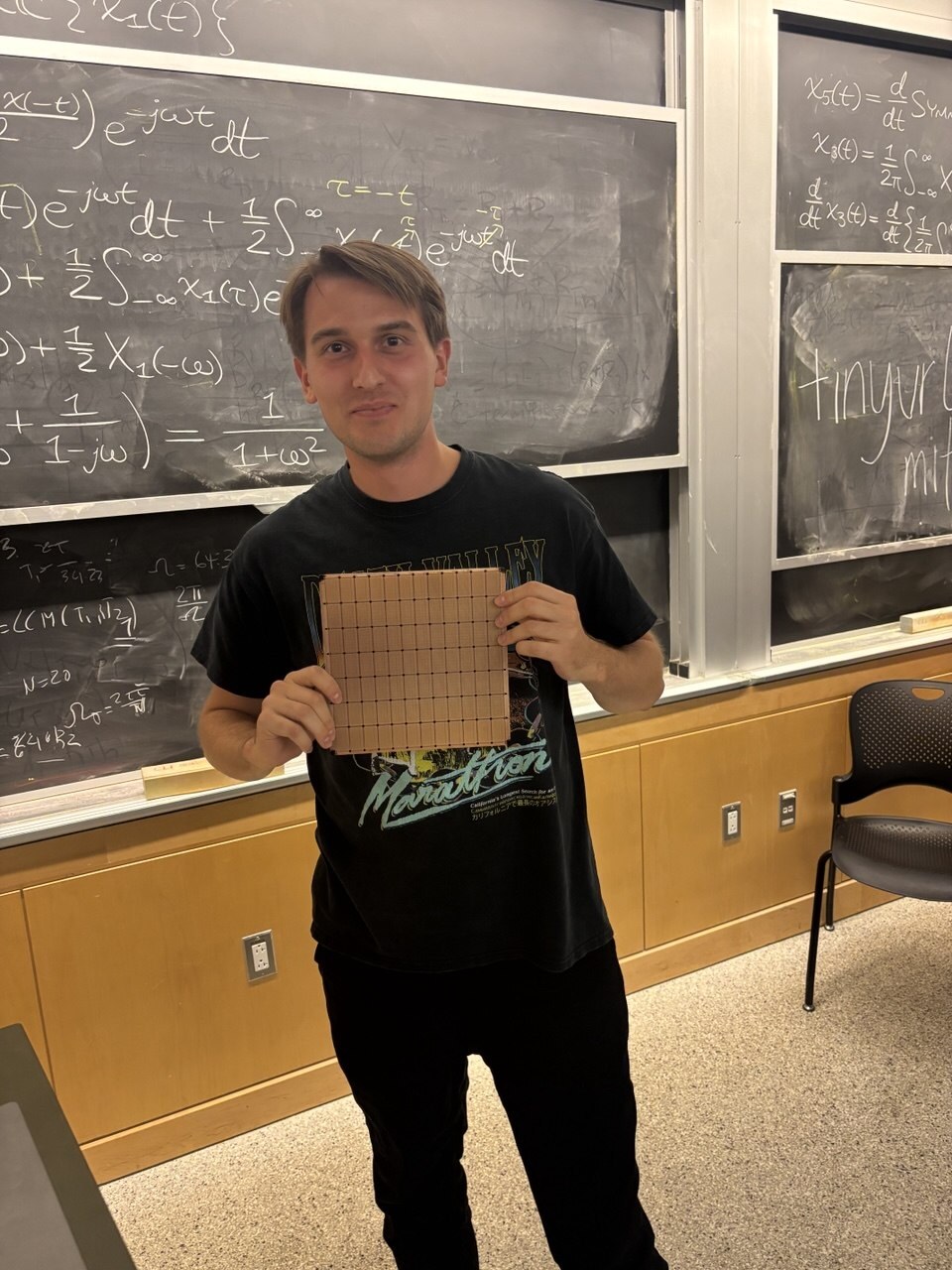
It was at MIT that Dmytro ended up at the Computer Science and Artificial Intelligence Laboratory — CSAIL, where he trained foundation models for robotics.
ULTA: 700 applications, 20 places and 15% of MIT admissions
While studying, Dmytro thought a lot about Ukraine. That’s how ULTA appeared — a program for Ukrainian students who want to enter American universities. 700 applicants responded to the Ukrainian’s call. Of all these applications, 20 were selected. Dmytro says that they were looking for a specific combination: a person has already done something outside the system, has already encountered the fact that everything breaks down and nothing works out — and still continued.
«Those who have never done projects will not stand it when everything breaks down, people don’t respond, and nothing works out. We had to understand that a person has already gone through part of this path,» explains Dmytro.
The overall conversion rate for admission to MIT, according to Yanovsky, is about 2%. In the first ULTA stream, this figure was 15%. At the same time, there was no secret recipe for Olympic medals here. Of the three applicants, only one had an award — in astronomy. The other two were taken by technical progress. Dmytro says that this is the essence: MIT is not looking for diploma collectors, but people who are growing.
But the program itself, says Dmytro, was never about admissions. «We never told anyone how to apply. We gathered students, gave them resources, and they built projects for Ukraine. We taught them to work hard and get better every day. And then they just took all that baggage and used it for their applications,» he says.
Pulley’s first AI engineer
After MIT, Dmytro joined Pulley, a fintech startup that specializes in cap table management. It was 2023, and most companies didn’t have any AI features in their products. He became their first AI engineer.
The models were fundamentally different back then. «GPT-4 didn’t work well with numbers, it couldn’t process tables. Only simple semantic things worked properly,» recalls Dmytro.
Within these constraints, he built everything he could: an onboarding assistant for new employees, a knowledge Slackbot based on Slack chat history, a codebase search tool, and a document cap table recognition system. For its time, it was a serious level.
That’s when he first showed Cursor to his colleagues. Pulley engineers didn’t even want to open it — the tool seemed crude and incomprehensible. Today, almost no developer can do without it.
When Pulley was offered the opportunity to become a Staff AI Engineer with his own team, Dmytro refused and returned to finish his degree.
«The MIT experience was a bigger challenge than the position,» he says.
How Prox was born
After Pulley, where Dmytro built AI agents for financial data, the Ukrainian thought about his own business. «GPT-4 didn’t work well with numbers, it couldn’t process tables. Only simple semantic things worked properly,» Dmytro recalls.
Then, within those hiring constraints, he built everything he could: an onboarding assistant for new hires, a knowledge Slackbot based on chat history, a codebase search tool, and a document cap table recognition system. For 2023, when most startups didn’t have any AI features yet, that was a serious feat.
That’s when he first showed Cursor to the Pulley engineering team. No one wanted to use it—the tool was still too raw back then. Today, almost no developer can do without it.
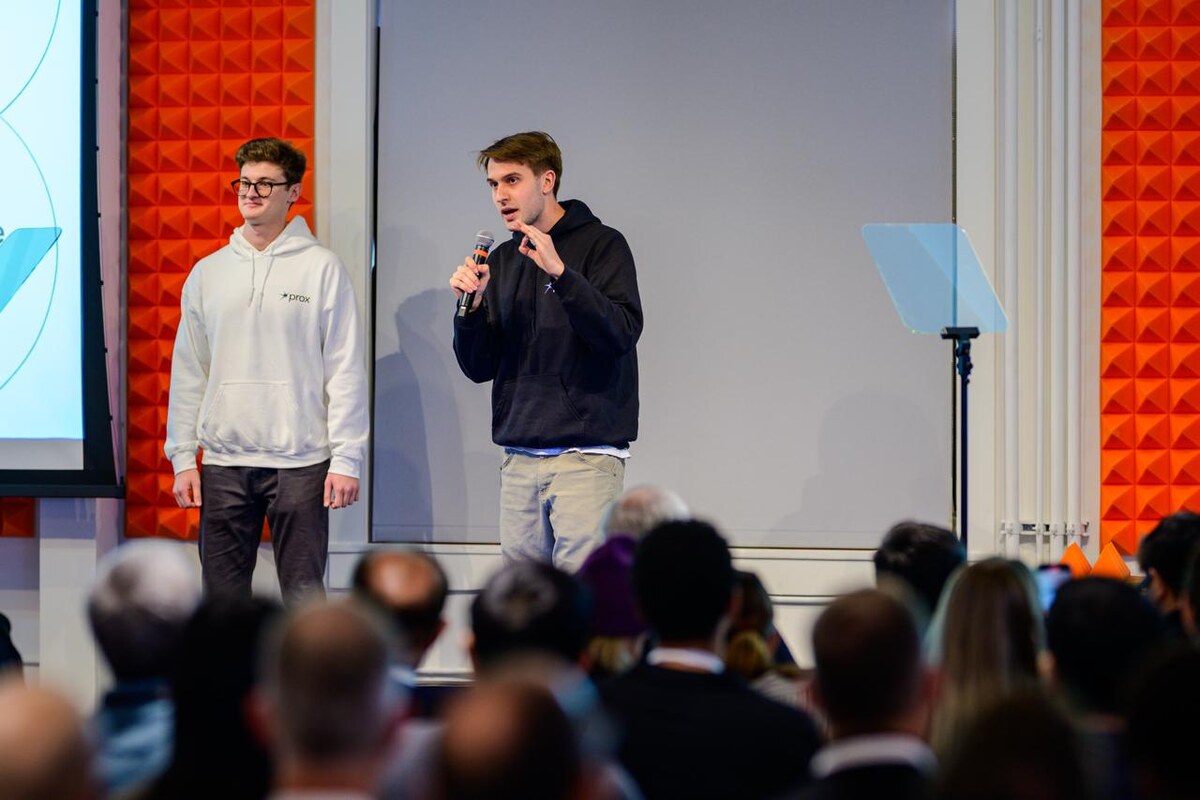
Later, Dmitry’s own startup, Prox, was born. The team takes all the client’s technical documents — manuals, specifications, diagrams — and builds a structured knowledge tree from them, similar to Wikipedia. Each link leads to a specific page of the original document. When the client asks something, AI finds the answer in this database, and if the information is complex — it generates a visualization itself: it takes the diagram, signs the elements, and presents it in a way that is understandable. Agents are currently processing about $1 million in transactions per month.
Dmytro found his first clients — large logistics companies — through cold emails. Aitivets admits: he wrote a thousand personalized ones. Ten agreed to meet. Out of ten, he was the first client.
«I think if Y Combinator weren’t behind us, fewer people would respond to these letters,» admits Dmytro.
He speaks about YC without pathos. Money and brand are understandable. But the main thing is something else. «Building a company is very hard and very lonely. When you work like this for years, it can be devastating on your own. But when you see people around you who are just as dedicated, it becomes easier,» he says.
The main mistake of the first year, admits Dmytro, was trying to make a custom solution for each client. It looked like consulting, not a product. «We closed all that and focused on one product that can be sold to hundreds of clients. The company is growing much faster,» says Yanovsky.
At first, young entrepreneurs worked with fulfillment companies, then with brands. But everywhere there were either too few opportunities, or the problem had already been solved. Over time, startups reached manufacturers of complex equipment — spare parts, air conditioners, industrial machinery.
«Everyone bypasses them, but the customers' questions are much more complicated. How to connect, how to configure, how to find a fault. That’s what they need help with,» he says.
Dmytro describes in detail what one Prox workflow looks like: the team manually reviews each page of documents before transferring them to the AI database. Plus, the company can update the database itself: if someone knows something that is not in the documents, they simply add it. In a few months, all the knowledge is collected in one place.
Thoughts on AI and hiring
When hiring engineers at Prox, LeetCode is not used, says Dmitry. Instead, candidates take an open GitHub challenge: build an agent for our product, use whatever you want. Out of a thousand attempts, 120 candidates passed this test. Four of them were called for an interview, two for two days of work in San Francisco, and only one was hired.
A technical interview only tests fundamental algorithms — but in a way that memorized definitions won’t help.
«Either you really understand or you don’t,» says Dmytro.
He speaks about the market without optimism for those who think that AI will replace the need for understanding. «When we interview graduates, I see that many do not try to understand the code themselves, but simply accept what the model gives. Such specialists have been coding with AI for two or three years and do not understand basic things. For such people, things will not change for the better,» Dmitry states.
He recommends paying special attention to security. «The model makes the feature quickly, but its code is not ready for production. We then spend four hours checking that nothing is broken. One mistake and everything can go wrong,» he adds.
If Dmytro is looking for a junior, there is only one priority — a 100% technical base.
«If a person has a strong technical base, they will be able to master any tools. If they learned to vibecode, but did not go through the difficult path of understanding the foundation, it is much worse,» Yanovsky states.
There is another popular question — is the line between developer and product manager blurring? Dmytro answers unexpectedly: it is blurring, but not in the way everyone thinks.
«The boundary is shifting more towards PMs — they are becoming more technical, they can make prototypes. Every product manager has always wanted to code, and now the tools allow it. But developers are not becoming better product managers — you need to understand people, and AI won’t help here yet,» he says.
Why Ukrainian defense tech should look to the US
Living in the USA, Dmytro communicates with American founders and says frankly: defense tech is the hottest topic right now. And Ukrainian teams have a unique advantage here — experience that no one else has.
«All the American founders I talk to consider defense technologies as the biggest opportunity. Ukrainian founders have a huge advantage here. But there are very few Ukrainian defense startups in America yet, and that’s surprising,» says Dmytro.
This is not just a feeling — it is the position of specific people. The Ukrainian says that Paul Graham and Harry Tan, the founder and president of Y Combinator, personally told him about the potential of Ukrainian defense startups. And YC made a special exception for this: Ukrainian defense teams can stay in Ukraine, receive funding and access to a network of American investors. To do this, they do not need to move to San Francisco. «As for money, I would look at America right away. There are much more opportunities here now. I urge everyone who reads this to apply,» he advises.
Instead of an epilogue
Finally, Dmytro answered the question that inevitably arises after such conversations: what would he have told himself when he got on the plane at the age of 18.
«You can progress much faster if you surround yourself with people who are going where you need to go, or who are already there. It took me almost eight years, although it could have been less,» he says. «The more connections and friends you have along the way, the faster you will get where you want to go.»
«A strong engineer doesn’t ask if it’s possible. He asks how long it will take.» The story of an IT guy from Chernihiv region who builds products for a Silicon Valley company and heads the engineering of an American startup
Мануал для джуна. Що треба знати новачку у frontend-розробці перед співбесідою на проєкт мрії: запитання для інтерв'ю та приклади тестових
Створювати ІТ-продукти можна на різних рівнях і вдосконалювати їх як зсередини, (backend), так і ззовні (frontend). Візьмемо, наприклад, сайт. Спеціаліст може працювати із завданнями «під капотом», а може розвивати інтерфейс сайту, застосунку чи спеціальне програмне забезпечення для бізнесу, щоб вони були зручними, зрозумілими та функціональними.
Останнім якраз займається frontend-інженер. Що ще треба знати джунам про frontend-розробку, що не варто робити перед співбесідою та на які запитання відповісти, щоби бути готовим на 100% — Frontend Engineer у Levi9 Олексій Горбунов розклав все по поличках у цьому матеріалі.
«Після випуску про IT-Generation хочеться зробити тред про те, як IT-школи вас най**ують». Відомий IT-блогер Діма Малєєв розповів, що думає про IT-освіту
Відомий IT-блогер Діма Малєєв розповів своє ставлення до IT-курсів, які наразі продукуються в Україні. «Після сьогоднішнього випуску про IT-Generation, хочеться зробити невеликий тред про те, як IT-школи вас най**ують, продаючи курси, які вам ніяк не допоможуть. І навіть якщо ви виграєте грант від програми — ви просто згаєте час», — написав він у Twitter.
Публікуємо його допис із частковою цензурою.
50 питань та відповідей щодо програмування для підготовки до технічного інтерв'ю
Готуючись до співбесіди, багато програмістів-початківців поняття не мають, яких питань очікувати від інтерв’юрів — чи це співбесіда в стартап, чи в технологічний гігант на кшталт Amazon, Microsoft або Google. У статті на Hacker Noon розробник Джавін Пол зібрав питання, які люблять ставити на таких інтерв’ю, а також відповіді на них та додаткові ресурси для підготовки.
A REAL EXPERIENCE, EVERYONE ... PLEASE BE CAREFUL ONLINE
A few weeks ago, I lost around $64,000 to a fake crypto trading platform. I was drawn in by the promise of earning 15% profit daily. It was a devastating time I struggled to pay my bills and was financially ruined. I eventually opened up to a close friend, who recommended a crypto recovery team with highly effective methods. I contacted them, and they successfully recovered all my stolen digital assets with ease. Their service was excellent, and they acted quickly within just 5 working days, they tracked down the scammers and returned my funds. I strongly urge anyone facing investment theft or similar issues to reach out to this team for the right solution and avoid losing large sums to fraudsters... Resqprofirm @aol. com
Whtsp: +19….852 …9/69…146
A REAL EXPERIENCE, EVERYONE ... PLEASE BE CAREFUL ONLINE
A few weeks ago, I lost around $64,000 to a fake crypto trading platform. I was drawn in by the promise of earning 15% profit daily. It was a devastating time I struggled to pay my bills and was financially ruined. I eventually opened up to a close friend, who recommended a crypto recovery team with highly effective methods. I contacted them, and they successfully recovered all my stolen digital assets with ease. Their service was excellent, and they acted quickly within just 5 working days, they tracked down the scammers and returned my funds. I strongly urge anyone facing investment theft or similar issues to reach out to this team for the right solution and avoid losing large sums to fraudsters... Resqprofirm @aol. com
Whtsp: +19….852 …9/69…146















A REAL EXPERIENCE, EVERYONE ... PLEASE BE CAREFUL ONLINE
A few weeks ago, I lost around $64,000 to a fake crypto trading platform. I was drawn in by the promise of earning 15% profit daily. It was a devastating time I struggled to pay my bills and was financially ruined. I eventually opened up to a close friend, who recommended a crypto recovery team with highly effective methods. I contacted them, and they successfully recovered all my stolen digital assets with ease. Their service was excellent, and they acted quickly within just 5 working days, they tracked down the scammers and returned my funds. I strongly urge anyone facing investment theft or similar issues to reach out to this team for the right solution and avoid losing large sums to fraudsters... Resqprofirm @aol. com
Whtsp: +19….852 …9/69…146
A REAL EXPERIENCE, EVERYONE ... PLEASE BE CAREFUL ONLINE
A few weeks ago, I lost around $64,000 to a fake crypto trading platform. I was drawn in by the promise of earning 15% profit daily. It was a devastating time I struggled to pay my bills and was financially ruined. I eventually opened up to a close friend, who recommended a crypto recovery team with highly effective methods. I contacted them, and they successfully recovered all my stolen digital assets with ease. Their service was excellent, and they acted quickly within just 5 working days, they tracked down the scammers and returned my funds. I strongly urge anyone facing investment theft or similar issues to reach out to this team for the right solution and avoid losing large sums to fraudsters... Resqprofirm @aol. com
Whtsp: +19….852 …9/69…146