Хочете будувати кар’єру в Data Science та AI? Vodafone Big Data Lab відкриває новий набір —>
Марія БровінськаІсторії
26 May 2026, 09:00
2026-05-26
“In my dreams, I still have two hands.” The story of Gennady Tatarkin, who after an injury and amputation began a career in IT
Eight years ago, Gennady Tatarkin worked in a furniture factory and built a completely understandable professional life. Work, plans, the usual rhythm — everything changed in an instant after a work injury, when his hand had to be amputated. There were months of adaptation ahead, painful getting used to the new reality, dozens of interviews and rejections, after which, even if no one said it out loud, one thing was clear: employers did not believe that a person with a prosthesis would be able to work on an equal footing with others. At that time, it seemed that along with his hand, he lost his usual future.
But today, Gennady works in the EPAM archival department, digitizes documents, travels from Bila Tserkva to the Kyiv office, undergoes corporate training on the use of AI, and is convinced: there is no business that he could not master if he allowed himself to try.
Gennady told dev.ua how he survived the loss of his hand, why employers often create barriers for people with disabilities, and how, step by step, he regained simple things that once seemed impossible — from cooking potatoes according to his own recipe to tying shoelaces with one hand.
Eight years ago, Gennady Tatarkin worked in a furniture factory and built a completely understandable professional life. Work, plans, the usual rhythm — everything changed in an instant after a work injury, when his hand had to be amputated. There were months of adaptation ahead, painful getting used to the new reality, dozens of interviews and rejections, after which, even if no one said it out loud, one thing was clear: employers did not believe that a person with a prosthesis would be able to work on an equal footing with others. At that time, it seemed that along with his hand, he lost his usual future.
But today, Gennady works in the EPAM archival department, digitizes documents, travels from Bila Tserkva to the Kyiv office, undergoes corporate training on the use of AI, and is convinced: there is no business that he could not master if he allowed himself to try.
Gennady told dev.ua how he survived the loss of his hand, why employers often create barriers for people with disabilities, and how, step by step, he regained simple things that once seemed impossible — from cooking potatoes according to his own recipe to tying shoelaces with one hand.
«Before ERAM, I didn’t work in IT at all»
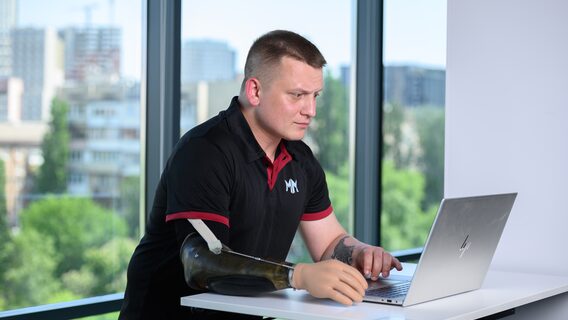
Before EPAM, I had no connection with the field of information technology. I dreamed of a theater career, studied to be an economist, worked at a furniture company, where I lost my hand. Today I work in the company’s archives department. I work with documents — digitization, structuring and control of archives.
I joined the company after Covid in 2021, when people started returning to the office, and my Welcome pack still had a mask with the logo on it. And three months later, a full-scale invasion began.
«You will work longer and harder than others»
I’ve had many jobs in my life. Eight years ago I worked at a furniture factory, where I injured my hand in production. Later it had to be amputated.
I became aware of the changes around the third day. Although the doctor said that my brain would not accept the new state for a while, I still dream that I have both arms.
After the injury, I was at home for a year, worked at the company for another year, but in a different position. Then I started looking for a job. It was a very difficult year. At first, I considered options in Bila Tserkva, where I live. Searches, interviews, mini-training. Considering the category of my disability, they didn’t even hire me for a simple job. Suddenly, I would have to do something with my hands, carry it? «You’ll do it longer and worse than others,» was the impression I got from the rejections.
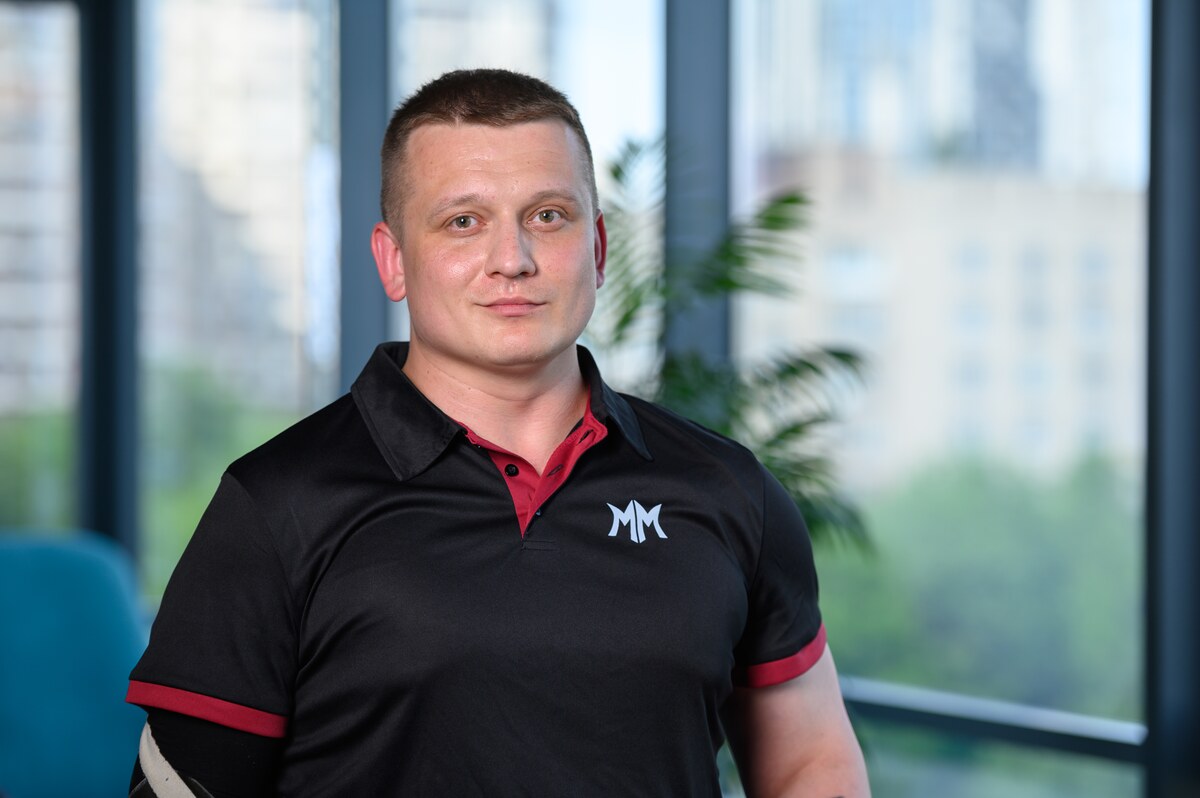
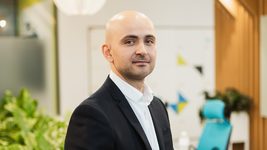
Gennady Tatarkin, People Operations Specialist at EPAM
Fateful meeting
Then there was a chance meeting with a person who much later recommended me to ERAM. I am still grateful to her for this recommendation. At first, it was unusual at work.
A lot of training at the start, a lot of unfamiliar terminology, some provisions had to be reread several times. But in fact, these are logical things based on the company’s experience — ethical behavior, data security, compliance, etc. That is, you know from the beginning what we do, what we don’t, how we communicate, that is, there are spoken rules. Over time, you transfer these rules to your private life, they help. Gradually, I got used to the Anglicisms.
«I’m not going to become a developer or tester yet»
I like the flexible format — I can work from home, but I often travel to Kyiv. Sometimes out of necessity, and often because there are colleagues there, new tasks, interesting meetings. We have a large department, about 30 people come to the office, the rest work from home. Among them are people with invisible disabilities. But this does not affect the speed or quality of task completion.
My work does not require knowledge of a programming language, but if desired, in the company you can master any IT direction on the internal training platform, get mentoring support. But I am not going to become a developer or tester yet. Perhaps in the future the development of AI will encourage this. But now, despite the fact that Ukraine is rapidly digitizing, electronic document flow is duplicated in paper form for storage. Conversely, there are old documents in paper form that our department digitizes in order to preserve and in the future give them to AI. I think people will have enough work for a long time. However, I regularly take corporate trainings on the use of AI tools.
Psychological barriers for people with disabilities
Today, the situation with hiring people with disabilities in the country is changing, often the obstacle to employment is not in the physical condition, but rather in the psychological perception of a person. I remember that after several consecutive refusals, I would give up and have crazy doubts. I think that refusals affect everyone. This requires resilience and working through your own reactions. I am no exception.
I am a creative person, since childhood I dreamed of a theater university, worked as a host of events, was involved in cinema and theater. Once I starred in the group of the film «The Secret Diary of Symon Petliura». And I liked it.
I know that there are a lot of filming going on right now, but because of the injury, I lack confidence: «Where am I going with the prosthesis?» There are opportunities, contacts, but in my internal dialogues I deny myself.
But there is no other advice here than to look at life honestly, to understand what we want, how we will achieve what we want. To perceive it not as a tragedy, but as new circumstances in which we need to find a different way of doing things. Maybe not right away, maybe it will be more difficult, but to regain our independence. Two weeks after the amputation, I could sew things up. One day I wanted fried potatoes. But not bought, not cooked by someone, but made according to my own recipe, the way I want. And I also found a way to peel potatoes with one hand — a board and two screws.
This weekend I learned how to tie shoelaces, with bows like everyone else, with one hand. Before, I either had someone help me, or I hid them in my shoes, or I avoided lacing them altogether. Yes, I do some things more slowly, but what once seemed impossible to me is possible. Now I’m thinking about a 3D printed guitar pick that I saw on social media. Yes, I can’t do some cool tricks yet, but in the future with a bionic prosthesis it might sound really good. But I have to teach myself to think that I can. I know that I’m suitable for any job that I can afford. And then the employer will be convinced.
«People often don’t notice my disability»
At first, it seemed to me that everyone was looking at the prosthesis. But later, I stopped thinking about it. Usually at work, I conduct an «initiation» for newcomers: what to do, where to start. It turned out that most of my colleagues did not notice the prosthesis the first time. In general, people’s reactions in society can be different. Children are more curious: they can look at it, ask questions. I’m fine with that. I rather feel embarrassed because of the reactions of their parents, who try to keep quiet, «line them up», saying, don’t look at it.
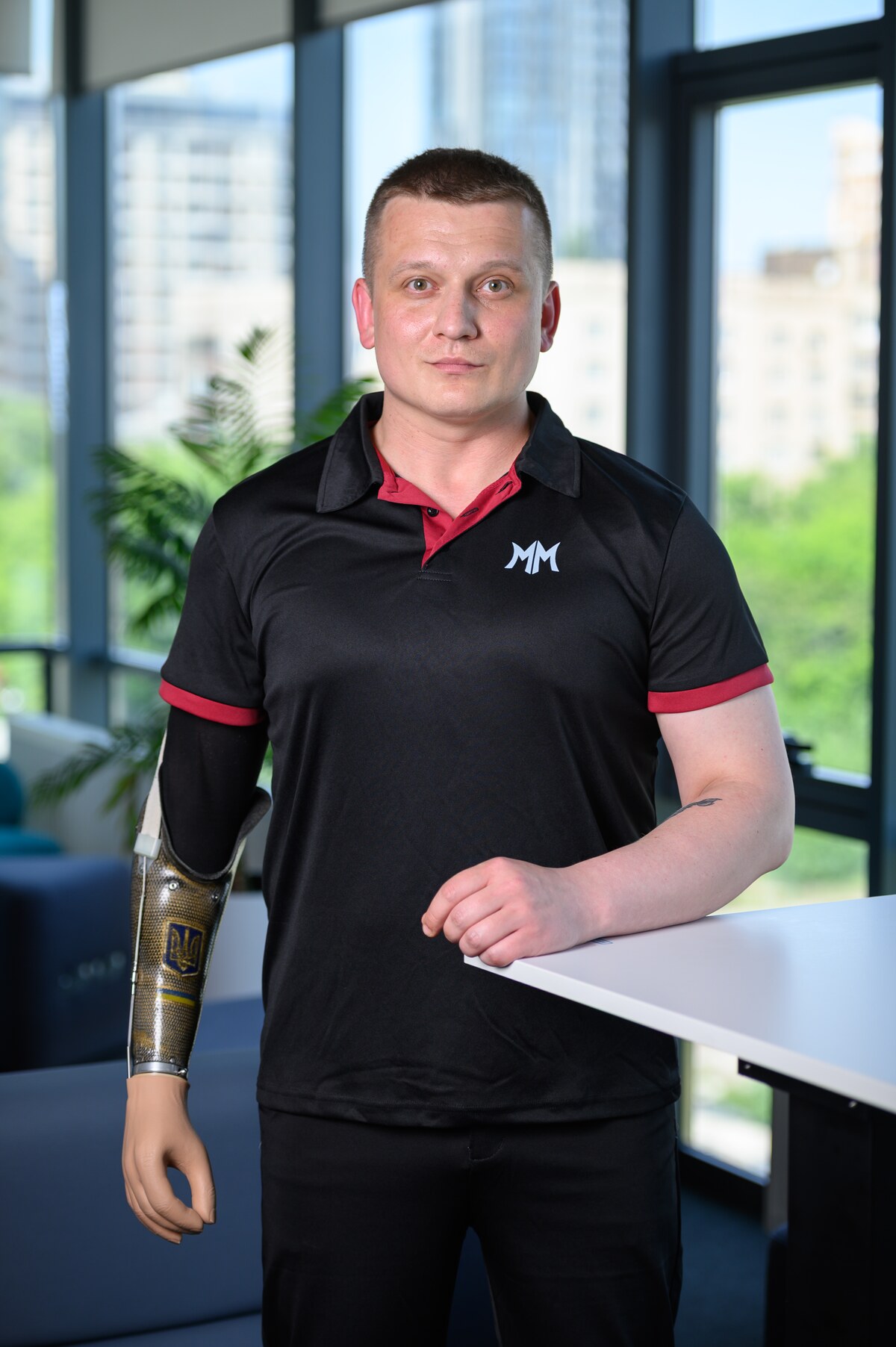
And I have a nice prosthesis! I got some cool «tattoos» on it — a trident. If you want to see it — come over.
«ERAM is an inclusive company, as far as it can be in Ukraine»
EPAM has facilities for people with disabilities, constantly working on the topic of accessibility, both spatial and digital. Remote format, flexible schedule, the opportunity to work part-time. People with disabilities are more likely to see doctors, go to the hospital for seasonal or annual examinations to confirm disability. Therefore, it is very convenient that there is an opportunity to combine work and worry about health. It is convenient for everyone — EPAM gets the result of work, people — do not make their condition worse. EPAM is definitely an inclusive company, as far as it can be in Ukraine
I think that today the situation with hiring people with disabilities in Ukraine is different than five years ago. Their number is increasing. We have become visible. There is an acute shortage of personnel from the business side and stimulating conditions from the state.
Barriers are gradually decreasing. There are organizations that help veterans with adaptation, etc. There are many organizations and structures in the country where you can get psychological support. But support from society, employers, and the creation of conditions is the best investment in the well-being of Ukrainians.
«Моя фінансова мета — накопичити $1 000 000, щоб мати пасивний дохід і жити на нього». Як айтішники витрачають гроші та в що інвестують
Зарплата айтішників в Україні — одна з найвищих. І ІТ-галузь під час війни — єдина галузь, яка зростає, попри війну. А айтішники — серед тих, хто найактивніше підтримують армію. Середній місячний донат айтішника становить 10% від зарплати, або $270. dev.ua вирішив розпитати айтішників, куди вони витрачають гроші й у що інвестують під час війни.
Не Патроном єдиним. Айтішник з EPAM шиє військову амуніцію для собак: історія диво-стартапу для чотирилапих захисників України
Максим Лісович, Interior Designer в ЕРАМ Україна, поза роботою допомагає амуніцією українським військовим… собакам. Так, службові пси носять унікальні жилетки та нашийники, мають спеціальні аптечки та турнікети. Чотирилапі в такому «одязі» більш захищені та впізнавані.
За словами Максима, тільки на заході країни нас захищають сотні військових собак. Айтівець допомагає військовим кінологам нести цю службу гідно, забезпечуючи відповідною амуніцією, спеціальними аптечками та турнікетами. Нещодавно він провів три дні поспіль, власноруч відшиваючи нашийники та повідці. А ще два роки тому шити він не вмів узагалі. Ось історія диво-стартапу.
Австралійське задзеркалля. Історія Delivery Director EPAM, який через війну релокувався із сім'єю до Австралії: як адаптуватися та вижити за океаном?
Григорій Клімов — директор з делівері і керівник великої Platform Engineering-практики в EPAM. Понад 10 років він будував свою кар’єру в українському офісі, але війна змусила його з родиною кардинально змінити життя. В березні Григорій з дружиною і трьома дітьми поїхали з рідного Харкова, деякий час провели в ЄС, а згодом — вирушили до Австралії. «Я мріяв жити в цій країні, коли піду на пенсію. Але війна підштовхнула до того, щоб прийняти рішення значно швидше», — каже Григорій.
Ось його історія.
Очільник EPAM Ukraine: «Було б класно мати якісь прозорі, відкриті механізми виїзду за кордон для обмеженої кількості людей»
Керівник EPAM Ukraine Степан Мітіш, який до призначення відповідав за київський та вінницький офіси компанії, дав велике інтерв’ю AIN. В компанії він працює вже 16 років, тобто знає про український IT-аутсорс багато, якщо не все.
dev.ua обрав найцікавіше з розмови.