Хочете будувати кар’єру в Data Science та AI? Vodafone Big Data Lab відкриває новий набір —>
Олександр КузьменкоSpaceTech
1 April 2025, 11:27
2025-04-01
SpaceX made the first-ever manned flight over the Earth's poles
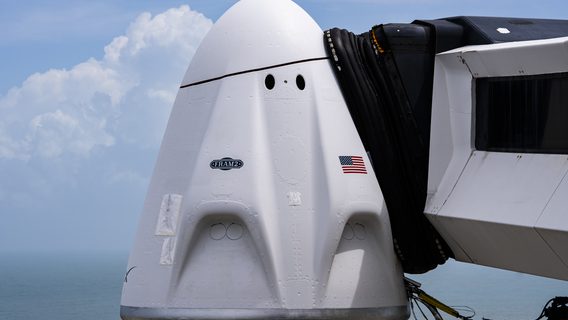
SpaceX launched the Crew Dragon spacecraft on the Fram2 mission, which was the first manned flight to polar orbit. This is a private mission that will include non-professional astronauts, but they will conduct a number of scientific studies.
SpaceX launched the Crew Dragon spacecraft on the Fram2 mission, which was the first manned flight to polar orbit. This is a private mission that will include non-professional astronauts, but they will conduct a number of scientific studies.
A Falcon 9 launch vehicle launched from Kennedy Space Center carrying the Crew Dragon Resilience spacecraft. The spacecraft separated from the Falcon 9 upper stage about 10 minutes later, Space News reports.
Resilience is carrying out a mission called Fram2 (named after the Norwegian polar research ship Fram), as well as the sixth flight of the Crew Dragon spacecraft outside of NASA missions.
Fram2 is the first manned mission to enter a polar orbit with an inclination of 90 degrees, allowing it to fly directly over the North and South Poles from low Earth orbit. Previously, the highest inclination achieved in a manned flight was 65 degrees during the early Soviet Vostok missions.
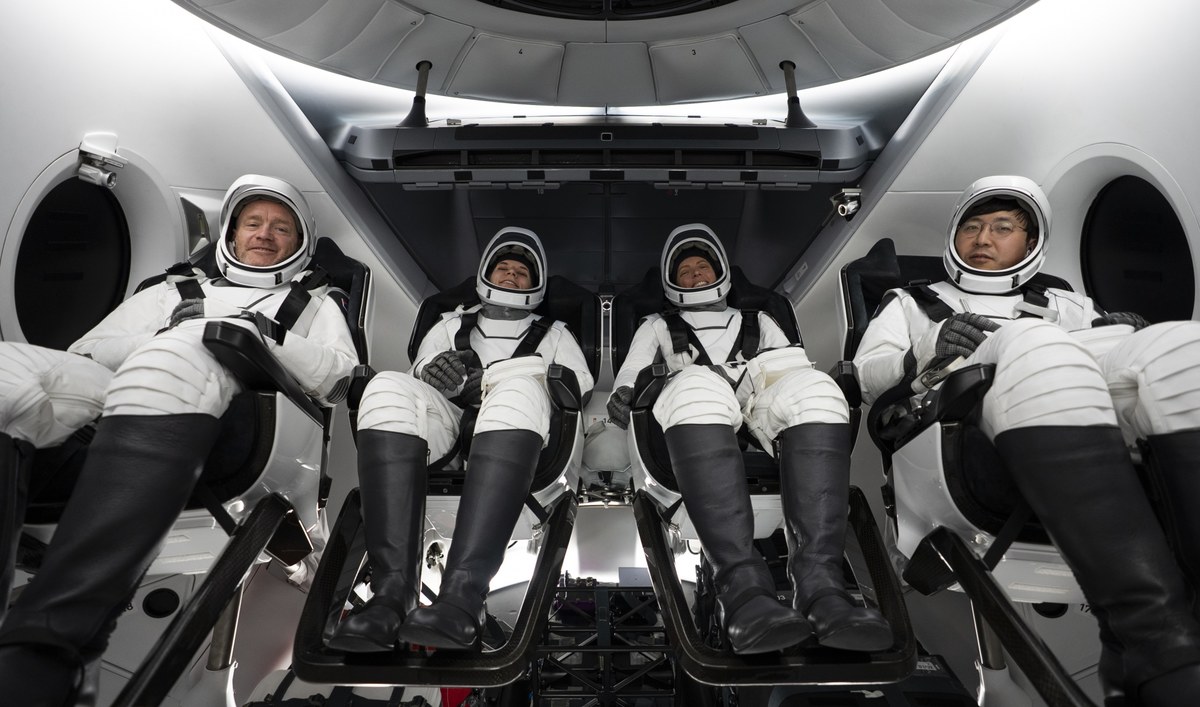
Fram2 crew. Photo: SpaceX
The Fram2 mission commander is Chung Wang, a Chinese-born cryptocurrency billionaire. During a pre-flight social media discussion on March 28, Wang said that he was driven by a «lifelong curiosity,» particularly about the polar regions, for the mission.
«As a child, I often looked at the empty white space at the bottom of the world map, wondering what was there», — he recalls.
According to him, he wanted to do something unique on Fram2 by flying over the poles.
«I don’t want to do the same mission over and over again. I have less interest in flying to the ISS», — he said of missions to the International Space Station.
The Fram2 team also includes Jannike Mikkelsen, a Norwegian cinematographer and director who is the ship’s commander and manages Dragon’s work during the «dynamic phases» of the flight, including launch and landing.
Another member of the historic flight is Rabea Rogge, a robotics researcher from Germany who is the mission’s pilot and the first German woman to go into orbit. She noted that while she will help Mikkelsen monitor the spacecraft’s displays, Dragon is a largely autonomous vehicle. Rogge will also be responsible for collecting data during the flight.
The fourth member of the mission, Eric Phillips, is a professional polar explorer from Australia who has been to the poles about 30 times. He serves as a mission specialist and medical officer.
In addition to being the first manned flight over the poles, the Fram2 mission will carry 22 experiments from eight countries. The diverse set of experiments ranges from observing the aurora borealis to checking the crew’s health and studying how fungi grow in microgravity.
Part of the payload for Fram2 was selected by SpaceX itself, including the first X-ray machine to fly in space, which could be used for medical X-rays as well as X-ray inspections of equipment. A device that would allow for exercise within the Dragon’s confined space, reducing blood flow to the legs and maximizing the benefits of exercise in the available space, will also be tested.
The crew will also independently abandon the capsule after landing to test how future crews will be able to abandon spacecraft during flights to the Moon and beyond.
«When you land on the Moon, Mars, or any other planetary surface, there won’t be any rescue teams there to meet you. We really want to start understanding what crews are capable of immediately after landing», — said Marissa Rosenberg, senior engineer for medical research at SpaceX.
Fram2 will spend about three and a half days in orbit before returning to Earth. This mission will be the first Crew Dragon mission to land off the coast of California after all previous missions returned off the coast of Florida.
Божество, зореліт, уламок планети: що людство знає про Місяць і як збирається туди повертатися
16 листопада 2022 року NASA успішно запустила місію Artemis 1 до Місяця. Ракета Space Launch System (SLS) і корабель Orion стартували о 8:47 за Києвом із космічного центру Кеннеді на мисі Канаверал. Задача корабля Orion — покрутитися навколо супутника Землі шість днів і повернутися на Землю, після чого можна запускати людей. Якщо все пройде успішно, уже за кілька років ми побачимо грандіозний камбек і реюньон людства на супутник Землі. Що ми знаємо про Місяць, чому так довго його ігнорували та як будемо повертатися — в оновленому завдяки успішному старту (нарешті!) суперексплейнері від dev.ua від 29 серпня 2022 року.
«Життя — це більше, ніж просто вирішення однієї проблеми за іншою». Ілон Маск написав колонку в китайському медіа. Які плани техногенія на найближче майбутнє?
Бізнесмен Ілон Маск написав колонку про сталу енергетику, мозкові імпланти та дослідження космосу в китайському виданні, що належить національній агенції з контролю за інтернетом та цензурою. Англійською текст переклав журналіст китайського держвидання «Сіньхуа» Янь Лю. Ми адаптували допис українською.