Олег ОнопрієнкоStartup
14 October 2026, 09:00
2026-10-14
From a pet project to 1000+ registered classes. How an IT guy from Dnipro created the website "Na Shtory" that saves parents from chaos in school chats
Collecting flowers, arguing over gifts for children, and endless “pluses” on Viber are the nightmare of any parent committee. Software developer Roman created the web application “Na Shtory”, which replaced the chaos in messengers with a structured bulletin board and transparent reporting. The site is visited by about 3,500 unique users every day, and not only schools, but also kindergartens and volunteers are already interested in the functionality. We talked to Roman and tell the story of the project’s creation.
Collecting flowers, arguing over gifts for children, and endless “pluses” on Viber are the nightmare of any parent committee. Software developer Roman created the web application “Na Shtory”, which replaced the chaos in messengers with a structured bulletin board and transparent reporting. The site is visited by about 3,500 unique users every day, and not only schools, but also kindergartens and volunteers are already interested in the functionality. We talked to Roman and tell the story of the project’s creation.
From idea to implementation: how parenthood inspired a startup
Roman is an experienced specialist with over 10 years of experience in development. He is an engineer by profession: he first graduated from the local Radio Engineering College, and later received a correspondence education at the Kyiv Institute of Information Technologies, specializing in "information communication networks". He currently works as a software developer at Gconnect.
The project "On the Curtains" became his personal initiative, a pet project, which was developed exclusively in his free time from his main job, when the developer became the father of a first-grader. When the programmer's main job began to implement artificial intelligence tools. Roman became interested in this topic, took several training courses and decided to create his own project for experiments, since the work tasks had certain frameworks and limitations.
"At first, there was an idea for a phone application, but after studying this topic, I realized that releasing the application would take more time, so I decided to postpone this idea, or rather, my motivation disappeared. At that moment, movements began at school, organizing flowers for the First Bell, and some work on arranging the classroom. Then I thought: "what if we make a website where we can manage all this?" I couldn't find anything on Google on this topic, so it was decided that such a service would be a pet project for experiments," Roman said.
How does "Curtains" work?
For the average user, the product works as a web application that opens in any standard browser. If desired, it can be installed on a smartphone as a regular program, without the need for an app store. Login to the system is organized via a one-time link sent to the mail. Thanks to this, parents do not need to invent or remember complex passwords.
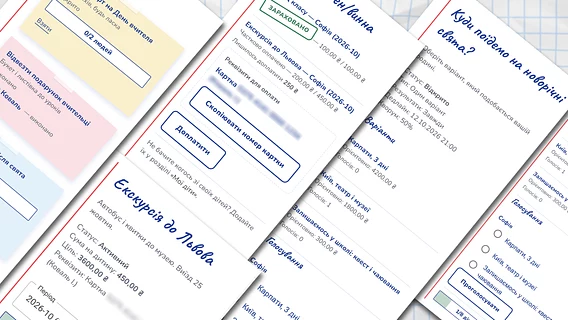
The interaction mechanics are as follows: the head of the parent committee creates a virtual classroom in the system and sends a special link to other parents. After joining, the following functionality becomes available to participants:
Poll: a tool where you can simply vote for the desired option without creating hundreds of comments with "pluses" in the general chat.
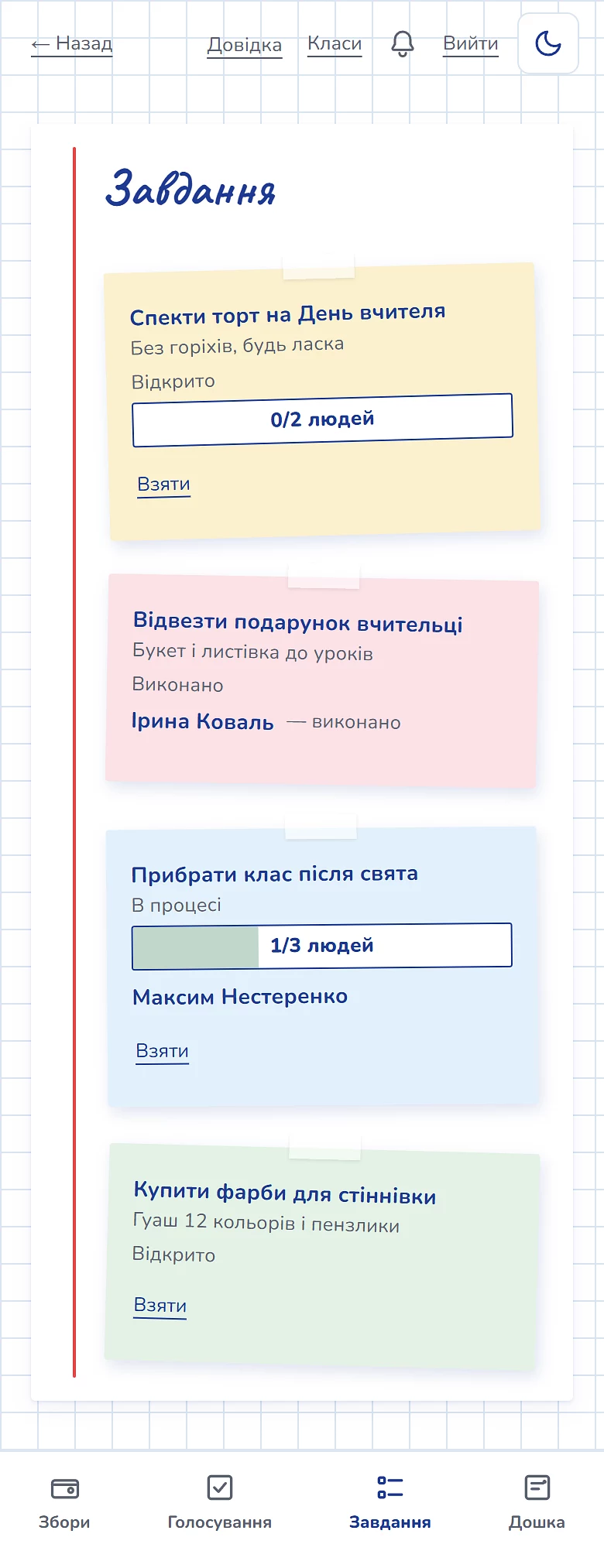
Assignments: A task allocation system, such as “who buys the cake” or “who arranges the bus.” According to the developer, this feature works great for engaging more “passive” parents in a common cause.
Bulletin board: a special space where important information is pinned to ensure it doesn't get lost in the stream of daily messages.
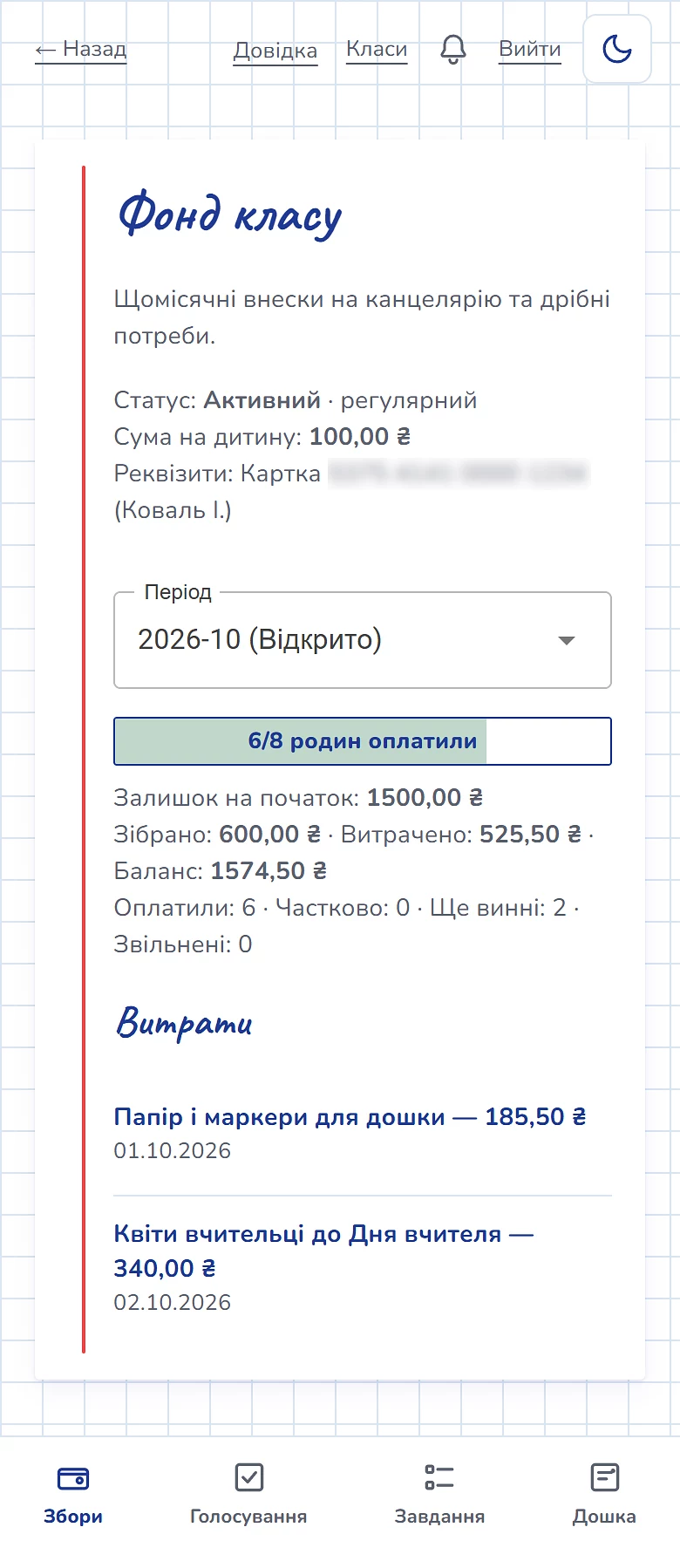
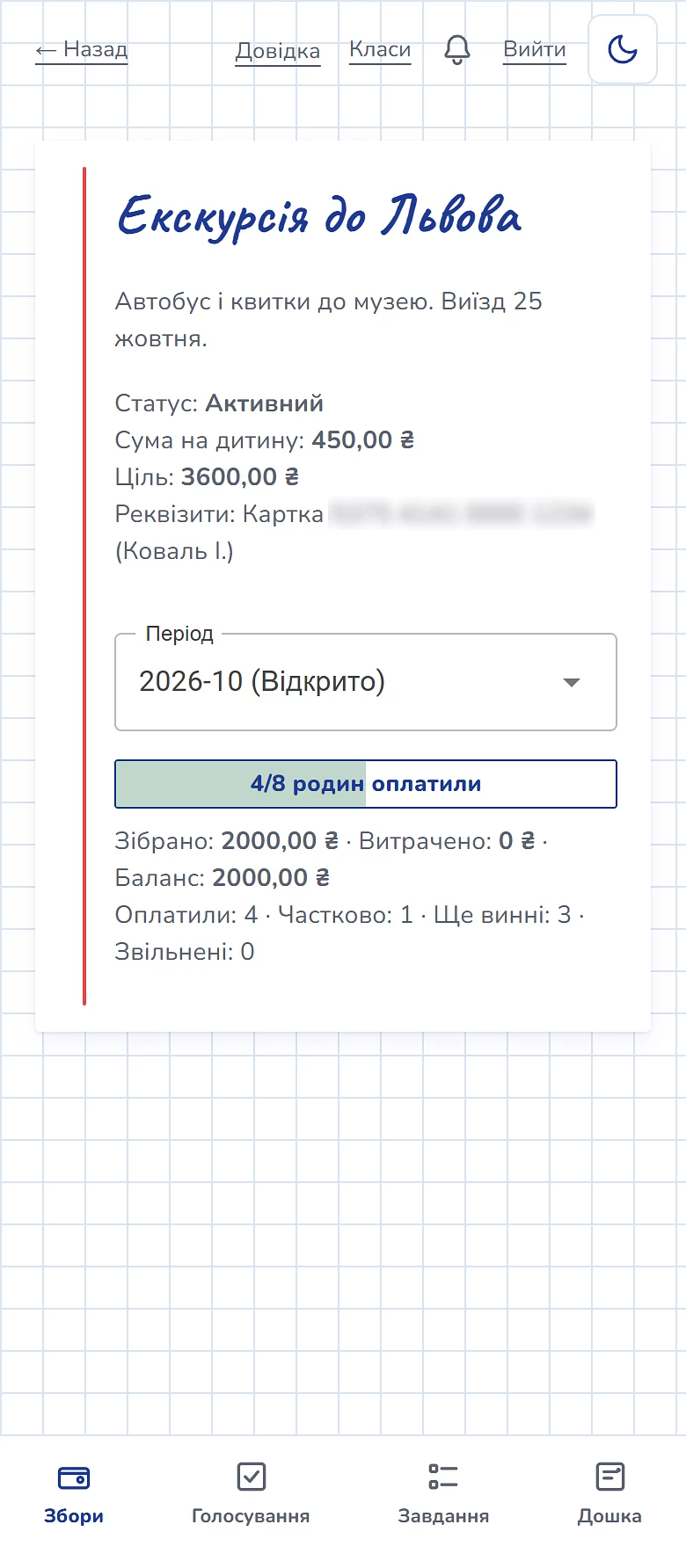
Accounting for fees: a transparent control system where everyone can clearly see how much money has already been collected and what exactly it was spent on.
It is important that the service does not transfer money, but only keeps records. Parents collect funds in the same way as before, but everything becomes transparent.
As Roman himself notes, he created the service from the inception of the idea to the final launch completely on his own: he thought out the architecture, wrote the code, created the design, and configured the infrastructure. However, the role of the entire development team was actually performed by an AI assistant.
"I used AI very actively, the main tool was Claude Code from Anthropic, but I also used ChatGPT and Gemini. I worked according to the spec-driven development approach: first, together with AI, I described what each function should do, then I made a plan, and only after that I wrote the code. AI did not change my decisions, but it speeds up the work many times over. It was as if I was managing an entire team from business analyst to developer," the IT professional shared his experience.
Roman added that thanks to the right approach to using AI, what would have taken a person a whole year was done in just one month. Some of the skills acquired while working on this pet project later came in handy in his main job. As for testing, this function was taken on by Roman's wife, Tatyana, who is a QA engineer by profession.
From a technical perspective, the application backend is written in the developer-native .NET platform, and the user interface is implemented in Blazor. The entire infrastructure works reliably in the Azure cloud environment and is based on Cloudflare.
A catchy name and unexpected viral success
The name "Na Shtory" did not appear immediately. At first, the project was developed under a different name, but it turned out to be already taken and too popular among other services. Thanks to the help of friends who suggested different options, the developer settled on a unique and ironic name.
“‘Up to the Curtains’ is probably the most famous meme about school meetings, and every parent immediately understands what it’s about. People react with a smile, and that’s good: the service should relieve tension, not add to it. In fact, money is not the main thing here. The main thing in the service is a survey, assignment distribution, and a board with important information,” Roman said.
He also admits that after his post went viral on the social network Threads (gathering about half a million views), there were a few users who didn't understand the irony and wrote negative comments about "scoop" or "corruption." However, their number was negligible - only 5-7 comments for a huge audience.
The platform was launched at the end of September, and the scale of the response frankly surprised the author. Roman expected that at least 10 classes would be interested in the service, but in the first day alone, over 300 teams registered in the system. Due to such a huge influx of users, the free email server exhausted its limits and “froze” within the third hour after launch.
Currently, more than 1,000 classes are registered in the system. The developer understands that some of them were created exclusively for testing, but active feedback and reviews on social networks indicate that many parent committees have already made the service their main tool. The developer's own class also actively uses the application. The site is visited by about 3,500 unique users every day.
Money, Monetization, and Developer Principles
When creating "Na Shtory" , Roman invested most of his personal time in the project - sometimes development took 20 minutes a day, and sometimes it stretched out for several hours. Direct financial costs remain small so far, since the infrastructure is deployed on cheap or free cloud tariffs.
The developer's principled position is that the service is and will forever remain completely free for parents . Moreover, he deliberately refused the "donate" button in favor of the development of the project. "I even thought about adding something about it, but I didn't, because if I donate, it will go primarily to the defense forces!" - Roman categorically declares.
If server maintenance costs increase significantly in the future, the developer is considering partner integrations, for example, with bookstores or school supply stores (or jokingly talks about collaborating with real curtain stores). The main rule of monetization according to Roman is that any advertising should be exclusively useful for users.
Future plans
Speaking about the near future, Roman focuses on ensuring the stability of the platform and processing feedback from the first users, promptly correcting and refining the functionality. The next big step should be the implementation of automatic reconciliation of receipts with monobank, which will allow treasurers to forget about manually marking those who have already handed over funds. The development of an expanded section with statistics and detailed reports is also planned.
View in Threads
Interestingly, users are already seeing the platform's potential far beyond schools. Roman is being asked to use the service for the needs of student councils, kindergartens, or even for meetings in work teams and volunteer initiatives. According to the developer, the architecture of the application is such that it can already be used for kindergartens without any changes, because the basic needs of any group of people in joint decisions and accounting for finances are universal.