Google has introduced a service for detecting AI-generated content. How SynthID Detector works
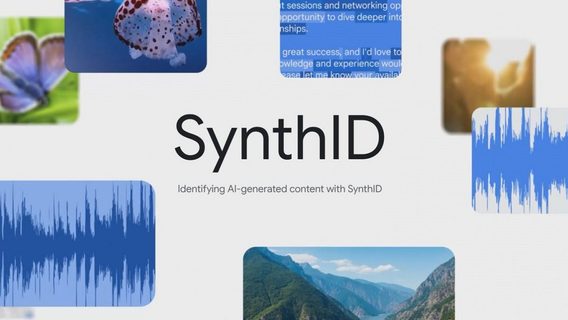
At the Google I/O conference, Google announced a new tool, SynthID Detector, which allows you to check whether content was created using Google’s artificial intelligence tools.
At the Google I/O conference, Google announced a new tool, SynthID Detector, which allows you to check whether content was created using Google’s artificial intelligence tools.
In a blog post, Google DeepMind’s Pushmit Kohli describes SynthID Detector as a «verification portal» that can «quickly and efficiently identify content created with Google AI.» It can also «highlight which parts of content are more likely to have been watermarked with SynthID.»
According to Kohli, SynthID watermarks are applied to images, text, audio and video generated by artificial intelligence, including content created by Google’s Gemini, Imagen, Lyria and Veo models.
Here’s how the tool works. When you upload an image, audio track, video, or piece of text generated by Google’s AI tools, the portal scans the media for the presence of a SynthID watermark. If a watermark is detected, the portal will highlight specific parts of the content that are most likely to contain watermarks. For audio, the portal points to specific segments where a SynthID watermark is detected, and for images, the portal points to areas where a watermark is most likely to be present.
Google is starting to roll out the tool to «early testers,» Kohli notes in his post.
«After the initial testing phase, the portal will be gradually rolled out to users who sign up for a waitlist to access SynthID Detector,» Kohli told The Verge. «We will learn from this cohort of professionals and work to implement content transparency more broadly.»
On May 20, Google showed off a lot of interesting things during the Google I/O '25 Keynote. Among the new features are Google Meet, an AI agent in Gemini, Search with AI Mode, and many other tools.
"I was more afraid of the interview than the combat missions." How a veteran after the front masters Java and builds a new career
Vitaliy Shchyrsky, Junior Software Engineer at EPAM, managed to work as a cook, courier, and restaurant administrator before the Great War. On February 24, 2022, he joined the defense of Ukraine, and after demobilization due to health reasons, he had to look for a new professional path. During rehabilitation, Vitaliy began to study programming on his own, later joined the EPAM program "IT for Veterans" and chose Java. The transition to civilian life, training after injuries and concussions, difficulties with English, and the first professional challenges — he tells dev.ua about all this. Then — the direct language of an IT specialist.
#Vsrativakansii. Crossfit candidate, 9 months to respond to the candidate, work under supervision and discrimination of candidates from Kharkiv, Dnipro and Zaporizhia
Hello! It’s #vsrativakansii again. A new selection of trashy job offers as usual on Friday’s broadcast. Today’s episode features a company that doesn’t know what it’s looking for, geographic discrimination in hiring, a response to a candidate with a weighty response, a candidate with CrossFit, and others.
GTA VI release in Ukraine: Lebiga and Tremba's records and preparations for the Armed Forces of Ukraine
The release of Rockstar Games' long-awaited Grand Theft Auto VI has been a huge event for gamers and streamers around the world. According to analytics company Streams Charts, the game attracted over 7.9 million concurrent viewers on its first day of release, setting a number of records on streaming platforms.