"I was more afraid of the interview than the combat missions." How a veteran after the front masters Java and builds a new career
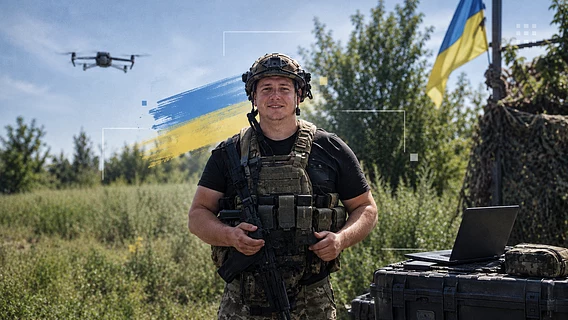
Vitaliy Shchyrsky, Junior Software Engineer at EPAM, managed to work as a cook, courier, and restaurant administrator before the Great War. On February 24, 2022, he joined the defense of Ukraine, and after demobilization due to health reasons, he had to look for a new professional path. During rehabilitation, Vitaliy began to study programming on his own, later joined the EPAM program "IT for Veterans" and chose Java. The transition to civilian life, training after injuries and concussions, difficulties with English, and the first professional challenges — he tells dev.ua about all this. Then — the direct language of an IT specialist.
Vitaliy Shchyrsky, Junior Software Engineer at EPAM, managed to work as a cook, courier, and restaurant administrator before the Great War. On February 24, 2022, he joined the defense of Ukraine, and after demobilization due to health reasons, he had to look for a new professional path. During rehabilitation, Vitaliy began to study programming on his own, later joined the EPAM program "IT for Veterans" and chose Java. The transition to civilian life, training after injuries and concussions, difficulties with English, and the first professional challenges — he tells dev.ua about all this. Then — the direct language of an IT specialist.
New life after the front: "My wife has to get to know me all over again"
My life before the Great War consisted of various roles and professions. I studied to be a foreign economic activity manager, and I also have a 4th category chef diploma. I worked as an administrator in a restaurant, a courier, cooked meals, and fought at the front. Now I rarely stand at the stove, because all my time is devoted to studying Java and AI.
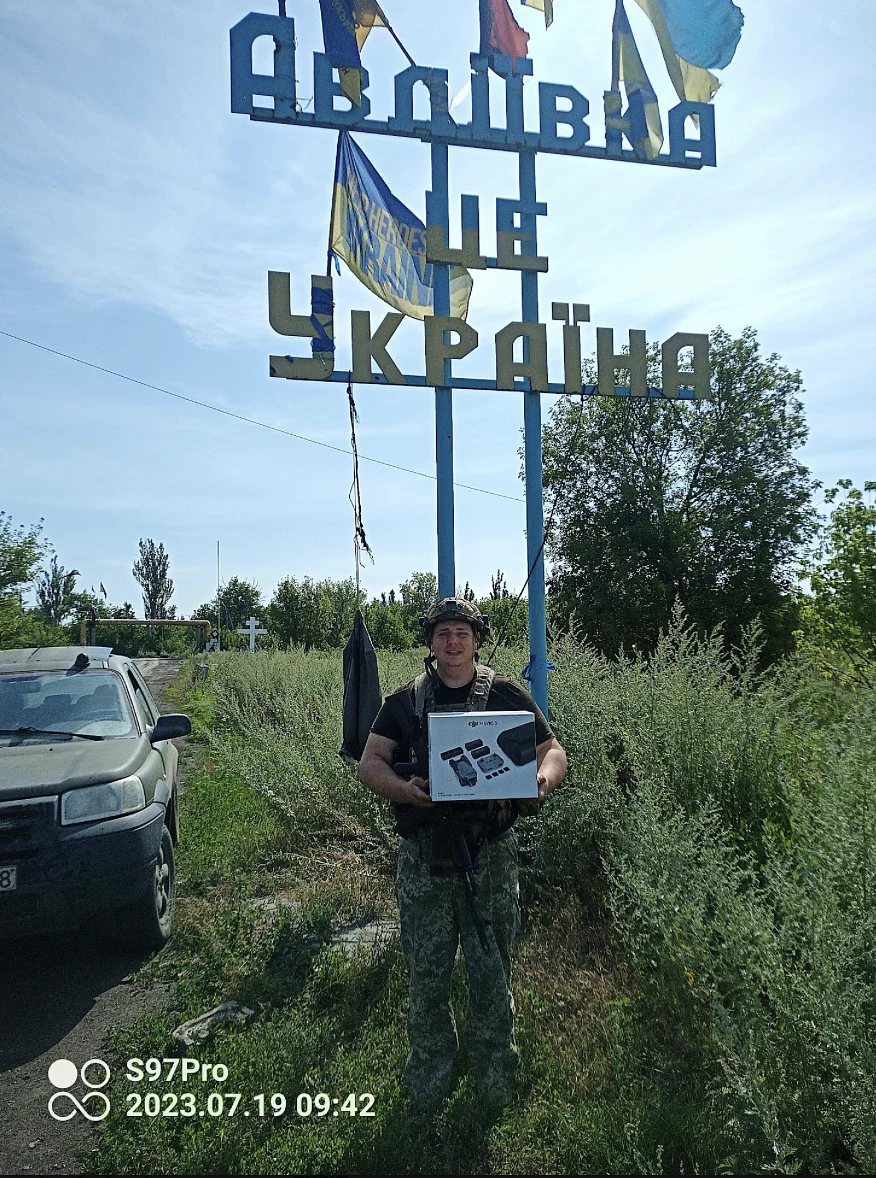
On February 24, 2022, I stood up for the defense of the country. And in February 2025, I was discharged due to health problems. The first days after demobilization, I seemed to be in prostration. Adaptation to civilian life was not easy. I was used to explosions, these sounds did not scare me. But it was physically uncomfortable for me to sleep in my own bed — at first I slept on the floor next to the bed. It was strange to see people around me who want something from me, but it is not related to the performance of combat missions; to hear children’s voices, to feel their sudden hugs. If before I hid under an umbrella from the rain and went around puddles, now I just tell myself: "No problem, it happens," and move on. There was an absolute reassessment of values, what is important, what really matters. I have changed, my wife has to get to know me anew. She didn’t like some of the new features, but she’s always on my side.
I spent almost a year in rehabilitation, but after the second month I started thinking about the future.
From chef to Java developer: how AI helped me choose a new profession
Given my health, I realized that it was time to learn a new profession. Where exactly to move on, I was advised by artificial intelligence. I created a prompt taking into account my circumstances, and it directed me to the IT field and advised me to pay attention to EPAM. I started on my own from a book, tried to learn Python, and on the way to the hospital I practiced on a laptop. I was drawn to how code can create changes and automate processes.
In March 2025, I saw an announcement of the " IT for Veterans " program. On the training portal, I came across a career test. I passed it three times, most often the results were repeated, so in the end I chose backend development in Java, since Python was not offered at that time. You can’t call this language easy, but I’m incredibly interested. And once you get into this topic, there’s simply no end to the learning.
The path to IT
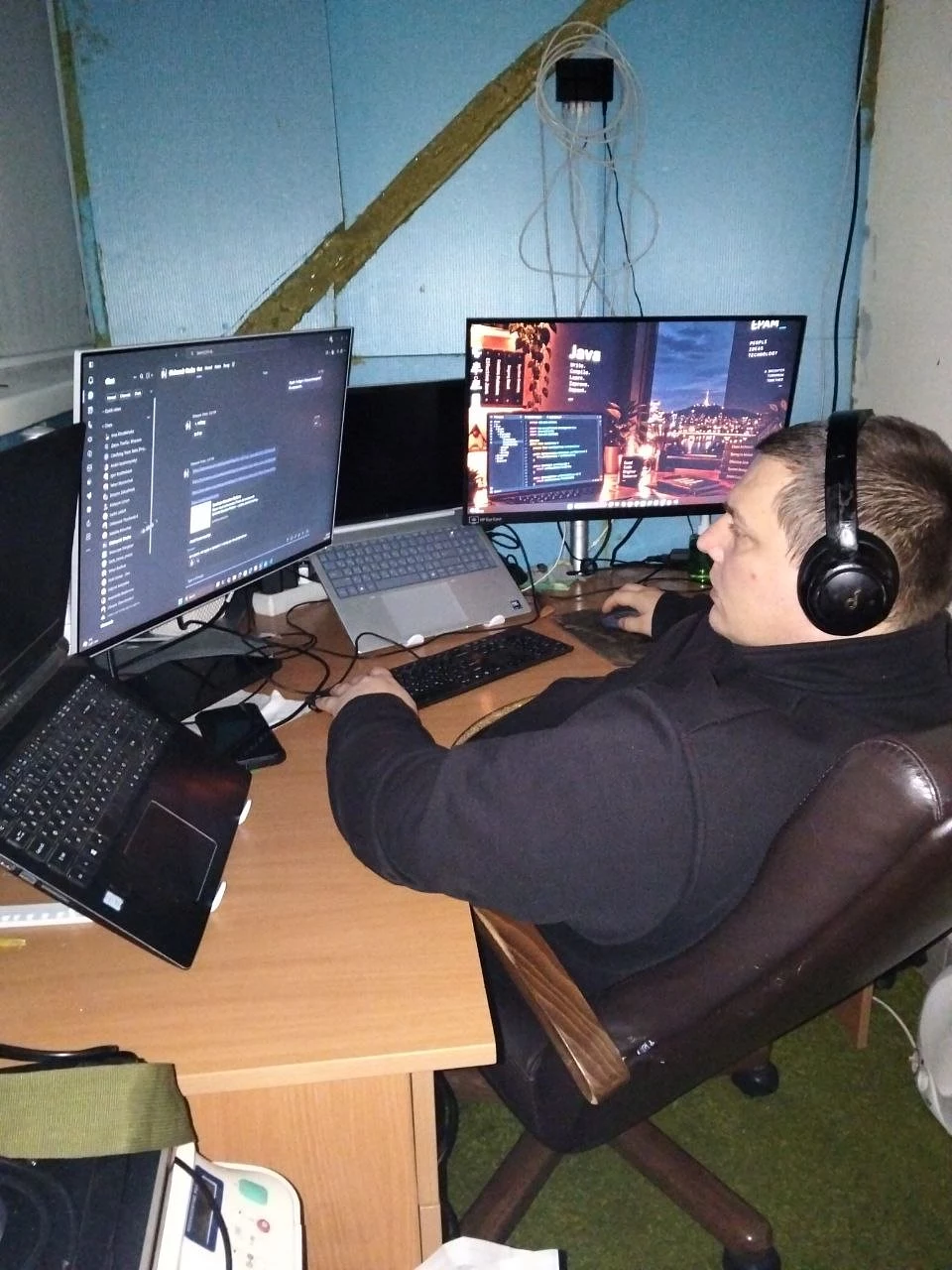
The first days of study were difficult. The intensity was crazy: we were recommended to devote 2 to 6 hours to the materials every day. My life schedule became very structured. In the morning I would take my child to kindergarten and, while I was driving to the hospital for rehabilitation, I would read a book. On the way back, I would have the same time for reading or practicing on my laptop. Two hours for household chores, food, and then I would sit down for Java, laboratory work, or English again. Then, I would have a short time for family, communicating with the children, who missed their dad very much, and at 8:00 PM, I would start English at the Green Forest language school. Even later, I would review assignments, repeat what I had learned, and do project-based learning, where I would later become a team leader.
Of course, it was not without difficulties. The first challenge was English. Training for veterans was conducted in Ukrainian, but all subsequent work and documentation was in English. I had an A2 level, which is not enough for IT. But I constantly improved my knowledge on my own, with tutors and in courses. And I still work on speaking practice. The second challenge was the need to concentrate and master a lot of new information. I had to return to some topics several times. Not because of my ignorance or unwillingness. Like many veterans, I have problems with memorization. After concussions and injuries, my condition gradually recovers, but sometimes, under stress, information simply flies out of my head. I remember how for several days in a row I could not comprehend the basic principles of object-oriented programming (OOP). I watched videos, read explanations, consulted with others, and on the third day — once! — and everything became clear in an instant.
Three attempts to pass the exam and fear of the interview
The important thing was to fight my own fears. I was almost more afraid of the interview to join the lab than I was of combat missions in the army, because my new professional life was at stake. I failed the exam the first time, and the second time too, but I didn’t give up. On the third attempt, I passed it with 97 points out of 100! I recently passed the AI certification from Google. Yes, it took time, but I managed.
What helped me keep going? First of all, people. My mentor, Andriy Shilin, who cared. He was quite strict about teaching and went beyond the program. Andriy checked every line of my code, gave detailed feedback, advice, and suggested good practices. Georgy Molchanov, the coordinator of the Java direction in the lab, is a person without whom I would hardly have gotten into IT. His support, vast experience, and faith in me played a huge role in my professional development. He was the one who helped me believe in myself as a future engineer. Yegor Bozhok, the coordinator of “IT for Veterans,” also supported me morally from day one, strengthened my interest in the IT field, suggested how to choose my direction, what to pay attention to during my studies. Once, I organized a meeting with another veteran, a graduate of the program, so that he could share his experience, and it was helpful.
Of course, I was also supported by my friends. One of them is an experienced architect who explains the incomprehensible in detail, better than AI. Another participant of “IT for Veterans”, Mykola, with whom I joined the program at the same time. We held each other, encouraged each other in the most difficult moments, planned to work on the same project. And, of course, my wife. She has known me for a long time and always said: “You are not stupid, you will succeed. Let’s look at your progress, compare what your English was like a year ago and what it is now…”.
Knock and it will be opened: what advice would I give to veterans who want to work in IT?
In essence, IT reminds me a bit of the army. The same teamwork. The same “discovery” stage at the beginning. Before performing a combat “task”, the unit and I also sat down for a briefing, brainstormed, distributed roles, rejoiced at a successful “release” and sorted out errors if someone made a mistake. Only the price of an error there is much “more expensive”.
If you or your loved ones are wondering whether to go on the program, share my conclusions and thoughts with them:
Don’t be afraid of your age or previous experience. I was a chef and a soldier, and today I’m a developer. I know people who successfully entered IT after 60. If you are interested, as I am, none of this matters. There are no walls and ceilings in learning. There are challenges that can be overcome.
Be persistent and knock on all the doors. I remember the advice of our program coordinator Yegor Bozhko: “Knock and they will open for you.” Don’t be afraid to ask your mentors questions, remind them about yourself, and ask for help.
Don’t expect easy money or instant results. It will be hard, you will have to study a lot, overcome stress and fatigue. But the worst thing is not trying to use your chance.
“Military service burns you out from the inside, and a former soldier comes to a company not as fresh and energetic as a college graduate.” The story of a veteran who entered IT after service
"Everyone paints a picture of a former stormtrooper drinking smoothies in an open space after a two-month course. It’s a trap." Why veterans shouldn’t go into IT today — reflections of an IT professional who served in the army
«Моя фінансова мета — накопичити $1 000 000, щоб мати пасивний дохід і жити на нього». Як айтішники витрачають гроші та в що інвестують
Зарплата айтішників в Україні — одна з найвищих. І ІТ-галузь під час війни — єдина галузь, яка зростає, попри війну. А айтішники — серед тих, хто найактивніше підтримують армію. Середній місячний донат айтішника становить 10% від зарплати, або $270. dev.ua вирішив розпитати айтішників, куди вони витрачають гроші й у що інвестують під час війни.
Не Патроном єдиним. Айтішник з EPAM шиє військову амуніцію для собак: історія диво-стартапу для чотирилапих захисників України
Максим Лісович, Interior Designer в ЕРАМ Україна, поза роботою допомагає амуніцією українським військовим… собакам. Так, службові пси носять унікальні жилетки та нашийники, мають спеціальні аптечки та турнікети. Чотирилапі в такому «одязі» більш захищені та впізнавані.
За словами Максима, тільки на заході країни нас захищають сотні військових собак. Айтівець допомагає військовим кінологам нести цю службу гідно, забезпечуючи відповідною амуніцією, спеціальними аптечками та турнікетами. Нещодавно він провів три дні поспіль, власноруч відшиваючи нашийники та повідці. А ще два роки тому шити він не вмів узагалі. Ось історія диво-стартапу.
Австралійське задзеркалля. Історія Delivery Director EPAM, який через війну релокувався із сім'єю до Австралії: як адаптуватися та вижити за океаном?
Григорій Клімов — директор з делівері і керівник великої Platform Engineering-практики в EPAM. Понад 10 років він будував свою кар’єру в українському офісі, але війна змусила його з родиною кардинально змінити життя. В березні Григорій з дружиною і трьома дітьми поїхали з рідного Харкова, деякий час провели в ЄС, а згодом — вирушили до Австралії. «Я мріяв жити в цій країні, коли піду на пенсію. Але війна підштовхнула до того, щоб прийняти рішення значно швидше», — каже Григорій.
Ось його історія.
Очільник EPAM Ukraine: «Було б класно мати якісь прозорі, відкриті механізми виїзду за кордон для обмеженої кількості людей»
Керівник EPAM Ukraine Степан Мітіш, який до призначення відповідав за київський та вінницький офіси компанії, дав велике інтерв’ю AIN. В компанії він працює вже 16 років, тобто знає про український IT-аутсорс багато, якщо не все.
dev.ua обрав найцікавіше з розмови.
#Vsrativakansii. Crossfit candidate, 9 months to respond to the candidate, work under supervision and discrimination of candidates from Kharkiv, Dnipro and Zaporizhia
Hello! It’s #vsrativakansii again. A new selection of trashy job offers as usual on Friday’s broadcast. Today’s episode features a company that doesn’t know what it’s looking for, geographic discrimination in hiring, a response to a candidate with a weighty response, a candidate with CrossFit, and others.
GTA VI release in Ukraine: Lebiga and Tremba's records and preparations for the Armed Forces of Ukraine
The release of Rockstar Games' long-awaited Grand Theft Auto VI has been a huge event for gamers and streamers around the world. According to analytics company Streams Charts, the game attracted over 7.9 million concurrent viewers on its first day of release, setting a number of records on streaming platforms.
The US limits production of advanced chips for China, Nvidia stops supplies, and Intel has its first external customer for 18A-P. What's happening in the semiconductor market?
The US is tightening controls on what advanced chips can go to China. Taiwan’s TSMC is suspending some orders from Chinese customers due to new rules, and Nvidia is no longer shipping some AI chips to the country. Against this backdrop, Intel announced the first external customer for its new 18A-P manufacturing technology.
These three news stories show how the rules of the game for companies that make cutting-edge chips are changing. It’s becoming harder for China to access certain technologies, and manufacturers are forced to take into account new US restrictions.
Have important news to share? Message our Telegram bot
Key events and useful links in our Telegram channel