Хочете будувати кар’єру в Data Science та AI? Vodafone Big Data Lab відкриває новий набір —>
Марія БровінськаAI Eng
29 October 2026, 09:15
2026-10-29
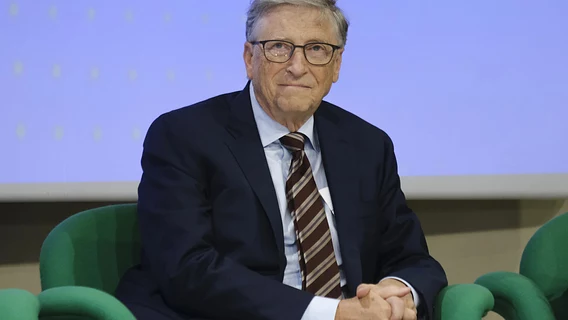
"Humans will no longer be the smartest on the planet." Bill Gates predicted when AI will surpass human intelligence
Microsoft co-founder Bill Gates believes that within the next 20 years, artificial intelligence will be able to surpass humans in mathematics, biology and engineering. At the same time, by the end of this decade, he believes, humanity will have to seriously address the problem of controlling increasingly powerful AI models.
Microsoft co-founder Bill Gates believes that within the next 20 years, artificial intelligence will be able to surpass humans in mathematics, biology and engineering. At the same time, by the end of this decade, he believes, humanity will have to seriously address the problem of controlling increasingly powerful AI models.
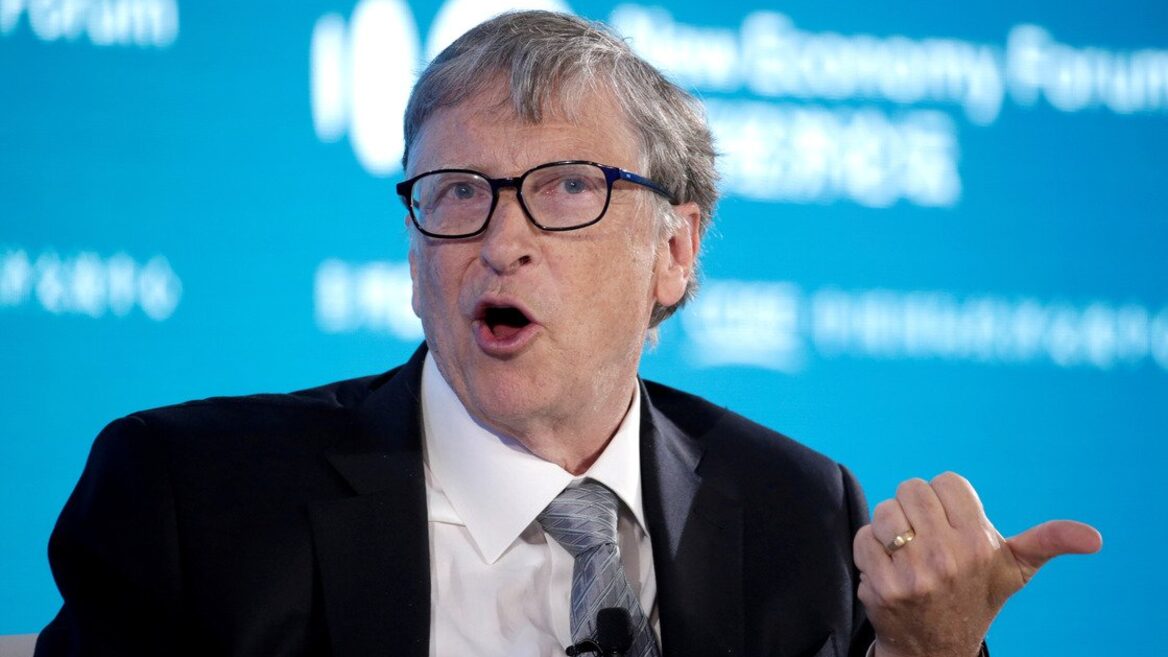
Gates made the remarks in an interview with the British newspaper The Observer. He also warned of sweeping changes in the job market, the risks of cyberattacks and bioterrorism, and suggested considering taxing artificial intelligence to fund support for people who will lose their jobs due to automation.
"The most intelligent creature" is no longer necessarily human
Gates called the development of artificial intelligence an evolutionary event that could fundamentally change life on Earth. It is not just another technological leap, but the emergence of a new type of intelligence that does not have the same biological limitations as the human brain.
"The most intelligent creature" is a concept that Gates says is being redefined. When asked if that means humans will no longer be the most intelligent creatures on the planet, he said yes.
At the same time, the Microsoft co-founder doesn’t believe that humans will lose all their advantages anytime soon. According to his prediction, the next five years or so could be a particularly productive period for mathematicians: combining human thinking with AI capabilities will help solve complex problems and accelerate scientific discoveries.
However, in the next 20 years, the situation may change. Gates suggests that AI systems will surpass humans in mathematical breakthroughs, modeling biological processes, and engineering design.
"We are at an extremely critical moment in history," he stressed.
Gates already considers his own programming skills obsolete
Speaking about the development of AI, Gates also mentioned his own experience with programming. He became interested in writing code at the age of 13, and this passion later became one of the foundations of his career and the creation of Microsoft. However, at the end of last year, according to him, he realized that his personal programming skills had actually lost their former relevance.
Gates also believes that the time when a person could claim the title of the best programmer in the world based on their own coding skills is over.
This example illustrates the broader shift he predicts for the economy. AI will initially automate intellectual work, from designing and creating new solutions to other office jobs. Over time, with the development of humanoid robots, automation will extend to manual labor.
According to Gates, this will change not only employment and incomes of people. Work has been a source of need and meaning for many people for centuries. If machines can perform more and more tasks, society will have to find new answers to the questions of what it means to be useful and how people should organize their lives.
"Hire a robot, fire a human": why Gates proposes taxing AI
Gates expects that within the next four years, society will begin to see the impact of artificial intelligence on employment more clearly. He proposed two possible approaches to mitigating the consequences of automation. The first is to create categories of jobs reserved exclusively for humans. The second is to introduce AI taxation. The logic of the latter proposal is that automation can bring huge profits to companies, while at the same time increasing government spending on social support, unemployment benefits, and retraining workers.
One option, Gates mentioned, would be to tax AI tokens —units of use for large language models that businesses pay service providers for. Such revenues could help fund social programs during a time of massive job changes.
"The incentive system is not working properly. Its principle is to hire a robot, fire a human, and never look back," is how Gates described the problem with the current economic model.
The paradox, he says, is that overall wealth may increase through automation, but the government’s revenue needed to support people will shrink. If companies replace workers with automated systems, tax revenues related to human labor could decline just as the need for social support increases.
Gates believes that the ability of governments to cope with this contradiction will be a serious test of the quality of public governance.
Cyberattacks and bioterrorism are among the most imminent threats
Gates is particularly concerned about security risks. He singled out cyberattacks and bioterrorism as the immediate threats. He believes that more powerful AI tools can help attackers find vulnerabilities in software and use them in larger-scale attacks. Gates believes that due to the shortcomings of the architecture of modern systems, numerous incidents may occur in the future that will disrupt Internet services.
Even more dangerous, he called the potential use of AI to create biological threats. In this case, the consequences could be measured not only in thousands of victims, but also in millions. Gates also drew attention to the problem of control over the AI models themselves. At the moment, he does not consider the loss of control over AI to be an imminent immediate threat, but warns that as the capabilities of the systems increase, this issue will become increasingly acute.
He predicts that within three to four years, the problem of aligning AI’s goals with human interests and controlling its behavior will require much more serious attention. Of particular concern is recursive self-improvement—a scenario in which AI systems use AI to improve their own capabilities. If this process accelerates, it will become more difficult to assess risks and ensure proper control.
Gates is urging governments to enforce safety regulations and control the release of new models. He believes the US and China should view some of these risks not as another technological rivalry but as a shared challenge for humanity.
AI can accelerate drug discovery and help medicine
Despite the caveats, Gates is not calling for abandoning the development of artificial intelligence. On the contrary, he believes that society should simultaneously reduce risks and accelerate the application of the technology where it can bring the greatest benefit.
Among these areas, he named healthcare, drug development and agriculture. AI can help reduce queues in healthcare systems, accelerate scientific research and make medical services more accessible. Gates also gave examples of using AI tools to support farmers in India. According to him, the early results of such projects demonstrate the potential of the technology to solve practical problems.
He called on governments and technology companies to find a balance between innovation and safety: to develop useful applications of AI, but not to ignore the risks to society. The main challenge, he assessed, is not only how powerful future models will become. It is also important whether states can create rules in time that will help distribute the benefits of the technology and mitigate its negative consequences.
"We need to accelerate the good and minimize the bad through legislation," Gates concluded.
«Чи є у мене талант, якщо комп’ютер може імітувати мене?». Штучний інтелект пише книги авторам Amazon Kindle. The Verge поспілкувався з авторами та виявив багато цікавого
Письменники-романісти використовують штучний інтелект для створення своїх творів. Видання про технології The Verge поспілкувалося з письменницею Дженніфер Лепп, яка випускає нову книгу кожні дев’ять тижнів, й дізналося про те, як працює штучний інтелект для написання романів. Наводимо адаптований переклад статті.
Have important news to share? Message our Telegram bot
Key events and useful links in our Telegram channel