The startup of the former CTO of OpenAI has released Inkling 2 Mini — an AI model for programming without the Internet. It needs about 20 GB of memory to run.
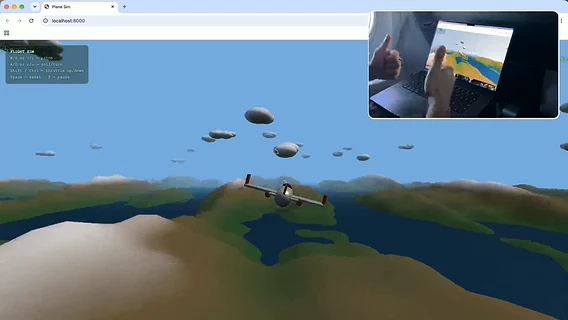
Thinking Machines has released the Inkling 2 Mini, an open-source AI model that can program even without internet access. The developers tested it during a flight: they ran it on a MacBook Pro and got a working flight simulator in a few minutes. The model requires about 20 GB of memory to run.
Thinking Machines has released the Inkling 2 Mini, an open-source AI model that can program even without internet access. The developers tested it during a flight: they ran it on a MacBook Pro and got a working flight simulator in a few minutes. The model requires about 20 GB of memory to run.
As the developers explain, the special feature of Inkling 2 Mini is its architecture: some layers of the model process each token three times. Thanks to this, the AI can perform more internal calculations, spending fewer tokens on solving the problem. In total, the model has 26.4 billion parameters, but during the processing of each token, it uses only 3.4 billion.
On the DeepSWE v1.1 test, which measures AI’s ability to perform software development tasks, the Inkling 2 Mini scored 48.2%, the best result among open-weight models with fewer than 100 billion parameters, according to Thinking Machines.
Inkling 2 Mini is now available for download on the Hugging Face platform.
Earlier, dev.ua wrote that Meta released Muse Spark Open — an AI model with open weights, specifically designed to run locally on Mac computers. It is also capable of writing code, fixing bugs, and adding new features to the software, but it requires a whole terabyte of RAM to run.
dev.ua also reported that Thinking Machines Lab, a startup run by former OpenAI CTO Mira Murati, is also working on interactive AI models that can simultaneously listen to a user and generate a response. The developers aim to bring AI communication closer to a natural human conversation, during which interlocutors will even be able to interrupt each other.
«Чи є у мене талант, якщо комп’ютер може імітувати мене?». Штучний інтелект пише книги авторам Amazon Kindle. The Verge поспілкувався з авторами та виявив багато цікавого
Письменники-романісти використовують штучний інтелект для створення своїх творів. Видання про технології The Verge поспілкувалося з письменницею Дженніфер Лепп, яка випускає нову книгу кожні дев’ять тижнів, й дізналося про те, як працює штучний інтелект для написання романів. Наводимо адаптований переклад статті.
"Zero response": Telegram does not respond to the appeal of the Central Digital Transformation Office at the National Security and Defense Council, although previously the former Minister of Digital Transformation Fedorov even consulted with the messenger team