Редакція dev.uaAround IT
22 September 2026, 10:00
2026-09-22
From "hardware under the table" to AI factories: The history of the independent Ukrainian cloud
Independence in the 21st century is measured not only by borders and the army, but also by the ability to preserve one’s data, digital statehood, and business during the largest systemic crises. What do you know about the Ukrainian cloud? How did the first and largest national cloud providers and mass services appear and grow? How are they changing right now under the influence of artificial intelligence? And most importantly, how does the cloud hold the foundation of our digital sovereignty?
Independence in the 21st century is measured not only by borders and the army, but also by the ability to preserve one’s data, digital statehood, and business during the largest systemic crises. What do you know about the Ukrainian cloud? How did the first and largest national cloud providers and mass services appear and grow? How are they changing right now under the influence of artificial intelligence? And most importantly, how does the cloud hold the foundation of our digital sovereignty?
The history of the Ukrainian cloud is a fascinating journey from dusty server rooms under household air conditioners to super-powerful data centers. The largest Ukrainian cloud provider Gigacloud has been operating in a market that is changing and evolving very quickly for 10 years. And on this occasion, we decided to figure out what transformations the Ukrainian cloud has undergone from the time of its first manifestations to the development of Cloud First and the first AI infrastructure.
The era of "iron under the table": What the first Ukrainian cloud looked like
If you’ve ever seen Ukrainian IT business in the 2000s, you’ll definitely remember this aesthetic. A separate corner in the sysadmin’s office, a metal cabinet or an ordinary table, under which a shabby case hums, and next to it on the wall, an LG or Samsung household air conditioner is tearing apart, trying to save the processors from overheating during the summer heat.
In the 2000s and early 2010s, Ukrainian business lived in a paradigm of physical ownership. Hardware was bought in Europe — often second-hand, after it had been written off by German or Polish companies. The main principle of the then director was as follows:
"Here’s my server, here’s its hard drive. I can touch it with my hand, lock the server room door with a key, and connect it to the alarm system. It’s secure."
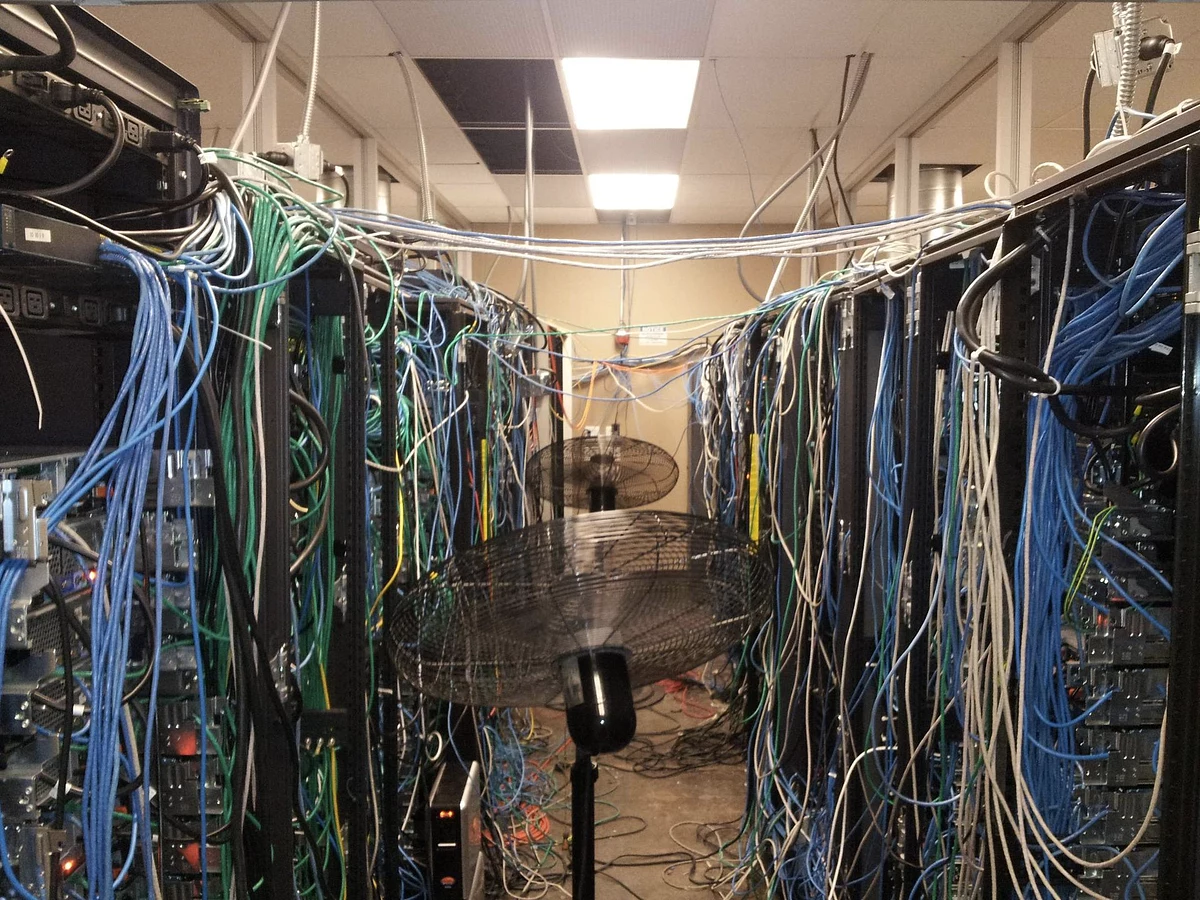
An archival photo of a typical Ukrainian office server room from 2005 — with a tangle of twisted pair.
Archival photo of a typical Ukrainian office server room from 2005 — with a tangle of twisted pair
The first file sharing sites and the emergence of mass data traffic
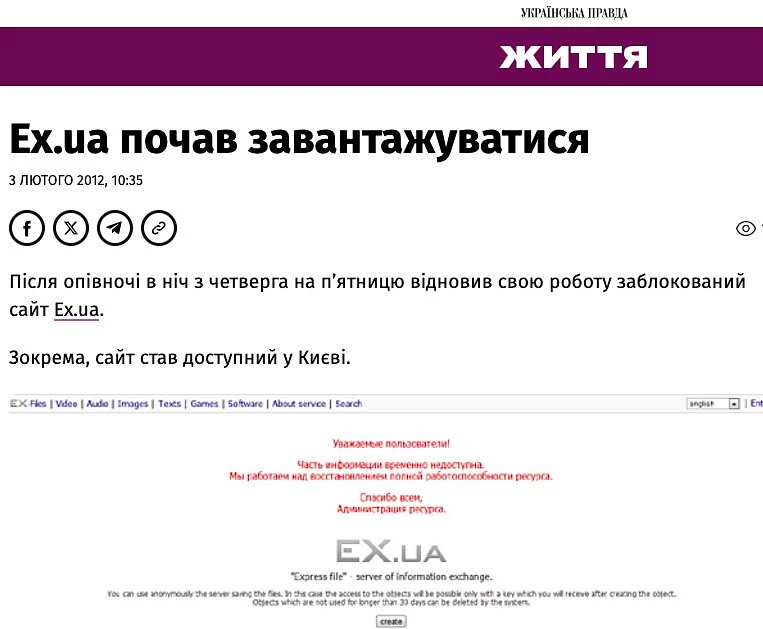
While businesses were holding on to physical disks, ordinary users needed volumes of data that the local PC could no longer accommodate. In 2004, the legendary Infostore.org project appeared — in fact, the first Ukrainian file sharing site. Only later did EX.ua appear, who remembers. All Ukrainian content was stored on such file sharing sites: films, music, software, distributions.
It must be said that it is unlikely that Infostore would have started operating so early in Ukraine without the appearance of another important thing — the first Ukrainian traffic exchange point UA-IX.
What was its importance? At that time, there were hundreds of Internet providers in Ukraine, but in order to exchange traffic with each other, it was necessary to either build an interconnection of networks (which is not always possible to do with all of them at the same time), or take already combined traffic from someone else. Sometimes it reached the point of absurdity: to get to Ukrainian traffic, the provider had to connect to an exchange point abroad through international channels, which were frankly weak at that time. Of course, such traffic cost a lot of money, and no Infostore.org could work, buying it on such a priori unfavorable terms. File sharing would simply not pay for itself due to their too expensive forwarding.
It must be said that in the 2000s, the Internet (and the processing and storage of its data) was not regulated by the state. Technologically, this gave us the opportunity to keep up and keep up with Western trends.
For example, what was the fundamental difference between Infostore and the first truly global (American) cloud service, Dropbox, which appeared a few years later?
Infostore was simply a static repository — a file dump with direct download, tied to specific local servers. Instead, Dropbox introduced the concept of a synchronized cloud state: your files were automatically distributed, cached, and accessible from any device without being tied to a physical medium. This was the first attempt to give the mass user a taste of what the "cloud" was. And Infostore became the very first step that taught Ukrainians to store data outside their own hard drive.
In 2008, the resource was closed by the then Ukrainian police. For allegedly storing pornography on its servers. At that time, 1.5 million (!) people used the service. Every third Ukrainian byte passed through this first prototype of the Ukrainian cloud.
From hosting to megawatt companies: Mirohost and Volya
Mirohost was the first commercial web hosting that allowed Ukrainian projects to live online without their own server.
"In 2003, I bought out and merged two small companies — a hosting provider, MiroHost, and a domain registrar, Imena.UA. They employed eight people, and the income from domain registration was about $6 thousand per month. My friends thought I was crazy. However, I was buying time. Starting a new business from scratch, I would spend at least two or three years developing it," recalls Mirohost founder Oleksandr Olshansky in an interview.
But the real technological breakthrough was the launch of the Volya data center, the first large commercial data center in Ukraine. Its first phase, with 2,000 units and a hall area of 80 sq. m, began operating in Kyiv in 2006. And in 2009, a new phase was launched, the total energy capacity of which exceeded one megawatt.
For comparison: at that time, giants were already emerging in the world. The first AWS data center appeared in the American state of Northern Virginia in 2006. The facility was immediately designed for 25-30 MW.
At that time, Amazon, with the launch of Amazon Web Services (AWS) and the EC2 service, proved that computing power could be the same resource as electricity or water: you only pay for what you consume second by second.
In Ukraine, the online store Rozetka opened in 2006. The explosive growth of e-commerce, the emergence of online banking and video streaming fundamentally changed the requirements. The server under the table could no longer withstand the influx of customers during Black Friday. There was an urgent need for large commercial data centers.
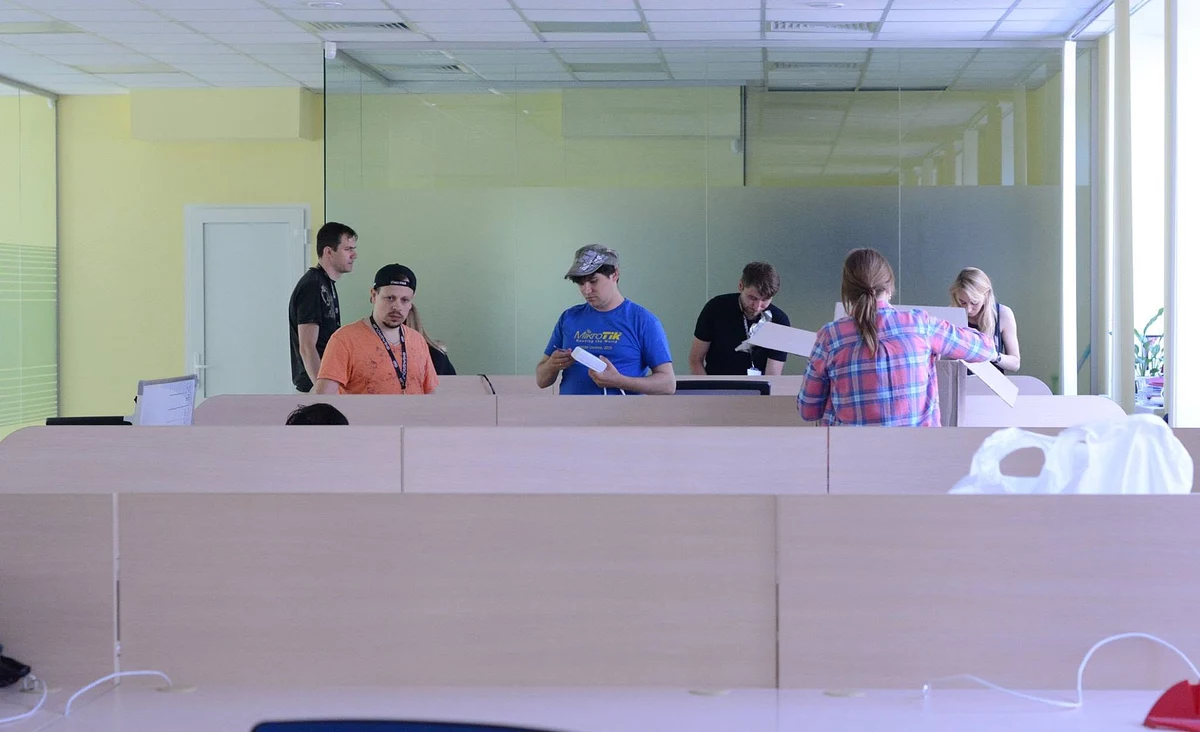
Photo from the GigaCloud archive
Psychological and economic barriers: "How is my data in your cloud?"
The demand for remote professional data storage, which was growing rapidly due to new e-commerce and video platforms, pushed data center owners to a new technological leap. And this evolutionary leap in the mid-2000s was definitely virtualization.
What is its essence: instead of buying one server for one task, this technology allowed us to "cut" one powerful physical server into dozens of virtual isolated machines.
Let’s go into more detail: virtualization is a technology that allows you to divide one physical computer (server) into several "virtual" independent ones. In other words, instead of buying 10 separate physical servers for different tasks, you take one super-powerful one and, using special software (hypervisor), cut it into 10 isolated virtual parts, each of which has its own operating system and works as a full-fledged computer.
“The first objection we heard was that the cloud was expensive. Almost everyone was convinced that it was a solution for large companies. We wanted to change this perception and from the very beginning we built a product that was accessible to businesses of all sizes,” recalls Anton Khvastunov, co-founder and CBDO of GigaCloud.
In the mainstream IT world, this concept exploded in the early 2000s (thanks to VMware), and it was it that made modern clouds possible. The evolutionary leap was that hardware ceased to be the “private property” of a single task: server resources were finally used 100% instead of just gathering dust in server rooms, and deploying a new server was reduced from weeks of waiting for a purchase to a few mouse clicks.
Moreover, later even more affordable technologies appeared, which allowed even small businesses to be pulled into the cloud.
"We built our first product on the basis of VMware for large businesses. But it quickly became clear that such a model would be too expensive for small and medium-sized businesses. That’s why we launched a public cloud on OpenStack," says GigaCloud CEO Nazariy Kurochko .
And here another problem immediately arose: OpenStack was then little known in the Ukrainian market, so customers needed to be explained why they could trust this technology. “In fact, the first years were a constant search for a balance between technologies, the cost of infrastructure, and what customers really needed,” emphasizes Nazariy.
But the biggest obstacle on the business path to the cloud was not even an economic barrier, but a psychological one. Co-owners and security directors were afraid to give data "to the outside." The word "cloud" caused sincere distrust.
“If they remove the server in the data center, will they remove my data too?”, “What if your admin reads our 1 °C accounting database?” — these questions were heard at every meeting.
“It was psychologically difficult for companies to give their data and IT infrastructure somewhere outside their own office or server room. But over time, this thesis lost its strength: customers saw that there were no mass stories about “remote servers” happening, and cloud providers could provide a much higher level of protection and fault tolerance than an individual company could afford on its own,” says Anton Khvastunov.
Eventually, most commercial structures were persuaded — economically and safely, first of all. Still, storing data in the cloud costs less than purchasing your own hardware, which is also becoming obsolete. In addition, from the point of view of data security and 24/7 support, large professional data centers looked more reliable.
“COVID-19, and of course, the full-scale invasion, especially contributed to this understanding. Therefore, I would say that the turning point was not some specific event. It’s just that the market has accumulated enough real experience. When companies saw that the cloud is not an abstract technology, and that it is already being used by their colleagues and competitors, distrust began to disappear,” Khvastunov summarizes.
This idea did not reach state structures so quickly. But more on that later.
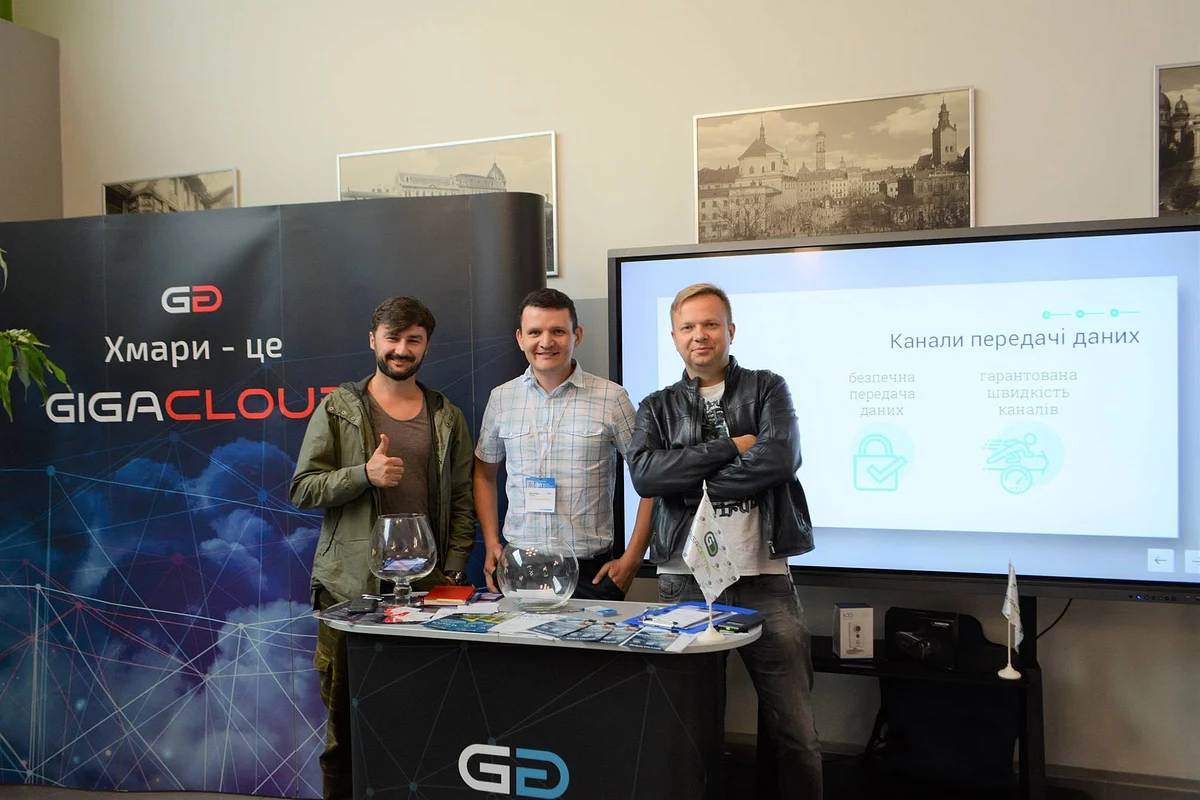
Photo from the GigaCloud archive
The evolution of hardware: from bulky servers to AI infrastructure
Hardware has evolved at breakneck speed over the past 15 years. The old bulky 4U form factor servers with noisy, slow hard disk drives (HDDs) that delivered at best a few hundred IOPS (input/output operations per second) are a thing of the past.
The technological leap of iron in numbers
Media Speed. Moving from HDD (100–200 IOPS, ~10ms latency) to NVMe SSD (over 1,000,000 IOPS, <0.1ms latency). Read speed increased 300+ times.
Density. From bulky 4U servers to ultra-dense blade systems that pack 10 times more cores and memory into a single rack unit.
Computing. From purely CPU-centric architectures (Intel/AMD) to hybrid systems with GPU clusters (NVIDIA H100/B200), where parallel computing speeds up matrix operations by thousands of times.
The birth of GigaCloud and the search for the perfect platform
GigaCloud entered the Ukrainian market in 2016. It was a response to a business demand: it needed a local cloud provider (IaaS), but with international security certificates (Tier III, ISO 27001, PCI DSS for the banking sector).
What is Tier III? It is a standard that guarantees a 99,982% availability rate as classified by the Uptime Institute for data centers.
What does this figure mean in percentage terms? The maximum total downtime (all unplanned and planned maintenance) is 94.6 minutes per year and 7.9 minutes per month. Agree, this is very little. If only ordinary home Internet providers worked like this!
This is important for business: a data center can be repaired and maintained without stopping the servers. But finding a site for such a data center in Ukraine was a real quest: not only was it necessary to have an indoor space, but also to have redundant city power grids of enormous capacity (two independent inputs from different substations) plus powerful diesel generator sets.
“When we launched GigaCloud in 2016, we didn’t need to look for a data center from scratch. At that time, the GIGAGROUP group of companies already included the telecom operator GigaTrans and the commercial data center GigaCenter,” recalls GigaCloud CEO Nazariy Kurochko.
Therefore, the company faced another challenge: to transform the existing data center infrastructure into the basis for a full-fledged cloud service. This required a significant transformation: it was necessary to purchase new equipment, expand capacity, and build new infrastructure.
The requirements for the site itself were high: the cloud had to be reliable, scalable, and fault-tolerant. Therefore, GigaCloud was not limited to one data center. The cloud was built on the principle of a cluster. Later, data centers in Kyiv and Warsaw were added to the GigaCenter site. “We place our own equipment at these locations, and we rent the sites themselves. This allowed us to build a geographically distributed infrastructure and get rid of a single point of failure,” emphasizes Nazariy.
Photo from the GigaCloud archive
An additional boom in cloud computing in Ukraine occurred in 2017–2018 during the first large-scale crypto boom. Specialized data centers for mining began to appear throughout the country, the main feature of which was not so much a disk system, but a colossal power density and industrial liquid or air cooling. This boom pushed the infrastructure market to understand: energy and cooling are the heart of the cloud.
Government in the Cloud: First Steps, "Action", Failures and Breakthrough
For a long time, the state was the most conservative player. All state registers lived in a bureaucratic dead end called the KSZI (Integrated Information Protection System). The old regulations obliged officials to keep data exclusively on "their own hardware", purchased through tenders in some basement room of the ministry.
The result as of 2019? Over 350 disconnected databases across the country. The registers crashed during any mass load (for example, filing declarations or an entrance campaign), and the failure of one hard drive in a hypothetical district administration could permanently destroy the document archive of an entire district.
The Cloud First strategy, which was adopted in Ukraine at the state level (voted by the Verkhovna Rada deputies) just a week before the start of the large-scale rollout, and the rejection of the old bureaucratic KSZI system allowed for a fundamental change in the approach to cybersecurity and data availability. The transition to the cloud became the only way to make government services sustainable, fast and secure. And, as it turned out quite a bit later, it was done very timely.
"In the event of at least partial implementation of the Cloud First strategy (approximately 50% of IT needs will be met through cloud services, rather than capital investments (in hardware — ed.), the total savings could reach UAH 40 billion for the period 2020-2024," the authors of the bill emphasized in the explanatory note.
Course for the birth of "Action"
The turning point occurred not only with the announcement of the Cloud First course, but also with the launch of the “State in a Smartphone” concept. The launch of the “Diya” application and portal completely changed the requirements for architecture. “Diya” does not store citizens’ data in itself — it extracts it from state registers in real time.
Were there any failures? Of course. The first mass voting in "Diya" (for example, during the National Selection for Eurovision) or payments from "e-Support" caused such a stir, when millions of people logged into the application in a minute, that the systems "crashed." But it was these challenges that taught Ukrainian architects how to properly balance loads, autoscale cloud resources, and build distributed clusters.
February 24, 2022: Digital Resilience Master Exam
GigaCloud is one of the few companies that started preparing for a possible invasion well in advance. An additional site appeared in Lviv in January 2022, that is, a month before the full-scale launch.
“About a month before the war, our specialists began calling clients en masse and offering to transfer critical data and backup copies to a site in Lviv or Poland. Some clients were skeptical about this at the time,” recalls Nazariy Kurochko.
When Russian missiles began hitting Ukrainian cities on the morning of February 24, 2022, the enemy was targeting data centers and server rooms of government agencies and businesses. Physical hardware at one point became a vulnerable target.
For example, at the beginning of the war in February 2022, Russian missiles hit 200 meters from the Privatbank data center in Dnipro.
“And we knew that moving our operations to a cloud solution was the only way to secure banking operations,” recallsDeputy Chairman of the Board of PrivatBank for IT and Operations Mariusz Kaczmarek.
The largest data migration crisis in Ukrainian history has taken place. In the first weeks of the full-scale invasion, hundreds of businesses, banks, and government agencies evacuated their digital assets from frontline regions and Kyiv.
"Clients who had previously hesitated began to make mass requests to urgently transfer critical data. In three days, from February 24 to 26, we received 300 requests for technical support. Most often, it was about transferring infrastructure from the Kyiv site to Lviv or Warsaw," says Nazariy.
Photo from the GigaCloud archive
For private cloud customers, GigaCloud physically evacuated the equipment. The company’s employees independently assembled, packed, transported it to a safe location, installed and configured it.
"From the beginning of the full-scale war until August 2023, the consumption of Microsoft Azure cloud services among our customers increased almost 7 times," said Stanislav Zyukov, head of Kyivstar’s direction for the implementation of Microsoft cloud solutions.
Data center engineers were moving critical registries, retail, and banking databases to the cloud in a matter of days, which had previously taken months to migrate. It was a fight to preserve the country’s digital heart.
Hybrid clouds have become popular: a combination of secure local sites in western Ukraine and backup resources in the clouds of EU countries.
As Oleg Horohovsky recalled in an interview with Forbes, the two data centers in Kyiv, where the data was processed, no longer seemed like a reliable configuration at that time.
"We decided to transfer part of the processing capacity to the cloud, to Amazon services, and the rest to a data center in Lviv. This is an extremely complex project, and we conducted it in parallel with the current work, without stopping," emphasizes Horohovsky.
Thanks to such actions, the Ukrainian banking system did not stop for a minute, and the registers remained intact even during direct hits on the building.
Present and Future: Sovereign Cloud
Today, the cloud is not just a place to store backups. It is a matter of digital sovereignty. Critical data of citizens, military registries, situational awareness systems, and MilTech developments must be subject to Ukrainian legislation and stored under the control of national operators.
Strict economic logic also works here: having its own powerful cloud provider of the GigaCloud level allows Ukrainian business and the state not to depend on exchange rate fluctuations and the policies of Western giants (AWS, Azure, Google Cloud), while receiving a network response delay (ping) of a few milliseconds.
Moreover, according to Kyrylo Naumenko, CTO of GigaCloud, Ukrainian government agencies and the private sector spend over $100 million on cloud services from foreign hyperscalers every year.
“If these same services were ordered from Ukrainian providers, the cost would be about $60–65 million. The rest is losses for the country’s economy,” the expert clarifies .
AI infrastructure: what makes it different
The AI cloud infrastructure being built today is fundamentally different from the traditional cloud. It requires not just vCPUs and SSDs, but supercomputer clusters with thousands of GPU cores connected by high-speed buses.
The AI Factory initiative from the Ministry of Digital Affairs, as well as the development of Ukrainian language models (LLM) from Kyivstar and the community (projects such as LapaTonia) require gigawatts of computing power on local cloud capacities to train models in the Ukrainian language and process sensitive data without leaving the country.
GigaCloud began investing in AI infrastructure in 2021, when it launched a GPU cloud. And since 2024, the company has completely switched to purchasing AI-ready servers. In total, GigaCloud’s investments in AI infrastructure reach millions of hryvnias.
“In the context of AI infrastructure, it is necessary to distinguish between two main types of workloads. The first is inference, i.e. the use of already trained models, for example, for transcribing calls, categorizing data, or working with ChatGPT. The second direction is model training. These scenarios have different requirements for the infrastructure. At GigaCloud, we are currently working with inference workloads,” says GigaCloud CTO Kyrylo Naumenko.
Gigacloud uses NVIDIA GPUs, which are among the leading solutions on the market for AI workloads and are widely used to run modern models.
A critical requirement for AI infrastructure is reliable power supply. Powerful GPUs consume significantly more electricity, so you can no longer simply fill a rack with equipment 100% by the number of units.
“Data centers built 5–10 years ago are often not designed for such capacities, so the rack can only be filled by 30–50%, as the power supply and heat dissipation limit is reached,” says Kyrylo Naumenko .
Another important aspect is cooling. There are two main approaches used in data centers today: air cooling and water cooling. Powerful GPUs generate significantly more heat, so traditional air cooling capabilities may not be enough.
"If the data center has a water circuit, this allows you to connect racks with a large number of GPUs to the appropriate cooling system. If there is no such circuit, its creation or redesign becomes a separate infrastructure task," the CTO clarifies.
Therefore, it is worth understanding: AI infrastructure involves more than just powerful GPUs. It is a set of changes in server hardware, power supply, cooling, networks, and data storage systems.
Photo from the GigaCloud archive
Conclusion
Over the past two decades, the Ukrainian cloud has come a long way. At first, it was used only by a few advanced businesses, but now cloud computing is happening “under the hood” of almost any online service that Ukrainians use. In a literal sense, we now simply live in the cloud, rarely leaving it. All our data is securely protected, and no, it is no longer on a flash drive in a safe jacket pocket.
Businessmen and statesmen, military personnel and ordinary users should remember: building an independent state in the 21st century means, among other things, building a reliable Ukrainian cloud infrastructure.
A cloud is like air. It seems invisible, but we can’t breathe without it.
The cloud guarantees that digital Ukraine will work under any conditions: under enemy attacks, during power outages, during peak loads, or during changes in global hyperscaler policies.
"For Ukraine, a sovereign cloud is, first of all, a matter of control. It is important to understand where the data is physically located, who manages it, and under what legislation it all works," emphasizes Anton Khvastunov.
There are categories of information that I would definitely not take outside Ukrainian jurisdiction. First of all, these are data over which loss of control could pose a risk to national security, the operation of critical infrastructure, citizens' rights, or the stability of the economy.
"First of all, these are defense and state data, critical registers, as well as information about critical infrastructure — energy, telecommunications, transport. Separately — medical, personal and financial data, which require a special level of protection," says Khvastunov.
But this does not mean that Ukraine needs to completely abandon AWS, Microsoft Azure, Google Cloud, or other global providers.
Hyperscaler clouds can be used to host less critical data, backups, or Disaster Recovery sites, as long as it does not conflict with legal requirements and security policies. In general, hyperscalers provide access to world-class technologies that make no sense to ignore.
"In my opinion, the future is a hybrid model. The main thing is to find a balance between sovereign infrastructure and global cloud services," Anton Khvastunov summarizes.