Хочете будувати кар’єру в Data Science та AI? Vodafone Big Data Lab відкриває новий набір —>
Олег ОнопрієнкоSpaceTech
14 October 2026, 13:11
2026-10-14
Jumping off Elon Musk's needle. How the world is challenging the Starlink monopoly and where does Ukraine fit into this race?
Low Earth orbit is experiencing an unprecedented boom: by the end of the decade, the number of satellites could reach 100,000. While the International Telecommunication Union tries to curb this chaos with strict quotas, a new hidden race is unfolding in space. China is building its own orbital empire, and Europe is investing billions in sovereign secure communication networks to break the Starlink monopoly.
Against the backdrop of this orbital redistribution, Ukraine is quietly but confidently building its own "plan B." The government is gradually opening the space market on the NASA model, allowing private Ukrainian companies to create their own networks for reconnaissance and command of troops. How is the world preparing for life in an overpopulated orbit and what role will Ukrainian private space play in this new coordinate system?
Low Earth orbit is experiencing an unprecedented boom: by the end of the decade, the number of satellites could reach 100,000. While the International Telecommunication Union tries to curb this chaos with strict quotas, a new hidden race is unfolding in space. China is building its own orbital empire, and Europe is investing billions in sovereign secure communication networks to break the Starlink monopoly.
Against the backdrop of this orbital redistribution, Ukraine is quietly but confidently building its own "plan B." The government is gradually opening the space market on the NASA model, allowing private Ukrainian companies to create their own networks for reconnaissance and command of troops. How is the world preparing for life in an overpopulated orbit and what role will Ukrainian private space play in this new coordinate system?
What are LEO satellites?
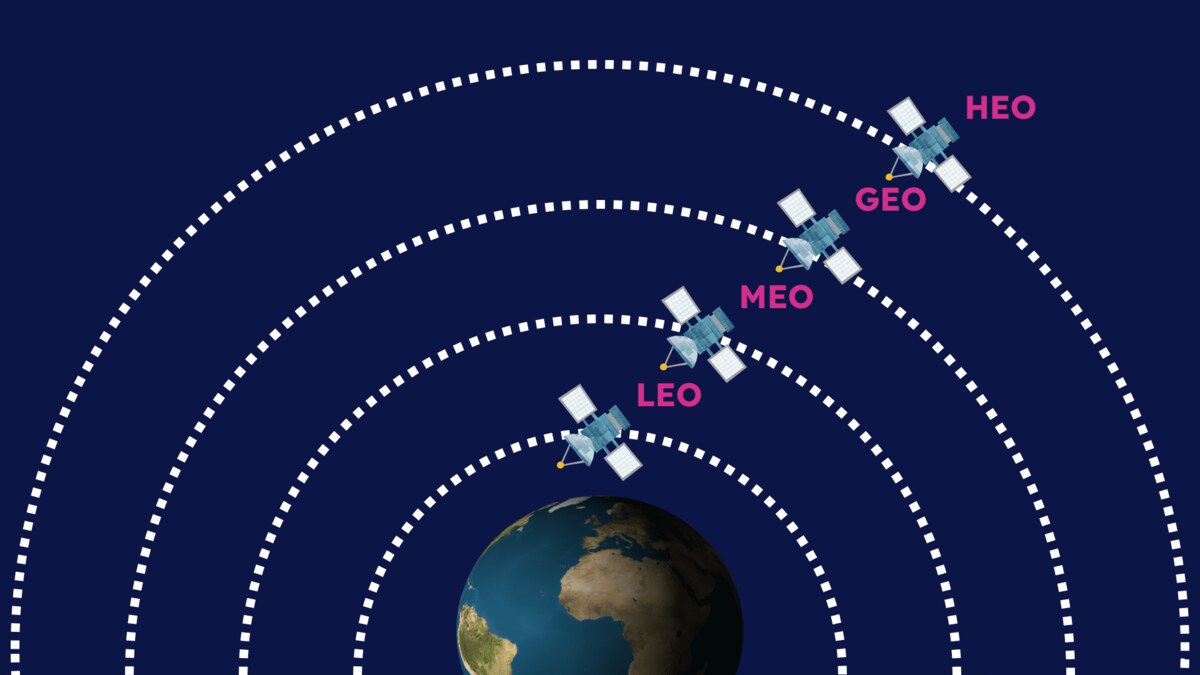
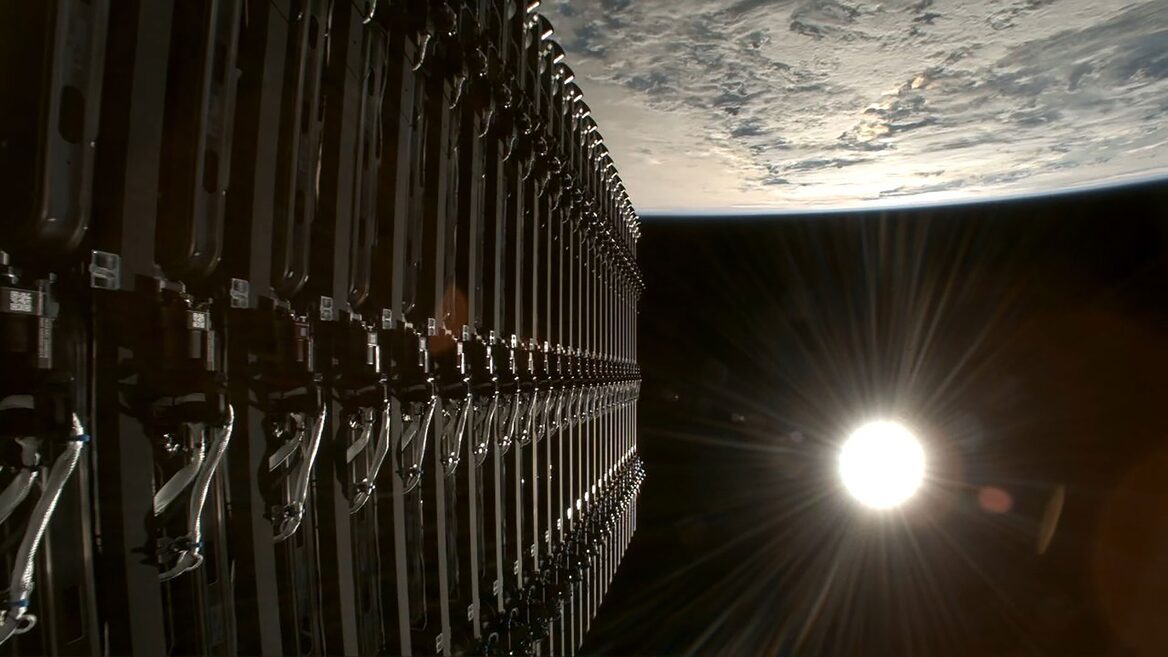
Low Earth orbits (LEO) are altitudes in the region of 300–1,500 km, where signal delay is many times less than on geostationary satellites at 36,000 km. The new generation of satellite networks is being built as a mega-constellation of hundreds and thousands of similar devices, which provides global coverage and the ability to "add" capacity simply by launching more satellites.
The first to scale this model was SpaceX's Starlink, which has already launched about 10,000 active devices. But today there are at least three major powerhouses in the LEO segment: the US (Starlink, Amazon Kuiper ), China (GuoWang, Qianfan), and Europe (OneWeb/Eutelsat and the upcoming IRIS²).
The altitude at which satellites operate around the Earth
However, the rapid growth in the number of spacecraft in low Earth orbit, from the current 11,000 to a projected 100,000 in the coming decades, poses a real threat of Kessler syndrome. This is a scenario in which an excessive density of objects and space debris provokes an uncontrolled chain reaction of collisions that can render the orbit unsuitable for safe use.
To prevent chaos and monopolization of space by bogus projects, the International Telecommunication Union (ITU) has introduced licenses that are not perpetual, so applicants must adhere to a strict “use it or lose it” satellite deployment schedule. For example, the licenses allow SpaceX to deploy up to 42,000 satellites.
Under these rules, an operator must deploy at least 10% of its declared constellation by the deadline, or its quota will be reduced to the number actually launched. This further encourages other countries to rush their launches to meet ITU requirements.
China: the orbital "alternative to the West"
China is building its own satellite ecosystem, which does not so much compete with Starlink on the open market as create a parallel infrastructure under Beijing's control.
The state’s flagship project is GuoWang. This is a state-run mega-constellation of LEO satellites, which is officially positioned as part of a future integrated “space-air-ground” system for 5G and 6G, and not just another commercial internet provider. GuoWang’s task is to secure orbital and frequency resources for China, provide its own critical infrastructure, and serve “friendly” regimes.
In parallel, Qianfan is being developed - an ambitious commercial project that, by 2030, declares thousands of satellites and an orientation towards the global market, where Western systems may be unavailable for political reasons.
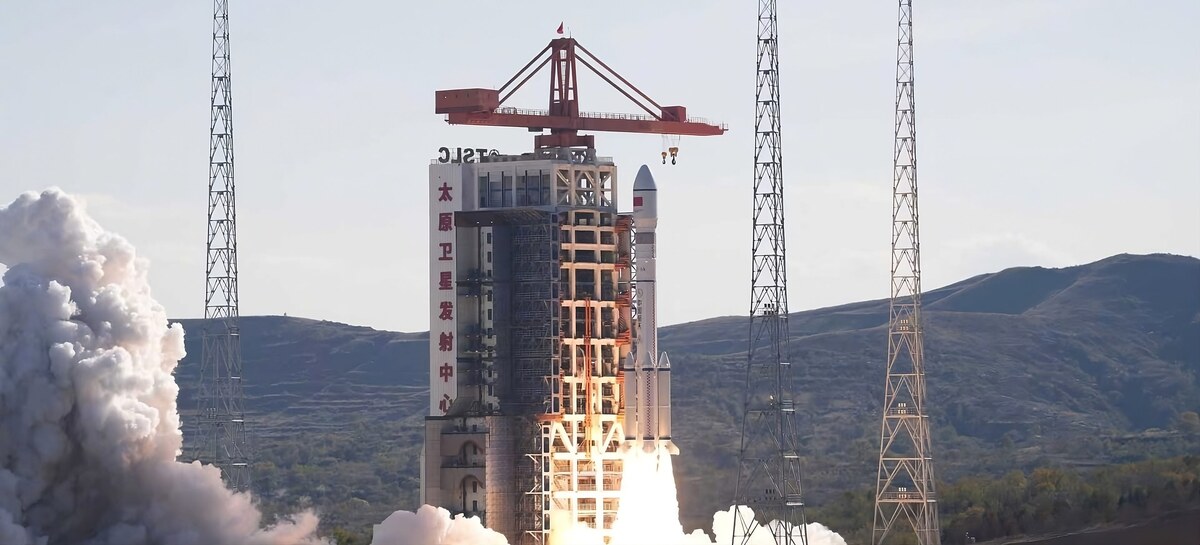
Launch of the Chinese Long March 6A Y24 rocket carrying LEO satellites
Last year, China set a national record of 92 launches, with the GuoWang and Qianfan launches accounting for part of the increase. China recently submitted two applications to the International Telecommunication Union to build huge non-geostationary satellite networks. Two groups of 96,714 satellites will fly in 3,660 orbital planes.
According to the ITU regulations for the GuoWang megaproject, the 10% norm is about 1,300 satellites that need to be launched into orbit by 2029. However, with only a little over a hundred active devices currently, the Chinese program is indeed critically lagging behind the required pace, and without multiple acceleration of launches, they risk losing their reserved orbital slots.
Europe: betting on a sovereign and multi-orbital approach
The European response looks different. Here, they are betting not on a single mega-constellation, the "European Starlink," but on a combination of private operators and a large state program for secure communications.
On the one hand, OneWeb/Eutelsat. After the merger, Eutelsat became the first operator to simultaneously operate geostationary satellites and a LEO constellation of over 600 devices at an altitude of about 1,200 km. Unlike Starlink, OneWeb will focus on B2B/B2G: mobile operators, airlines, maritime carriers, government agencies, defense agencies. The company does not play mass B2C, but becomes a natural candidate for the role of the European base layer of LEO communications.
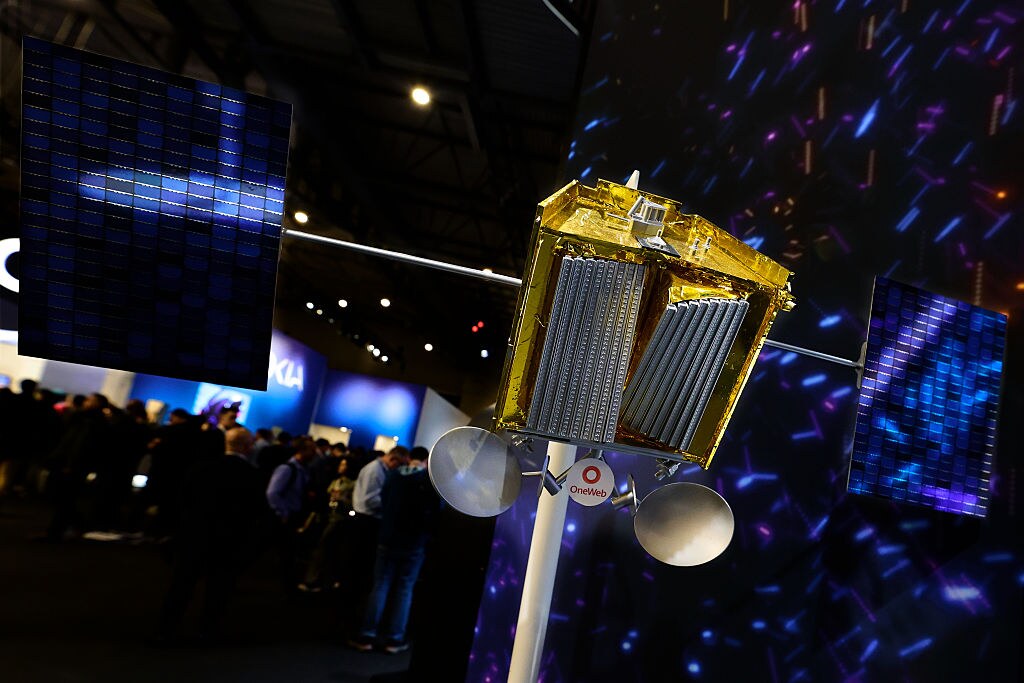
A model of a satellite from the Eutelsat OneWeb constellation is presented during the 2025 Mobile World Congress
On the other hand, IRIS² (Infrastructure for Resilience, Interconnectivity and Security by Satellite). This is an EU flagship program with a budget of about 10.6 billion euros, which is to create a multi-orbital (LEO+MEO) constellation of about 280-300 satellites. Its direct goal is to provide secure, encrypted, cyber-resistant satellite communications for governments, armies and critical infrastructure of the EU, reducing dependence on Starlink.
European Commissioner for Defence and Space Andrius Kubilius has made it clear that non-EU members, including Ukraine, the UK and Norway, “may join” IRIS² once the system is operational . Norway and Iceland have already agreed to participate in the project, but this is still a question for Ukraine.
In parallel, the GovSatCom mechanism is being deployed , which consolidates the existing government and military satellite resources of member countries and should become the foundation for IRIS² services.
From mono-dependence on Starlink to European diversification
Currently, Ukraine remains one of the most Starlink-oriented countries in the world: from 2022, tens of thousands of terminals will provide communication at the front and in the rear structures, including for critical infrastructure. That is why any failure or political decision of the system owner is felt especially acutely here. The global Starlink shutdown in July 2025 directly hit the military communications of the Armed Forces of Ukraine.
Against this backdrop, the allies have begun to build a parallel circuit. In July 2025, Denmark became the first EU country to officially finance European-made satellite communications services for Ukraine through the European Defense Agency (EDA). The package includes European terminals and access to secure satellite communications, with the type of operator not disclosed for security reasons.
The fact that the aid is coming through EDA is indicative, because this is not "another donation", but a test case of using European satellite services as a structural alternative to Starlink for the Ukrainian army.
At the same time, contracts and public mentions of the use of OneWeb/Eutelsat services in Ukraine are emerging. For example, the German government is paying for Ukraine's access to the Eutelsat satellite Internet network, and the total number of terminals is planned to be increased to 40,000 units.
Politically, the EU is already publicly signaling that Ukraine could become a member of IRIS² and GovSatCom when the programs enter the operational phase. For Kyiv, this is a chance to gain contractually guaranteed access to European sovereign satellite infrastructure, rather than living in a permanent “goodwill” regime of a private company.
Who in Ukraine is building "its own Starlink"?
Ukraine currently does not have the resources to create its own LEO mega-constellation like Starlink or GuoWang, either financially or in terms of ground infrastructure and launches. State programs until 2025 focused on Earth-sensing satellites ( the notorious Sich series ) and participation in international launch projects, rather than on broadband satellite Internet.
However, there are private companies operating in Ukraine that, like SpaceX at one time, are trying to fill the niche of low-Earth satellites.
The Ukrainian company Stetman, which over the two and a half years of war has become one of the key suppliers of modified terminals and Starlink-based solutions for security and defense forces, is now promoting its own comprehensive UASAT project — from terminals to orbital constellation.
Stetman has signed a license agreement with the Swedish company Requtech for the serial production in Ukraine of flat satellite terminals that work with the OneWeb and Intelsat constellations. This allows reaching a capacity of 2,000-10,000 terminals per month in half a year; the equipment has already been certified and codified by the Ministry of Defense of Ukraine, so it can quickly cover the needs of the front and critical infrastructure without mono-dependence on one provider.
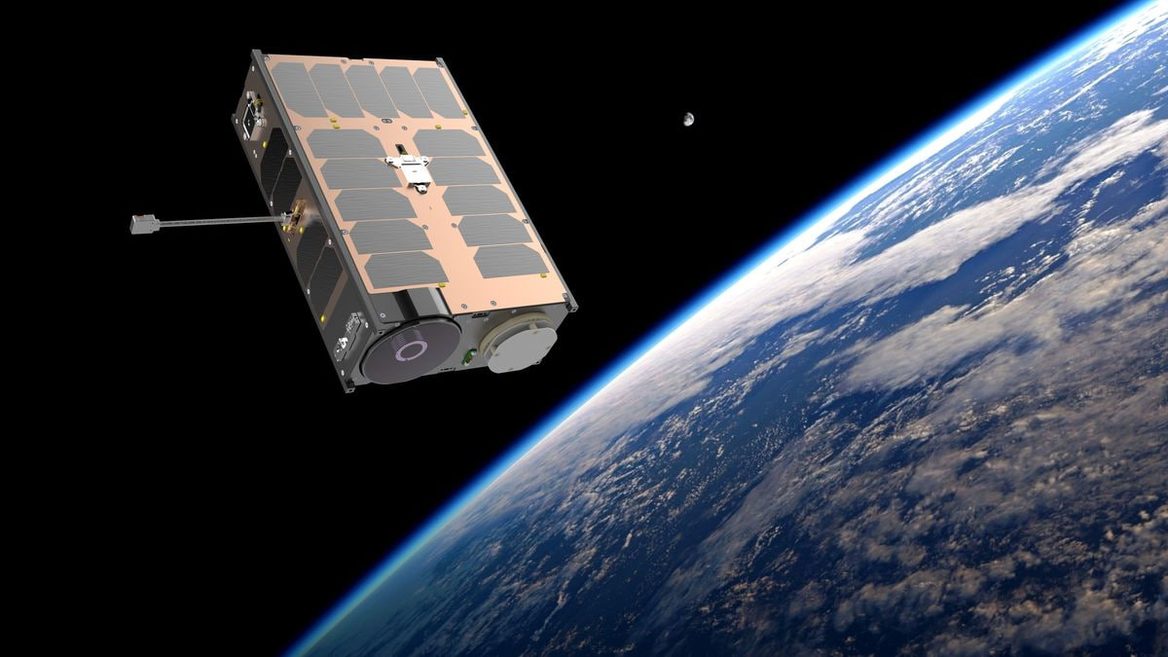
Next, Stetman is preparing for launch the UASAT-NANO / UASAT LEO orbital constellation, which operatesat an altitude of about 550 km, it is designed for approximately 300 devices, and the first test satellite is to be launched into orbit in the fall of 2026 by a SpaceX rocket. A phased deployment is planned from 2027: initially about 120 satellites, then annual serial launches of about a hundred devices that form a secure network for the government, special services, and the military, rather than a massive "Ukrainian Starlink" for household users.
Initially, satellites for UASAT will be manufactured by Danish GomSpace , with production gradually localized in Ukraine as soon as security conditions allow. The network architecture is designed to operate up to 100,000 terminals within one country and has increased resistance to electronic warfare — in fact, it is a planned “orbital backup circuit” in case Starlink or other foreign systems are unavailable or politically restricted.
In addition, Ukrainian defense company Fire Point recently announced the launch of two satellites into orbit and publicly announced that it plans to launch “dozens” of new devices in 2027, deploying its own satellite network for intelligence and military missions. According to co-founder and chief designer Denis Shtilerman, the goal is to reduce Ukraine’s dependence on the US government and private Western technology companies by supplementing the national defense ecosystem with its own space component.
Despite the fact that the Ministry of Defense plans to launch the first Ukrainian satellites by 2030 , the current role of the state in this configuration is not to build a mega-constellation from scratch, but to support several private operators that simultaneously integrate with Western constellations (Starlink, OneWeb, Intelsat, the future IRIS²) and deploy their own UASAT and Fire Point satellites.
And this reality was partially confirmed by the former Minister of Digital Transformation and current Minister of Defense of Ukraine, Mykhailo Fedorov, who in October 2025 stated that the private sector would have the opportunity to compete for the implementation of space projects for the country, repeating the experience of the transformation of the US space industry, where NASA moved from a monopoly to a model of open market and competitions.
Product Designer задонатив ЗСУ особистий Starlink. Як він це зробив
Арсеній Фещенко працює на позиції Product Designer платформи по оренді квартир у Києві та Лондоні bird. Нещодавно хлопець задонатив на потреби ЗСУ особистий Starlink. Розповідаємо, як це вдалося зробити.
Британець створив інструмент для злому Starlink з деталями на $25. Чи виведе він термінал з ладу? WIRED
Британський дослідник безпеки Леннерт Воутерс створив modchip — спеціальний інструмент злому, який можна приєднати до антени Starlink. Готові деталі для нього коштують $25.
10 серпня на конференції з безпеки Black Hat у Лас-Вегасі дослідник розкрив подробиці збоїв у терміналах Starlink та розповів про те, як серія апаратних недоліків дозволяє зловмисникам отримати доступ до системи і запустити власний код на пристроях. Про це написав WIRED.
Бойова гігієна. Чим небезпечний WiFi на передовій, та чому інколи прилітає по Starlink: пояснює айтішник
Володимир Степанець, Senior Systems Architect в EPAM Poland написав великий пост-пояснення про те, чим небезпечний інтернет на передовій та чому роздавати його не варто як з терміналів Starlink, так і зі смартфону.
Публікуємо його аргументи, правила та поради.
Have important news to share? Message our Telegram bot
Key events and useful links in our Telegram channel