Хочете будувати кар’єру в Data Science та AI? Vodafone Big Data Lab відкриває новий набір —>
Олег ОнопрієнкоІсторії
8 August 2025, 09:00
2025-08-08
KAI and AxxonSoft launched the first AI security laboratory in Ukraine worth over 5 million hryvnias
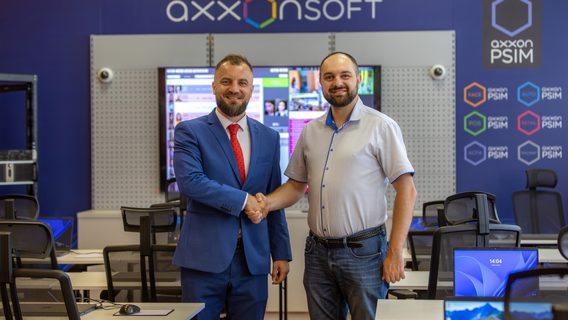
Oleksandr Kurinny, a graduate of KAI and CEO of AxxonSoft Ukraine, together with the Kyiv Aviation Institute, opened the first intelligent video surveillance laboratory in Ukraine. Thanks to this cooperation, students will be able to learn to develop complex security systems based on artificial intelligence. The company invested more than 5 million hryvnias in the project, which allowed creating a unique educational program. A dev.ua journalist visited the opening of the Axxonsoft intelligent video surveillance laboratory and tells how this modern space will function.
Oleksandr Kurinny, a graduate of KAI and CEO of AxxonSoft Ukraine, together with the Kyiv Aviation Institute, opened the first intelligent video surveillance laboratory in Ukraine. Thanks to this cooperation, students will be able to learn to develop complex security systems based on artificial intelligence. The company invested more than 5 million hryvnias in the project, which allowed creating a unique educational program. A dev.ua journalist visited the opening of the Axxonsoft intelligent video surveillance laboratory and tells how this modern space will function.
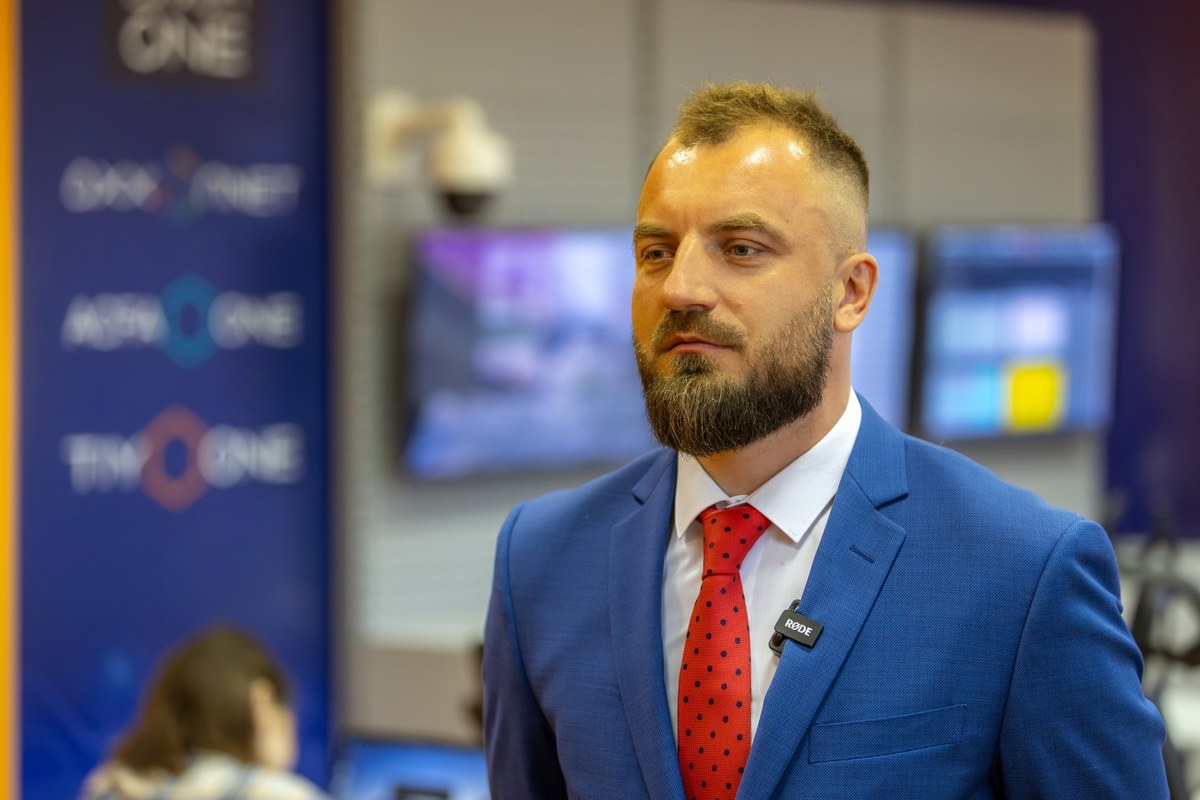
Oleksandr Kurinny, CEO of AxxonSoft Ukraine
Analyzing similar programs in other higher education institutions that train cybersecurity and information protection specialists, I can say that there is nothing like it anywhere. There is an analogue of the laboratory in Dubai, I believe that we have a more qualitative and correct approach.
Oleksandr Kurinny, CEO of AxxonSoft Ukraine, who graduated from KAI with honors in 2007, told dev.ua that as of today, the total investment in the project is over 5 million hryvnias. “If you build such infrastructure locally, it would be an investment of over 100,000 euros,” Kurinny noted.
The laboratory is a complex system that includes:
Neuroanalytical networks based on artificial intelligence;
Biometric identification systems with facial recognition;
License plate recognition systems with color, make and model identification;
Intelligent search in the archive by events and criteria;
Detection of unusual human behavior and persons with weapons;
Fire and other emergency detection systems .
AxxonSoft Ukraine software is the basis of a security system that integrates all modern subsystems - security, fire alarm, access control, perimeter security, etc. The laboratory presents modules that not only unite the system into a single whole, but also intelligently process any data. Artificial intelligence analyzes events, classifying objects (for example, distinguishes a tree branch from a person or a car), evaluates behavior, trajectory and speed of movement. All information is securely stored and in real time the system reacts exclusively to alarming events.
"Thanks to all these factors, any student will quickly learn not just to master data, but to find and enter any information like an investigator. The main task is operational intellectual search in a matter of seconds," explained the CEO of AxxonSoft Ukraine.
AxxonSoft uses a combination of its own developments and the world's best solutions. "We use our own patented artificial intelligence developments, and we also integrate the best mathematicians in the world," said Kurinny.
The company's partners include leading global developers: Ukrainian mathematics from the company "Vit", American Roadly, Austrian Carmen for license plate recognition, German Cognitec for face recognition.
Educational program
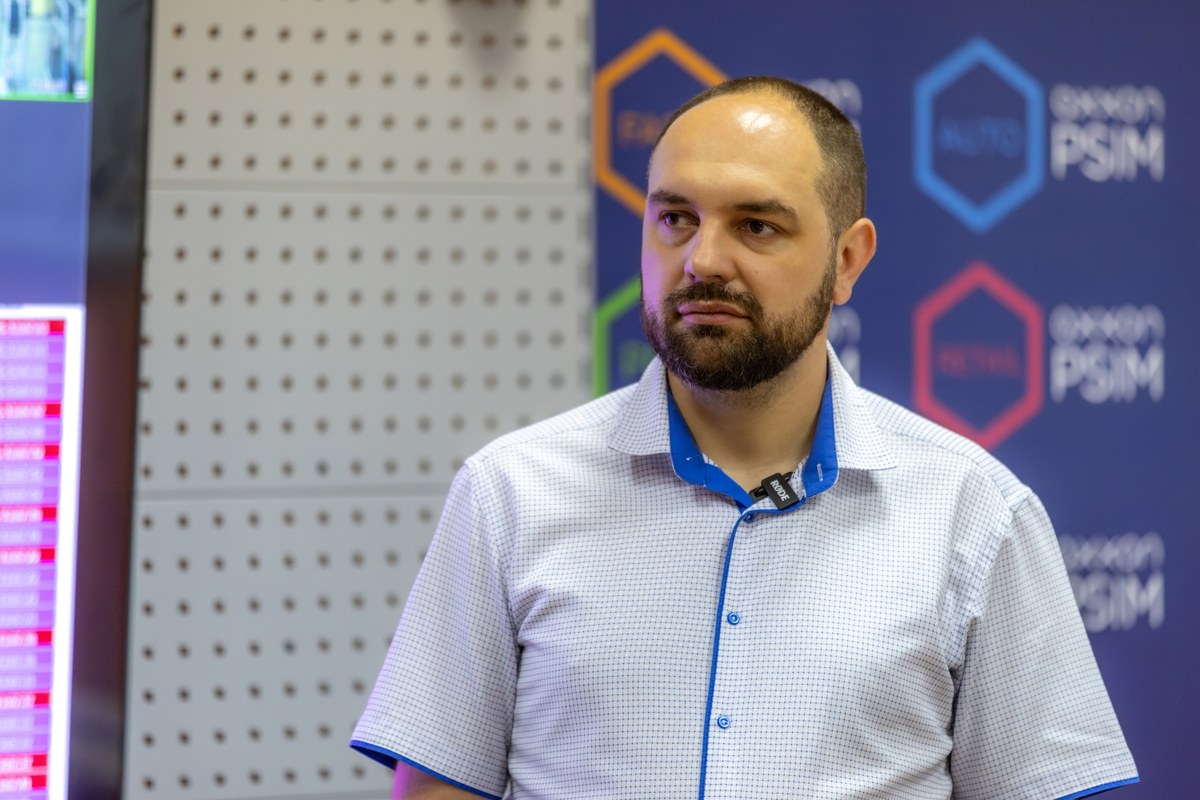
Andriy Fesenko, Dean of the Faculty of Computer Science and Technology of KAI, spoke about the structure of the study.
Andriy Fesenko, Dean of the Faculty of Computer Science and Technology, KAI
The course will start at the basic level - setting up the network so that all the hardware can see each other. After that - configuring the software, conducting event analytics and quickly finding incidents.
The program is designed for eight lectures and eight laboratory sessions of two academic hours each. 75 students can be trained per semester (5 groups of 15 people), which means 150 specialists per year.
After conducting laboratory and practical classes, students must process the information received in accordance with the teacher's tasks and find the necessary data. This simulates the real work of an engineer or company that comes to the site, analyzes the infrastructure, creates a network and information system, and then provides the customer with exactly the information that interests him, including the control and recording of incidents and their further implementation.
When asked about the teaching staff, Oleksandr Kurinnyi replied that the students will be taught using the “symbiosis” approach. According to him, both employees of their company (lecturers, laboratory assistants, practicing architects) and representatives of the institute will teach. The goal of this approach is to achieve interchangeability and a synchronous combination of theoretical knowledge with real practical cases.
Kurinny noted that the company receives many orders from the market that it does not have time to process. These orders, for example, concern training neural networks to identify objects - from wheel sets to the contents of wagons (scrap metal, sand, crushed stone). Performing such tasks requires significant human and time resources.
He also expressed hope that over time, the university would be able to provide them with “easy learning technologies” that they could integrate into their system. This would allow them to fulfill orders on a paid basis, which would be beneficial for customers, the company, as well as for the students and scientists who would participate in these developments.
How the laboratory works
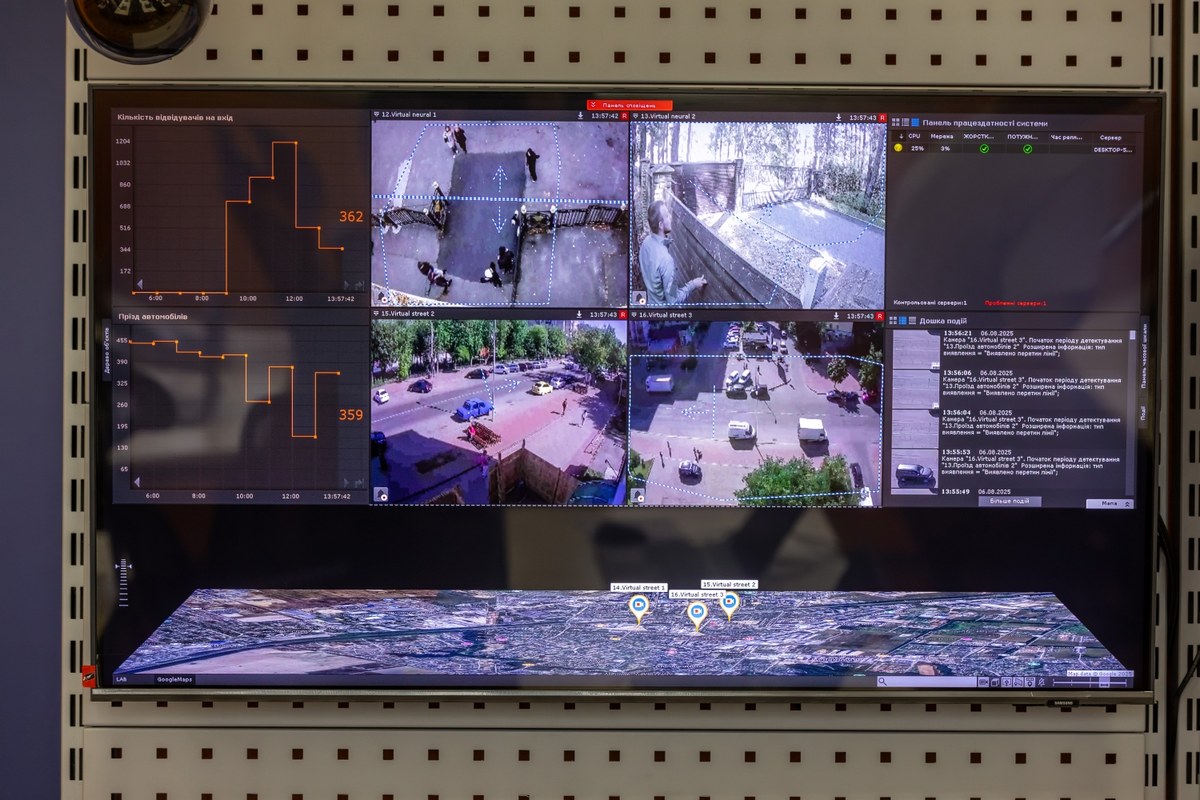
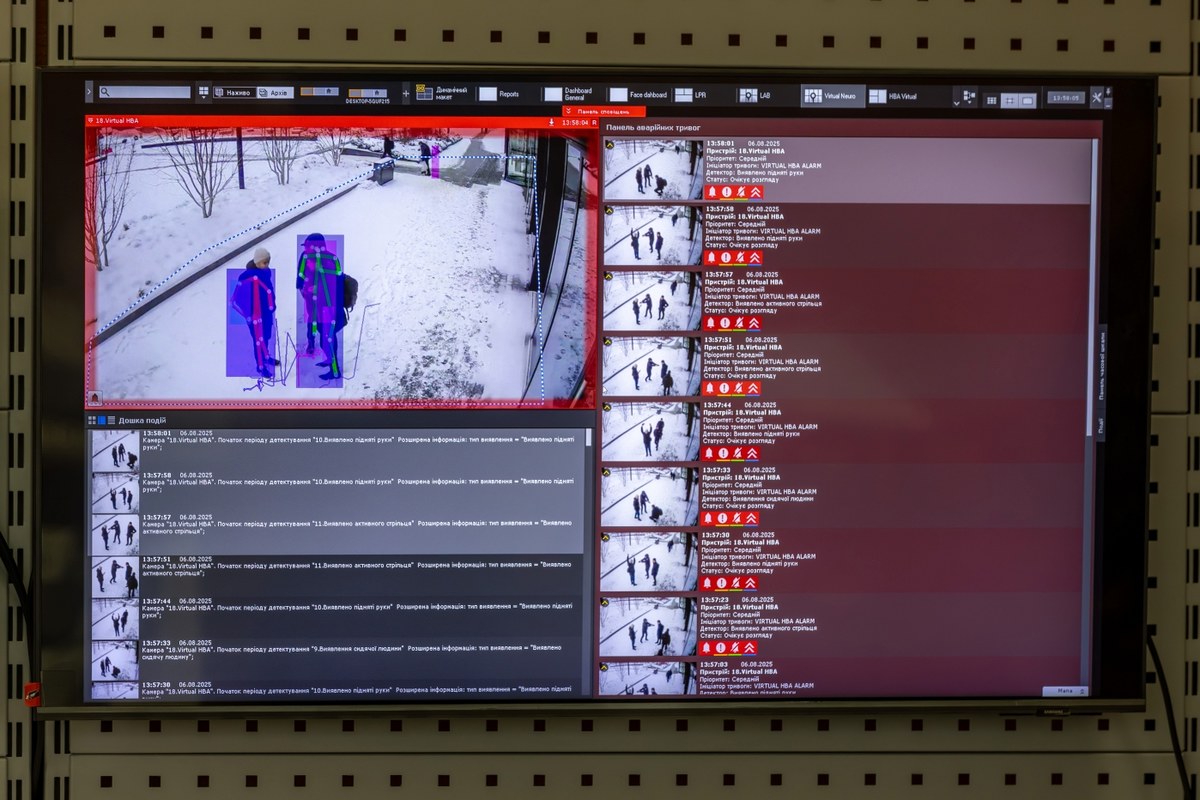
The dev.ua journalist managed to see how the AxxonSoft system works in practice. When a person enters the camera surveillance zone, the video surveillance system software provides security zone settings - perimeter, virtual lines, visitor counting, etc. The difference from simple motion detectors is that the system recognizes the type of object (person, object, machine) and, based on the logic of the events, either rejects alarm signals or transmits them to the notification panel. The operator reacts only to alarm events processed by artificial intelligence, which the system filters with an accuracy of up to 98%.
The software is able to track unusual situations, such as a person with a weapon or suspicious behavior, signaling the operator about a potential threat. The system can also recognize faces on low-resolution cameras and transmits all data to the event dashboard with information about the camera, the captured face and its characteristics, which allows you to work in conditions close to real-life.
During the demonstration, there were three cameras: one in real time, the second broadcasting a recording from a past exhibition, and the third showing video from the subway. Despite the fact that two of the recordings are not live, the system processes them “on the fly”, which allows for the analysis of any video archives.
The main function of the system is four-factor facial identification:
Face detection — searching among moving objects and capturing the image;
Identification — analysis of facial vectors with determination of gender, age, emotions, presence of glasses, beard, mask, etc.;
Verification — comparison with a database (employees, clients) with a similarity index of over 85%, which provides a high degree of confidence;
A face from the allowed list ("White List") is used, for example, for two-factor authorization of access to an enterprise.
A face from the Black List instantly signals the presence of an unwanted person.
Image search — the ability to submit a photo or screenshot (for example, from the Ministry of Internal Affairs database) and receive information about whether this person was at the facility during a specified period (up to three months). The analysis includes cameras at the entrance, exit, and surveillance cameras that track the trajectory of movement.
Thus, the system provides high-tech monitoring with deep analysis of behavioral and identification characteristics in real time and from archived data.
Laboratory infrastructure
The system is not limited to one classroom - it is integrated with the entire university infrastructure and has access to international resources. These are university cameras, city cameras that are allowed for public use, as well as cameras from Ukraine. Kurinny explained that at AxxonSoft Ukraine we also have cloud technologies around the world that students will be able to use in practice.
The lab allows students in Kyiv to connect to a camera, for example, in Sydney, and study analytics practices in different countries around the world.
The AxxonSoft Ukraine solution is already working on real objects, such as shopping malls, ArcelorMittal, Ukrtelecom, Nova Poshta, and others.
“These are all our strategic partners who use our solutions and constantly improve them for their business processes,” noted Kurinny.
Future collaborations
The university plans to become a testing ground for new technologies. "We really hope that over time the university will be able to provide us with technologies so that we can integrate them into the system on a paid basis — for the customer, for us, plus for students or scientists."
The laboratory is open not only to KAI students, but also to AxxonSoft partners and customers. “We have an agreement that our partners and customers can also study here. Advanced training courses are a must have. You definitely need to take them once a year, because technologies do not stand still.”
Fesenko emphasized the accessibility of the program: "Students from the Faculty of Computer Science, the Faculty of Aerospace Engineering, the Faculty of Electronics and Telecommunications can study here. We do not rule out the opportunity for students from the humanities faculties, if someone has the abilities."
This laboratory has become a vivid example of successful cooperation between education and business, demonstrating how graduates can return to their universities not just with experience, but with specific innovations that raise the level of domestic education to world standards.
“I have a deferment thanks to school.” A candid conversation with an IT worker from Pingle Studio, who teaches computer science at a Kharkiv school, about mathematics, the pains of Ukrainian education, AI in teaching, and the combination of pedagogy and work in IT
“I want technology to be useful, not just entertaining and ‘sleeping’ children’s attention.” A computer science teacher from Poltava region develops educational apps for children to learn the alphabet, works from Kobzar, and mathematics