Хочете будувати кар’єру в Data Science та AI? Vodafone Big Data Lab відкриває новий набір —>
Марія БровінськаІсторії
1 April 2025, 09:00
2025-04-01
"I started with a PC the size of a three-door wardrobe." A native of Kherson with 40 years of experience - about programming in Delphi, the principle "if it works, touch it less" and the evolution of IT
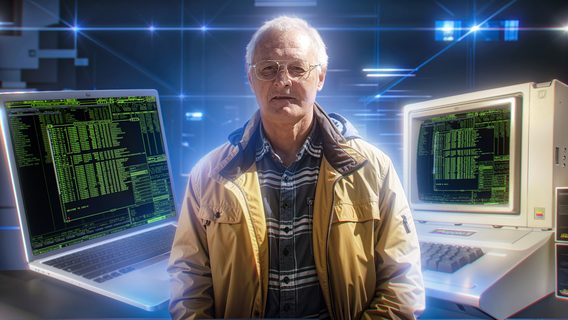
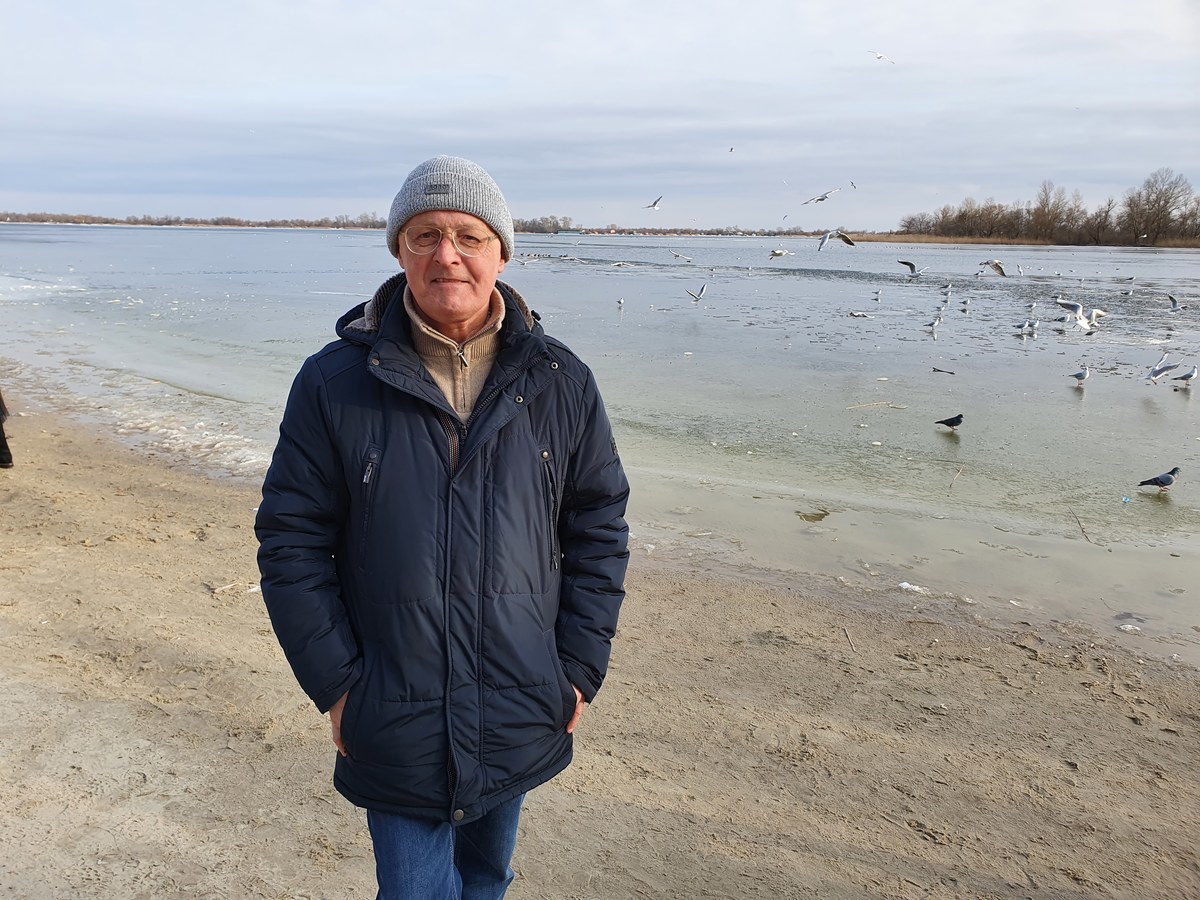
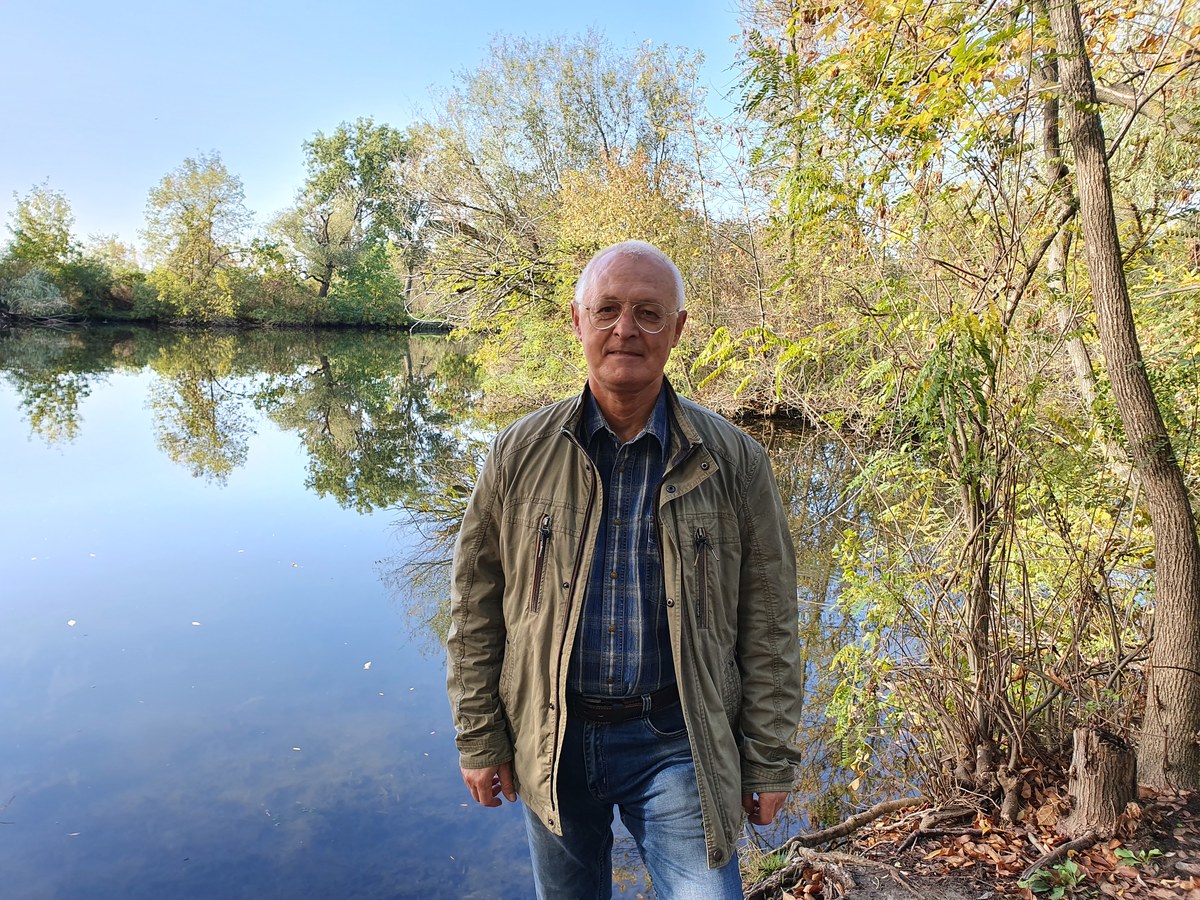
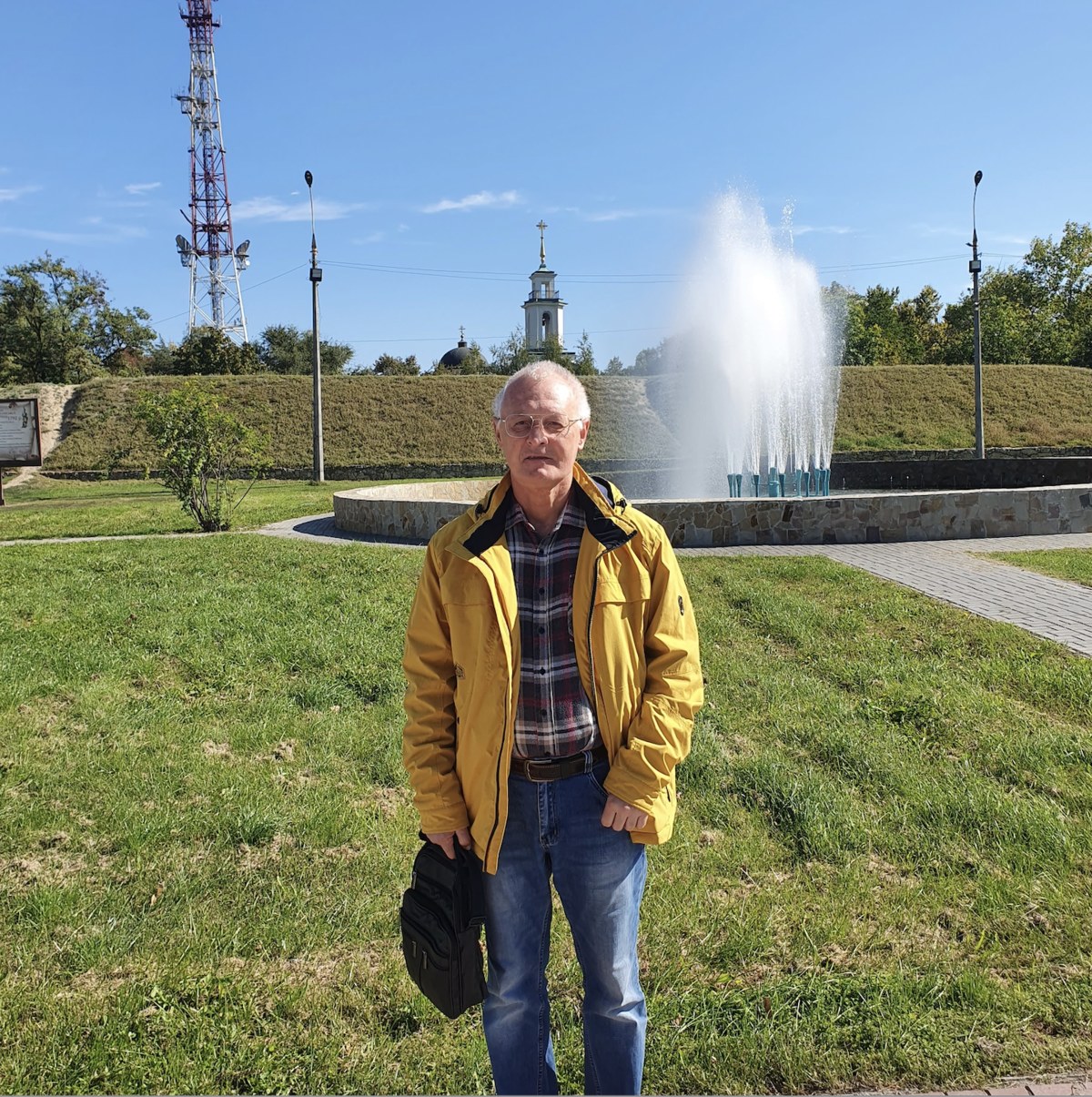
Data analyst from EPAM Andriy Kamuz is originally from Kherson. He lived in the southern city for almost 60 years. He is currently in Odessa, occasionally visits relatives and is waiting for the moment when he can return home. Andriy became an IT worker in 1986, when electronic machines were just starting to appear. The engineer told dev.ua about his journey — from working at a factory to an IT service company, as well as how much he misses his hometown. What follows is his direct speech.
Data analyst from EPAM Andriy Kamuz is originally from Kherson. He lived in the southern city for almost 60 years. He is currently in Odessa, occasionally visits relatives and is waiting for the moment when he can return home. Andriy became an IT worker in 1986, when electronic machines were just starting to appear. The engineer told dev.ua about his journey — from working at a factory to an IT service company, as well as how much he misses his hometown. What follows is his direct speech.
Started in ACS, moved to IT
I have lived in Kherson since I was four years old. My parents came here when my father was offered a job as a radio engineer at a semiconductor factory. I myself graduated from the Institute of Trade with a degree in «Food Production Machinery». I worked as a site foreman at a Kherson plant, and then my father helped me get a job in the metrology department at the plant.
In 1986, the company began to introduce mini-computers. No one knew what to do with them, and those who wanted to study were sent to Yerevan for courses. My colleagues and their families refused to go, but I agreed. After studying, I returned to the programming department.
IT was called automatic control systems (ACS) back then. Back then, the Internet and personal computers didn’t exist yet, and we started working at Electronics 60/79.
These were machines the size of a three-door wardrobe, with a processor the size of a large TV. The 29-megabyte drive was the size of a washing machine and weighed under 300 kilograms, with a rotating disk inside, the boxes of which were still used to transport cakes. The operation of the machines of that period was used for reporting, in the case of our factory — for accounting of finished transistors.
Only in 1991 did I first see a personal computer with a hard drive and a 40 megabyte hard drive. I started programming in Fortran, then I used Pascal, then came FoxPro and the already well-known MS DOS. The systems had almost no graphics for the user, the information was contained in printouts — hundreds of sheets, which were then studied. Only 10 years later did they start actively using the Windows-95 OS, now it’s funny, but back then I had to explain to people how to use a mouse.
«If it works, touch it less»
In 1991, our plant was closed. For a while I worked in ship repair, and then moved to the banking sector, where I worked for the next 20 years. They didn’t pay much, but they paid steadily. IT in financial institutions has its own specifics — it is the maintenance of existing systems. The National Bank’s certification imposes certain restrictions, so no special changes were introduced.
The principle is simple: «If it works, do less.» I programmed in Delphi, which was popular at the time. I consider myself self-taught — even before the Internet appeared, I read books and bought reference books.
Working in banks was definitely more interesting than at a factory. At that time, SQL services, which were usually used for accounting, had already begun to appear. I witnessed the liquidation of Bank Ukraina, at that time cash was transferred from branches across the country to the central office. These were huge volumes that required careful accounting. Then I worked for over 10 years at Express Bank, which served the railway. At that time, we worked on the implementation of an alternative card system — NSMP (national mass payment system), which was used before the spread of Visa and Mastercard. NSMP cards only had chips, and these cards were accepted only by «their» ATMs. Due to the inconvenience, we decided to abandon the system.
On another project, we wrote programs for internal use that were not distributed outside the bank branch. They used the Oracle system, the Italians who bought the financial institution insisted on this. However, the program was designed for banks with an audience that was several times smaller.
Operations to generate daily reports for the National Bank, which were supposed to take a couple of hours after the branches closed, dragged on until the morning… Therefore, we decided to create our own analogue, the program would «collect» the received data in the middle of the night and already generate a report according to the National Bank’s parameters.
A 3-month project took 4 years
My last job before diving into the world of big IT was a local service company, where we fulfilled orders for a Belgian client who supported a nuclear power plant. There we optimized the warehouses of a nuclear power plant. The specifics were that the nuclear power plant has high security measures. All products were checked, so from the moment of ordering to receiving it could take half a year. Our system allowed us to track in advance what exactly needed to be ordered soon.
The client insisted on having a Delphi developer in the project, since he knew the language himself and could check the code.
Before starting work, I was warned that the project would be completed in three months, but in reality it took 4 years. By the end of the third month, we didn’t even have access to the data.
This is an example of how unpredictable orders can be. There was no direct contact with the customer, our requests were collected, we went to the nuclear power plant and discussed the details there. And then the client saw how the program was developing and decided to improve it as the work progressed. The final project was far from the initial specifications. We would probably have continued working if it weren’t for the pandemic that had begun.
IT experience — 38 years
I came to EPAM in March 2021 and after the banking sector I felt the scale of project development. I already have four projects here. Mostly Data Science, I was involved in data migration between databases and continued to work with SQL services.
In general, as I see it in the industry now, database developers are professionals, mostly in their 40s. SQL has been around since the early 80s. It’s a technology that has been around since long before the internet. For example, at our factory, it was used to calculate salaries for 15,000 employees.
The difference in working with a large company is fundamental — I immediately felt the support of the team management manager. Previously, if you had a problem, you would look for a way to solve it yourself, but here you have a mentor. They also offered to use the opportunity to transfer to other countries for the winter, but I prefer working from the office. I live three blocks away, and in case of problems with the electricity, I am sure that I will be able to continue working continuously.
During my time at EPAM, I participated in three major projects: creating a data warehouse for a large pharmaceutical company. The second and third projects were performed for a well-known manufacturer of youth products — data migration.
Looking back, I can count my experience in IT — 39 years without a break. Interestingly, I am the only one from the factory who continued to work with technology. Once I met a former colleague from the enterprise, she said that after the closure, no one from the team continued to work in their specialty. Therefore, I believe that IT is a specialty that survived the 90s, and even now it is one of the most stable industries.
Longing for Kherson
Kherson was liberated two years ago. After the de-occupation, I was there several times — I visited relatives and managed to get a feel for a different city. Now it is a very difficult place to live. Most of the residents have left. If 300,000 people used to live there, now, according to my observations, no more than 10% remain. The streets are empty — there are no people, no cars. Local residents try not to go out without urgent need, they mostly visit shops near their homes.
My brother and his wife remain in Kherson. He used to have a sewing machine repair business. There were sewing shops in the area, many craftsmen sewed at home. He repaired equipment and had a good income. Now he has no income, so I help the family financially. The three of us live on my salary. I believe that everything will end soon. And as soon as it becomes safer, I will definitely return home.
«What used to be programmers’ work is increasingly moving into the ‘monkey job’ category.» A native of Aityte with 20 years of experience is convinced that AI will soon replace programmers. There is a discussion on Threads with 100+ comments
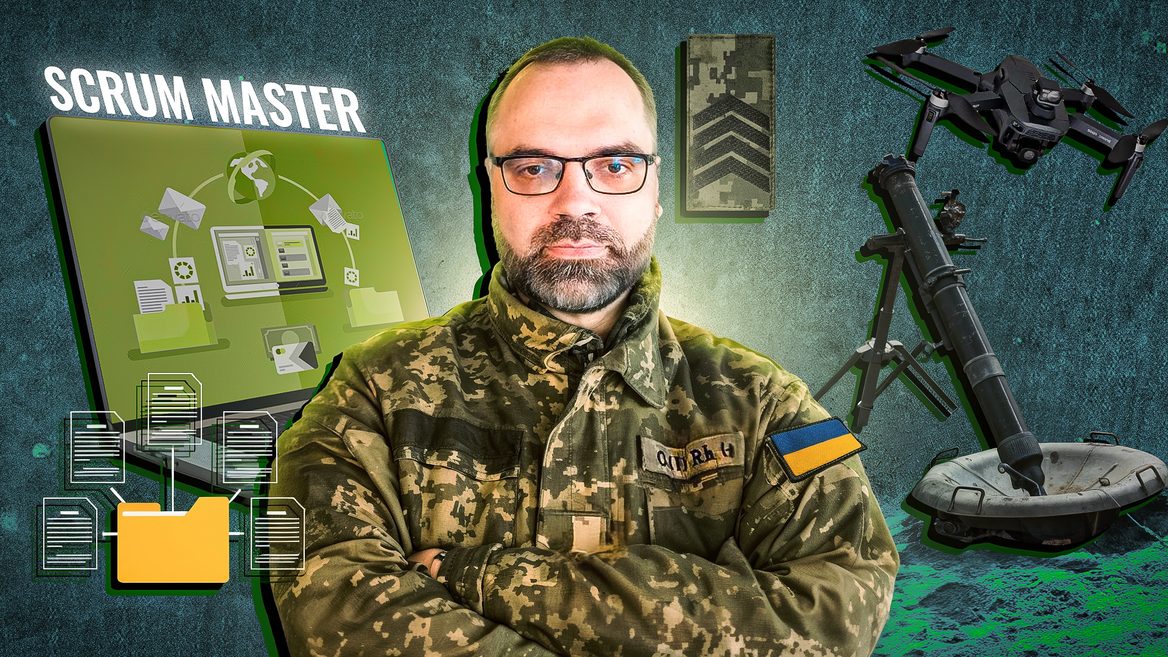
«In the army you will never be alone. I don’t know if you can prepare for this.» The story of an IT professional who mastered a mortar and a UAV, and now successfully implements best IT practices in the engineering unit
«Моя фінансова мета — накопичити $1 000 000, щоб мати пасивний дохід і жити на нього». Як айтішники витрачають гроші та в що інвестують
Зарплата айтішників в Україні — одна з найвищих. І ІТ-галузь під час війни — єдина галузь, яка зростає, попри війну. А айтішники — серед тих, хто найактивніше підтримують армію. Середній місячний донат айтішника становить 10% від зарплати, або $270. dev.ua вирішив розпитати айтішників, куди вони витрачають гроші й у що інвестують під час війни.
Не Патроном єдиним. Айтішник з EPAM шиє військову амуніцію для собак: історія диво-стартапу для чотирилапих захисників України
Максим Лісович, Interior Designer в ЕРАМ Україна, поза роботою допомагає амуніцією українським військовим… собакам. Так, службові пси носять унікальні жилетки та нашийники, мають спеціальні аптечки та турнікети. Чотирилапі в такому «одязі» більш захищені та впізнавані.
За словами Максима, тільки на заході країни нас захищають сотні військових собак. Айтівець допомагає військовим кінологам нести цю службу гідно, забезпечуючи відповідною амуніцією, спеціальними аптечками та турнікетами. Нещодавно він провів три дні поспіль, власноруч відшиваючи нашийники та повідці. А ще два роки тому шити він не вмів узагалі. Ось історія диво-стартапу.
Австралійське задзеркалля. Історія Delivery Director EPAM, який через війну релокувався із сім'єю до Австралії: як адаптуватися та вижити за океаном?
Григорій Клімов — директор з делівері і керівник великої Platform Engineering-практики в EPAM. Понад 10 років він будував свою кар’єру в українському офісі, але війна змусила його з родиною кардинально змінити життя. В березні Григорій з дружиною і трьома дітьми поїхали з рідного Харкова, деякий час провели в ЄС, а згодом — вирушили до Австралії. «Я мріяв жити в цій країні, коли піду на пенсію. Але війна підштовхнула до того, щоб прийняти рішення значно швидше», — каже Григорій.
Ось його історія.
Очільник EPAM Ukraine: «Було б класно мати якісь прозорі, відкриті механізми виїзду за кордон для обмеженої кількості людей»
Керівник EPAM Ukraine Степан Мітіш, який до призначення відповідав за київський та вінницький офіси компанії, дав велике інтерв’ю AIN. В компанії він працює вже 16 років, тобто знає про український IT-аутсорс багато, якщо не все.
dev.ua обрав найцікавіше з розмови.