Хочете будувати кар’єру в Data Science та AI? Vodafone Big Data Lab відкриває новий набір —>
Олексій ДзюбаScience Pop
13 December 2024, 09:01
2024-12-13
“One in four patients say they use ChatGPT instead of Google to analyze their symptoms.” Dealing with a psychiatrist when AI takes their job and replaces our brains
Today, we increasingly hear that artificial intelligence will take jobs from many professions in the near future. At the same time, technologies and chips in particular have advanced so much that they can be implanted into a person's body, improving their life (remember Elon Musk's Neuralink startup). We combined these two topics, and psychiatrist, psychotherapist, speaker Oleksiy Krapyvka, using his own example and practical experience, spoke about the use of AI in psychiatry, how far artificial intelligence is from the human brain, and why Neuralink belongs to the category of "it's already been done."
Today, we increasingly hear that artificial intelligence will take jobs from many professions in the near future. At the same time, technologies and chips in particular have advanced so much that they can be implanted into a person's body, improving their life (remember Elon Musk's Neuralink startup). We combined these two topics, and psychiatrist, psychotherapist, speaker Oleksiy Krapyvka, using his own example and practical experience, spoke about the use of AI in psychiatry, how far artificial intelligence is from the human brain, and why Neuralink belongs to the category of "it's already been done."
AI in psychiatry
— How can artificial intelligence (AI) be used in psychiatry?
— The level of AI that is available now is generally used in diagnostics. For example, MRI (magnetic resonance imaging) and CT (computed tomography), that is, to diagnose certain patterns. A person simply cannot physically look at 10,000 MRI scans in their lifetime. Another direction is prediction based on the data obtained. For example, whether a person will relapse (recurrence).
No less important are chatbots that can be used as an assistant: from the “don’t be lonely” function to a reminder to take pills.
Thus, we do not have a replacement for a doctor, but an additional tool. We most likely cannot go beyond its scope.
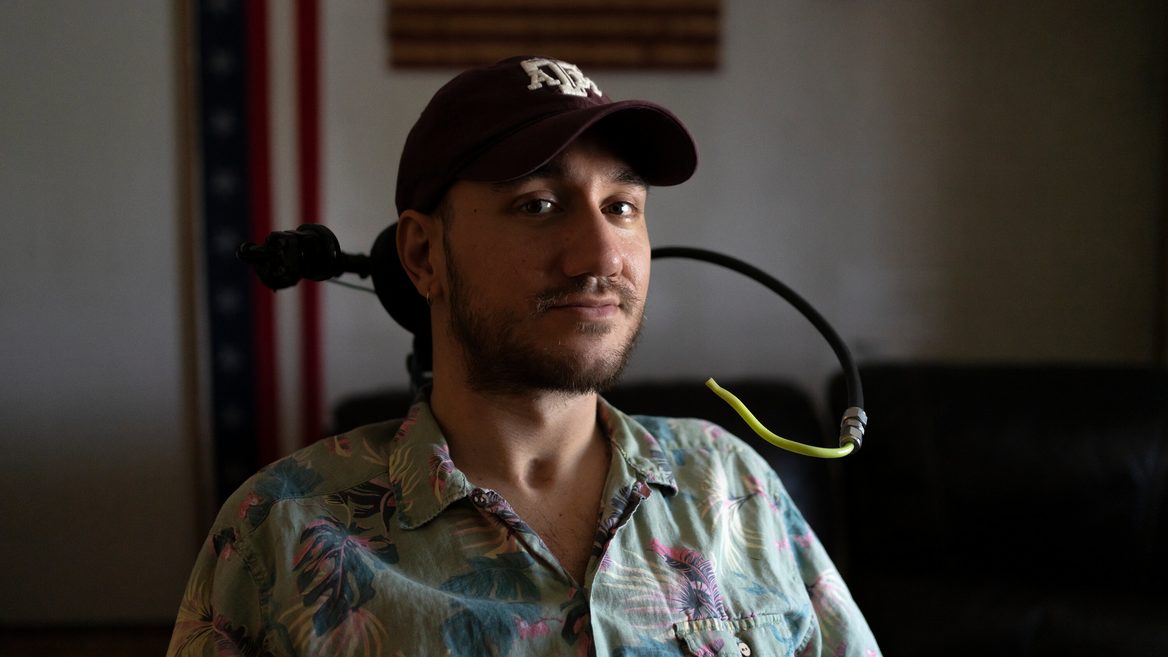
Photo — Oleksiy Krapyvka
— Do you use AI in your work yourself?
— I use AI as a kind of “crutch” (I say this in a positive sense) for searching for information. But I then validate and check it “manually” by reviewing meta-analysis. The same ChatGPT pulls up information not always rationally.
I am against courses like "How to learn to use AI perfectly in your work" as a full-fledged substitute for your work unit. In this case, you stop thinking and analyzing. And the human component that makes a doctor not a robot can be lost.
— Can AI take your job as a specialist?
— It seems to me that AI can replace the worst specialists. What do I mean? If you know a little about how medicine and the WHO (World Health Organization) work, then it creates a treatment protocol for each disorder that tells you what to do. This is done to equate the level of such cool specialists like me with specialists of the level of "I don't understand anything, I'm just sitting here like this." Roughly speaking, so that the average doctor can give treatment without understanding at all how it works (this should not be the case).
In this case, AI is much more effective than a certain number of our specialists. And here the question is, rather, the quality of education and training of people.
There is information everywhere that AI can replace simple, mechanical work, such as in a warehouse, as well as designers and illustrators. Artificial intelligence can replace any profession at the junior or trainee levels, that is, at the elementary level. Thus, we can see which of our deputies will be replaced by AI (laughs).
— Have you had cases where a patient came in with a diagnosis given to them by AI?
— Today you really encounter such a phenomenon of time. "Unfortunately, I didn't see the quadrocopters, because that's my dream (laughs).
Every fourth patient says they now use ChatGPT instead of Google, analyzing their symptoms, or using its support so they don't feel alone.
However, AI does not yet allow a person who is not an expert in the field to formulate their query in such depth.
— AI is commonly seen as a helper. Does it make us stupider?
— Look at the digitalization that has already changed our lives. We no longer have as much information in our heads as people of the past and the century before last. Maybe this is a process of evolution, where you can be lazier, and that's normal. On the other hand, in recent times of evolution, the brain has decreased in size. That is, the need to use it has decreased.
All innovations from the category of "making life easier" change a person towards doing less, because now there is no need for it. If the brain no longer needs to think, this function will decrease in quality and the brain will also decrease in quantity. We are already seeing similar processes today.
Scientists have proven that the language a person uses affects the brain and its abilities: research
AI in the human brain
— Moving on to the topic of the human brain, what are the similarities and differences between AI and the brain?
— The similarity exists in the element on which AI is built. It is a copy-paste of one of the mechanisms of the head, namely information processing. Both analyze input data to make a decision. Another point of similarity is learning. The brain is constantly learning something and the “neuron” learns new algorithms over time. It is important to understand that from the outside this can be called learning, although this is not entirely true. A person creates fundamental structures in the head that we cannot even imagine, and the “neuron” operates on the principle of “a + b = c”.
The difference lies in structure (AI cannot replicate the structure of the brain), emotions (AI does not have them), flexibility (the brain is prone to nonlinear data processing), and consciousness (AI does not have it). AI cannot replicate all of these.
— How far is artificial intelligence from the human brain?
— If we don’t delve into this topic, it seems that we are very close to creating an analogue of the human brain as artificial intelligence. In fact, we are very far away and have no chance of making a complete copy-paste. AI is a mechanism that performs near-linear analyses according to the principle of the brain or, in part, according to the logic of neurons. AI cannot be creative, connect intuition or, say, evolutionary-animal mechanisms.
There is scientific evidence that quantum processes occur at the microlevel in the brain. However, we still cannot make AI think on its own.
The mechanism of thinking and reasoning is precisely the quantum world. From a scientific point of view, we do not understand such processes so much that even the cosmos is more understandable to us.
Creating a full-fledged analogue of the brain is so impossible that Donald Trump will soon become the president of the world. We will probably be able to create new versions of cool “crutches” that will help people, but this will not replace human qualities for us. In the next 100 years, we will not be able to create real artificial intelligence. What we call “AI” today is a certain programmed algorithm, not real artificial intelligence.
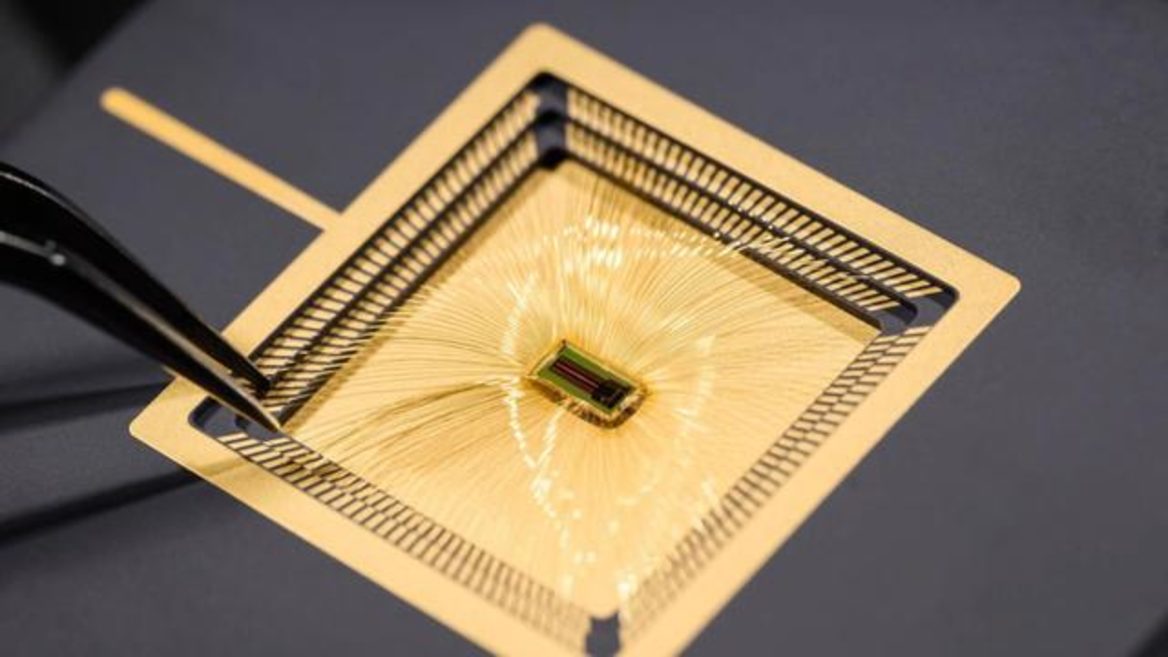
8-millimeter chip converts thoughts into text with 91% accuracy: how this tiny brain-machine interface works
Scientists say that humanity should either work towards developing an "AI crutch" that will not be able to match the human brain, or move towards genetic engineering, remaking humans into another form.
At the same time, we as humanity still do not know exactly how biological processes work.
For example, when you see light, scientists understand the sequence of stages of this process: a sunbeam hits the cornea of the eye, etc. But why the transformation of an electronic stimulus leads to the appearance of a picture in our brain, we still do not know. In this case, AI is just an analogue of three conditional neurons interacting with each other.
— Is creating a digital double of the brain using AI a futile endeavor?
— In 2014, a team of scientists from the OpenWorm project recorded all the connections between 302 neurons in a worm. There are 80 billion neurons in the human brain. We could just print it out on a 3D printer and sell it for $3 on AliExpress (laughs).
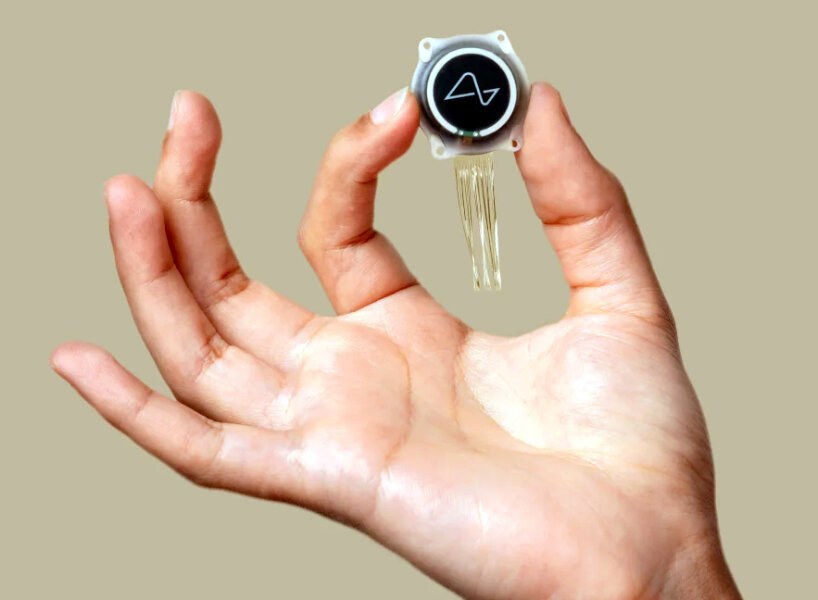
Photo — Neuralink
— Diagnosis of brain and psychiatric disorders using AI. Is it possible?
— Science and evidence-based medicine work on the principle of “we go where we need to go.” Today, the level of our “want and can” is at the moment of analyzing brain changes in the presence of a certain disorder. However, there is a certain correction in psychiatry: most of the disorders cannot be seen by diagnostic methods such as MRI and CT. That is, there is nothing to compare AI to. We work at the level of understanding that “with schizophrenia there are certain changes in the head.”
In general, 95% of residual disorders in this area remain incomprehensible to us; we do not understand their genesis.
Because we don't understand what's wrong with a person, it's impossible to apply AI deeper than depression or schizophrenia. It's in these disorders that we know there are certain micro-changes in the human brain.
— What do you think about Neuralink and AI chips in the human head from Elon Musk?
— This is an interesting idea, a kind of biohacking. It actually has existed for a long time, just after the Third Reich (the regime of Adolf Hitler 1933-1945) there are social laws that prohibit us from experimenting with the human body. Every 10 years we hear a story about a chip being implanted in a person's head. To understand, treatment pills activate a certain area of the brain through one mechanism, and the chip "turns on" this same system, but in a second. In fact, chips in the brain are a cool, new "crutch", that is, a useful help for a person.
Як нейромережі бачать вільну та незалежну Україну? Тест dev.ua
Нейронні мережі для генерації зображень бачать світ по-своєму, їхню логіку зрозуміти часом зовсім неможливо. Але таки хочеться. На честь Дня Незалежності України редакція dev.ua вирішила провести невеликий експеримент.
Ми задали чотирьом різним нейронним мережам п’ять однакових запитів: «прапор України», «День Незалежності України», «український Крим», «перемога України» та «українці». Отриманими результатами ми ділимося з вами нижче.
У TikTok тепер можна генерувати фон за допомогою нейромережі. Ми протестували її та ділимося результатами
У TikTok з’явилася нова функція «Розумний фон». З її допомогою як фон для тіктоків можна підставляти згенеровані нейромережею зображення. Редакція dev.ua протестувала цю технологію і ділиться своїми враженнями.