Хочете будувати кар’єру в Data Science та AI? Vodafone Big Data Lab відкриває новий набір —>
Марія Бровінська
3 February 2025, 08:46
2025-02-03
“There are much more opportunities on the market now than when I was looking for my first job as a C++ programmer in 1998.” CEO Sigma Software — about Ukrainian IT, war, childhood and adult dreams and opportunities
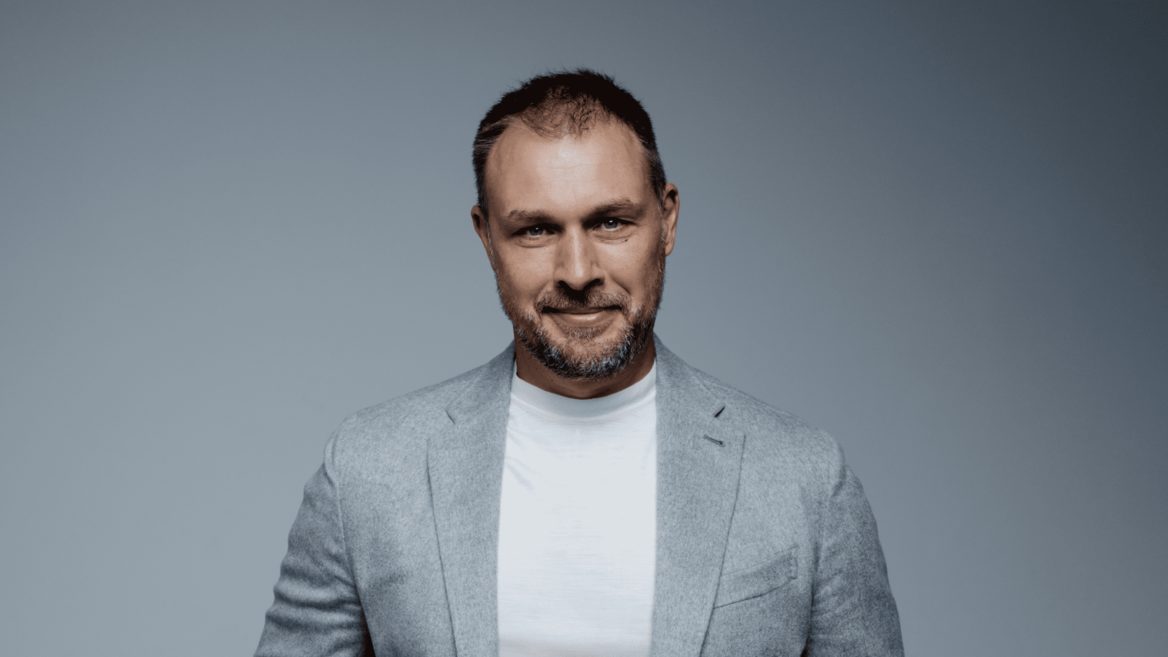
Imagine a little boy who, as a child, dreamed of becoming a trucker and conquering the world by car, but instead chose programming and, together with co-founders from Kharkiv, built one of the largest and most dynamic service IT companies in Ukraine. At first glance, an incompatible synergy, however, today a car enthusiast, supporter of the opportunist movement and patriot of Ukraine Valeriy Krasovskyi runs a company from the top 15 in Ukrainian IT, which has more than 20 offices around the world and serves hundreds of international clients. dev.ua recorded a long interview with the founder and CEO of Sigma Software about war, business and dreams.
Imagine a little boy who, as a child, dreamed of becoming a trucker and conquering the world by car, but instead chose programming and, together with co-founders from Kharkiv, built one of the largest and most dynamic service IT companies in Ukraine. At first glance, an incompatible synergy, however, today a car enthusiast, supporter of the opportunist movement and patriot of Ukraine Valeriy Krasovskyi runs a company from the top 15 in Ukrainian IT, which has more than 20 offices around the world and serves hundreds of international clients. dev.ua recorded a long interview with the founder and CEO of Sigma Software about war, business and dreams.
Content
About Ukrainian IT-2024
Valeria, I would like to ask you to describe the past IT year in three words — what was it like for you personally and why? What surprised you the most in 2024, and what inspired you?
— I just returned from Donbass, where we met with the Kholodny Yar brigade. The courage of our soldiers is inspiring, they really lack not only financial support, but also normal communication. We also met with tenth-graders in the first underground school in Kharkiv. And these children asked very correct and deep questions about their future lives: what is important, what to do, what to do, how to achieve success. And this is also really inspiring.
If we talk about the tech world, everything developed more or less as expected, but the rapid growth of the crypto market came as a surprise. There were also very serious changes in the economy, and indices appeared on exchanges, thanks to which you can buy bitcoin without buying it directly.
Changes have also occurred in the AI industry. Almost every customer wants AI, this year is being called the year of artificial intelligence. Everyone wants to optimize costs, increase productivity and turns to us with a question about how to achieve this.
And the third technological marvel is the development of Quantum Computing. This is a completely different level of data processing, with simply incredible possibilities.
The greatest progress in this direction was achieved by Google, creating a special chip that accelerates calculations by tens or even millions of times. Investments in quantum startups doubled in 2024. I think a new era awaits us. And, by the way, our SID Venture Partners fund also has one quantum startup, Haiqu, in its portfolio. The project has already attracted $4 million, is included in all ratings of the most promising Ukrainian startups, and is carrying out joint projects with IBM, Xanadu, Perimeter Institute and other leaders of the quantum industry.
If we ground ourselves from global IT to Ukrainian, how much are we in the trends, or are we perhaps lagging behind the global tech world?
— I would say that this is not entirely true. Our specialists work at the level of American specialists. Moreover, I believe that Ukraine currently has the largest number of defense startups in the world. We surpass any other country: from an idea to the implementation of a solution, it takes us not years, as is usually the case in the USA, but only weeks. Despite the difficult conditions, Ukraine has significant potential for the development of military technologies. This applies to both hardware and software solutions.
If we talk about IT in general, then, given the geopolitical situation in the world and the uncertainty of economic processes, customers are acting very cautiously. Therefore, we are experiencing a general decrease in the number of orders in Ukraine.
The second problem is more typical for large companies: customers want to have senior specialists right away. Therefore, there is currently very little demand for juniors in Ukraine.
Yes, we have some problems, but not lagging behind. A bunch of cool Ukrainian startups are working in global markets. It would be good if more investments came to us so that we could really develop this direction better. Our talents are very strong and creative.
Against the backdrop of all the other companies complaining that they don’t have enough orders, that it’s too difficult to attract customers, you report that you have 68 new customers over the past year. Are these 68 worldwide statistics, global, or is it specifically Ukraine?
— The problem is that new orders are very segmented. What do I mean? If before a client came and said that he wanted a team of 10–30 people, now he comes and says that he needs one or two people, or suggests starting with a very short task.
Why have we managed to attract so many new customers? It’s not an easy task, but our entire management and business team is actively involved in the sales process.
We understand that in such conditions it is necessary to act as decisively as possible. Everyone is working at 200%, and we are not going overboard with opportunities, but trying to use every opportunity.
For example, in the European market we still see a decrease in the number of orders. However, the situation in the American market looks a little better, as it is usually more flexible: there customers adapt to changes faster, and competition is higher. Therefore, companies are forced to invest in R&D, which is a positive factor for us.
Do I understand correctly that in these 68 projects you are specifically involving Ukrainian specialists who are in Ukraine, not in teams?
— We have specialists not only in Ukraine, these can be mixed teams.
Actually, it’s interesting how many of these 68 projects are distributed to Ukrainian specialists.
— I think it’s still a mixed story. There are Ukrainian specialists who have moved abroad, and we involve them in work both in Europe and in the USA. We have an office in Brazil, where more than 60 people now work. Some projects require work in the same time zone, so we involve Brazilian employees.
There are also projects that cannot be taken outside the EU — in such cases, we attract specialists from Poland, Romania, etc. Thanks to the development of our international offices, we get more opportunities for the growth of Ukrainian divisions.
Of course, we always strive to include a Ukrainian location and Ukrainian specialists in all projects. But it is very difficult with large corporations. Even if they want to support Ukraine, their BCP (business continuity plan) often does not allow them to do so because we are at war.
Sure. Tell us a little about your new offices over the past year. Latin America, European locations…
— Last year we actively developed the offices that we opened over the previous two years. We have one new European location where there will be another representative office, but we have not announced it publicly yet.
Last year, we also expanded a bit in Poland — we opened a new large office in the financial center of Warsaw. In addition to workplaces for our employees, there is a space for holding events. It also houses a representative office of our Sigma Software University, which is now actively developing on the international and European market.
— No. We’ll tell you the details sometime within a month.
About booking and mobilization
Speaking of booking and mobilization issues, what problems does Sigma Software have in this area?
— The Ministry of Digital Affairs has done a great job in this direction — the booking process has become extremely simple, and they were able to overcome the bureaucracy. However, we would like to have more such opportunities. We are seriously maintaining the economic front and actively supporting the army. Now, when the situation in the Ukrainian economy remains extremely difficult, I believe that it is extremely important not only to maintain it, but also to create conditions for further development.
And how many booked specialists are needed for the full functioning of a company?
— At least 50%, and ideally 60–70%. It also depends on how mobilization occurs. It is very difficult to predict, but at least 50% of those booked will allow the business to be maintained. We need to balance it somehow. The Ministry of Digital Affairs is doing quite a lot, and I would also like more initiatives from the people’s deputies regarding the possibility of booking employees.
How is the company regarding gender balance? Has anything changed in the hiring process because of the war? Have you started hiring more women?
— This is a very serious and important topic for us. We are one of the best tech companies for women. We have been awarded the Best Workplace for Women in Tech award by the Women in Tech Global Awards for two years in a row. 50% of our management team is women. It is important to emphasize that this situation was established even before the full-scale invasion. In general, we have 35% women in the company (while the market average is 25%). This figure has increased slightly over the past two years. I am very glad that we are the ones leading this trend.
About IT education
Given the difficult situation on the labor market, many beginners are beginning to doubt whether IT remains an attractive field to work in. Some even believe that it is a kind of bubble that may burst over time. Do you have a recipe for how to interest young specialists in the industry? After all, as you yourself noted, they are not in great demand among employers at the moment.
— The industry has survived more than one crisis, and has continued to grow and develop, attracting young people. This crisis will also pass, and demand will recover.
But we can’t predict how long this crisis will last. What advice would you give to the Junas?
— When I was looking for my first job in 1998, as a junior and junior C++ programmer, there were far fewer opportunities in the market than there are now. There were only a few companies, and it was extremely difficult to get in. Candidates were expected to be experienced, smart, and proficient in multiple programming languages.
However, if you really want something, don’t demand a high salary right away, and instead try to show your skills and motivation, employers often choose a less experienced but ambitious specialist.
Those who have the necessary soft skills and are willing to work hard usually get a chance. That’s why I’m convinced that opportunities always exist. The main thing is to analyze the situation and understand that even if it’s difficult to get somewhere, but you really want it, it’s quite possible.
And here is another important remark. It is difficult to understand how one can even talk about IT as a «bubble». It is a serious driver of the economy and many businesses, and this will not change. The only question is that the tools are changing. Today, when AI gives us a lot of new tools, this does not mean at all that certain IT professions will become unnecessary. It only indicates that we need to understand how to use these new tools to do more and more efficiently.
If you compare the conventional Assembler that was used to program in the past and modern Java with its libraries, ready-made programs and templates, these are completely different levels. What a programmer can create in a week now, a programmer in Assembler could have done in years in the past. The same thing is happening today with AI: we are able to perform more complex and meaningful tasks. Of course, very simple tasks will gradually disappear, but it is important to learn how to use these new tools in order to take on serious tasks.
Do you feel a difference in the training of wartime specialists and those who studied before the war? There is an opinion that the level of training of specialists, graduates of the same courses or universities, has decreased due to constant stress and distance learning.
— I think that such a problem really exists. Forced online learning doesn’t help either. Let’s hope that very soon it will be possible to change this and still study offline. Although online learning simply requires more responsibility from a person.
I don’t know if you’ve seen it or not, but there are two trends in the world right now. Large corporations are debating whether to bring professionals back to the office or allow remote work and a hybrid format. So, recently, in New York, an advertisement for Spotify, which has a larger share of the music market than Apple, was shown in Times Square. The content of the advertisement was the same: Spotify trusts its employees — regardless of where they work from. This is a cool advertisement, they caught this trend.
Since the company’s launch, we have paid great attention to education, and in 2016 we united all our educational initiatives under the Sigma Software University brand.
Specialists at our university tell me that now many IT specialists who have lost their jobs or found themselves on a free bench, on the contrary, have a huge motivation to study.
Because in today’s market, a specialist who is not constantly learning risks being left without a job.
Interestingly, the market in blue-collar professions is now as hot as the IT market was in 2021.
By the way, what is Sigma Software’s policy on this? Does this story come back to office work?
— We don’t force specialists to work from offices. This is the first thing that has changed for us. We have always taken offices that were 2–3 times larger than we needed, so that we could grow in one city.
Now we take half the space we need. But we still motivate people to work together from the office at least one or two days a week, because it is important to communicate with each other, then cooperation is better and more effective. However, there is no compulsion.
About blockchain, crypto and innovation
Please tell us what you personally use in terms of artificial intelligence, how it helps you, and, in fact, for what tasks you could recommend using AI.
— I am convinced that AI should be used wherever possible: in creating proposals for customers, optimizing text, recording meetings, etc. We have developed an in-house assistant, Sima, which allows you to search for information while saving a lot of time and budget.
AI now does a lot of the work that I used to ask assistants or certain services to do. I just type the required query into my phone and I have the information right away. You can even find some contacts, companies in a certain market, what they do, what their revenue is.
There are so many things you can do with ChatGPT, Claude, Grok. What do you usually use?
— I mostly use ChatGPT and the Microsoft tool because it is included in our corporate subscription. It is important to use these tools correctly: if there is information that you do not want to send to the public cloud, you should choose the corporate subscription. This ensures that the LLM model is used, but the data remains protected and does not end up in the public cloud.
And speaking of artificial intelligence agents, according to the heads of tech giants, next year will be the year of AI agents? That is, most routine work will be replaced by assistants working on the basis of artificial intelligence. Are there any developments in this direction in Sigma Software, besides Sima?
— We have several projects with large corporations that are still under NDA, but when we finish them, we will tell you everything. A lot of things are ordered because everyone wants to understand how they can improve their business, reduce costs or do more by using such agents.
I really believe that many processes will be significantly improved, although there are still many challenges that we IT people still need to work on to make AI agents more effective. For example, if you contact the support service where an AI agent is working, unfortunately, you are unlikely to be completely satisfied with the result.
Sigma Software also works in the crypto and blockchain domains. Tell us about that.
— Back in 2019, we met the founders of IdeaSoft, which eventually joined Sigma Siftware Group. It specializes mainly in blockchain technologies and works on R&D projects in this area, in particular on crypto wallets, decentralized exchanges, etc. The blockchain market is not yet fully structured, but it is developing very rapidly. In addition, it is extremely dynamic, so in order to work in it, you need to understand it deeply and focus on it. This is what IdeaSoft focuses on.
In addition, we acquired the company Eventyr, which works on projects with the metaverse, virtual reality. There is a lot of different equipment there that you need to be able to work with.
About «Diya.City Union» and the IT lobby
Please tell us about the union you launched with other outsourcers last year, «Diya.City Union.» How did it happen that you actually created two such unions, one of which works mainly with food companies, the other with service companies? Why didn’t you join forces right away and, in fact, what are the current tasks facing this union?
— Good question. Initially, we actively participated in the development of the bill on «Diya.City». It states that there can be several such unions, their number is not limited. This, by the way, is exactly the position that we defended. After all, when there is no possibility to create an alternative, risks arise that can be used for certain purposes. Competition, on the contrary, contributes to the normal functioning of the system.
We also cooperate with Diia.City United. At the same time, we do not focus exclusively on service businesses — among the participants there are product companies, defense startups, venture funds. Although the founders of our association are dominated by large Ukrainian service companies, the total number of participants already exceeds 160. We have common goals, although views on the paths of development may differ.
Service companies have already built many different associations, we have IT clusters, IT Ukraine, and the IT Committee of the European Business Association. Our association has become a kind of union of existing structures. The Supervisory Board includes representatives of IT Ukraine, the Kharkiv and Lviv IT clusters, as well as the EBA IT Committee. This is actually a synergy of what has already been created.
The food companies didn’t have big meaningful unions. And for them, the creation of Diia.City United was a landmark. This doesn’t mean that we have any serious differences. These are just different opportunities.
We still cooperate together, we have the same goals: to protect the tax regime of «Diya.City», to make it convenient, so that more companies join it, so that Ukraine is known in the world. And also to spread and advocate the brand of Ukraine in the world. And now we are working on it.
And what issues do disagreements arise most often?
— These are not differences, but rather the focus of efforts. For example, large food companies are not very interested in holding B2B meetings with companies in Britain, America, or other countries. But in medium and small service companies, the focus is somewhat different; they have a serious request for help with business development. Therefore, such help is much more interesting to them.
Small product companies are interested in customers of large service businesses because they are constantly looking for innovations, so I am sure that this is where the untapped synergy of service and product businesses lies. Also, startups need access to the capital market.
About defence-tech and startups
Tell us about your defense story. How did you come to the conclusion that you needed the Defense Builder defense accelerator, that you needed Buntar and defense startups? This is a bit unusual for an IT business with a global name.
— We have been investing in food companies since 2008.
Grocery is good, but defense?
— Well, defense… We all work for the defense capability of the country. This was very important for us. We created our Sigma Software Unity Fund, from which we help various units with very large funds.
We were once approached by the founder of one of our first investments, a fintech company called Finmap, which we invested in from our corporate venture arm, Sigma Software Labs. The startup is also doing great now, but one of the founders, Ivan Kaunov, went to war. He is now an officer in the Armed Forces of Ukraine. He approached us with the idea of creating a Ukrainian reconnaissance drone, said he was already working on it, and we decided to support him. As of today, his project Buntar Aerospace has already raised $3 million.
For us, it was not so much an investment for profit, but a way to support the country’s defense capability and create an accelerator for so-called «garage» startups. These are projects that are still little known and do not have sufficient experience in creating presentations to attract investment or reach foreign customers. The idea of this accelerator is to help small companies in the initial stages of their development — to support them in their formation, attracting financing and further growth, while contributing to strengthening Ukraine’s defense capability.
I would say this: first and foremost, we have defense capability, and then, of course, there is assistance and financial interest so that these companies can develop and develop our defense tech, so that it remains Ukrainian, so that foreign companies do not buy it up, but invest in it and then, thanks to great exits and sustainable development, strengthen the economy of our state.
And what is the mechanism for getting into an accelerator or into your startup accelerator?
— You can simply write to the Defense Builder website and the accelerator CEO Kateryna Bezsudna will receive the application. We are currently expanding the team that will work with the order funnel, select those that are really interesting and where we can help.
And regarding the startup hub, apart from Defense, what areas of development are you most interested in? And how can a small team of developers get some help, funding, or consulting from you?
— We have two directions. The first is the corporate incubator Sigma Software Labs. We usually consider startups that work in the B2B segment. Why? Because if there is an idea and software that may be interesting to our customers, we will help it.
Another example is our venture fund, which we launched together with IdeaSoft and Datrics. It is called SID Venture Partners, and there are already 31 investments there. The principle of investing in us is that we usually invest at the seed and pre-seed stages of development. We are interested, of course, in Ukrainian companies or companies with Ukrainian founders. This is important to say, because the market in which they operate is global.
Typically, we are talking about AI and BigData, DeepTech technologies — including the most advanced niches, in particular Quantum Computing. The fund also invests in FinTech, AdTech and B2B verticals in general.
The key focus is on startups with commercial traction, a professional team and global ambitions. The main thing for such investments is that the team includes a person with a strategic vision, a technically savvy CTO, as well as a person who knows how to sell. When an investor joins this triumvirate, it works great. We also need to understand that these investments should pay off over time.
Moreover, we recently decided to launch a program for entrepreneurs. This is an invitation to do business together for experienced entrepreneurs and, perhaps, young ones too.
How does it work?
— If an entrepreneur comes to us with an idea, wants to involve our Sigma Software brand for this and have a share in this business, then this is possible with us. For example, some interesting services in cybersecurity or the quantum sector, something else innovative. It can be directly related to IT, it can be related to business analysis, business intelligence.
If we make the appropriate decision, the project will receive our brand, and the founder will receive a share in the business and funding. You can suggest ideas directly to me, click on LinkedIn .
How soon will the initiative start?
Already. Here you type it — and that’s where we’ll start.
7 quick questions not about IT
If you weren’t in IT, where would you see yourself? Where would you like to work?
— When I was a kid, I wanted to be a truck driver, seriously. Now it sounds a bit strange. I just really love cars and have always been around them. My parents said that my first word wasn’t «mom,» but «Zhiguli.» I don’t know if that’s true, but I really like it all. When I was a kid, I thought that if I became a truck driver, I would always have fun driving.
Then I came to IT. I got a personal computer quite early, in 1995, probably. I was very interested in it, I played a lot, analyzed how games worked, so I chose IT. C++ was the most common programming language at that time.
In fact, my path in IT began when I got acquainted with Turbo Pascal. Later, integrated development environments appeared, such as Delphi and Borland C++ Builder. Then decentralized approaches appeared — for example, CORBA. These were the first attempts to create decentralized libraries, and this direction really fascinated me. I was actively involved in research and implementation of libraries and technologies, published articles on various R&D resources, both English and American. This was a serious part of my professional development. My parents had nothing to do with IT. My father worked as an energy engineer, and my mother was a philologist.
Can you recall your biggest or most memorable professional experience in IT that changed your perspective on something? Was there a situation that turned your worldview upside down?
— Well, I wouldn’t say that something directly turned my worldview upside down. There were quite a few problems, for sure. I would say that these are just situations that teach understanding of business. There were a lot of cases from which I learned a simple lesson. When they tell you: «You don’t have to sign a contract, we trust him, he trusts us, these are our friends or this is a very serious company» — it’s all complete nonsense. Trust is very important, but the documents must be in order. You must always prescribe everything in as much detail as possible.
Once, due to such «trust» and verbal agreements that were interpreted differently by different parties, we were not paid about $700,000. The company had to spend over half a million dollars to do free work for the customer.
Do you have any other business besides IT?
— I have investments in other businesses and shares of some companies on the stock market. But it’s hard to call it another business. I would say this: there isn’t one yet, but I don’t rule out that it will appear.
Who in the tech world is a kind of idol for you, someone you would like to ask for advice from?
— Probably Richard Branson, and it’s not just about IT. I really like his approach, because I also always have an opportunistic view of things. When I see an opportunity, even if it’s something new for me, I want to try it. Branson has the same thing.
In his book, he wrote that he was happy when he saw bad service, because it opened up a business opportunity. For example, he started Virgin Airlines precisely because he was unhappy with the service of airlines. At the start, he didn’t even have money for his first plane — he had to take out a loan, go through a complicated licensing process, and overcome a lot of problems. Despite this, he created many successful businesses where he was able to convey his values and vision to his employees. It’s incredible.
What car does Valery Krasovsky, a car enthusiast, drive?
— I have several of them:
Land Rover Defender.
Subaru Forester. This is the first cool car I bought with my own money, without a loan, in 2006. It has a turbo engine, it still drives and is now where it is needed most.
And I also have my first car, from the Soviet car industry, it’s a Zhiguli. The first model, white. It’s my age, born in 1977. It’s like a memory, I completely renovated it, so it looks just like new, like a saloon car. Everything works.
My business partner Dmitry Vartanyan and I also have a DeLorean car — the one in my favorite movie, Back to the Future. We recently branded it in Sigma Software’s corporate colors for our event in Lisbon.
Do you invest in crypto? And if so, in which tokens?
— I have a certain cryptocurrency portfolio, because without trying it out on your own experience you won’t understand how the market works. I won’t name the names of the tokens and I won’t give advice on investing. Because there are no general rules here, some people are intuitive, some do mathematical calculations. Everything is very subjective. For me, it’s more for the sake of interest, sometimes I manage to earn money, but I don’t do it professionally.
What does Valeriy Krasovsky dream of as the head of Sigma Software?
— About victory, of course, no matter how banal it may sound now. I would really like to believe in the wisdom of our society, that we will still rebuild and build a country that will be defensible, that no one will attack, that will use for us, for our society, for Ukrainians all the opportunities that we have. And we have an incredible number of them.
Джун шукає роботу? 10+ роботодавців про можливості для молодих спеціалістів в українському IT
Тисячі джунів — близьке майбутнє IT-індустрії, адже через війну чимало людей, що втратили роботу, вирішили переквалфікуватися і стати айтішниками. Чи буде для всіх робота? Не факт. Оскільки не всі компанії співпрацюють с початківцями. Та навіть ті, хто готує для себе кадри самостійно, з початку року зафіксували небувалий наплив бажаючих вчитися. Зокрема, тільки в EPAM Univercity заявки на навчання подали 18 000 охочих. Вже відновилися і перевершили довоєнні показники і IT-школи: кількість студентів в IT-школі Mate academy зросла вдвічі до 550 слухачів на навчанні повного дня, у GoIT — на 40% до 5000 студентів.
dev.ua розпитав роботодавців, які можливості вони мають для джунів та чи готові вони ростити собі кадри.
«Ситуація вже пройшла точку критичного дна». Що відбувається на ринку праці та чи є шанс на відновлення активного найму в українському IT
36% українців, які втратили роботу, не знають, як її шукати, рапортує Work.ua. Зокрема, 15% читачів dev.ua, згідно з опитуванням, також опинилися за бортом і наразі не працюють. Скаржаться на досить скромний найм у порівнянні з довоєнними часами і рекрутери. Висновок, що ринок кандидата через війну перетворився на ринок роботодавця, вже ні в кого не викликає сумнівів.
IT-компанії вербують в IT родичів своїх співробітників. Що пропонують Sigma Software, EPAM, DataArt, SoftServe, Luxoft
Українські офіси великих IT-компаній пропонують для родичів своїх співробітників особливі умови для входу в IT. DOU опитав низку компаній, які запустили ініціативи з навчання близьких своїх співробітників нової професії на тлі повномасштабної війни. Розповідаємо найцікавіше.
«Війна забрала в мого покоління 10 років життя». Як ми будемо вчитися IT під час та після війни: висновки Максима Почебута
Сьогодні, коли весь світ сколихнула війна в Україні, ми, українці, не припиняємо свою боротьбу за те, у що віримо, ми продовжуємо робити бізнес, ми продовжуємо працювати, ми продовжуємо навчатися. Якого впливу зазнала освіта, чи актуальне навчання в ІТ, на чому сфокусовані тренінгові центри великих компаній сьогодні, розповів dev.ua Максим Почебут, Chief Learning Officer у Sigma Software та віцепрезидент з питань освіти ІТ Асоціації України.
Have important news to share? Message our Telegram bot
Key events and useful links in our Telegram channel