Марія БровінськаІсторії
17 December 2025, 10:00
2025-12-17
Jobs instead of routine: how Kredobank saves employees' time
In the financial industry, automation has long ceased to be exclusively an IT sphere. At Kredobank, this transition came naturally: after the large-scale implementation of RPA (Robotic Process Automation), the bank faced another challenge — how to get rid of hundreds of small routine actions that take up employees' time every day.
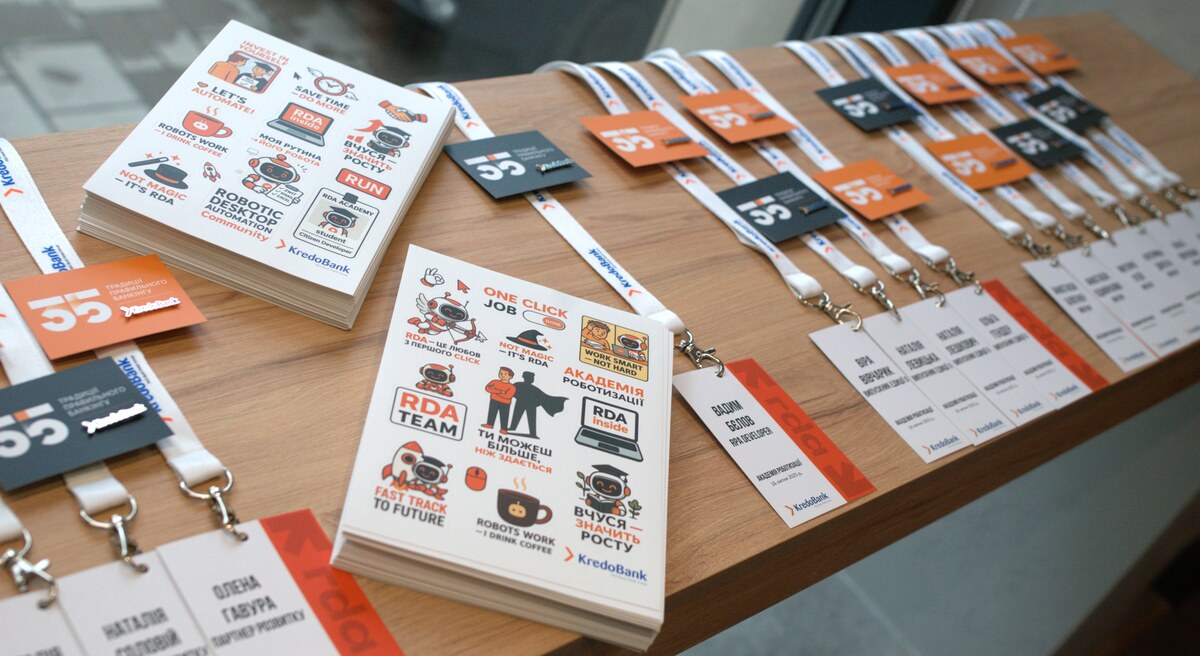
This is how RDA (Robotic Desktop Automation) appeared in the bank — automation at the workplace level. And with it — the Robotics Academy, where employees learn to create their own robots.
dev.ua continues the story started in a conversation with Oleg Noga, COO (Chief Operating Officer) of Kredobank, and talks about the robotization model that combines technology and human development.
In the financial industry, automation has long ceased to be exclusively an IT sphere. At Kredobank, this transition came naturally: after the large-scale implementation of RPA (Robotic Process Automation), the bank faced another challenge — how to get rid of hundreds of small routine actions that take up employees' time every day.
This is how RDA (Robotic Desktop Automation) appeared in the bank — automation at the workplace level. And with it — the Robotics Academy, where employees learn to create their own robots.
dev.ua continues the story started in a conversation with Oleg Noga, COO (Chief Operating Officer) of Kredobank, and talks about the robotization model that combines technology and human development.
From RPA to RDA: When Automation Becomes Closer to Humans
The first stage of the bank’s transformation was the introduction of RPA — robots that perform large-scale regulated processes and work as virtual employees on servers 24/7. Today, RPA covers a significant amount of the bank’s operational activities — about 75 thousand hours of annual work that was previously performed by people.
But alongside large tasks, there is another type of work — dozens of repetitive actions: reconciliations, unloading, transferring, forming small files — that are not suitable for large RPA processes, but take hundreds of hours in total.
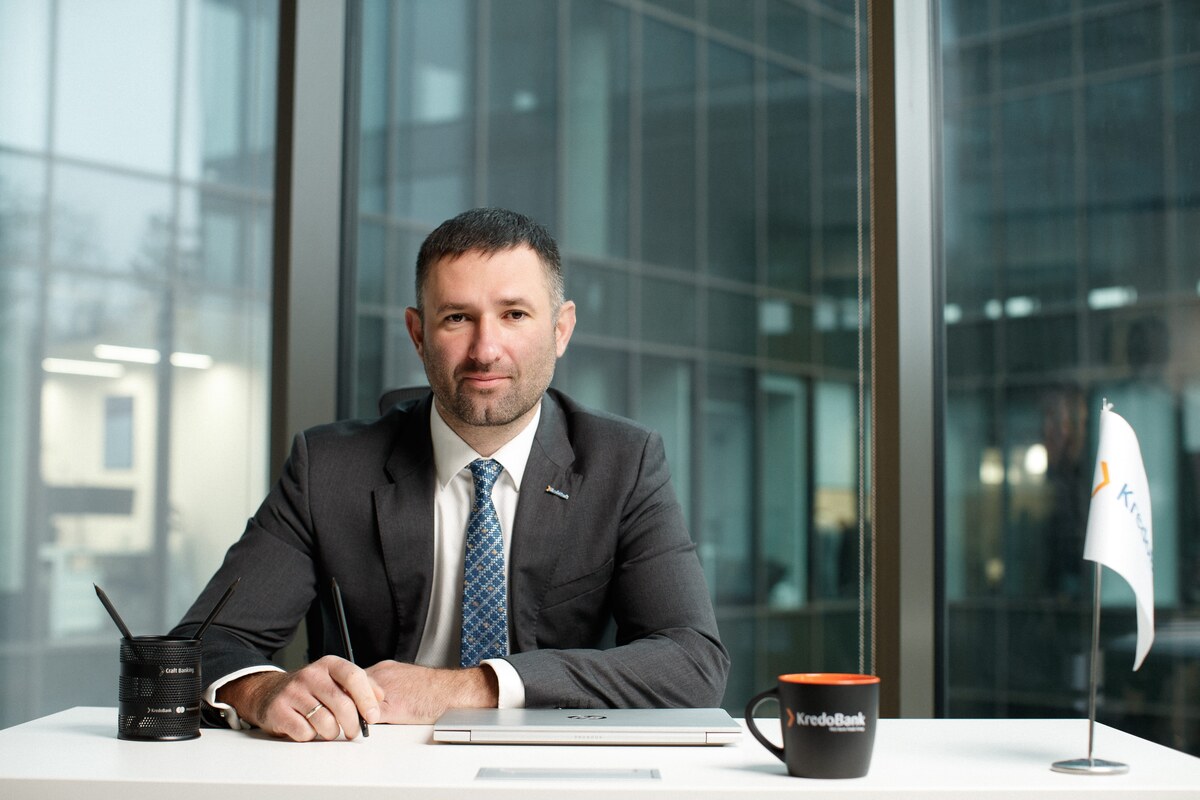
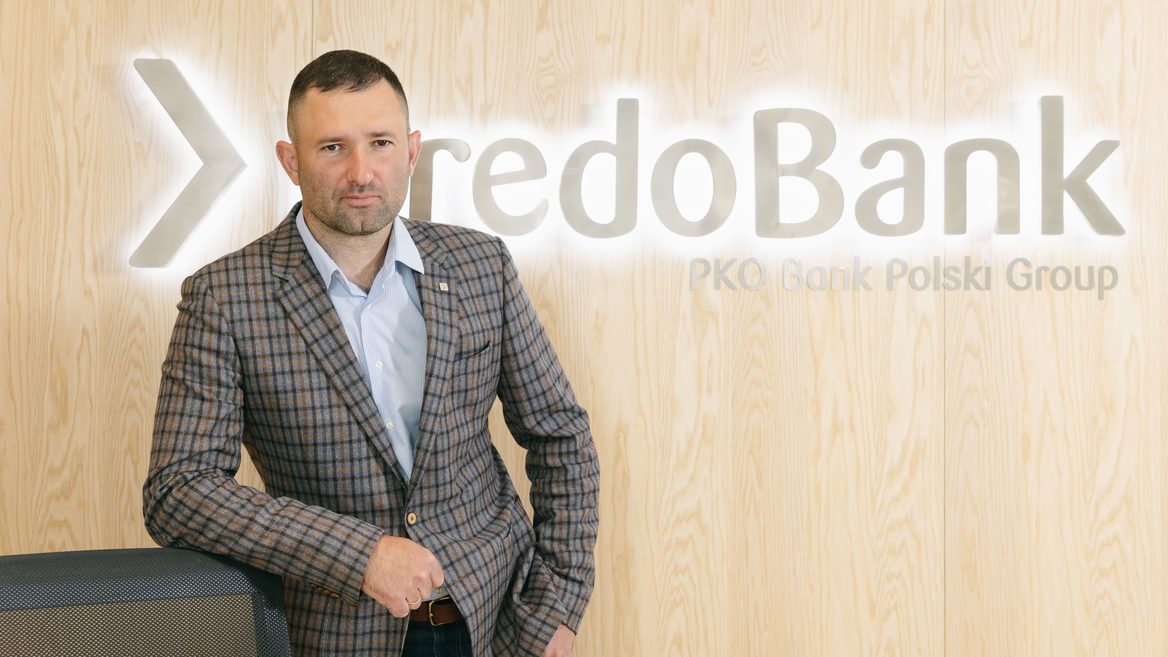
Oleg Noga, COO of Kredobank
«The goal was to develop digital leaders in the operational direction of the financial institution, that is, ambassadors who would popularize digital innovations in their teams,» Oleg Noga previously told dev.ua.
To solve this problem, the bank began testing RDA — robotics directly on the employee’s computer. The first RDA solutions appeared after the exchange of practices with PKO Bank Polski, the leader of the financial and banking group, which includes Kredobank, but further development became a completely unique story, built taking into account Kredobank’s new transformation strategy.
«Technologies are effective when they are in the hands of people who use them every day. Our task is to give employees the tools to improve their processes on their own,» says Oleg Noga.
Robotics Academy: When Employees Become Changemakers
The Robotics Academy is a strategic project of Kredobank, created to develop automation skills among employees and form a generation of citizen developers within the bank, employees who can combine two roles: analyst and developer.
Its key goal is to give people tools that will allow them to independently optimize their own processes and influence the efficiency of their implementation.
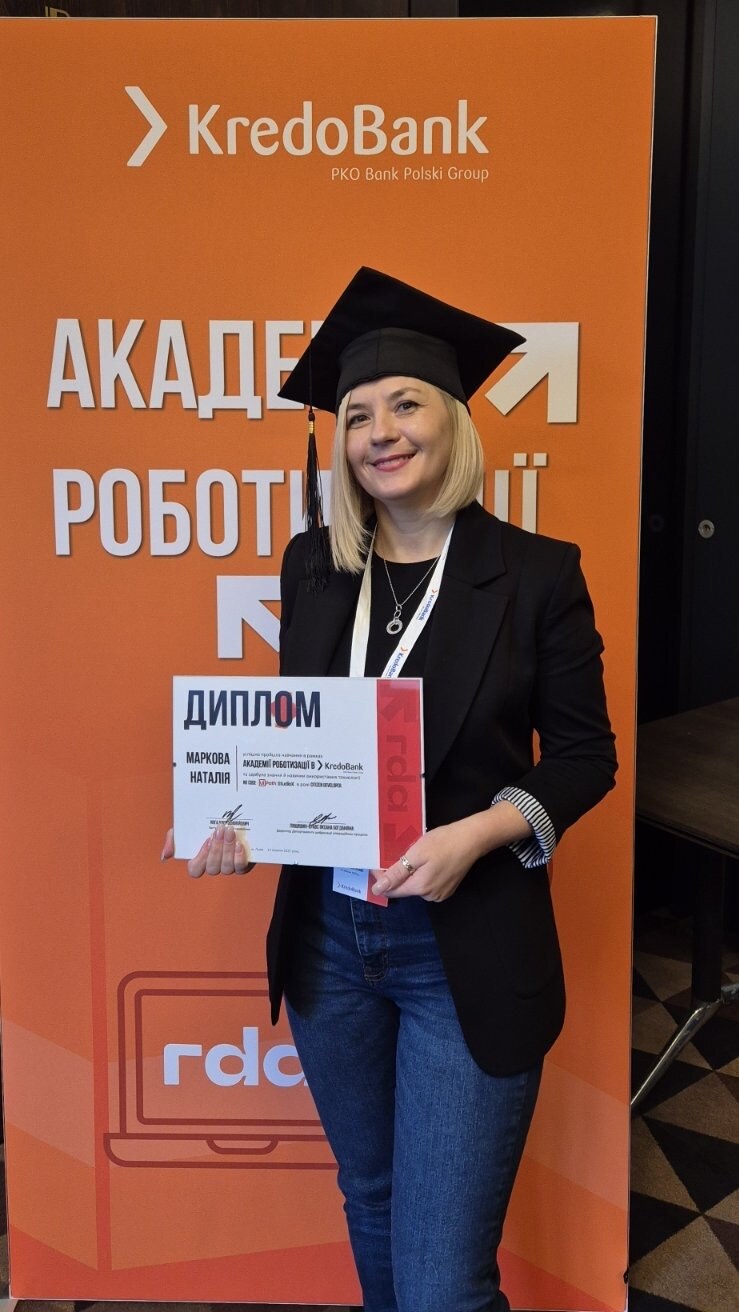
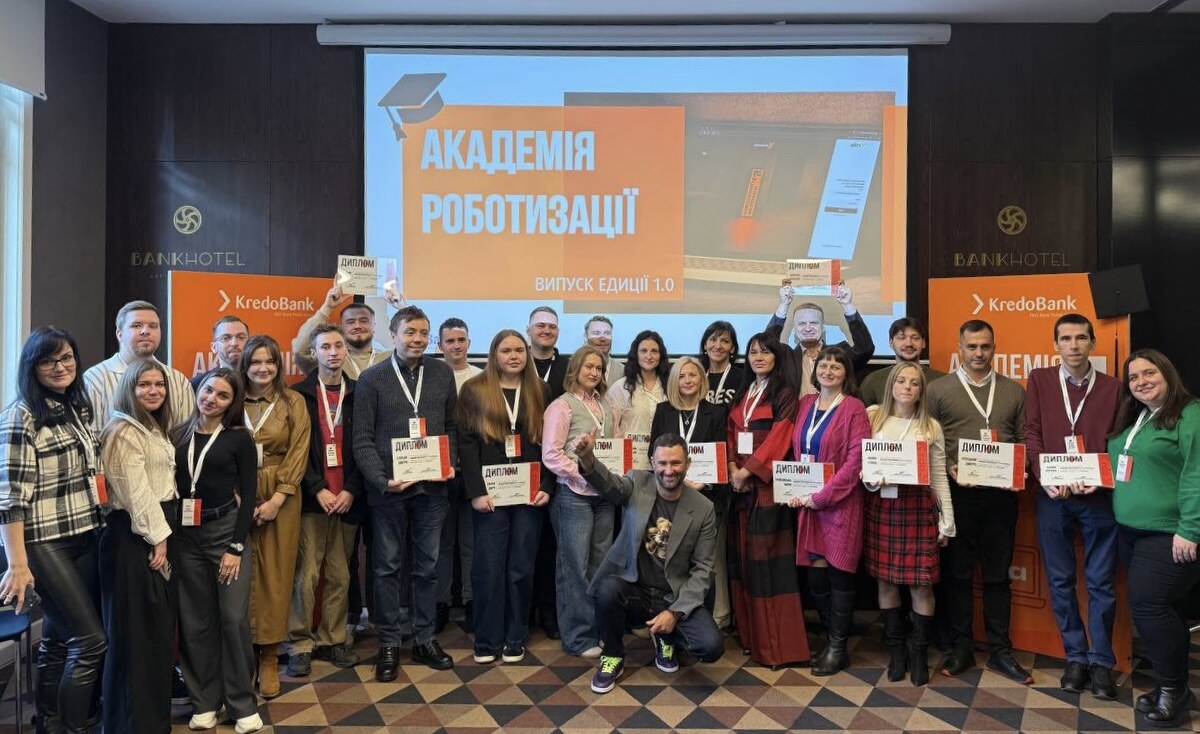
In July 2025, Kredobank officially began training the first group of students of the Robotics Academy. It was formed by 20 employees from different divisions of the bank. These were people with completely different tasks, but with the same motive: to learn to optimize their working time, avoid routine and become drivers of change in their teams.
For the bank, this was the first step towards a model in which automation is born not only in specialized teams, but directly where operational work takes place.
First robot in just 7 weeks
The format of training at the Academy includes: 5 weeks of intensive training and 2 weeks for robotization of your own process. The program is built on the principle of «learning through practice».
The training process includes 8 thematic modules covering: studying the capabilities of RDA, the logic of building a robotic process, and working with the main programs and systems of the bank. During this period, participants prepare to create their first robot: they understand typical scenarios, analyze examples, and learn to analyze their own processes using the example.
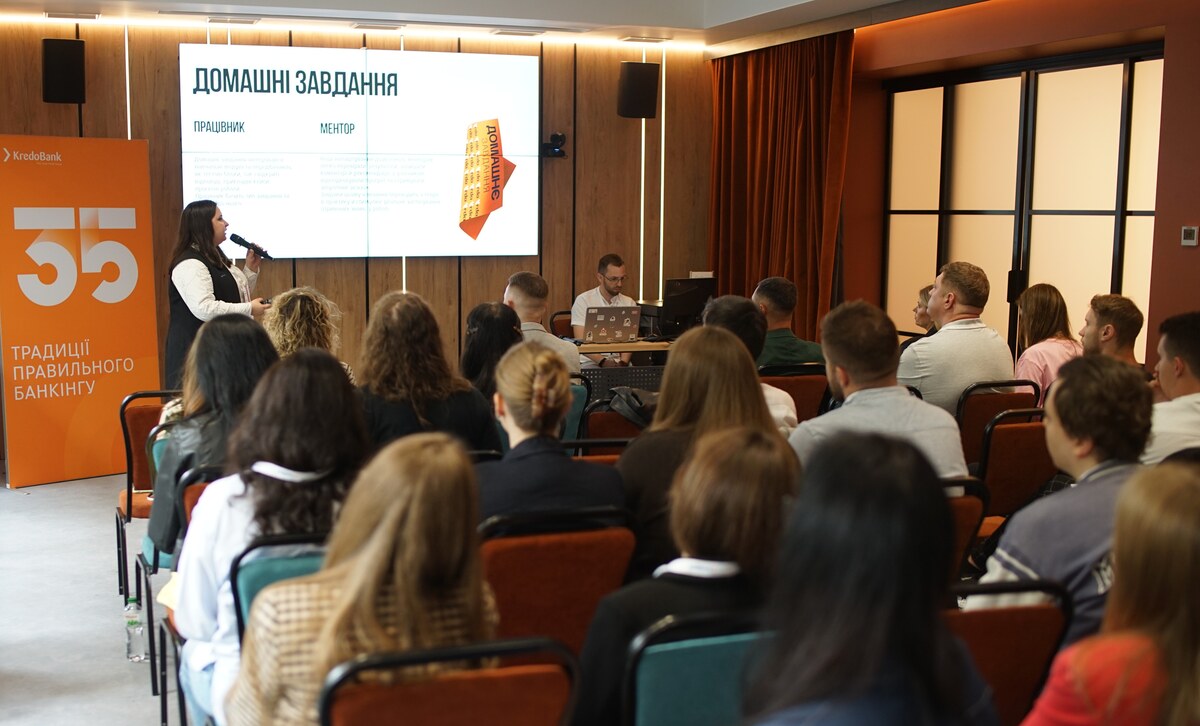
After completing the 5-week training, students move on to the next stage — a two-week robotization of their own process of choice. During these two weeks, they: analyze their real process, describe its logic, build an RDA robot, and ultimately demonstrate the finished solution to other participants, which is one of the strongest elements of the Academy, because during these demonstrations, participants share approaches, tools, and findings, creating a real space for the exchange of experience between departments.
«Citizen developers is not about technology. It’s about the ability of a person to influence their work. It’s about the courage to propose solutions and create them,» Oleg emphasizes.
«We use the no-code environment UiPath Studio X. It is so intuitive that each employee can create their own robot without programming knowledge. At the end of the course, each person presents a real robotic process that they use in their work,» says Anastasia Blotner, a graduate of the Academy’s test group who has now become a mentor for new students.
Community: When robotics becomes part of culture
After completing their studies, Academy graduates become members of the RDA Community — an environment where people united by a common goal share experience, consult each other, create new ideas, and support the development of robotics in their departments.
«Almost 90% of Academy graduates expressed a desire to join new training launches as mentors to gain new experience, help and motivate participants,» says Pavlo-Borys Teslyak, head of projects and programs in the field of intangible production for digital initiatives, one of the organizers of the Academy, lecturer and mentor of the program.
«A mentor is a partner. He helps to look at the process differently. A mentor pushes the participant to the correct decision or conclusion. Provides support and coordinates the participant, helping to choose the most convenient and correct way to implement automation. And most importantly, inspires,» explains Iryna Kovalenko, head of projects and programs in the field of intangible production for digital initiatives at Kredobank, one of the organizers and lecturer of the Academy.
The community has become an important part of the bank’s culture. Thanks to it, a new type of interaction is being formed between departments in the bank — horizontal, open, and built on support.
For Kredobank, this community is one of the key elements of transformation.
The community supports a strategic course on developing the skills of the future, helps scale new tools faster, and ensures the sustainability of change, while Academy graduates remain part of the process, contributing new ideas and helping to shape the culture of efficiency that the bank espouses.
What tasks do employee-created jobs perform?
The first RDA robots work on dozens of processes that used to take the most time. Among them:
Document generation. Robots collect data, fill in templates, structure information, and prepare files in minutes.
Reconciliations and checks. Instead of manually reviewing data multiple times, the robot does it automatically, immediately reporting any deviations.
Preparing the database for reporting. Robots collect, clean, and format data.
Daily back-office operations. Data updates, exports, transfers, sorting — are now performed by a robot.
Such tasks are not always high-profile, but they are the ones that create a real effect in daily work.
Result: time that stopped disappearing into routine
Kredobank already has two parallel robotics ecosystems operating: RPA — 50+ robots and RDA — 110+ robots — saving employees about 75,000 hours and 7,000 hours per year, respectively.
That’s nearly 82,000 hours each year that are no longer lost in routine operations. This is time employees can focus on customers, analysis, product development, and work that brings real value.
The Future of the Academy: Evolution, Scaling, and New Tools
The Robotics Academy is a project that will not end after training a few groups. It is part of a long-term strategy where technology and employee development move hand in hand.
The bank’s plans include new training formats, the development of a citizen developer community, the integration of new automation tools, and the evolution of the program into a broader ecosystem of work with the skills of the future.
«We don’t just learn to create robots, we create a culture of efficiency and development, where every minute of a person has real value. Robots work without emotions — but we create them with inspiration,» concludes Oleg Noga.
Innovation doesn’t start with technology, it starts with people. RPA and RDA were tools, but the real transformation happened when employees were empowered to create change themselves.
In the future, banks that can develop their people and give them automation tools will have the greatest advantage.
At Kredobank, 35 robots saved 40,000 hours and performed over 1 million transactions. Now the financial institution is implementing AI. Why does the bank and its clients need it?