Хочете будувати кар’єру в Data Science та AI? Vodafone Big Data Lab відкриває новий набір —>
Марія БровінськаAround IT
25 August 2025, 08:59
2025-08-25
“Climbing the peak felt like moving to a new level in the game.” The story of a manager from ERAM who became the first Kharkiv resident to summit Everest
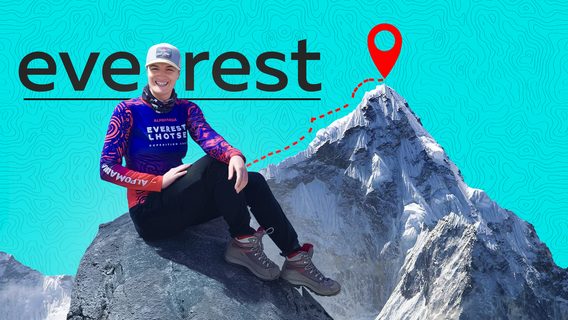
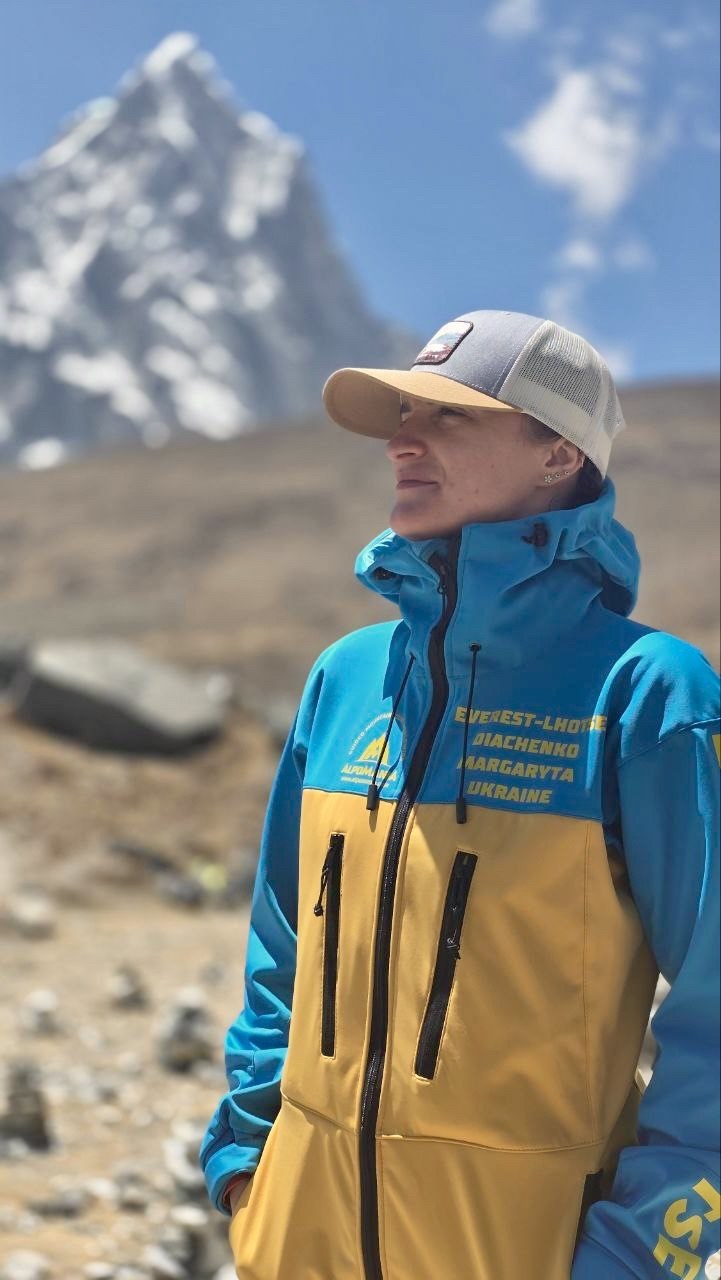
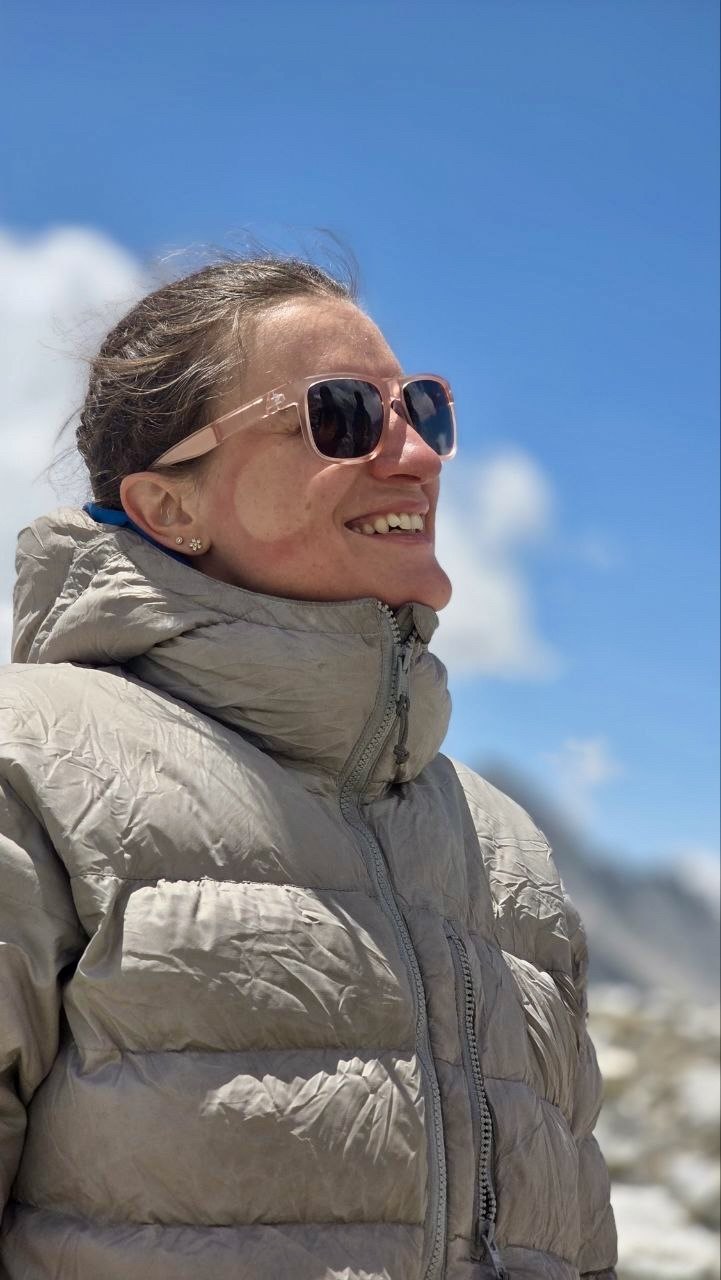
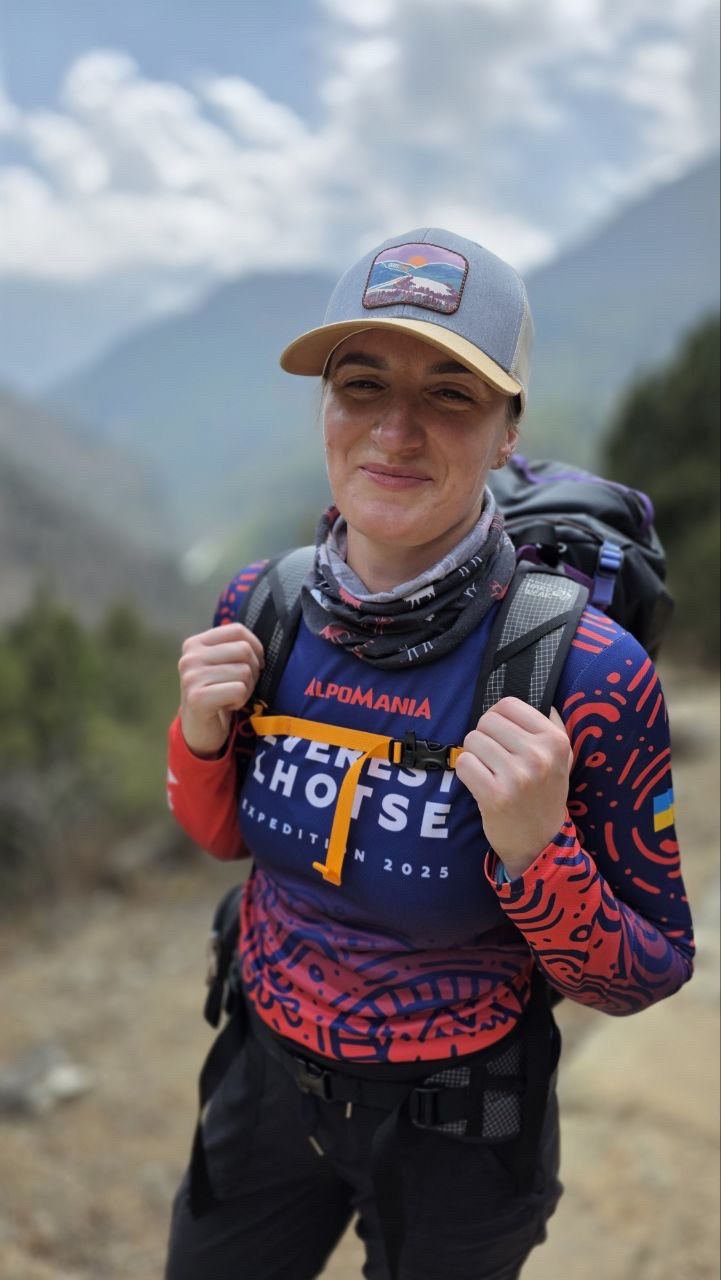
Margarita Dyachenko is a project manager at ERAM. In May, as part of a Ukrainian expedition, she conquered two «eight-thousanders» — Everest and Lhotse. She became the first girl from Kharkiv to climb the highest mountain in the world and did it up to 7,000 meters without additional oxygen from a cylinder. About mountain mindfulness, the process of climbing and discovery after returning — from the first person.
Margarita Dyachenko is a project manager at ERAM. In May, as part of a Ukrainian expedition, she conquered two «eight-thousanders» — Everest and Lhotse. She became the first girl from Kharkiv to climb the highest mountain in the world and did it up to 7,000 meters without additional oxygen from a cylinder. About mountain mindfulness, the process of climbing and discovery after returning — from the first person.
Unexpected offer
I was offered to join the expedition two months before it started — and it was quite unexpected. However, I agreed immediately because I already had experience in serious climbing, was preparing for another climb, and was physically and mentally ready.
As soon as I found out about participating, I immediately adapted my training schedule: increased the number of workouts per week, added gym and pool workouts, and included interval training in my running program.
A typical week before an expedition looked like this:
Monday is rest day.
Tuesday — exercise machines + pool.
Wednesday — running.
Thursday — yoga and stretching.
Friday — individual functional training.
Saturday — running.
Sunday — two group classes: Pilates and cardio, followed by exercise machines + pool.
In addition to physical training, I followed a balanced diet with the use of dietary supplements and a sleep regimen of 8–9 hours. I completely eliminated alcohol.
It should be noted that I have been very active all my life, constantly moving. It all started with rhythmic gymnastics in childhood, I also love cycling, horseback riding, riding a motorcycle, trying rope jumping and much more. However, it was the mountains that won my heart.
Expedition
In fact, the hardest part of this expedition for me was taking a month and a half off work, because I’m a responsible person and didn’t want to let anyone down during a fairly long absence. But everything turned out for the best — and I took it as a good sign for this climb.
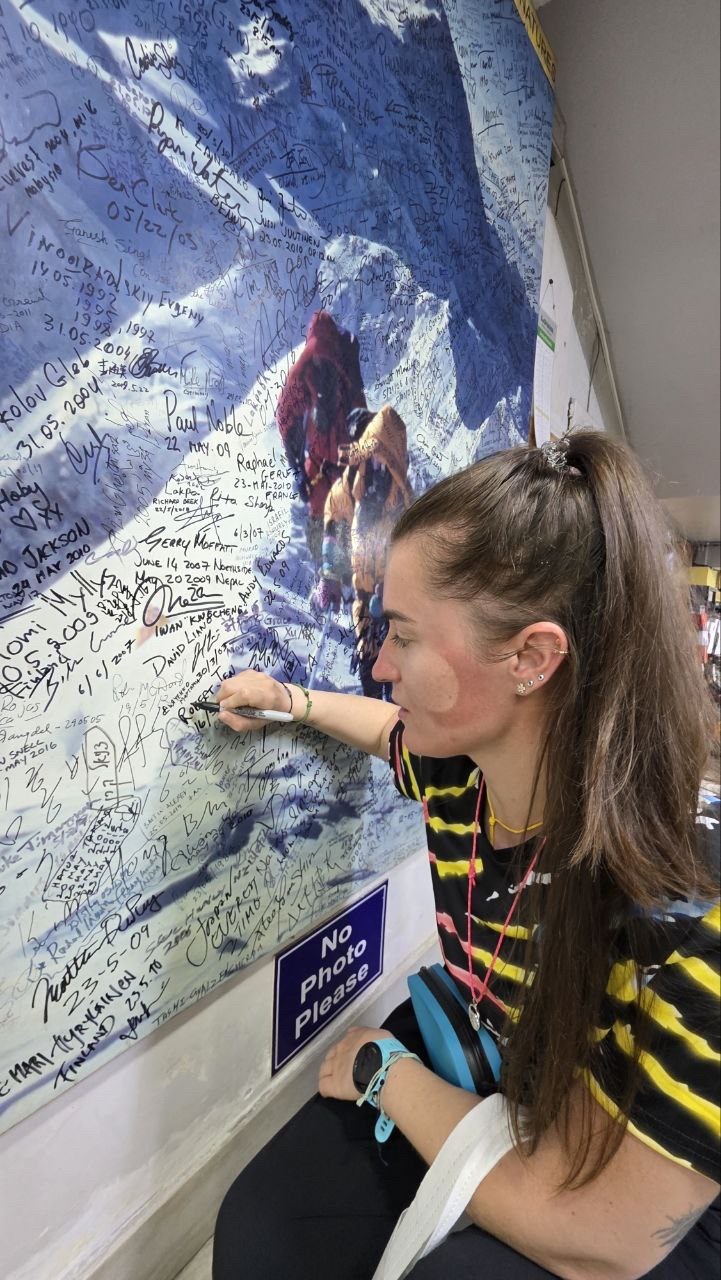
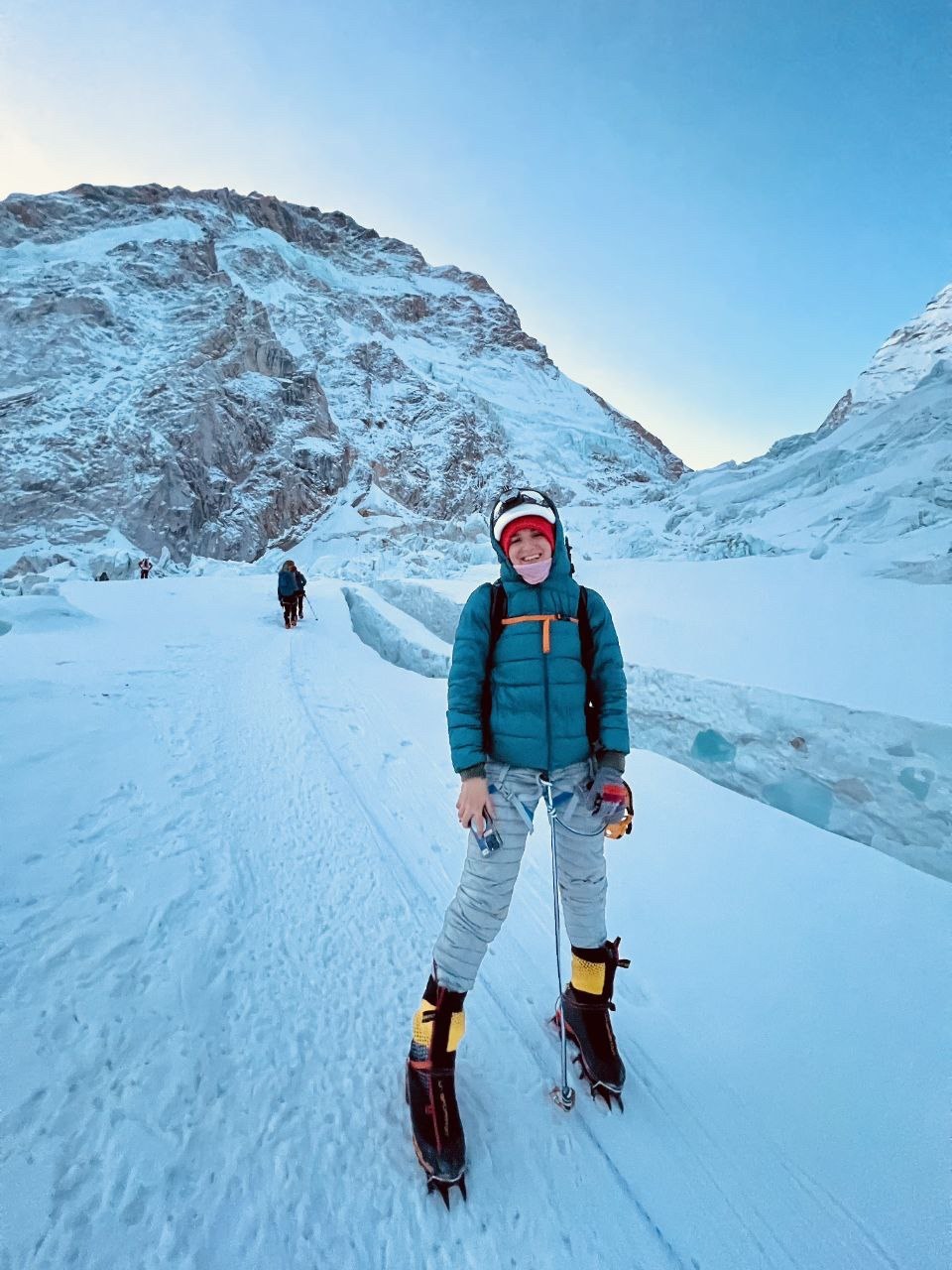
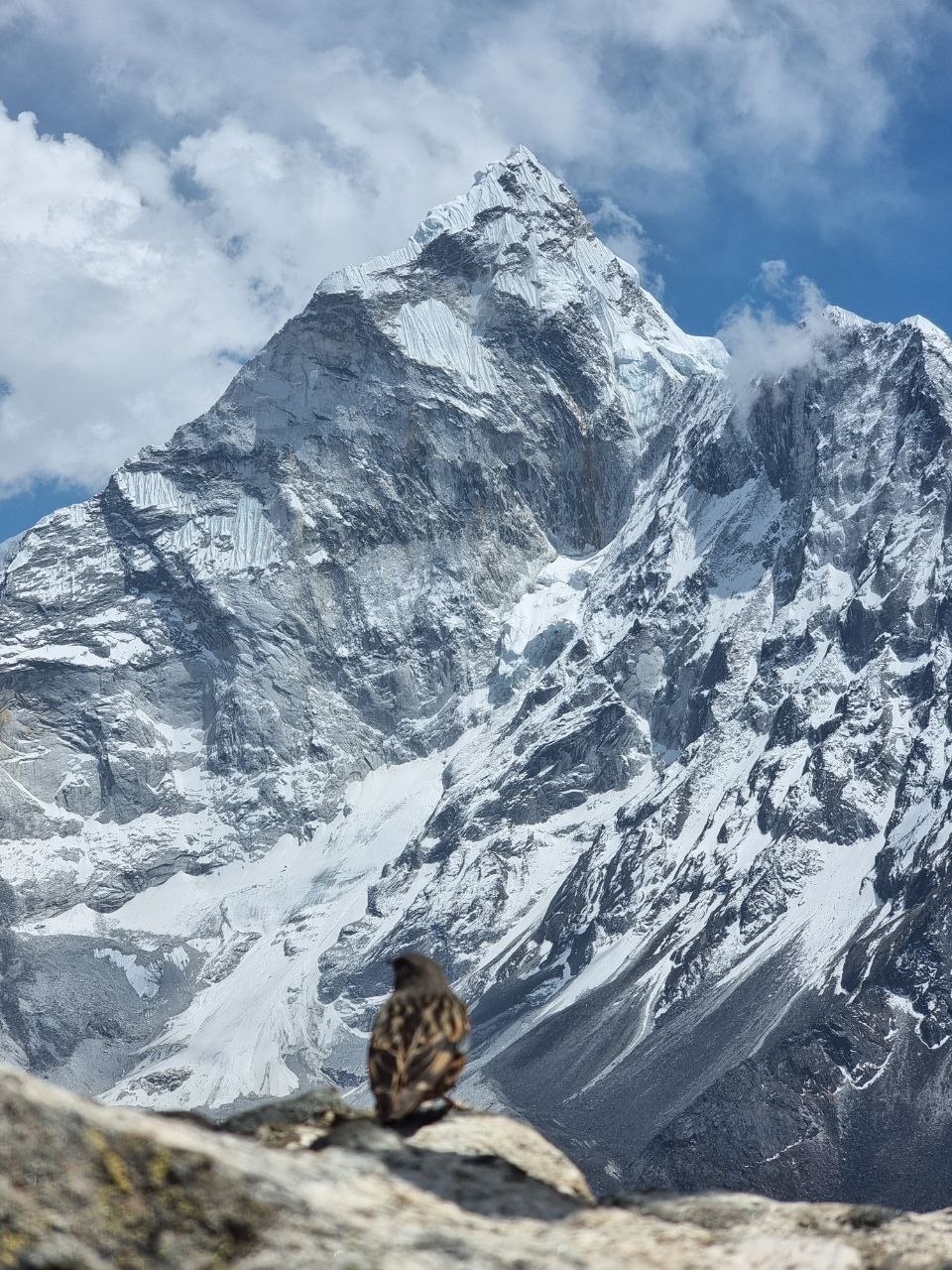
On April 16, I flew to Kathmandu. From there, my group and I took a helicopter to Lukla and set off for base camp. In a week, we climbed more than 2,500 meters of altitude: from 2,860 m to 5,364 m.
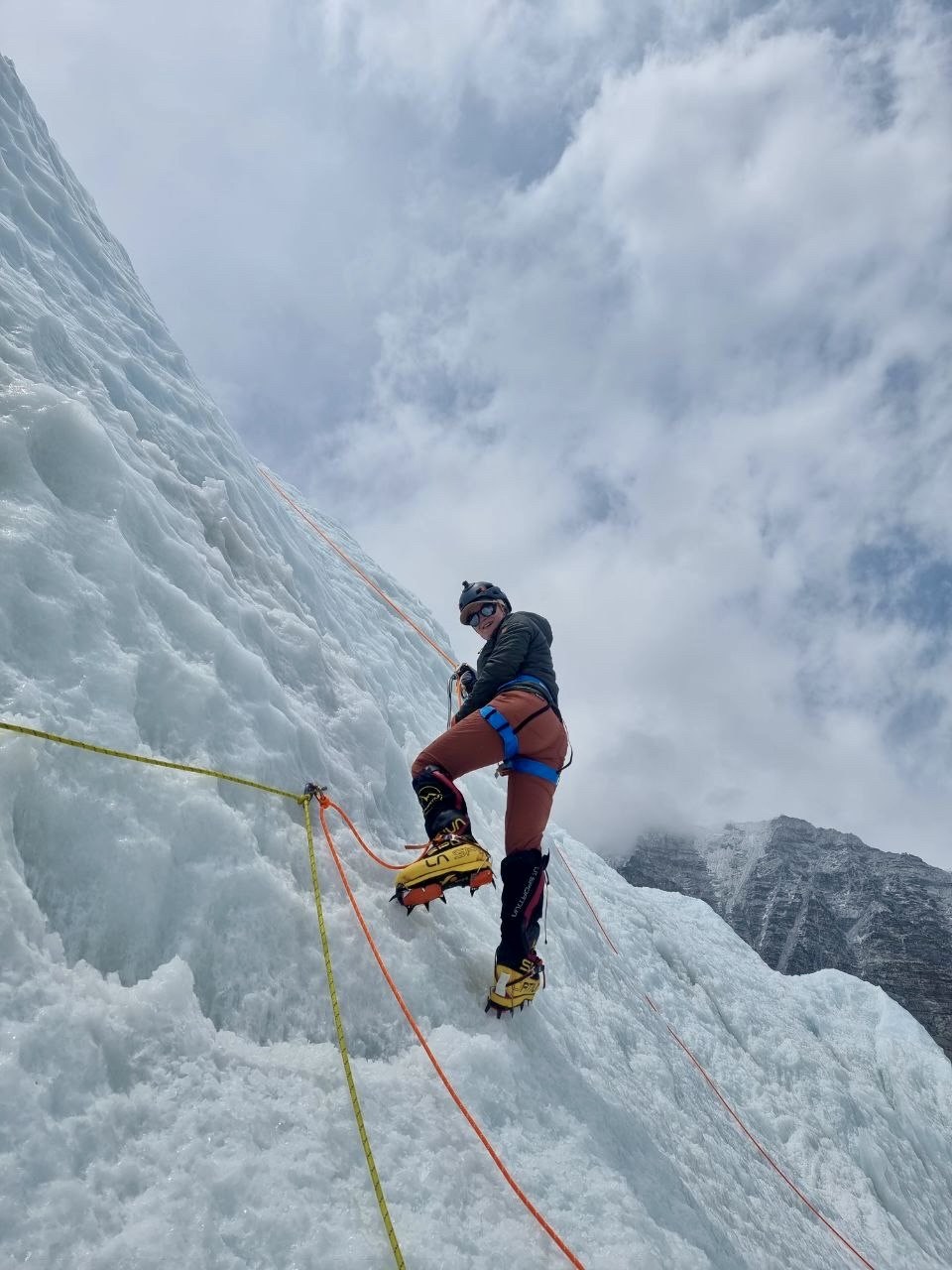
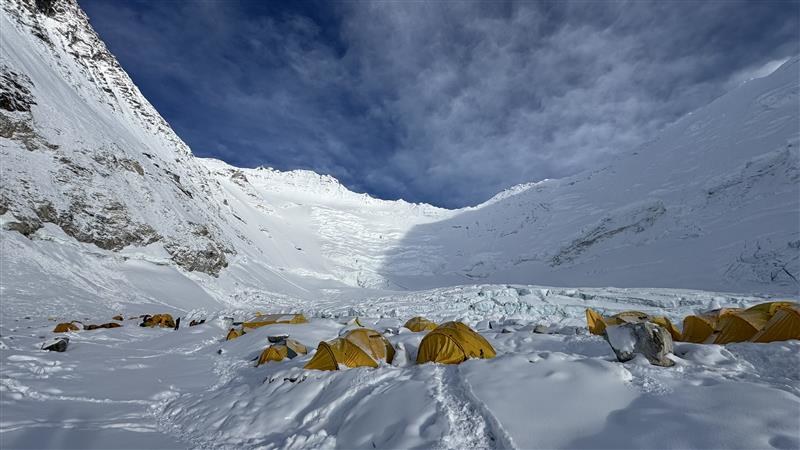
Then we started acclimatization trips and ice training, we honed our skills in climbing ladders, rappelling, and working with a zhumaram, a special rope clamp. Overall, life at base camp was quite comfortable and eventful.
After preparation, we had to move on: we crossed the Khumbu glacier, spent the night in the first camp at an altitude of 6100 meters, set off through the Valley of Silence to the second camp at 6400 meters. This transition was quite meditative for me. And then two days of rest with extraordinary panoramas of the Everest circus awaited us. Then we returned to the base camp, because climbing eight-thousanders requires gradual adaptation and careful treatment of one’s own body.
Climbing the peak was like moving to a new level in the game: from about an altitude of 6,700 meters, a rather steep climb begins, with ropes stretching all the way to the very top of Everest.
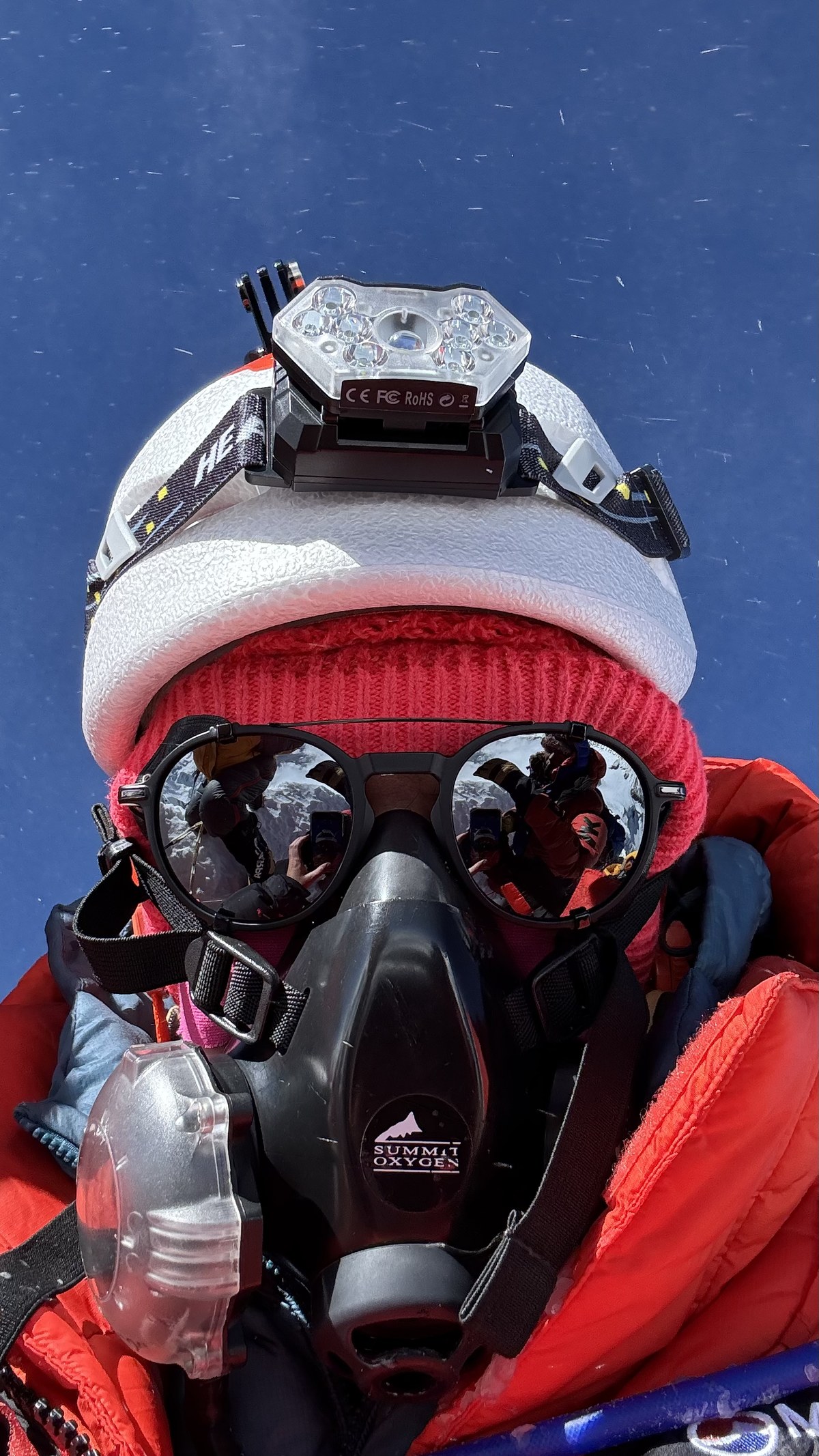
At 7100 meters, in the third camp, I already needed additional oxygen from a cylinder — I was the last girl to switch to it. In general, that night was one of the most difficult for me. The third camp is located on a steep slope and is arranged on terraces carved out of the snow. Snow fell all the time. It seemed that in the morning you would wake up under a blockage. Because of these thoughts, the night was anxious and short — at five in the morning we set off further, to the fourth camp, which is located on the edge of the so-called «death zone» — at an altitude of 7950 meters.
This climb was difficult and technical, but the views that opened up with the sunrise completely compensated for it. We reached the camp around noon and had to rest before conquering the summit. Due to the excitement, this was not easy to do.
Conquering Everest
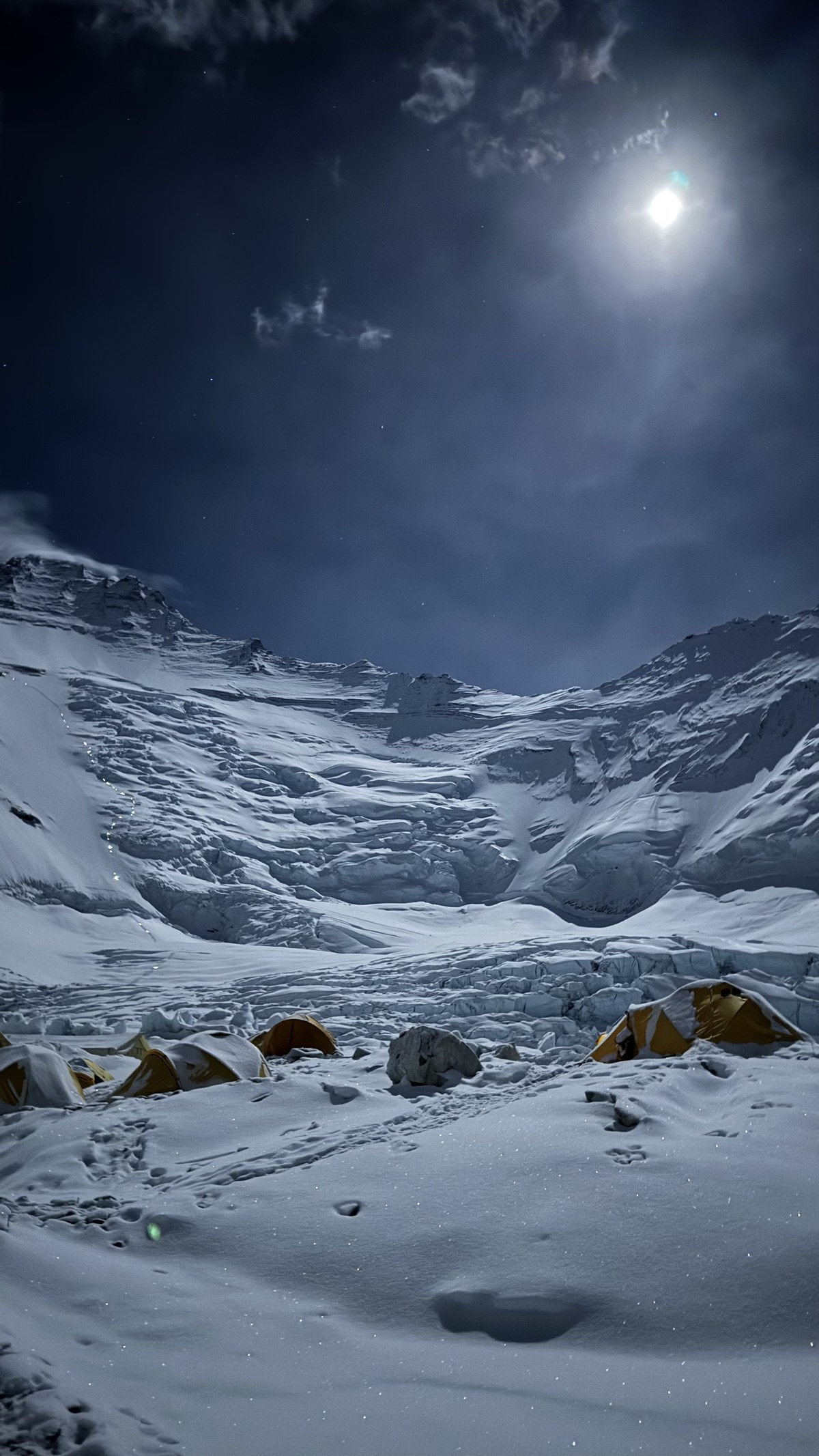
We started climbing the peak at 9 pm on May 13. The temperature was somewhere around -30–35°C. The night was simply magical, the moon was shining brightly. While I was walking along the ridge, I did not forget to look down — at the mountains below us, which were covered with clouds like a blanket. And in this silence, here and there, golden and purple lightning flashed. I could not take my eyes off… Although it was worth looking very carefully at the ground below.
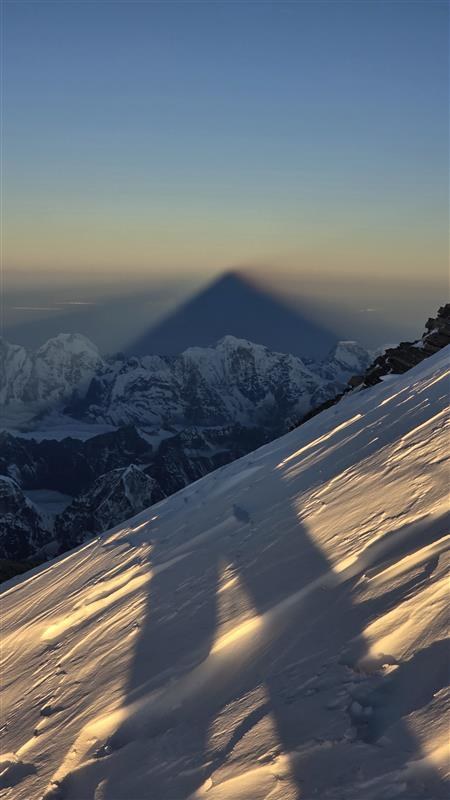
And when the sun rose, I was already under the south peak. I had never seen such a shadow all the way to the horizon and beyond, as on Everest. Immediately after the south peak, my Sherpa guide replaced the oxygen tank with a new one, and we climbed the most famous part of the route — Hillary’s Stairs. Probably, it was when I saw the place that I had looked at hundreds of times on the Internet that it really dawned on me for the first time that I was on Everest. And then there were only the last few hundred meters left — and the peak.
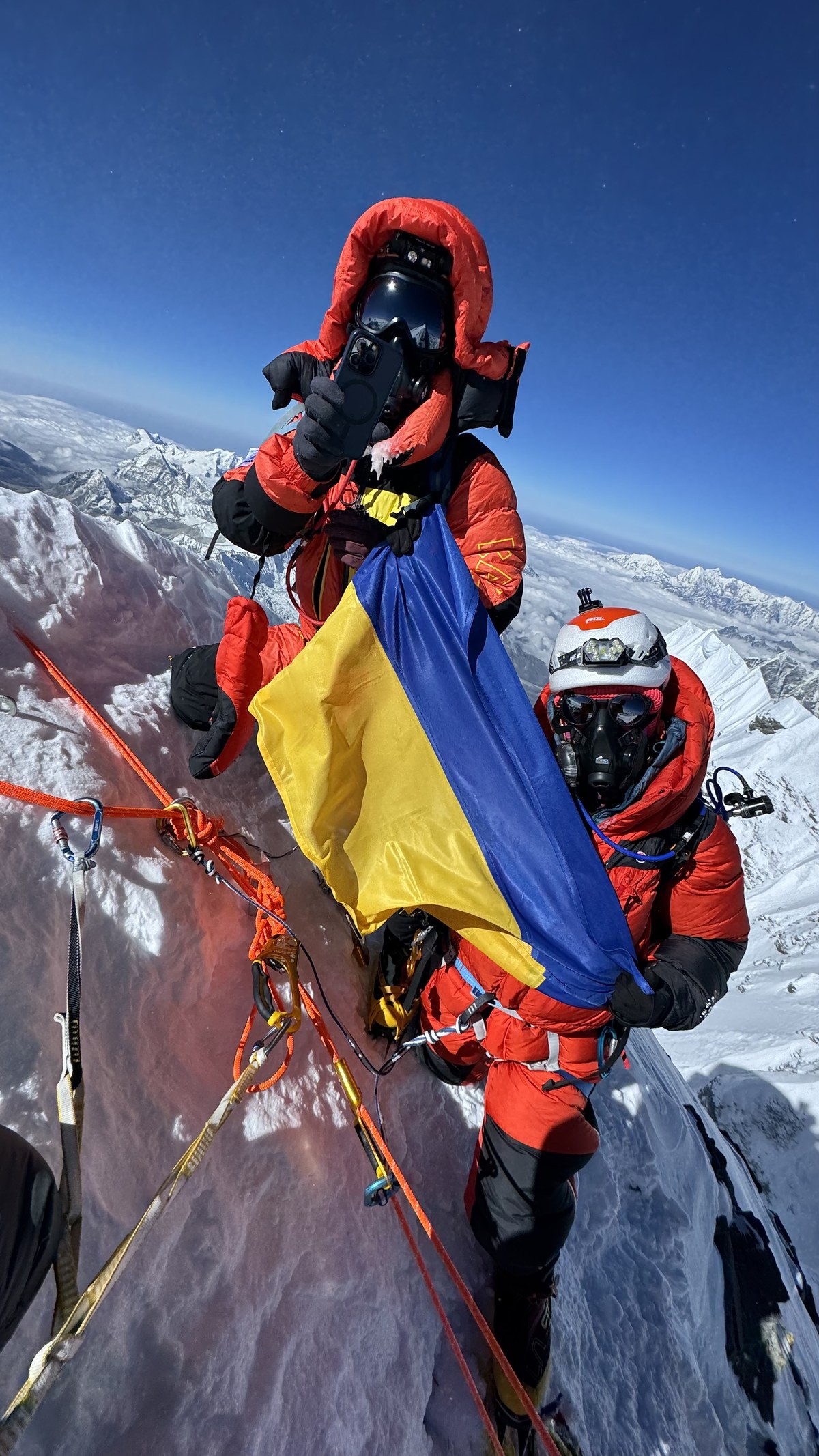
At 8 am on May 14, we stood on top of the world together with the group members. The views around were extraordinary, because the sky was crystal clear that day. Frankly speaking, standing on the top of Everest, it is difficult to immediately realize that you are on the roof of the world. But later, just remembering it, it takes your breath away… At the same time, the descent awaited us ahead — an equally important stage, where you need to leave half your strength.
After resting a little at Camp Four, at 11 pm on May 14 we set off to conquer Lhotse. At 8 am on May 15 our team stood on the summit of the fourth highest eight-thousander in the world — 8516 m. The summit of Lhotse is not at all what it seems. There is no plateau, no convenient peak — just a snow cornice, which you approach… and hang at the end of the rope. An incredible feeling of height. In total, we conquered both peaks in a day.
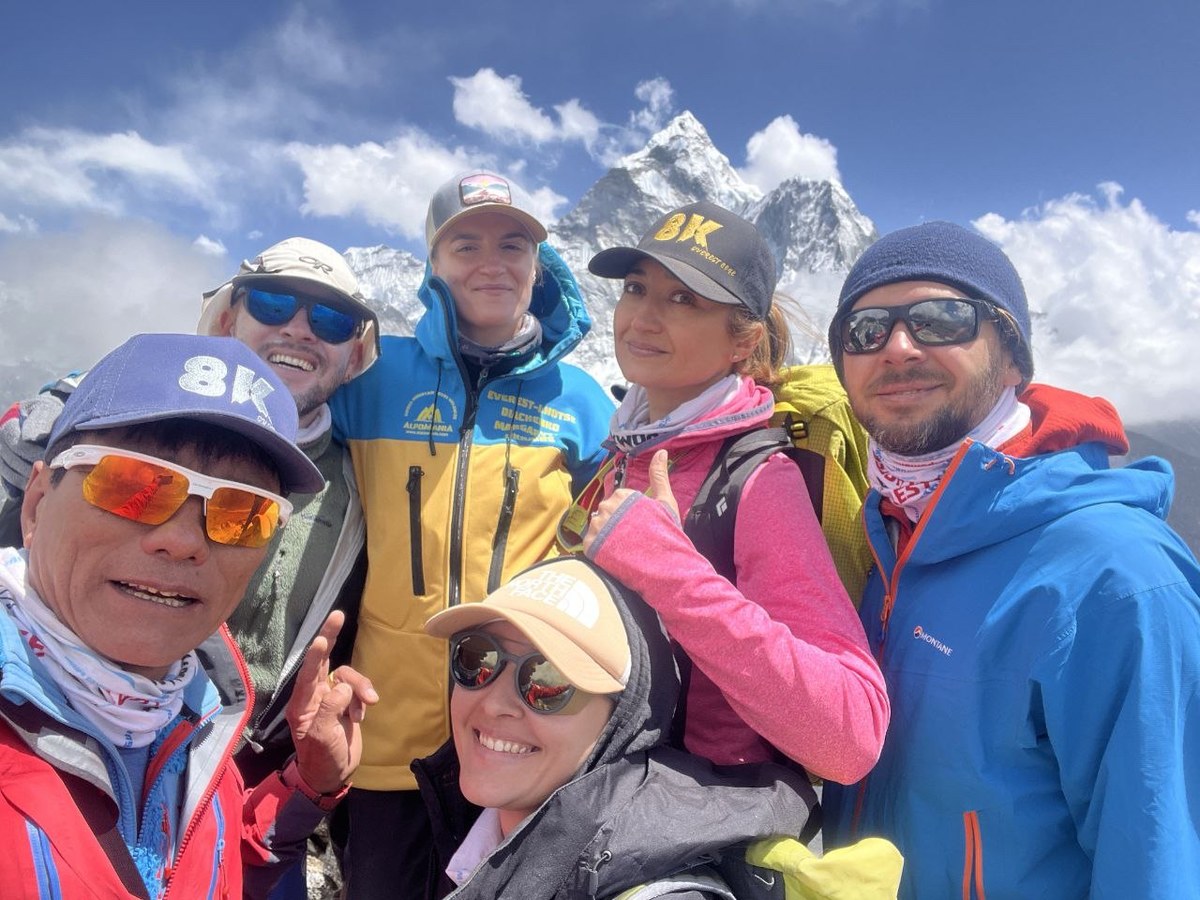
Ahead was the descent with an overnight stay at the second camp, a return to base camp, a long-awaited rest, a celebration with our incredible team — and then each of us set off home from Kathmandu.
Leaving the mountains is a mix of feelings. Joy from returning to warmth, a shower, and regular food (because in the mountains we mostly ate thin, hot soups). And at the same time, a slight sadness because such an incredible adventure has come to an end.
Conclusions and main insight of the expedition
During this expedition, I did not experience any altitude sickness, just like I did on Denali (previously known as McKinley, Alaska, USA, 6,190 meters) the year before. This is probably due to the already established long-term acclimatization and good physical shape, which I maintained through systematic training and nutrition. The well-organized acclimatization during the expedition itself also played a role, for which I would like to thank our main guide. I am also grateful to my Sherpa Mingma. He took care of my comfort and peace in the best way possible. I also really appreciate the support of my family and friends.
As a project manager with a mathematical mindset, I understand that for me this is not only a profession, but also a way of life and thinking.
I love plans, check boxes, Excel spreadsheets — in general, I use this structured approach to everyday tasks. I need to put everything into clear algorithms. And I’m also a very team player. This approach helps in the mountains too, because you have to be ready to support those around you. I always take a small supply of useful little things with me just in case someone needs them. Similarly, when climbing Everest, they helped me out by sharing water and an apple — and it was the most delicious apple I’ve ever tasted.
And my own experience and analysis of previous achievements also help me a lot. I believe that this is more important than other people’s reviews. For example, I can be told many times about a place that there is nothing to see there. But I will still go to make my own impression — and there is a chance that I will find something unexpectedly good for myself there. Of course, there is a chance that I will see the opposite, but still from my own experience. So I jumped with a parachute three times to make sure — it is not mine.
The biggest lesson I learned from the mountains is the importance of mindfulness on the way to a goal, small iterations, and quality training. I used to get to the top and immediately think, okay, what next? But last year, on Denali, I realized that it is necessary to be grateful for what you achieve, celebrate it, and be more aware of the event in the moment.
During each climb, I have a certain insight. This time it sounded like «step by step» — step by step. That’s how I managed to reach the tops of two eight-thousanders. After all, of course I had to be nervous: on the eve of the final rush to the peak, the whole body understands that this is what you are here for. To overcome this state, I check everything many times, and then take the first step and pick up the rhythm. I just start doing my thing — and catch an almost meditative state.
Of course, sometimes I can get caught up in negative thoughts and overthink things. A well-known practice that I came to intuitively helps me overcome this: I take some time to mentally play out the worst-case scenarios, exaggerating everything as much as possible. And when everything has already happened in my head, then I feel like I’ve already experienced it. Gradually, the wave of anxiety recedes and I return to small joys: the night seemed quiet and I managed to sleep, the tea was surprisingly hot and delicious, etc.
Now is a period of change in my life. I am inclined to think that Everest was the impetus for it. And I am surprisingly going through it calmly, with trust. As if I surrender to the flow of life.
SoftServe co-founder Taras Kytsmey: «When IT specialists go to teach, it’s a win-win. Education is a long-term game. The war will end, and the IT industry will fly up like a rocket.»
«Моя фінансова мета — накопичити $1 000 000, щоб мати пасивний дохід і жити на нього». Як айтішники витрачають гроші та в що інвестують
Зарплата айтішників в Україні — одна з найвищих. І ІТ-галузь під час війни — єдина галузь, яка зростає, попри війну. А айтішники — серед тих, хто найактивніше підтримують армію. Середній місячний донат айтішника становить 10% від зарплати, або $270. dev.ua вирішив розпитати айтішників, куди вони витрачають гроші й у що інвестують під час війни.
Не Патроном єдиним. Айтішник з EPAM шиє військову амуніцію для собак: історія диво-стартапу для чотирилапих захисників України
Максим Лісович, Interior Designer в ЕРАМ Україна, поза роботою допомагає амуніцією українським військовим… собакам. Так, службові пси носять унікальні жилетки та нашийники, мають спеціальні аптечки та турнікети. Чотирилапі в такому «одязі» більш захищені та впізнавані.
За словами Максима, тільки на заході країни нас захищають сотні військових собак. Айтівець допомагає військовим кінологам нести цю службу гідно, забезпечуючи відповідною амуніцією, спеціальними аптечками та турнікетами. Нещодавно він провів три дні поспіль, власноруч відшиваючи нашийники та повідці. А ще два роки тому шити він не вмів узагалі. Ось історія диво-стартапу.
Австралійське задзеркалля. Історія Delivery Director EPAM, який через війну релокувався із сім'єю до Австралії: як адаптуватися та вижити за океаном?
Григорій Клімов — директор з делівері і керівник великої Platform Engineering-практики в EPAM. Понад 10 років він будував свою кар’єру в українському офісі, але війна змусила його з родиною кардинально змінити життя. В березні Григорій з дружиною і трьома дітьми поїхали з рідного Харкова, деякий час провели в ЄС, а згодом — вирушили до Австралії. «Я мріяв жити в цій країні, коли піду на пенсію. Але війна підштовхнула до того, щоб прийняти рішення значно швидше», — каже Григорій.
Ось його історія.
Очільник EPAM Ukraine: «Було б класно мати якісь прозорі, відкриті механізми виїзду за кордон для обмеженої кількості людей»
Керівник EPAM Ukraine Степан Мітіш, який до призначення відповідав за київський та вінницький офіси компанії, дав велике інтерв’ю AIN. В компанії він працює вже 16 років, тобто знає про український IT-аутсорс багато, якщо не все.
dev.ua обрав найцікавіше з розмови.