Хочете будувати кар’єру в Data Science та AI? Vodafone Big Data Lab відкриває новий набір —>
Наталя ХандусенкоWar
24 September 2026, 11:50
2026-09-24
«To put the scale into perspective, a significant share of domestic traffic used to flow through these sites before the full-scale war». Four data centers were damaged in Kyiv due to Russian strikes. What does this mean for consumers, and should we expect an internet collapse?
Russian occupation forces have changed the tactics of attacks on Ukraine’s digital infrastructure. While previously the targets were mainly energy facilities, in recent weeks the enemy has been purposefully destroying key communication nodes and data centers (data processing centers). Anatoly Frolenkov, a consultant in the telecom, IT and media market, told dev.ua about the prerequisites, consequences of the latest attacks and the resilience of the Ukrainian network segment. He also provided advice on how ordinary users and businesses can minimize risks.
Russian occupation forces have changed the tactics of attacks on Ukraine’s digital infrastructure. While previously the targets were mainly energy facilities, in recent weeks the enemy has been purposefully destroying key communication nodes and data centers (data processing centers). Anatoly Frolenkov, a consultant in the telecom, IT and media market, told dev.ua about the prerequisites, consequences of the latest attacks and the resilience of the Ukrainian network segment. He also provided advice on how ordinary users and businesses can minimize risks.
Third week under the gun
The attempts to knock out the communications infrastructure are not a one-time action — it is a planned campaign that has been going on for several weeks. According to the expert, the enemy is currently using mainly strike drones.
"It’s not just yesterday’s attack — this is actually the third week that the Russian army has been taking out infrastructure. So far, it’s mainly "shaheeds", I haven’t seen any really strong ballistics yet. Currently, Kyiv is mainly suffering from this, because historically and traditionally, the main connectivity and concentration of equipment was here," notes Anatoly Frolenkov.
Hitting four data centers
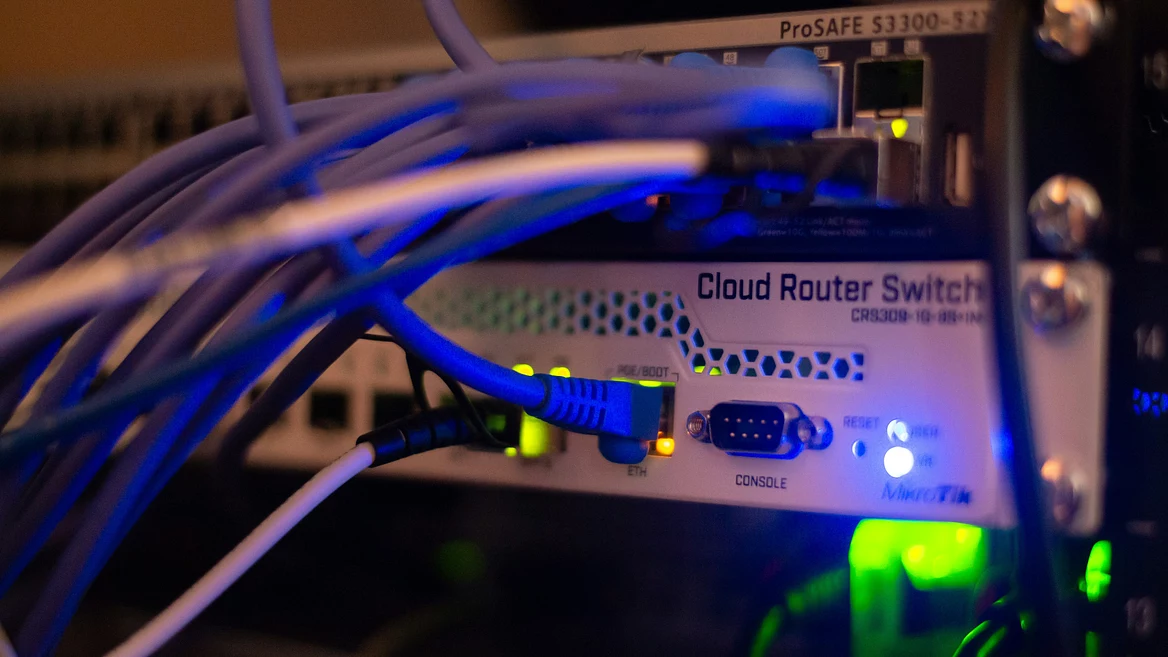
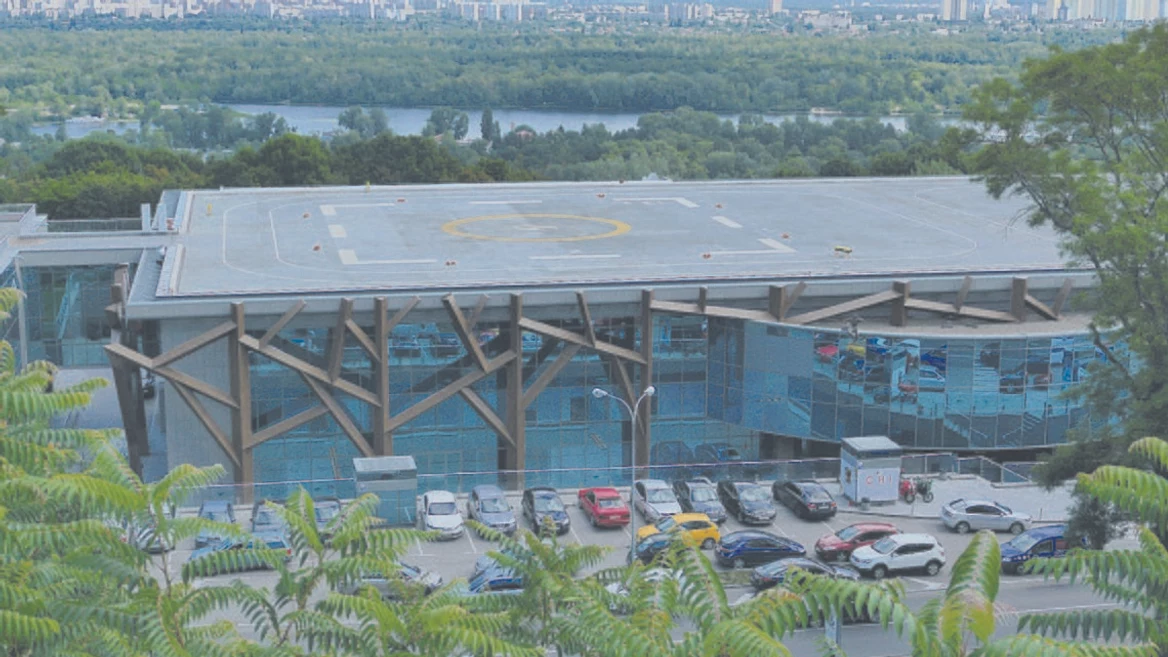
During yesterday’s massive attack, four key data centers were hit at once. The extent of damage varies significantly between sites, but the fact that several points were targeted indicates an attempt to cause maximum damage.
"This is the first time we have such a situation: water got into one data center, it flooded a little — and because of this, almost everything there was destroyed. At the second, only the diesel generator was damaged. The third remained practically intact. In the fourth, there were problems exclusively with the power supply. That is, the physical infrastructure itself was not critically destroyed in most cases," comments Frolenkov.
Olshansky: the data center where MiroHost’s facilities were located was destroyed, so there is currently no recovery time. Foreign infrastructure is operating normally
Russian attack damages Cityhost data center in Kyiv: some services are operating with failures
Who was affected?
The affected data centers served as critical hubs. A significant portion of Ukrainian traffic was switched through them, so both providers and ordinary users felt the consequences.
"Yesterday, operators were a little affected, because they took out key data centers where the all-Ukrainian segment of the Internet is switched. To put the scale into perspective: a significant share of internal segment traffic used to flow through these sites before the full-scale war. As a result, two large operators, whose network core was located there, "fell down" for several hours," the expert emphasizes.
Despite this, according to Anatoly Frolenkov, a serious collapse was avoided thanks to redundancy: “The operators and hosters who were located there worked quickly. In just two hours, they deployed the infrastructure on backup sites and rebalanced traffic. Most data center clients were practically unaffected, because after 2022 everyone learned to distribute servers: both between different data centers in Kyiv and to European sites. This process is similar to the sore topic with logistics warehouses — evolutionarily we were moving towards large cross-connect hubs, and now we have to decentralize everything as much as possible.”
UPD. Internet provider Etherlink, which serves, in particular, the central part of Kyiv, announced damage to the main node. When will the connection be restored?
What happened behind the scenes: how they restored communication
The recovery process after such attacks requires time not only for physical repairs, but also for software redirection of network flows.
"Purely physically: switches and equipment are knocked out. Time passes by before people switch to backup sites or launch reserves — this is a physical factor. In addition, when physical equipment or a site is destroyed, an imbalance occurs in the system: traffic simultaneously switches to other channels and begins to critically load other directions," explains Frolenkov.
Almost 100,000 households in Kyiv and the region remain without the Internet — Ministry of Digital. Here’s what providers have said so far
How to minimize risks: tips for users and businesses
For an ordinary user, the absence of the Internet for 1–2 hours is an inconvenience, but for a business it is a loss. Anatoly Frolenkov gave practical recommendations on how to ensure an uninterrupted connection under any conditions.
Diversify providers. Have two home internet channels and SIM cards from two different mobile operators.
Use alternative technologies. Get Starlink if being connected 24/7 is critical.
Combine a local and national provider.
“I would advise combining one small local provider (for example, your district or city) and one large national one. Why is that? A small operator is less bureaucratic — it can send a repair crew and get the network up and running faster. And a large national operator has the resources to duplicate and maintain 2–3 backup servers, although it is very expensive and painful for them,” advises Anatoliy.
For advanced users, the expert advises paying attention to the provider’s BGP connectivity: "Look where your provider is connected, how many higher-level backbone operators (Tier-1/Tier-2) it has, and what traffic exchange points (IX) it is connected to. The more such connections, the less chance that if one node is destroyed, your connection will be lost — traffic will instantly be redirected to another backbone."
Could the Internet in Ukraine disappear completely?
Anatoly Frolenkov considers the issue of a total "shutdown" of the Internet in the country to be more theoretical. The network architecture was developed specifically to withstand physical damage to individual nodes.
“The Internet is a global distributed system. To put it simply: it’s like a circulatory system or water. If one artery was cut somewhere, the water immediately went to another. Therefore, it is physically almost impossible to completely destroy the Internet. The only thing that can happen during large-scale destruction is a temporary overload (clogging) of the surviving highways. But this is a purely temporary problem that operators quickly solve by rebalancing,” concludes Anatoly Frolenkov.
Бойова гігієна. Чим небезпечний WiFi на передовій, та чому інколи прилітає по Starlink: пояснює айтішник
Володимир Степанець, Senior Systems Architect в EPAM Poland написав великий пост-пояснення про те, чим небезпечний інтернет на передовій та чому роздавати його не варто як з терміналів Starlink, так і зі смартфону.
Публікуємо його аргументи, правила та поради.
Для айтішників – хоч зірку з неба. Закарпаття приєднають до румунського інтернету
З початку війни до Закарпаття переїхала велика кількість IT-спеціалістів. Зараз їх в регіоні вже близько 35 000. А було дві. Переселенці повинні були вирішувати на новому місці багато побутових проблем, як, наприклад, знайти житло, робоче місце, стати на облік у військкомат.
Як рф захоплює український інтернет у Херсоні, та хто за цим стоїть: розслідування Wired
росія захоплює український інтернет. В окупованій Україні користувачів російського інтернету піддають потужній цензурі та моніторингу. Як влаштована ця система, розповідає Wired. dev.ua переказує найцікавіше з матеріалу.
Have important news to share? Message our Telegram bot
Key events and useful links in our Telegram channel
це означає що "консультант із телекому, IT та медіаринку Анатолій Фроленков" з своїм другим підбородком, замість того щоб показувати свою некомпетентність після ударів, краще б закликав нашу владу бити по москальських дата центрах, які вони так легко не перенесуть закордон




















це означає що "консультант із телекому, IT та медіаринку Анатолій Фроленков" з своїм другим підбородком, замість того щоб показувати свою некомпетентність після ударів, краще б закликав нашу владу бити по москальських дата центрах, які вони так легко не перенесуть закордон