Хочете будувати кар’єру в Data Science та AI? Vodafone Big Data Lab відкриває новий набір —>
Марія БровінськаІсторії
21 April 2025, 08:00
2025-04-21
“In just one month, my team and I evacuated over 700 wounded.” The story of a Senior Operations Specialist at EPAM and a hospital worker who combines work in IT and saving defenders on the frontline
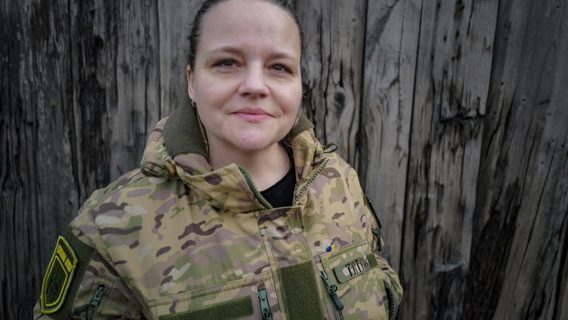
Tetyana Pesotska is a Senior Operations Specialist at EPAM Ukraine. She works in the Cloud Partnership Operations Department, supporting the Europe, Middle East, Africa, and Asia-Pacific regions. However, in addition to her main job, Tetyana performs an extremely important mission — as part of the volunteer medical battalion «Hospitaliery», she saves the lives of soldiers on the front.
Tetyana Pesotska is a Senior Operations Specialist at EPAM Ukraine. She works in the Cloud Partnership Operations Department, supporting the Europe, Middle East, Africa, and Asia-Pacific regions. However, in addition to her main job, Tetyana performs an extremely important mission — as part of the volunteer medical battalion «Hospitaliery», she saves the lives of soldiers on the front.
The specialist told dev.ua about her work at Hospitaliers, her training as a medical doctor, and her motivation to never stop. Next is Tanya’s direct speech.
How I got into the Hospitallers
I have a medical family: my mother is a doctor, my daughter is a medical student at the National Medical University named after O. O. Bogomolets, dreams of reconstructive surgery and is a certified NAEMT TCCC instructor at the CLS (Combat Life Saver) / SMS (Combat Medic/Corpsman) level. My husband also has knowledge and skills in tactical med at the CLS level and is a first aid instructor.
After the full-scale invasion began, our whole family took tactical medicine training. We were invited to join a union that trained civilians, and later the military. But to teach yourself, you need to go through a serious path: courses, practice, certifications.
Almost a year later, I became a TACME instructor, but my studies are still ongoing. I plan to enter medical college to officially confirm my knowledge and obtain the right to perform all necessary medical procedures, including intubation.
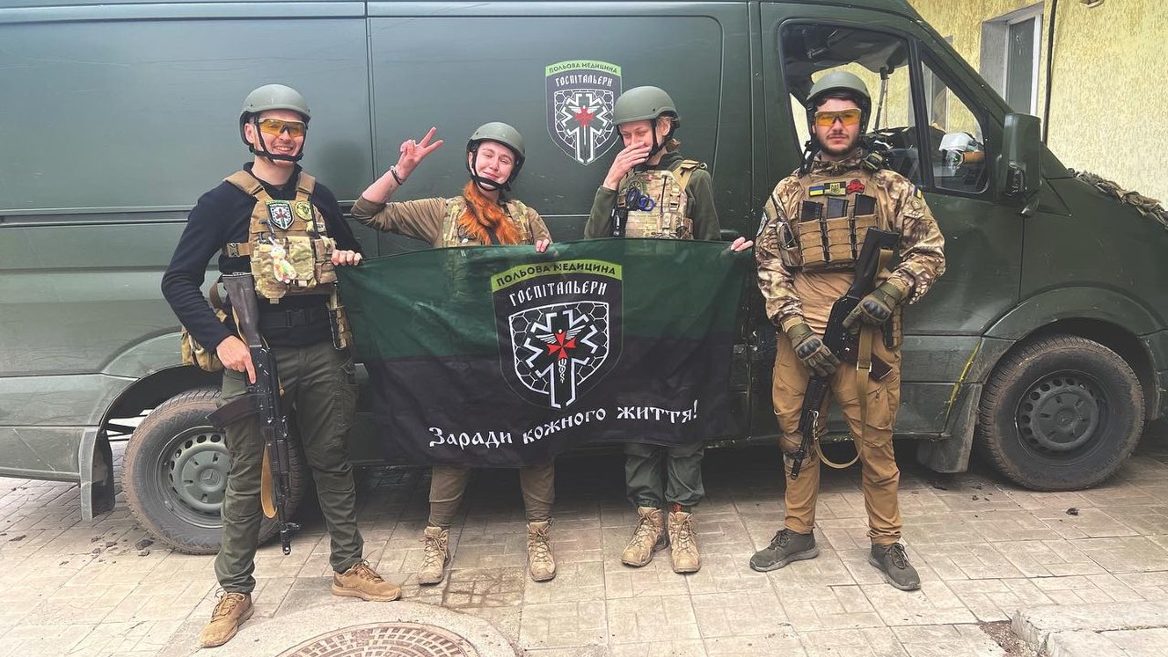
I have been part of the volunteer medical battalion «Hospitaliers» for about a year. To join the team, you need to go through intensive training at the level of SMS (Combat Medic/Corpsman), as well as two interviews — with the head of the medical service and the rotation coordinator. There are different levels of training in tactical medicine — from rifleman-medic to surgeon. Currently, I work at the level of CMC (Combat Medic / Corpsman) and am preparing for MP (Medical Person), which involves in-depth knowledge of tactical medicine and readiness to provide assistance in combat conditions.
In everyday life, the Hospitallers team are civilians. We do not wear uniforms in everyday life, we do not decorate ourselves with chevrons. We are not military — we are volunteers and volunteers, and the uniform is a matter of convenience.
«My team and I evacuated over 700 wounded»
My work is focused on the long-distance evacuation stage. Our main task is the mass evacuation of the wounded from stabilization points or medical facilities located on the second, relatively safe line. For this, we use an ambulance named after our sister Natalia Yatsun («Austrian»), who, unfortunately, died in a traffic accident.
During this time, I have already completed about six rotations, and there have been so many evacuations that I have lost count. In just one month, my team and I evacuated over 700 wounded.
On average, one trip takes about seven to eight hours. But sometimes we leave for the next evacuation without a break.
We usually pick up already stabilized fighters, sometimes even after surgical interventions performed by military doctors. In one trip, we can evacuate up to 30 people, taking them to hospitals in the rear for further treatment.
The most important thing for us is to deliver the patient in a stable condition, responding to any changes during the evacuation. We always work as a team, and a doctor is always present in the Austrian.
Maintaining contact with the wounded
I try to stay in touch with the wounded we are evacuating. Especially those who were in the most serious condition. If a person has lost their phone, I try to find them in the hospital.
It often happens that fighters are left without communication, which is why my colleagues at «Austria» and I started a good initiative: we buy push-button phones or collect old smartphones, supplement them with SIM cards and chargers, and distribute them to the guys.
Recently, our colleague, Svitlana Pshenichna, handed over several of these — fully functional, I bought SIM cards for them. Now we can give out phones so that the wounded can at least tell their relatives: «I’m alive.»
When you transport a seriously injured person, you are responsible for their life. Often they are in an extremely exhausted state, some have not slept for several days, have not eaten, have not drunk. Therefore, when stabilization is complete, we always try to make their journey a little easier. We always prepare tea, coffee for those who are allowed, and treat them with treats. It is a small gesture that means a lot.
About the basic combat medic backpack
The nature of injuries is constantly changing. For example, last summer we had a crazy number of amputations. Every second injured person lost a limb. These were the most difficult evacuations. And recently, most of the injuries have been shrapnel. Often these are chest injuries, pneumothorax, multiple torso injuries. Perhaps this is due to the fact that drones are now operating more often, and the nature of the injuries is completely different.
In such conditions, it is critical to have everything you need to provide assistance in the shortest possible time. The combat medic’s backpack contains everything you need to stop critical bleeding, support breathing, and provide first aid. Our resuscitation vehicle always has at least one backpack, because the arrival can happen anywhere, and you need to be ready to provide assistance to several wounded right on the spot.
What I always have with me, even in civilian life, are 2 tourniquets, 2 bandages of different sizes — 4 and 6 inches, hemostatic bandage, gloves, scissors. Like any paramedic, I can’t be caught off guard.
Once I heard explosions in the suburbs of the capital, packed all my supplies into a bag, and was there in a few minutes. Fortunately, no one needed help, but I was ready to provide it. That is why I actively encourage readers to learn the basics of first aid and support the project " Backpacks of Life 2.0 " from EPAM and the «Leleka» Foundation, which involves the purchase of high-quality first aid for 1 million hryvnias. Friends, this is important and this is what saves lives.
Why do civilians need tactical medicine?
Tactical medicine is not just about war. It is about the chance to survive in critical situations — in the event of injury, an accident, shelling, or even an accident. I am convinced that everyone should have basic knowledge of first aid: both civilians and military personnel. At trainings, I teach the basics: stopping critical bleeding, ensuring airway patency, hypothermia. This is what every Ukrainian should know.
I remember a woman who came to the courses every quarter for two years. She said: «I want to practice everything to automatism,» and she even came in uncomfortable clothes to train in conditions close to reality. Because in a critical situation we can be in a state of shock, but the body remembers what to do.
I also work with educators. On the eve of the next rotation, together with other paramedics, we conducted a training for 22 teachers of the subject «Defense of Ukraine» so that they could teach children correctly. Because the old system with Esmarch’s tourniquets and kerchiefs has long ceased to correspond to reality. I really want the knowledge to be not formal, but practical.
Why am I doing this?
Sometimes it’s hard to explain why I continue this activity despite the constant fatigue, lack of days off, and accumulated stress. I don’t have a simple answer. But I know for sure that my knowledge and skills can save someone’s life. Whenever I see a request for training or help, I take it on because I understand how important it is.
There is always one question in my head: «If not me, then who?» I understand that I cannot «grasp the immeasurable,» but I can do my part.
And if others join in, together we can create something big and meaningful. That’s what motivates me — knowing that I’m doing my part to save lives and help those who need it most.
From intensive care to EPAM. A pediatric anesthesiologist from Lviv left medicine for IT, and now dreams of a major medical project based on Big Data: the story of switching during the war
«У США тестувальник може отримувати $100 000 і навіть $500 000 на рік». Історія релокейту дніпровської IT-родини, де чоловік працює в EPAM, а дружина влаштувалася в Tesla
Марк і Вікторія Терещенки — IT-подружжя. Він працює на позиції Lead Test Automation Engineer у компанії EPAM, вона — Software QA Engineer у Tesla. У серпні 2021 року пара разом з 1-річним сином здійснила релокейт до США за L візою. Ми зв’язалися з українською родиною та поговорили про труднощі переїзду, зарплату в Америці та специфіку роботи в компанії Ілона Маска.
«Моя фінансова мета — накопичити $1 000 000, щоб мати пасивний дохід і жити на нього». Як айтішники витрачають гроші та в що інвестують
Зарплата айтішників в Україні — одна з найвищих. І ІТ-галузь під час війни — єдина галузь, яка зростає, попри війну. А айтішники — серед тих, хто найактивніше підтримують армію. Середній місячний донат айтішника становить 10% від зарплати, або $270. dev.ua вирішив розпитати айтішників, куди вони витрачають гроші й у що інвестують під час війни.
Не Патроном єдиним. Айтішник з EPAM шиє військову амуніцію для собак: історія диво-стартапу для чотирилапих захисників України
Максим Лісович, Interior Designer в ЕРАМ Україна, поза роботою допомагає амуніцією українським військовим… собакам. Так, службові пси носять унікальні жилетки та нашийники, мають спеціальні аптечки та турнікети. Чотирилапі в такому «одязі» більш захищені та впізнавані.
За словами Максима, тільки на заході країни нас захищають сотні військових собак. Айтівець допомагає військовим кінологам нести цю службу гідно, забезпечуючи відповідною амуніцією, спеціальними аптечками та турнікетами. Нещодавно він провів три дні поспіль, власноруч відшиваючи нашийники та повідці. А ще два роки тому шити він не вмів узагалі. Ось історія диво-стартапу.
Як людина, яка свого часу була і в АТО і в ООС і прослужив 2 роки під час повномасштабки від її початку, можу сказати що "Госпітальєри" це не просто медичний батальйон, "Госпітальєри" - це легенди, які матимуть заслужене місце в підручниках історії:)
P.S: Вже як цивільний нещодавно проходив декілька різних тренінгів, які проводила Тетяна, і можу сказати що це прям топ, можу цілком порекомендувати. Знання, які ви там отримаєте, ніколи не будуть зайвими.












Як людина, яка свого часу була і в АТО і в ООС і прослужив 2 роки під час повномасштабки від її початку, можу сказати що "Госпітальєри" це не просто медичний батальйон, "Госпітальєри" - це легенди, які матимуть заслужене місце в підручниках історії:)
P.S: Вже як цивільний нещодавно проходив декілька різних тренінгів, які проводила Тетяна, і можу сказати що це прям топ, можу цілком порекомендувати. Знання, які ви там отримаєте, ніколи не будуть зайвими.