Meta is offering a 95% discount to track usage of its new AI model
Most AI services allow users to opt out of sharing their data to train future versions of their models. Meta decided to go further and put a monetary value on this privacy.


Most AI services allow users to opt out of sharing their data to train future versions of their models. Meta decided to go further and put a monetary value on this privacy.

Most AI services allow users to opt out of sharing their data to train future versions of their models. Meta decided to go further and put a monetary value on this privacy.
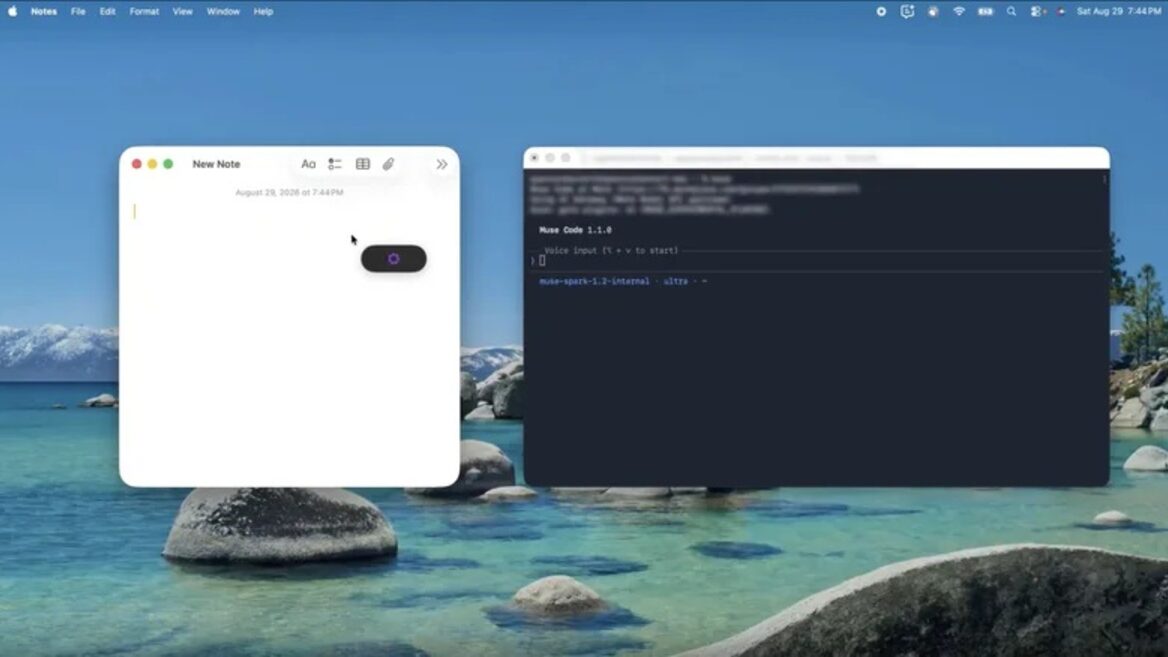
For its new Muse Spark model, designed to drive coding and other autonomous agents, Meta has introduced a special discount of about 95% . It is available to those who agree to “contribute” to the development of future models by sharing their prompts and responses to the system, TechCrunch reports .
If under the standard agreement 1 million input tokens cost $1.25, then under the pricing model for contributors it is only 10 cents. For output tokens, the standard price is $4.25 per million, but the same million under the contributor model will cost only 20 cents.
This initiative came amid Meta's difficulties in collecting data for training: a program launched earlier this year to track the actions of its own employees on computers caused a wave of internal criticism and was stopped in June .
Getting this kind of user data is critical for improving AI agents. Mario Zechner, the developer of the open source Pi tool, noted that the rapid jump in coding agent capabilities between April and October 2025 was due to the fact that Claude Code, by default, saved all developer sessions and used them for reinforcement learning (RL).
However, as AI labs try to move beyond pure programming and introduce agents into other professional fields, they are faced with a lack of digital footprint and complex workflows.
Arvind Narayanan, a professor of computer science at Princeton University, emphasizes that large companies are usually categorically against using their data:
“They choose corporate tariffs with token payments, even though consumer subscriptions like Claude Max or ChatGPT Pro are 10–20 times cheaper. The main difference between them is precisely the data retention policy and corporate control.”
Understanding these concerns, Meta is trying to offset the risks financially. The company’s documentation states that the special rate for contributors “lowers the barrier to prototyping, testing integrations, and scaling experiments where learning from your data is acceptable.” Narayanan believes that this approach could force companies to be more clear about which data is strictly confidential and which can be shared for cost savings.
The move also reflects the escalating price war between leading AI developers. For example, Anthropic’s latest models (Fable and Mythos) came out with reduced processing costs for cached tokens, and OpenAI significantly reduced the prices of its models in late July.