Наталя ХандусенкоSpaceTech
15 January 2025, 17:39
2025-01-15
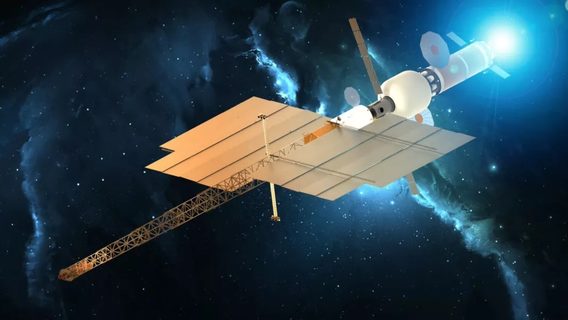
NASA plans to build a football field-sized radiator for its Mars rover right in space
A trip to Mars and back is a huge human endeavor, requiring years in space. But NASA is exploring some ambitious concepts that could turn this epic round-trip into a relatively short two-year journey.
A trip to Mars and back is a huge human endeavor, requiring years in space. But NASA is exploring some ambitious concepts that could turn this epic round-trip into a relatively short two-year journey.
NASA is working on a nuclear-electric propulsion system that would involve robotically assembling a football-field-sized space radiator in a vacuum. The project has moved beyond the idea phase, as the agency has already received approval to fund early-stage research over the next two years, TechSpot reports .
The project, called MARVL, stands for Modular Assembled Radiators for Nuclear Electric Propulsion Vehicles. NASA, along with external partner Boyd Lancaster, intends to break down a key component of a nuclear engine into more manageable, modular parts.
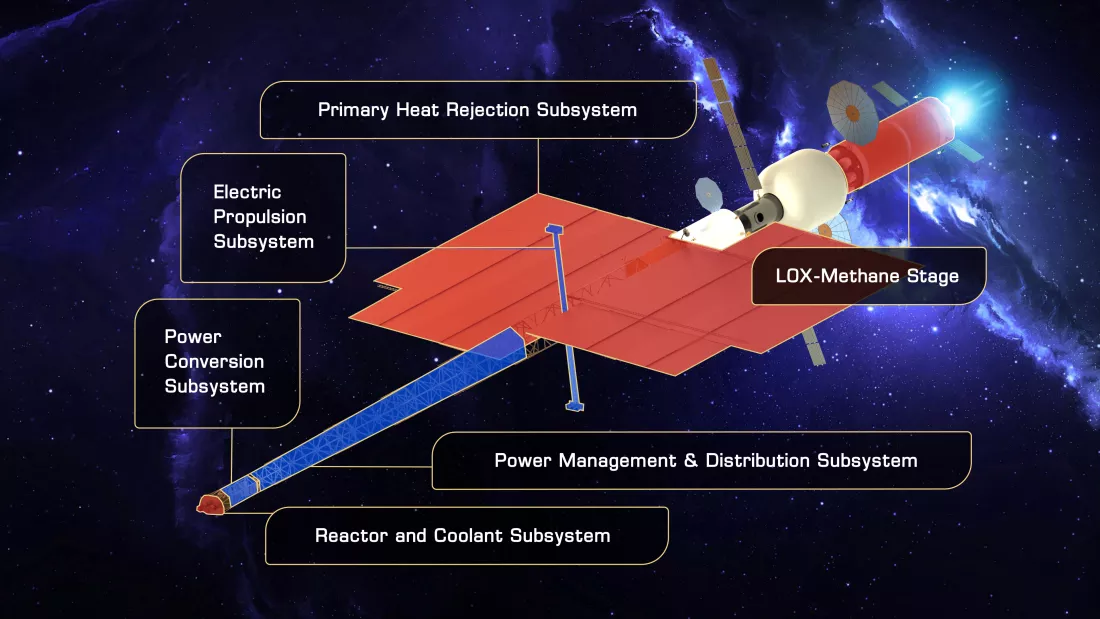
One of the main hurdles for a nuclear electric motor is figuring out how to efficiently remove all the waste heat generated by a nuclear reactor to power the system. This project involves building a colossal array of radiators, about the length of a football field when deployed, to release that heat into space.
The main problem is squeezing something so massive into the narrow confines of a rocket. Even fully compressed, the radiator would be too large and bulky.
In theory, MARVL's approach is very simple: if you can't launch the entire radiator at once, why not send it in pieces and let robots assemble it off-planet? This approach would mean multiple launches, but it also means that any parts of the rocket wouldn't be limited by the size of the launch vehicle.
Once the MARVL radiator components reach orbit, robots will connect the panels by pumping a liquid metal coolant, such as a sodium-potassium alloy, through them. The coolant will dissipate waste heat from the nuclear electric power plant.
NASA also says that this approach will affect the design of the spacecraft itself, which it is supposed to service.
The actual development of a full-scale nuclear-powered spacecraft is still a long way off, but prototypes like MARVL are turning key pieces of the puzzle into reality.
Божество, зореліт, уламок планети: що людство знає про Місяць і як збирається туди повертатися
16 листопада 2022 року NASA успішно запустила місію Artemis 1 до Місяця. Ракета Space Launch System (SLS) і корабель Orion стартували о 8:47 за Києвом із космічного центру Кеннеді на мисі Канаверал. Задача корабля Orion — покрутитися навколо супутника Землі шість днів і повернутися на Землю, після чого можна запускати людей. Якщо все пройде успішно, уже за кілька років ми побачимо грандіозний камбек і реюньон людства на супутник Землі. Що ми знаємо про Місяць, чому так довго його ігнорували та як будемо повертатися — в оновленому завдяки успішному старту (нарешті!) суперексплейнері від dev.ua від 29 серпня 2022 року.