Реклама партнера — Название партнёра
UNIT.City — місце, де люди працюють... КРАЩЕ! Обирай свій простір просто зараз 👉

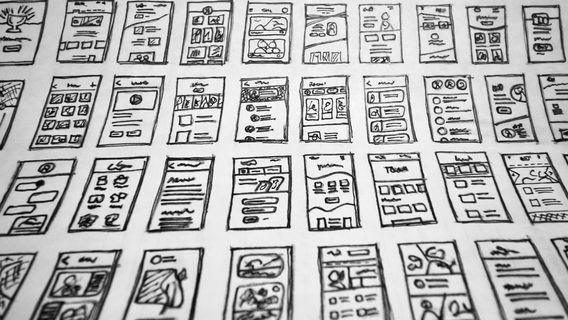
Unpopular thoughts from an experienced designer about UX/UI. It will be useful for both beginners and experienced designers.

Mentor and UX/UI designer with over six years of experience, Andriy Kolodyazhensky, supported the popular trend on Linkedin «Say an unpopular opinion and run» by writing 11 design insights.

Leave a comment
Unpopular thoughts from an experienced designer about UX/UI. It will be useful for both beginners and experienced designers.

Mentor and UX/UI designer with over six years of experience, Andriy Kolodyazhensky, supported the popular trend on Linkedin «Say an unpopular opinion and run» by writing 11 design insights.

Designer version:

  1. The best designer gets the job not because of their technical skills/experience/ability to do the work, but because the one who seemed subjectively better to the team/customer.
  2. Most requirements in a job description can be just anecdotal (well, what if it’s needed) or very general.
  3. Most UX/UI jobs that require experience with UX research and analytics don’t actually have such requirements.
  4. Everyone talks about the importance of UX in the interface, but everyone really appreciates a beautiful UI.
  5. No one knows for sure how long a task will take. The larger the scope of work, the harder it is to predict.
  6. For beginners in UX/UI, it is better to start with analyzing references and honing your skills than to do in-depth research and draw CJM for projects where it is not needed.
  7. Not structuring your work in a Figma file by pages and sections is a wrinkle. And not doing most of the joins on autolayouts is a wrinkle x2.
  8. Sooner or later, with professional development, a UX/UI designer reaches a point where they start using variables and tokens.
  9. Sometimes a borrowed large design system complicates work more than it helps.
  10. Nobody likes to do most unpaid testing tasks. Because it’s unpaid work that takes up your time and doesn’t give any guarantees of getting a job (and often doesn’t give you anything new that you can learn from your portfolio and technical interview anyway).
  11. All employers want experience with research and analytics, but most don’t need it, so they don’t let designers gain such experience. And the market is becoming like a job: to get a job, you need to have work experience, and to have work experience, you need to get a job.

Other designers supported Andriy and shared their experiences that align with his points. Here are five examples that experts provided:

  • «Regarding the first point: At one interview, only one question from my side helped me get a decent offer: „What the hell did you launch product X and how do you make money from it?“ After that, they didn’t even give me a test. There won’t be such questions in stuffy checklists, it’s just mindset, match, experience, and the uniqueness of each interesting interview,» — Digital Product Designer Anton .
  • «Point 9 resonates strongly. Too often I see how attempts to optimize a large third-party design system for the needs of a project end either in a very long time of tinkering and rearranging components, or (and) in a huge pile of bugs and detached instances. Often it would be faster to do it from scratch. This is except for situations where the project itself requires the use of a ready-made library (for example, the same material) to optimize development costs,» — UI\UX Designer Anna Kryvko .
  • «I had this happen to me at one interview. We talked for about an hour and then they asked me about research, metrics, etc. I answered calmly. In turn, I wondered if they work with UX and conduct research? To which the answer was — no, and we don’t plan to. But we want the candidate to be an experienced specialist and already know how to do it all. It sounded very strange to me. It’s like they asked: — do you know how to lay tiles? And you’re like: — yes, I’ve been laying tiles for 6 years. Recruiter: — Great! Well, then wallpaper glue. What the hell???» — UI/UX Designer Anastasia Kulik .
  • «Research and analytics are important, without them the designer draws his fantasies, not what users use. Of course, if he took it without this knowledge, he will not use it. Different audiences have different habits and stereotypes, based on the tools they used, not what the designer has seen in the latest UX trends,» — Founder of JobNote.ai Oksana Lobko .
  • «11. Recruiters often talk about „strange“ job seekers, but they simply ignore most of the job postings,» — UI/UX designer Olena Kovalenko .

More comments here .

Read the country's main IT news in our Telegram
Read the country’s main IT news in our Telegram
On the topic
Read the country’s main IT news in our Telegram
How to prepare for an interview for a UX/UI designer position. The designer has prepared a list of questions that are most often asked during interviews
How to prepare for an interview for a UX/UI designer position. The designer has prepared a list of questions that are most often asked during interviews
On the topic
How to prepare for an interview for a UX/UI designer position. The designer has prepared a list of questions that are most often asked during interviews
“On Monday morning at the meeting, he shouts at you in a voice that is not his own and then blocks you everywhere without warning.” A designer from Ukraine complained about an employer in Israel who quietly fired her by blocking her in work chats
«On Monday morning at the meeting, he yells at you in a voice that is not his own and then blocks you everywhere without warning.» A designer from Ukraine complained about an employer in Israel who quietly fired her by blocking her in work chats
On the topic
«On Monday morning at the meeting, he yells at you in a voice that is not his own and then blocks you everywhere without warning.» A designer from Ukraine complained about an employer in Israel who quietly fired her by blocking her in work chats
What hurts Juna? The story of a designer-sweater who almost didn't get a job at "Diya" and after a year of searching, she raised red flags for employers and herself refused offers
What hurts Juna? The story of a designer-sweater who almost, but didn’t get a job at «Diya», and during the year of searching, she raised red flags for employers and herself refused offers
On the topic
What hurts Juna? The story of a designer-sweater who almost, but didn’t get a job at «Diya», and during the year of searching, she raised red flags for employers and herself refused offers

Have important news to share? Message our Telegram bot

Key events and useful links in our Telegram channel

Discussion
No comments yet.