"A significant part of Ukrainian IT is in a coma due to its failure to accept the new reality." Intellias, SoftServe and Sigma Software executives on the future of IT outsourcing and adaptation to new conditions
Large Ukrainian companies, which are usually classified as IT outsourcing, are rapidly transforming, changing their business models and principles of work, because the AI revolution has left them with no other option — either they have to adapt to new conditions, or prepare for a gradual but steady reduction in the number of clients and an unfortunate end somewhere on the horizon.
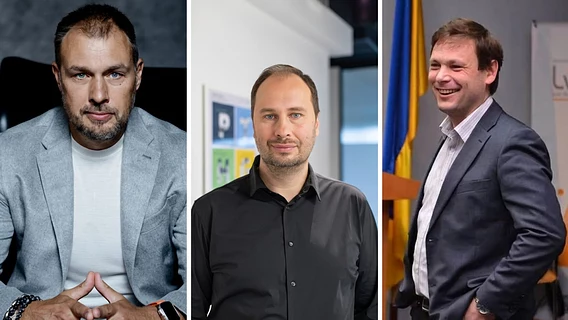
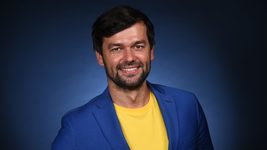
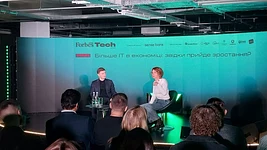
Why “selling man-hours” can no longer be a successful business model and how companies are changing their positioning and approaches to the customer? The CEOs of Intellias, SoftServe, and Sigma Software — Vitaliy Sedler, Andriy Stytsyuk, and Valeriy Krasovsky — shared their thoughts on this topic during the Forbes Tech forum.
"No corporate culture can "overcome" the laws of economics"
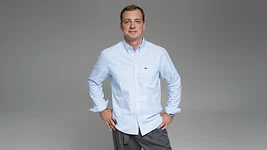
Vitaly Sedler immediately prepared the audience for “uncomfortable conclusions.”
“It seems to me that a significant part of Ukrainian IT is still in a kind of coma regarding the rejection of the new reality. For example, almost every day I get approached by companies offering to help us hire engineers. Or they tell me what great engineers there are on the market. But now, as a rule, these are not just engineers, but AI engineers. But the fact that we added two letters to the name of the profession has not changed the world,” says the CEO of Intellias.
He emphasizes that access to engineering talent and even access to technical expertise ceases to be a significant advantage, because the client is interested in something completely different: how to increase revenue, how to reduce production costs, how to create a better product, how to overtake a competitor, and so on. “But how many Ukrainian companies are actually trying to deeply understand their client and understand their needs? How many of us are ready to come to the client not with a team proposal, but with our own vision of how to make this client’s business better? And what’s more, to take on some of the responsibility, that is, some of the risk for this result,” Sadler asks rhetorical questions.
According to him, Ukrainian companies have been trying to be “good engineers” for decades, but now they need to learn to be “good business partners.”
As Sadler says, this is a much more complex transformation than simply teaching an engineer to use artificial intelligence.
“I’m not sure how deeply our IT companies are aware of this. By the way, I’m not very comfortable talking about it either, because for 20 years I built a business according to the model that I’m now urging you to change from the stage,” said the CEO of Intellias.
He formulated the new approach introduced at Intellias in three words — client outcome first, noting that their value is determined not by the number of people involved or hours worked, but by the real impact on the client’s business problems.
“It is for this influence, and not for the time spent, that we must learn to make money,” the IT entrepreneur concluded succinctly.
As for the employment of IT professionals, Sadler states an unfortunate but obvious fact — IT companies will need fewer people to perform the same amount of work.
“This is an economic reality that makes no sense to deny. For decades, the Ukrainian IT industry lived in conditions when the demand for workers significantly exceeded the supply, and we, employers, competed for people, created comfortable conditions for them, and cultivated loyalty in them. And, probably, we ourselves formulated a feeling of guaranteed demand in our employees. There are no such guarantees anymore,” the head of Intellias voices his vision.
He urges all technology industry workers to ask themselves the question: will the market need their skills in three years?
“The market, not my company, but the market itself. And what am I doing for this now? And, by the way, this is the question for me: will the market need my skills, my competencies as a CEO in three years?” emphasizes Sadler.
According to him, no corporate culture can “overcome” the laws of economics, and the responsibility of IT companies in the current conditions is to create opportunities for their employees to develop. “But the responsibility of the employee is to take advantage of these opportunities and find themselves in the future,” he adds.
Another conclusion that Vitaliy Sedler shared with the audience concerns the vision of Ukraine as a leading player in the IT market. In his opinion, in the current conditions, this should not be taken for granted, because no one has given Ukraine “the guaranteed right to continue being an IT country.” This right, according to Sedler, must be constantly proven anew, especially in the current reality, which poses new challenges to the IT business.
“We really like to be proud that Ukraine is a technological nation, that we have hundreds of talented engineers, a strong mathematics school, $7 billion in IT exports, etc. But all these are our past achievements, not guarantees of the future. To a large extent, the success of the IT industry was built on the fact that we could offer the world high-quality engineering at a competitive price. But what happens to this competitive advantage in a world where engineering is rapidly becoming cheaper?” he asks rhetorical questions.
According to Sadler, it’s time to change what Ukraine builds its reputation on.
“For 30 years, we have been building Ukraine’s reputation as a country with talented people. Now it’s time to build Ukraine’s reputation as a country with smart businessmen. We need more entrepreneurs, not more programmers. We need more of our own intellectual property, more industry expertise, more understanding of global markets, more willingness to risk our own capital. And I am convinced that over 30 years, we have built all the necessary prerequisites for this,” the company’s head noted.
In his opinion, it is not the entire technology industry that is currently in an existential crisis, but certain business models and “unwillingness to change,” while the technology industry itself is perhaps facing the greatest number of opportunities in its entire history.
This is bad news for those who want to maintain their status, but fantastic news for those who want to achieve this new status. For ambitious entrepreneurs, for ambitious engineers, for ambitious companies. I am convinced that now is the best time in the history of the technology industry. And that is how I perceive this new reality,” he concluded.
"The client always pays money for the same thing — for solving their problems. It’s just that the problems change"
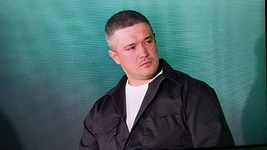
Andriy Stytsyuk, recently appointed CEO of SoftServe, shared that during the last strategic session, the issue of the company’s "identity" and business model transformation were discussed, among other things.
“The client always pays money for the same thing — for solving their problems. It’s just that the problems change. And now the problem for clients is not where to find people to solve their specific tactical business problem. The problem is how to rethink their business, and SoftServe helps clients rethink their business,” Styciuk noted.
In this context, Styciuk told about the case of one of SoftServe’s clients — an American road company that was experiencing a high level of injuries among its employees. SoftServe developed a system for this client that uses artificial intelligence to warn road service workers about dangers on the roads.
“The client came with a problem — look, our insurance payments are growing, people are dying. We cannot continue to work in such conditions,” Stycyuk noted, adding that this client was brought to them by Nvidia.
SoftServe has combined traffic maps, data from traffic cameras, information about changing weather conditions, and many other data from various systems in its solution to be able to prevent road incidents.
“We tested it, the solution works on our client’s side, and the company that does such road works reports that the level of injuries is significantly decreasing. That is, we are actually helping to save human lives, we are helping to banally reduce the costs of insurance and medical care for this company,” Styciuk shared, illustrating with this case the fact that today clients come to IT companies with non-obvious and complex requests that, at first glance, may not even be related to the IT sphere, and the company itself is looking for possible solutions.
The CEO of SoftServe says that in this case, the company is in the process of negotiating with the client to scale this solution to new road sections.
According to Stytsyuk, IT companies that have traditionally worked as outsourcers should become business partners for their clients, not just order execution.
“We should try to solve the client’s problem, not try to “sell” him additional people,” says Styciuk.
The CEO of SoftServe believes that quality management as a competency for such companies can be placed at the level of a separate product.
“This is a whole philosophy — to analyze and listen to everything that the client does. This way you can understand how the entire architecture of the client is built, and not go into any specific product. We need to assess where our strengths and weaknesses are in relation to what the client needs, and start “selling” him much more,” Stycyuk said, saying that IT companies now have to help clients systematically change their business with specific consequences, and not just make this or that software.
"The risk for food companies is even greater than for consulting"
Sigma Software CEO Valeriy Krasovsky believes that the term IT outsourcing is losing its relevance, and it is more correct to define this area of activity as IT consulting. At the same time, Sigma Software builds products together with partners, not limited to IT consulting.
“We don’t just do IT consulting, we also build product companies with other entrepreneurs. We have quite a few different products. One example is the company we founded together with our customer from Sweden. We founded a company with certain products in document management: in six months, three finished products were released to the market, 100 paying customers and $100,000 in first revenue. Before AI, this was absolutely impossible,” Krasovsky noted, illustrating this as a successful example of AI agent orchestration.
He noted that currently there are no requests from clients to involve teams of this size.
“Previously, for a company of our size — up to 2,000 people — to receive a request for 50 or 100 people, or even 150, was common practice, but now that is no longer the case,” says Krasovsky, adding that the business model of collaboration has shifted to specific projects, rather than permanent work.
He noted that the market has not yet "formed" the traditional IT outsourcing business model, so many companies have not yet fully understood the new realities.
At the current stage, as Valeriy Krasovsky says, IT companies should prioritize the business component, not engineering.
“The business part becomes even more important. Okay, you can do something, but then no one will need it if you don’t know how to sell,” states the head of Sigma Software.
At the current stage of AI development, Valeriy Krasovsky believes that some product companies are even at greater risk than IT consulting companies. After all, with the help of AI, it is now quite easy to create a product from scratch.
“There is space for all of us, but everything is changing so quickly that you just have to constantly monitor it all. And I think the risk for product companies is even greater than for consulting. Because it can all be redone at once — and knock all these monsters, big CRM systems, out of the market,” says the CEO of Sigma Software.
He gave an example of internal software for which the company previously had to pay about $50,000 per year, but developed its own analogue.
“There has been such a technical change that before you bought a ready-made product, on which a team of 200-300-400 people constantly worked. Now you can do it all yourself and it’s easier. Moreover, when you chose an external product, you adjusted part of your processes to this product. Now, on the contrary, you can adjust the software to your processes,” says Krasovsky.
So consulting companies, he said, can easily build cool internal products much cheaper than they used to.
Thus, the conclusion from the speeches of top speakers from Ukrainian IT companies suggests itself as follows: the future of IT outsourcing will be determined by the transition from simple hiring of “hands” and closing tasks to deep product expertise, integration of AI into all stages of development, and partnership at the level of business results. Whether everyone can do this and whether everyone will understand it in time are open questions.
“Monitoring AI agents’ decisions and catching errors is a full-time job.” Avenga CEO talks about how AI is changing IT outsourcing and predicts a new source of income for outsourcers
“Selling the hours of a developer who has become three times more efficient thanks to AI is pure business masochism.” The head of InSoft.Partners on how artificial intelligence is destroying classic IT outsourcing
«Пастка початківця». 5 найпоширеніших помилок джунів на співбесідах та як їх уникнути
Напевно, кожен хоч раз у своєму житті переживав ситуацію, коли після співбесіди замість запрошення на роботу приходила відмова. «Як же так? Це несправедливо!», — чимало з нас корили долю і не розуміли, що пішло не так. Катерина Нікітіна, SoftServe IT Academy Recruiter, розповіла про п’ять найпопулярніших помилок кандидатів-початківців на співбесідах.
У 18 років «захантив» SoftServe, у 21 — відкрив власну компанію. Історія львівського IT-вундеркінда
Гліб Щур — випускник кафедри систем штучного інтелекту НУ «Львівська політехніка». На молодших курсах його запросила на роботу IT-компанія SoftServe, де він працював майже 3 роки розробником у R&D-відділі. А вже у 2021 році Гліб заснував власну компанію та став CSO у 21 рік. Розповідаємо історію львівського «самородка».
“If complicated tax procedures are added, some people will not dare to enter the legal field.” WhiteBIT commented on the adoption of the law on crypto taxation
Have important news to share? Message our Telegram bot
Key events and useful links in our Telegram channel