Олександр КузьменкоSpaceTech
13 December 2024, 18:57
2024-12-13
NASA has figured out why its previous helicopter, Ingenuity, crashed on Mars, and is already preparing a new, even larger Mars Chopper
Engineers from NASA’s Jet Propulsion Laboratory and AeroVironment have revealed the cause of the crash of the first Mars rover, Ingenuity, on January 18, 2024, which resulted in damage to the blades. The scientists also presented a concept for their next helicopter, which will explore the «red planet» from the sky — Mars Chopper.
Engineers from NASA’s Jet Propulsion Laboratory and AeroVironment have revealed the cause of the crash of the first Mars rover, Ingenuity, on January 18, 2024, which resulted in damage to the blades. The scientists also presented a concept for their next helicopter, which will explore the «red planet» from the sky — Mars Chopper.
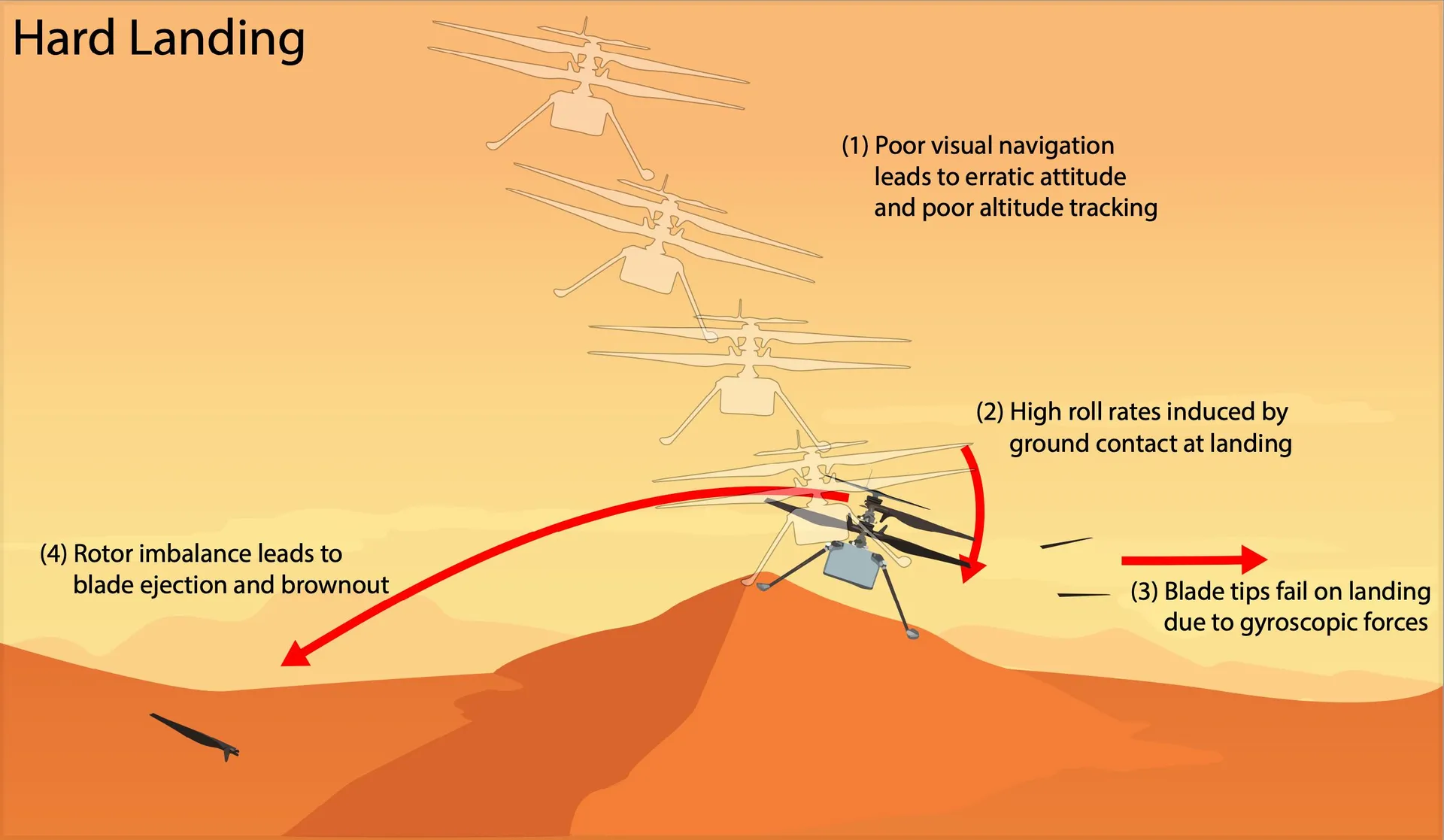
Now scientists have detailed what led to this. The rover’s visual navigation system, which was designed to track textural features on the Martian surface, was confused by a featureless stretch of undulating sandy terrain, leading to an incorrect speed estimate that led to a hard landing.
Based on remote data, including photographs taken after the flight, researchers believe that «navigation errors created high horizontal speeds during landing,» which likely led to Ingenuity experiencing a «strong impact on the slope of a sandy undulating surface,» causing it to roll and sway.
A visualization of how Ingenuity was damaged. Image: NASA
NASA engineers initially thought that Ingenuity’s rotor blades were damaged after contact with the Martian surface during the crash. They now believe that they broke off because «the rapid change in course placed a load on the rapidly rotating rotor blades beyond their design limits.» Part of one of the rotor blades was about 15 meters from where the rover finally came to rest.
Damaged but not broken
However, except for a propeller failure late in the mission, Ingenuity is generally in good shape and could still be useful. Scientists say Ingenuity still has «about 20 years of memory» left on board, meaning it could continue to take measurements and images every sunny day on Mars.
However, it may not be able to transmit this data to Earth. The Perseverance rover, with which Ingenuity maintains radio communication and sends its data to the mission team, is currently 3 km away from the helicopter. Ingenuity may soon lose contact with the ground control center.
«I think that within the next month we will lose contact forever, either until we return in 20 years with astronauts, or until we return to return samples,» NASA believes.
How NASA plans to replace Ingenuity
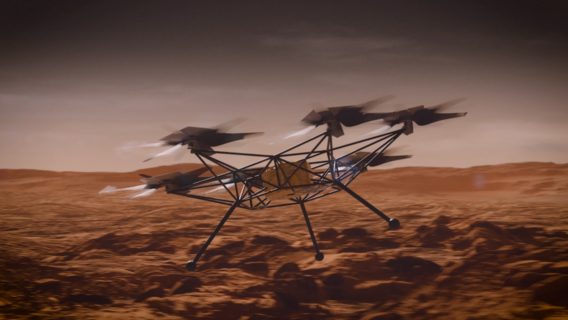
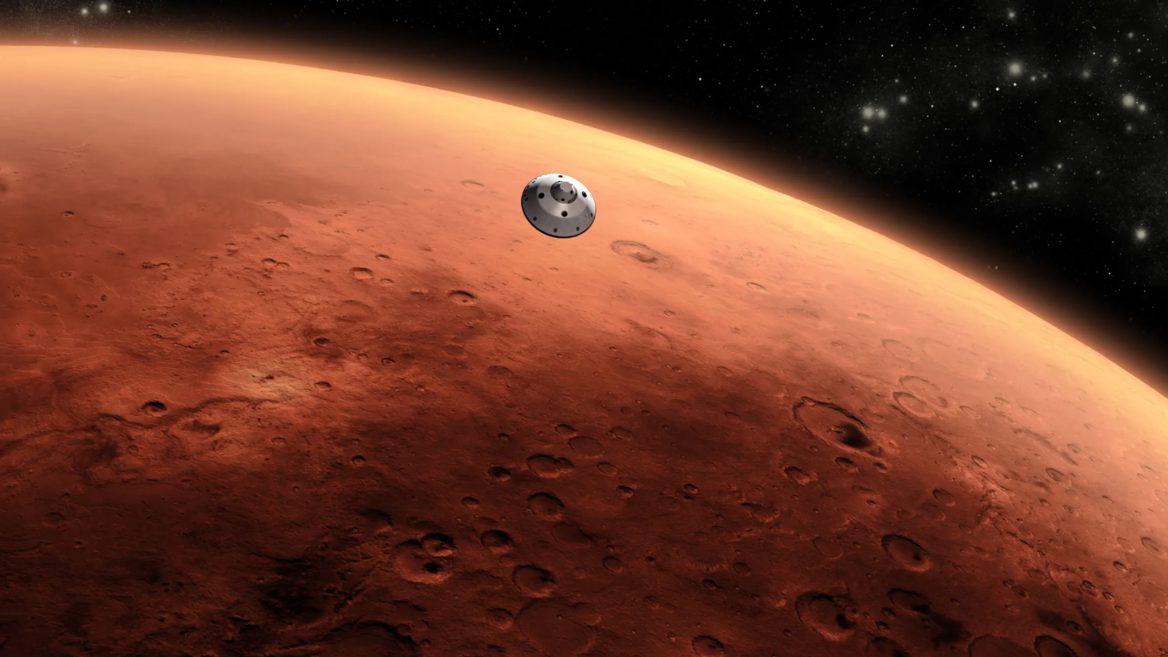
Scientists have already unveiled a conceptual design for their next helicopter to explore Mars, the Mars Chopper. A short animated video shows NASA’s concept for a vehicle that will fly over the «red planet».
The helicopter, which is still in the concept and design stages, is intended for Mars exploration, but its larger size and multiple rotors mean it will also be able to carry scientific instruments to study terrain that rovers cannot reach.
Божество, зореліт, уламок планети: що людство знає про Місяць і як збирається туди повертатися
16 листопада 2022 року NASA успішно запустила місію Artemis 1 до Місяця. Ракета Space Launch System (SLS) і корабель Orion стартували о 8:47 за Києвом із космічного центру Кеннеді на мисі Канаверал. Задача корабля Orion — покрутитися навколо супутника Землі шість днів і повернутися на Землю, після чого можна запускати людей. Якщо все пройде успішно, уже за кілька років ми побачимо грандіозний камбек і реюньон людства на супутник Землі. Що ми знаємо про Місяць, чому так довго його ігнорували та як будемо повертатися — в оновленому завдяки успішному старту (нарешті!) суперексплейнері від dev.ua від 29 серпня 2022 року.
Очі, якими ми дивимося у Всесвіт. Навіщо людству такі телескопи, як «Джеймс Вебб» і «Габбл»
Космічний телескоп «Джеймс Вебб» показав свої перші зображення, до яких цей проєкт ішов із початку 1990-х. До цього основним нашим «оком» у Всесвіт був «Габбл».
Have important news to share? Message our Telegram bot
Key events and useful links in our Telegram channel