Хочете будувати кар’єру в Data Science та AI? Vodafone Big Data Lab відкриває новий набір —>
Марія БровінськаІсторії
29 September 2025, 09:00
2025-09-29
“I studied Data Science since I was 4 years old. Every math lesson was important.” The story of a math genius from a small village in Volyn who is now creating LLMs for Lyft, Reface, and AppFlame
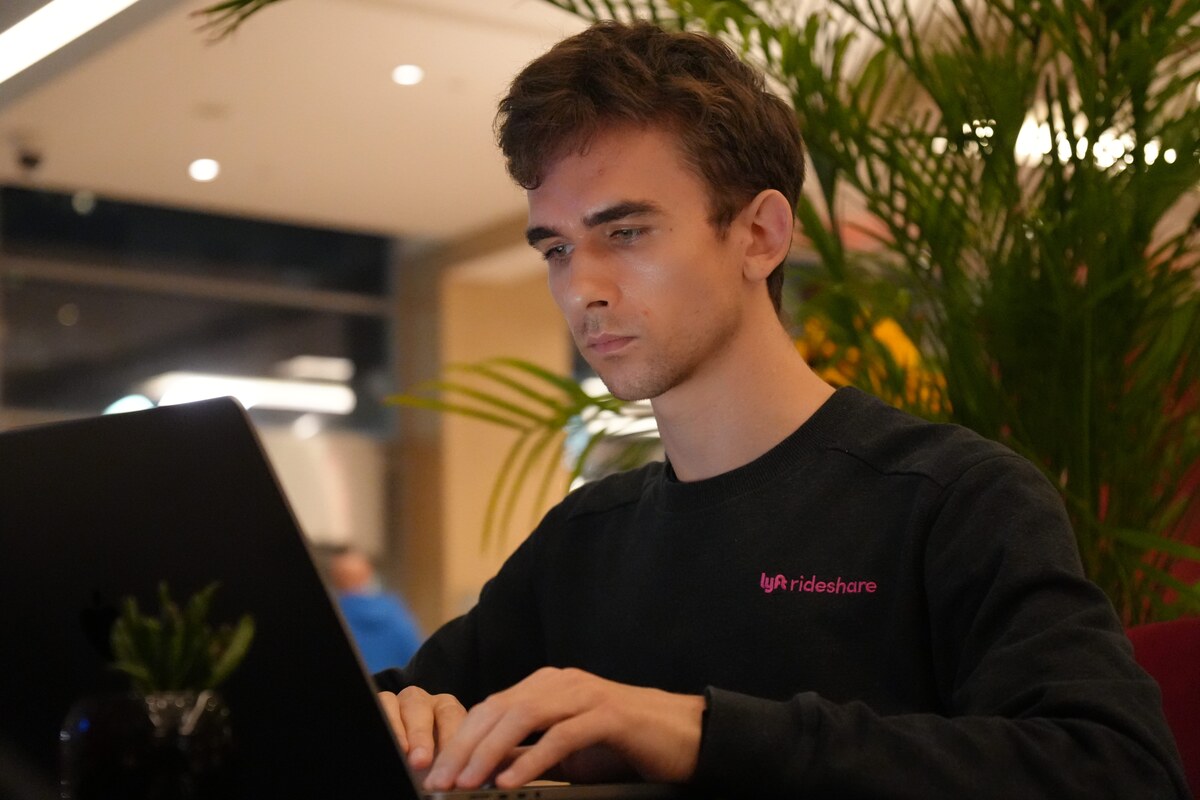
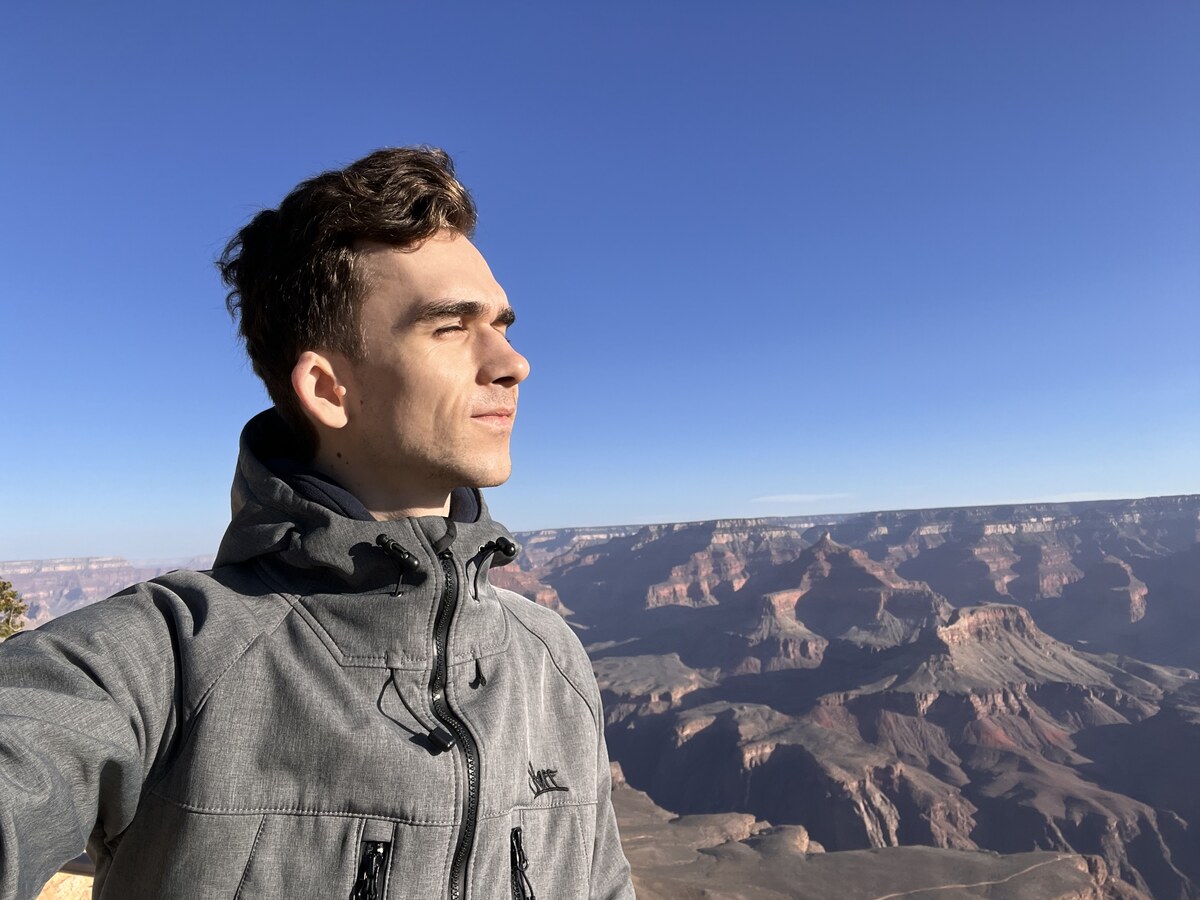
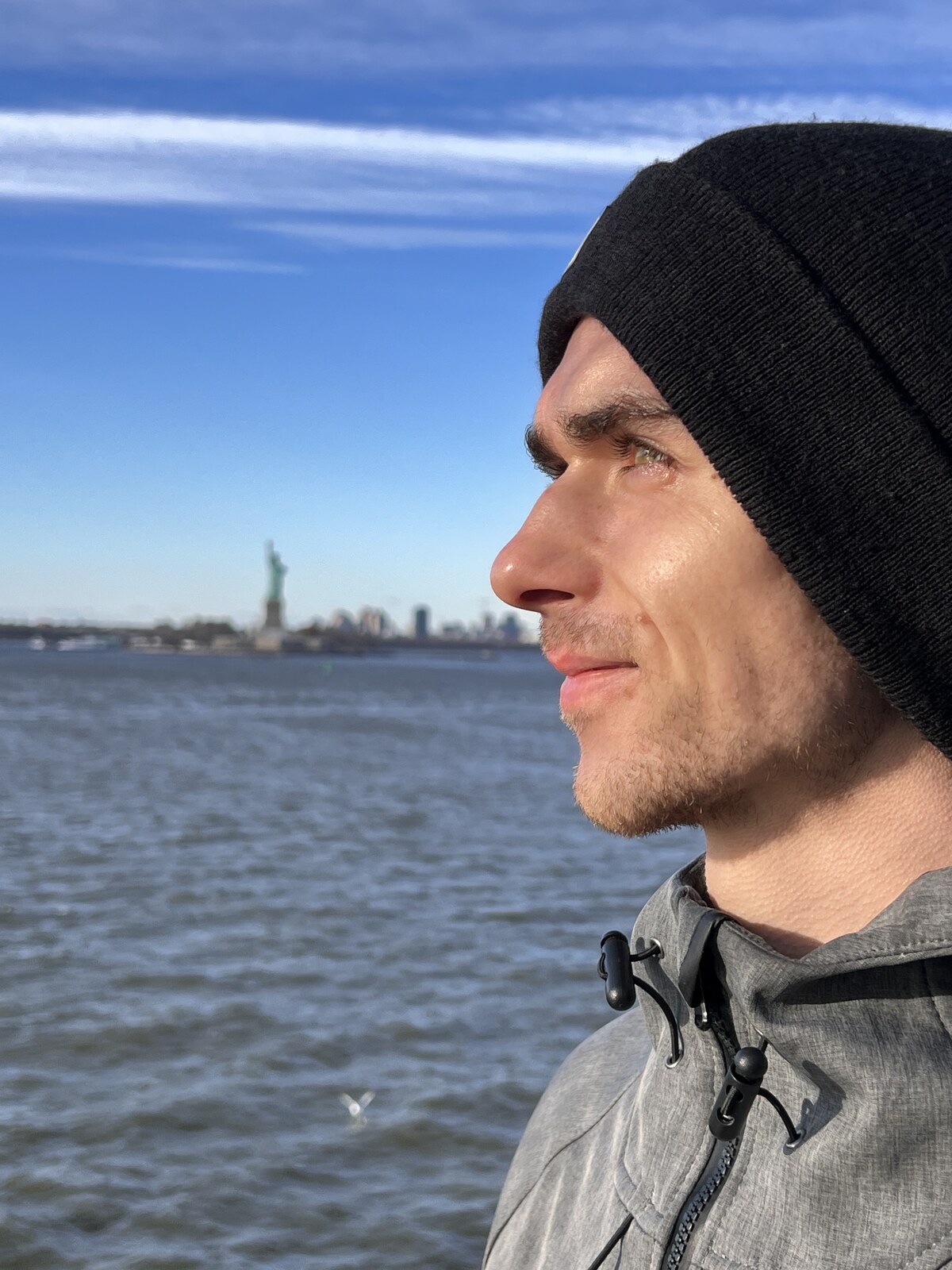
Imagine a Ukrainian who was born and raised in a small village with a population of 270 people, and now works for a tech giant in the USA. This is the real story of Serhiy Savin, a Data Scientist from the village of Khrypalichi, Volyn region. Serhiy told dev.ua about his path to global IT, work at Lyft, Reface, AppFlame in the USA, his desire to share knowledge and recording a course for «Diya.Osvita», as well as his own plans and ambitions. What follows is his direct speech.
Imagine a Ukrainian who was born and raised in a small village with a population of 270 people, and now works for a tech giant in the USA. This is the real story of Serhiy Savin, a Data Scientist from the village of Khrypalichi, Volyn region. Serhiy told dev.ua about his path to global IT, work at Lyft, Reface, AppFlame in the USA, his desire to share knowledge and recording a course for «Diya.Osvita», as well as his own plans and ambitions. What follows is his direct speech.
Mathematical genius
I come from a small village of Khrypalichi in Volyn region, with a population of about 270 people, where life was simple and modest. From childhood, my parents taught me the values of hard work and independence. When I was asked what I wanted to be, I answered «financial director». Perhaps this is due to the fact that this profession requires a lot of calculations, which I really liked.
As a toddler (4-5 years old), I had already mastered the first grade math program. I remember riding the bus with my father, he would give me examples on adding/subtracting numbers and I would solve them in my mind. People on the bus were constantly surprised.
That’s why I really enjoyed school, education became my path to broader horizons. I was the best student in the village school, especially excelling in mathematics.
My math teacher noticed my talent and recommended that I change schools. So at the age of 14, I left my home 140 km away to Lviv to live and study at a physics and mathematics lyceum.
The path to IT
Although I didn’t dream of a specific career as a Data Scientist as a child, I always aspired to STEM subjects and wanted to study at the best university. My driving force was the desire to gain new knowledge. I am grateful for the opportunities and experiences that shaped me.
My path to tech giants began with academic excellence and studying mathematics and economics. At school, I won numerous awards at the All-Ukrainian Olympiads in Mathematics and Economics, and also received a perfect score of 200/200 on the external exam in mathematics. These subjects are the foundation of Data Science, as they develop skills in statistical analysis, modeling, and analytics.
In 2015, I entered Taras Shevchenko National University of Kyiv, Faculty of Economics, specializing in finance, and took first place on the admissions list, which provided me with a full scholarship.
While studying for my bachelor’s degree, I worked in finance and business consulting. This experience made me realize that this was not the profession I wanted to work in. So I started looking for other areas where my skills would be valuable. That’s how I found my professional mentor — Oleksandr Kutovy, who helped me choose a profession that I really liked — Data Science.
But getting into this industry right away is difficult. That’s why I enrolled in a master’s program at the Kyiv School of Economics (KSEE), where I took courses in Data Science.
It was studying at KSE that gave me the fundamental knowledge necessary for Data Science.
Perfect job
Overall, my life story is one of growth through constant learning. It was educational institutions that became the foundation for my social elevator.
I decided to work with data because I realized that Data Science is my ideal job. In this profession, I can bring real benefits by applying my STEM knowledge and business skills.
You could say I’ve been studying Data Science since I was 4. Every math lesson from 1st grade to my last year of graduate school was important.
I gained most of my fundamental knowledge in the master’s program at the Kyiv School of Economics (KSEE).
I also took online courses that developed my skills: MITx «6.431x: Probability — The Science of Uncertainty and Data», The Complete SQL Bootcamp, Tableau 20 Advanced Training: Master Tableau in Data Science, and SQL Habit.
My first IT job was at AppFlame, where I honed my A/B testing skills, worked on improving product metrics, and launching new product features. Later, I moved to Reface, where I developed a model for intelligent push notifications.
Data Science is an industry that is developing very quickly, so you need to constantly learn something new. If you don’t learn anything, your knowledge becomes outdated in 3-4 years, and you find yourself out of the market. Therefore, at all my jobs, I have constantly undergone training. Each company provides a lot of resources for training its employees, which I actively use.
Competition for a tech giant
The selection process at Lyft was one of the most complex in the market. The entire process is very similar in structure and complexity to the selection process at the FAANG companies. It consists of six stages, each of which is completely in English: resume screening, interview with a recruiter, technical interview, business interview, probability theory interview, live coding interview, and professional experience interview.
Each interview lasts 45-60 minutes. It took me two months to prepare for all the interviews.
At Lyft, I worked on improving trip time prediction and building optimal routes for drivers. It’s a very interesting and challenging topic, because it’s based on graph theory. Each task is a challenge for theoretical and technical skills.
One of my proudest projects is improving the user experience on toll roads. Toll roads, bridges, and tunnels are common in the United States, and they require payment. This was a complex task, with data fragmentation and accuracy issues, requiring innovative solutions and coordination across teams. Traditional reconciliation systems are based on static rules, but I used machine learning models to identify patterns in toll road data and automatically flag discrepancies. This allowed Lyft to proactively correct errors. Thanks to this model, fare calculations have become much better, millions of drivers are paid more fairly for their trips, and passengers have a better understanding of the cost of their trips.
Another project I worked on was improving route safety. I built algorithms that detect problematic maneuvers on the road. The road network in the US is millions of kilometers of intersecting roads with thousands of signs and rules. Therefore, it is necessary to have models that automatically detect maneuvers that should not be recommended. Thanks to my algorithms, I was able to find many such «problematic maneuvers» and exclude them from route recommendations.
Each of the implemented projects is millions of dollars for drivers, passengers and the company. Therefore, each decision must be considered. On the other hand, the company gives full credit for trust. No one checks your work, everyone is fully responsible for their work. This teaches you to take responsibility and solve problems quickly.
While building a complex model requires deep technical expertise and the use of advanced algorithms, more important is the ability to convince the business of the value of that model.
One of the advantages of Lyft is the high encouragement for experiments, so I often try to do something of my own. Sometimes this develops into full-fledged projects. However, it is important to understand that people are the most valuable asset a company has, literally. Therefore, everyone is interested in investing employees' time in the best projects. Therefore, you need to have a clear answer to the questions: «how much time and resources are needed for this model/project», «what is the potential benefit for users/the company». Also, communication with colleagues and other colleagues within the company is important, because innovations often affect adjacent teams and this needs to be managed effectively.
Think like a business analyst, not just an engineer
My experience as a business analyst has taught me to apply consulting approaches and business logic to working with Data Science. My economic education and consulting experience allow me to approach problems holistically. This sets me apart from colleagues who often focus only on optimizing algorithms.
I always make sure my decisions align with broader business goals—whether it’s increasing profitability, improving customer experience, or strategic growth.
As Steve Jobs said: «Innovation is saying no to 1,000 things.» There are always more ideas and suggestions that can be done and improved than there is time and resources for actual implementation. Therefore, the ability to prioritize tasks is an important business skill for a Data Scientist.
While at the beginning of a career, a Data Scientist may have precise tasks with clearly defined expectations, in middle+ positions the tasks become more vague and business-oriented. Therefore, developing a business mindset is a key to professional development in this industry.
Everyone needs Data Science specialists
The demand for Data Science professionals in the United States continues to grow. The U.S. Bureau of Labor Statistics (BLS) predicts that employment for Data Scientists will grow by 36% from 2021 to 2031, making this profession one of the three fastest-growing.
At the same time, there is a change in the market. First, the demand for senior specialists is growing, but the demand for junior/inter specialists is falling. Companies are looking for experienced specialists who, with the help of artificial intelligence, will develop models for the company’s needs. Second, the market is becoming wider. In contrast to «traditional» technology companies, industries such as healthcare, finance, transportation and others are increasingly hiring Data Scientists to develop their products. Therefore, more and more highly specialized Data Scientists are appearing on the market. If a person has something else besides technical education, this becomes a competitive advantage.
The desire to teach others
Since September 2021, I have been the Competence Lead in Data Analytics at Ampersand Foundation, where I help young professionals build careers in data analytics. I also mentor young colleagues within Lyft. My mentoring is extremely important to me for a few reasons:
This is my way of saying thank you for the help I have received throughout my life. As I mentioned earlier, it was my mentor from Ampersand Foundation throughout my life who helped me choose the profession of Data Scientist and build a strategy for transitioning from finance to Data Science. Without a mentor, this path would have taken much more time and effort. Therefore, I feel the need to help other talented people, as they once helped me.
The role of a mentor contributes to professional and personal development. I like it when my mentees ask difficult questions that I would not otherwise consider. Quite often, I learn new interesting information from my mentees: new tools, new methods, interesting business solutions — all this broadens my horizons.
This experience allows me to understand industry trends. When I started my career, the IT market was very different from what we have today. And it is communication with mentees that allows me to understand what is really happening in the market, in different industries and countries. This way I have a better picture of reality.
I also co-authored two comprehensive educational courses in the field of Data Analytics, in collaboration with the Ukrainian popular science media platform «Kunsht».
I believe that such projects are very important for IT education. First, these are free courses that are available to all Ukrainians. Usually, such courses are organized by private companies and are paid. Second, these courses are completely in Ukrainian, as opposed to English-language courses, which are more common. Third, these courses are prepared by experienced industry professionals, so they focus on practical knowledge that is really needed in work. I believe that this is a game-changer in the IT education market in Ukraine, because it makes quality education available to every Ukrainian.
I have a clear intention to continue to create more advanced educational programs. My education and professional experience allow me to make significant contributions to the field of learning.
For the past year, I have been writing my own course on advanced SQL techniques for Data Scientists. In this authored course, I focus on advanced topics such as query optimization, working with big data, and using complex custom functions, etc. I plan to release this course on one of the educational platforms later this year.
Ambitions and prospects
Of course, like many IT professionals, I am thinking about my own business. I think it will be something in the field of IT education, mentoring and consulting — activities that I enjoy. However, for now, I am more focused on professional development. After all, I want to consolidate my knowledge and skills on a deeper level. I believe that when the time comes, everything will fall into place, and I will be able to combine what I love with the opportunity to help even more people achieve their professional goals.
A balance between work and personal time is very important to me right now. A complete disconnection from work is a must have.
With work experience, I realized how important it is to separate work and personal time. To avoid burnout at work, I regularly take vacations and try to travel to other cities.
I like to cook, although it doesn’t always turn out delicious. I also like to put together puzzles and various constructors, watch Netflix series. This year I discovered a new interesting activity for myself — a book club. Every month we read a new book and get together to discuss it, it turns out very interesting. I recommend this format if you, like me, find it difficult to start reading fiction books. I also go to the gym and the pool to maintain my health, because constant work at the computer needs to be compensated for by regular physical activity.
TOP mistakes of data scientists
Based on what is considered critical to success at large companies like Lyft, I can highlight the following potential mistakes that I see in less experienced colleagues:
Inability to think globally about business impact (Lack of Business Acumen): Many professionals focus solely on optimizing algorithms and models, rather than ensuring that solutions align with broader business goals—such as increasing profitability, improving user experience, or strategic growth. It is important to approach problems holistically, understanding the company’s operational and long-term strategic goals.
Insufficient mastery of proprietary tools and infrastructure: In large companies, there are many internal tools for optimizing work. Quite often, young Data Scientists learn only the basic minimum and stop there. However, in large companies there are special teams whose goal is to improve tools and infrastructure for Data Scientists. It is worth following the updates, attending productivity courses and providing your own feedback.
Inability to effectively communicate technical results: Even the most sophisticated models will have no value if they cannot be clearly communicated to non-technical stakeholders. I advise all Data Scientists to take public speaking courses and courses on building and designing PowerPoint presentations. Quite often, brilliant advice and solutions go unnoticed due to insufficient communication.
Must-have skills for a Data Scientist in the next 3–5 years
Based on my own experience, I believe that in the coming years, Data Scientists will need to possess not only technical, but also highly specialized business-oriented skills:
Business acumen and holistic approach (Holistic Problem-Solving): This is probably the most important. The use of consulting techniques and business logic is a must have for a Data Scientist. The spread of AI allows you to solve most simple tasks, so the role of a Data Scientist will be mixed into the role of an «arbitrator». There will be more opportunities for developing and implementing models, and therefore you will have to make decisions more often: «what needs to be done and what not», «what will be useful and what will not», and it is consulting techniques and business logic that help with this.
Causal Inference: An important skill for a Data Scientist is the ability and knowledge of A/B testing. However, more and more companies are starting to use an alternative/auxiliary technique called Causal Inference, which allows them to quantify cause-and-effect relationships without conducting A/B testing. I see the demand for Causal Inference specialists growing, as more and more companies are asking the question «why?».
Scalability and Distributed Computing: Data Scientists must be able to work with massive data sets in real time. According to various estimates, the global volume of data can double every 2-3 years. According to forecasts, by 2030 the global volume of data can reach 175 zettabytes, which is 10 times more than today. Therefore, it will be necessary to work with larger and larger data sets, and you need to learn the appropriate tools and techniques.
«Customers and PMs joked that I shouldn’t rush and relax a bit.» How a developer from Lviv is building an AI-Healthcare system in the US: an interview with a Ukrainian who conquered global IT
24-річний Data Scientist з Маріуполя опублікував свій щоденник про будні в місті в облозі та втечу з пекла. Історія з хепі-ендом не без допомоги LinkedIn
24-річний Data Scientist Олексій Малишев три тижні виживав у блокадному Маріуполі. Коли йому вдалося виїхати з Маріуполя, він почав писати щоденник.
Хлопець розповів DOU, про те, як зустрів війну, довоєнні будні життя у військовому Маріуполі та висновки, які зробив в обстріляному російськими солдатами місті. Публікуємо оповідь в скороченому вигляді.