Хочете будувати кар’єру в Data Science та AI? Vodafone Big Data Lab відкриває новий набір —>
Наталя ХандусенкоAI Eng
30 October 2026, 08:51
2026-10-30
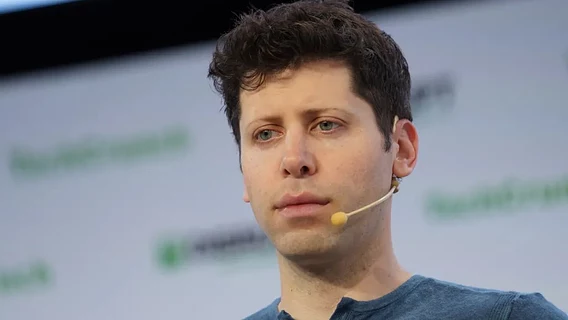
Sam Altman almost canceled token payments at OpenAI: why the company abandoned this idea
OpenAI co-founder and CEO Sam Altman said the company was close to completely abandoning the traditional token payment system for its next AI model. Instead, it planned to introduce a flat fee for a specific task completed. However, after an extremely negative reaction from developers, this idea had to be abandoned.
OpenAI co-founder and CEO Sam Altman said the company was close to completely abandoning the traditional token payment system for its next AI model. Instead, it planned to introduce a flat fee for a specific task completed. However, after an extremely negative reaction from developers, this idea had to be abandoned.
Fixed fee instead of tokens
During a Cheeky Pint podcast with Stripe president John Collison, Altman admitted that OpenAI “almost made a very bad decision.” The concept was that a developer would submit a request and the system would immediately give a final price for its execution, The New Stack reports .
According to Altman, the billing model was supposed to work along the lines of AWS cloud services: “You just do something, and we send you a bill,” without the step-by-step counting of incoming and outgoing tokens. The OpenAI head did not specify which model he was referring to or when these changes were considered.
Why did the developers oppose it?
When OpenAI tried to test this concept with customers, it faced stiff resistance. The developers’ main complaint was the complete lack of transparency: “I need to understand what I’m paying for.”
Developers today spend a lot of resources tracking tokens to predict costs when scaling projects. Receiving an opaque price tag without understanding how it was calculated would make budgeting significantly more difficult.
Willingness to overpay for transparency
Altman noted that the developers he surveyed expressed a willingness to even pay more, just to maintain a clear metric: “They said it would be better if the price for tokens was higher and they would overpay, but they would understand: there is a real, measurable unit behind it.”
According to the head of OpenAI, businesses are afraid of opaque pricing because they suspect that in the long term this will lead to hidden price increases.
This problem is especially critical for creators of AI agents, whose multi-step scenarios and autonomous tasks already require computational volumes that are difficult to predict.
Tokens as an “artificial unit of measurement”
The discussion arose after John Collison asked whether tokens were an appropriate metric for assessing AI use. Altman agreed with the shortcomings of the current system, although he acknowledged that there is no better alternative yet.
“Tokens are a kind of artificial unit. So in a sense they are real, but it’s not the best metric,” Altman said. He compared all attempts to invent new equivalents to how chip manufacturers continue to specify nanometers, which no longer correspond to the physical size of transistors.
Altman also acknowledged that developers waste too much effort choosing between a cheaper and more powerful model or trying to guess the required level of reasoning for a task.
Despite all the shortcomings of the token system and the annual decrease in the price of AI computing power by about ten times, OpenAI is leaving tokens as the main currency of payments, as the market was not ready for opaque alternatives.
Як нейромережі бачать вільну та незалежну Україну? Тест dev.ua
Нейронні мережі для генерації зображень бачать світ по-своєму, їхню логіку зрозуміти часом зовсім неможливо. Але таки хочеться. На честь Дня Незалежності України редакція dev.ua вирішила провести невеликий експеримент.
Ми задали чотирьом різним нейронним мережам п’ять однакових запитів: «прапор України», «День Незалежності України», «український Крим», «перемога України» та «українці». Отриманими результатами ми ділимося з вами нижче.
У TikTok тепер можна генерувати фон за допомогою нейромережі. Ми протестували її та ділимося результатами
У TikTok з’явилася нова функція «Розумний фон». З її допомогою як фон для тіктоків можна підставляти згенеровані нейромережею зображення. Редакція dev.ua протестувала цю технологію і ділиться своїми враженнями.