Хочете будувати кар’єру в Data Science та AI? Vodafone Big Data Lab відкриває новий набір —>
Ігор Вишневський Hot News
5 February 2025, 09:00
2025-02-05
"We have practically the entire periodic table. But in the mining industry, Ukraine is 20-30 years behind." What in our bowels can become a tasty morsel not only for the domestic tech sector, but also for Donald Trump
Several recent statements by top politicians — Ukrainian and not only — have forced us to look into the very depths of Ukrainian soil. It’s not that we have such sharp eyesight, but experts helped us with this.
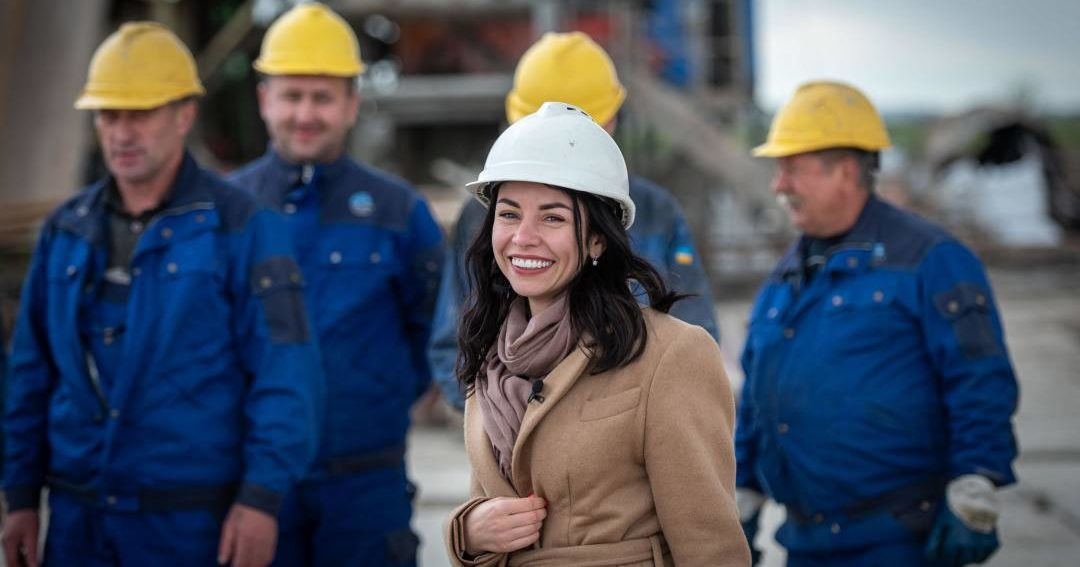
Recently, dev.ua spoke with the executive director of the National Association of Mining Industries of Ukraine, Ksenia Orinchak, on the topic of extracting raw materials for potential domestic production of microchips. And although the statements of government officials about the full cycle of microchip production did not contain any assurances, according to the expert, we have everything we need for this in terms of raw material deposits. Accordingly, the added value of such products for our country will be much higher, not to mention the concomitant development of the mining industry and other related sectors of the economy.
Several recent statements by top politicians — Ukrainian and not only — have forced us to look into the very depths of Ukrainian soil. It’s not that we have such sharp eyesight, but experts helped us with this.
Recently, dev.ua spoke with the executive director of the National Association of Mining Industries of Ukraine, Ksenia Orinchak, on the topic of extracting raw materials for potential domestic production of microchips. And although the statements of government officials about the full cycle of microchip production did not contain any assurances, according to the expert, we have everything we need for this in terms of raw material deposits. Accordingly, the added value of such products for our country will be much higher, not to mention the concomitant development of the mining industry and other related sectors of the economy.
«In fact, we have enough raw materials for Ukraine to have a value-added product in the form of a microchip. Why do we need to assemble microchips from foreign raw materials, how can we do a full cycle?», the expert asks a rhetorical question, emphasizing, however, that this requires a very significant journey and the rapid implementation of this idea would look more like science fiction.
«Usually, states subsidize such projects by about 30%.» dev.ua received more information about domestic chip production, and also learned the opinion of the tech business about this initiative
But in today’s globalized technological world, which is already teetering on the brink of geopolitical extinction, it would be naive to think that the extraction of Ukrainian resources is only an internal Ukrainian issue. Earlier this week, US President Donald Trump, who from the first days of his presidency shocked the Western world with his unequivocal aspirations to organize a global political and economic redistribution, expressed interest in Ukrainian deposits of rare earth metals. In turn, President Volodymyr Zelenskyy also, not by chance, included a clause on rare earth resources in his Victory Plan, and expressed his readiness for dialogue. But for now, at the very least, they need to be protected from Russian encroachment, which, of course, the US can help with — with weapons and finances.
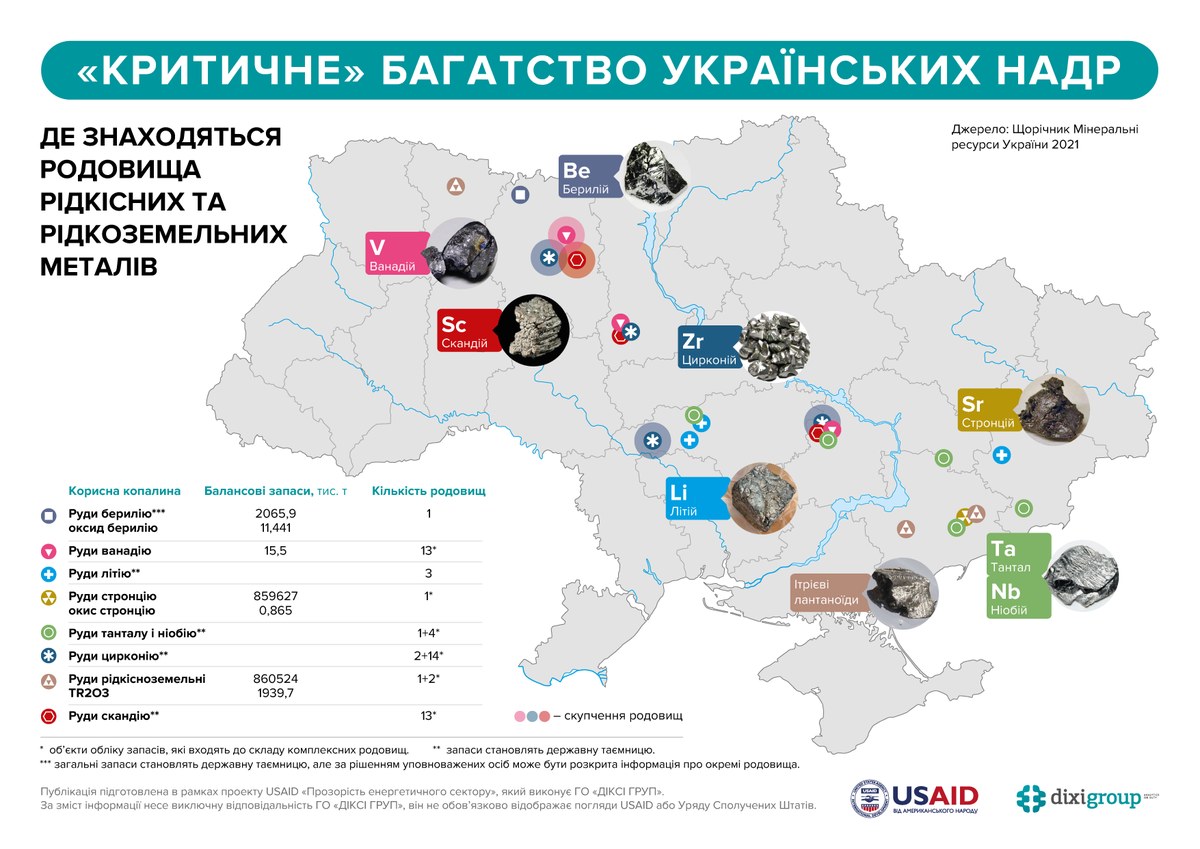
If someone wants to study the geography of Trump’s plans, the dixigroup map is a good place to start.
Now, we asked Ksenia Orinchak about which natural mineral deposits and deposits in Ukraine could contribute to the establishment of domestic semiconductor production, what is the current state of the industry, and how much money is needed to launch full-fledged extraction of these minerals for the tech sector.
The richer you are, the happier you are.
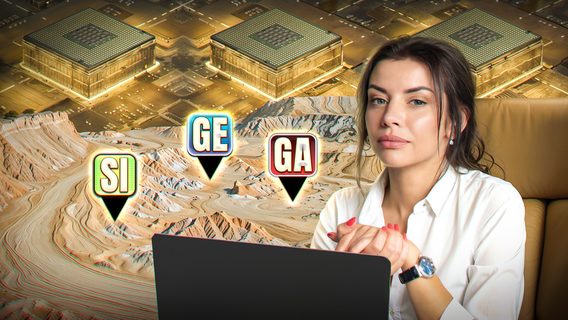
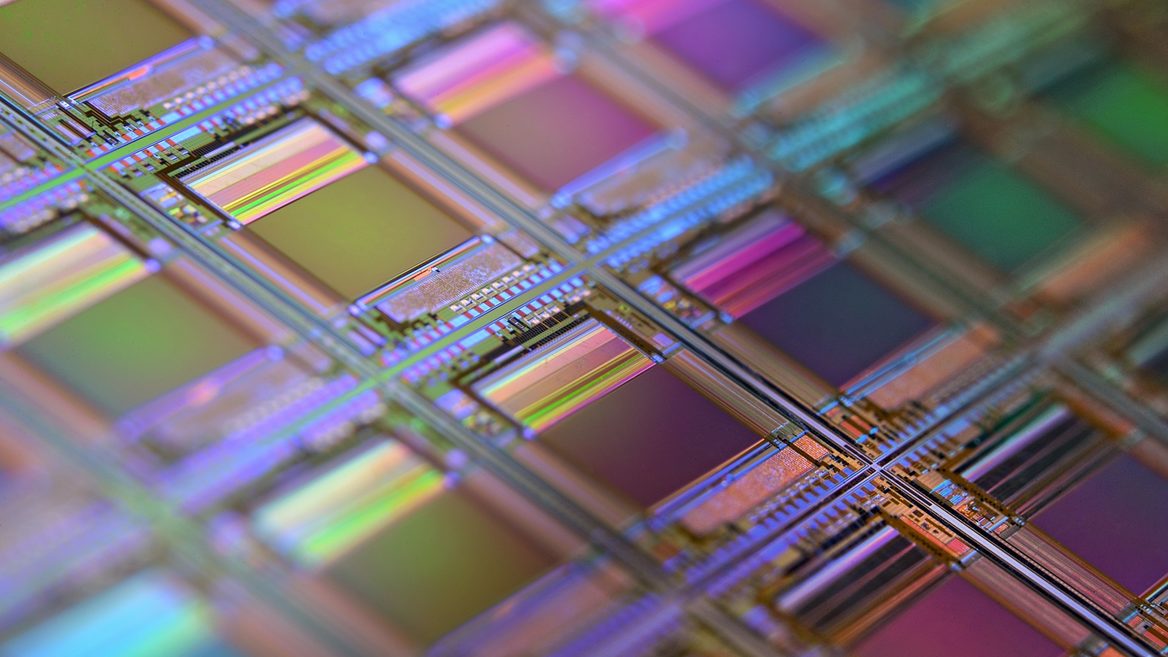
If we talk about raw materials for semiconductors, then first of all we should talk about the extraction of silicon, germanium, gallium. Indium phosphide and doping impurities — boron and phosphorus — may also be relevant in production (the production of p-type and n-type semiconductors requires the addition of impurities to the silicon crystal to change its electrical properties — a process called doping).
Silicon: the foundation of microelectronics
Silicon, according to Ksenia Orinchak, is the most common raw material for computer chips. And introducing controlled impurities into silicon, the expert says, can give it new electrical properties, making it even more useful for making microchips.
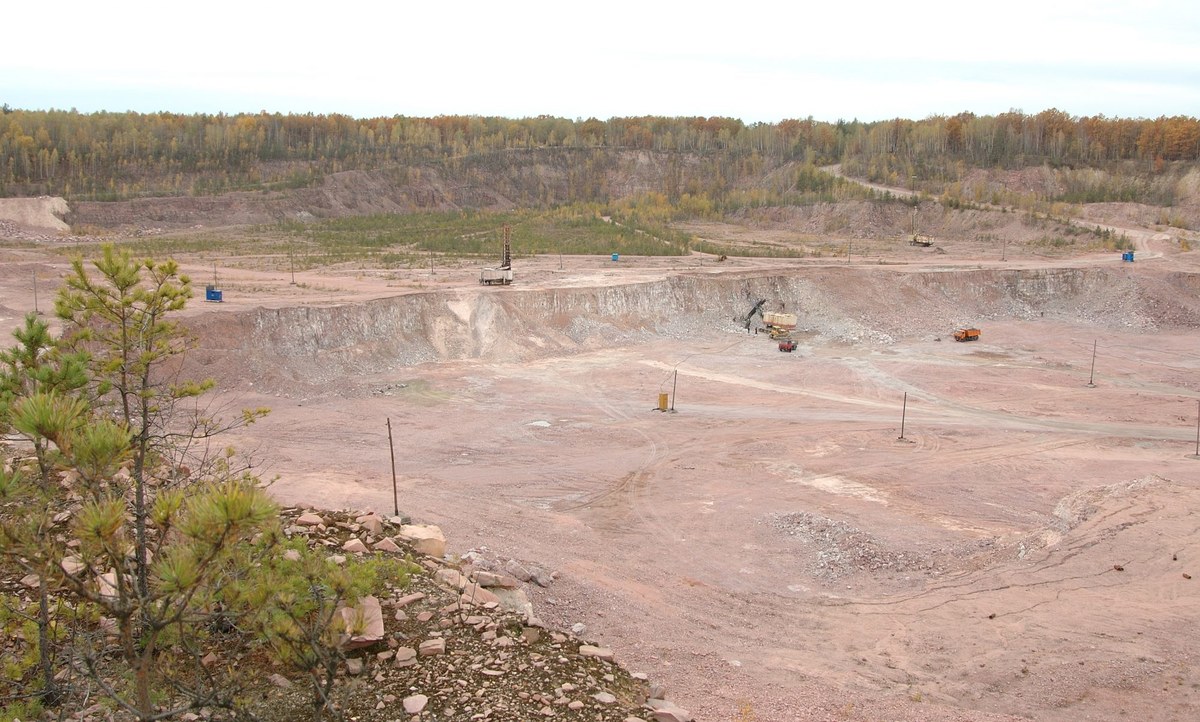
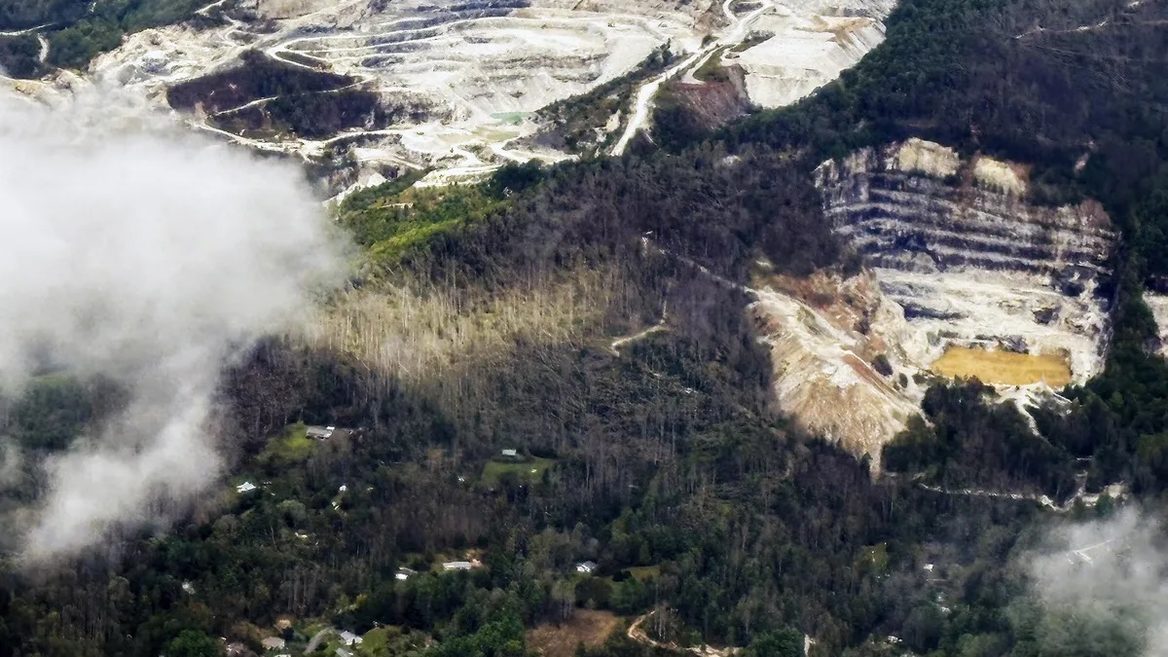
Tovkachiv Mining and Processing Plant — photo from the official website
«The basis of a microchip is silicon wafers or platforms. First, manufacturers clean, melt, or cool silicon to an ingot state. These ingots are then cut into very thin wafers and cleaned to an extremely smooth finish. The wafers then undergo a photolithography process to apply patterns. Ion implantation changes the electrical characteristics of the silicon, and etching removes excess material. The next step is to attach metal circuits — usually made of aluminum and copper — to the silicon wafer,» explains the executive director of the National Association of Mining Industries of Ukraine, explaining the details of the process.
According to her data, in Ukraine, the total reserves of the main raw material for the production of silicon — quartzites — exceed 180 million tons. Their deposits are in Dnipropetrovsk, Zhytomyr, Kirovohrad regions (Ovrutske, Tovkachivske, Bilokorovitske, Vasylkivske and Ivanovske). At the same time, the Ovrutske quartzite deposit has no analogues in Europe in terms of the quality of crystalline quartzites and reserves. The SiO2 content is 98,8%, and the explored reserves are over 150 million tons, and the forecast ones are 500 million tons.
During Soviet times, as the expert notes, Ukraine was a powerful producer of silicon, providing 21% of the USSR’s quartz raw material production and 85% of polysilicon production. Two key enterprises — Zaporizhia Titanium Magnesium Combine and Donetsk Chemical and Metallurgical Plant — provided 4-5% of the world’s polysilicon production. After the collapse of the USSR, the industry declined. Zaporizhia Aluminum Combine stopped the production of technical silicon in 2008, although it plans to resume work with a capacity of 8,000 tons per year. Pure silicon production ceased in the late 1990s. The preserved capacities remained at the Mariupol Ilyich Metallurgical Plant, which is under occupation, and the Zaporizhia Semiconductor Plant, after modernization, can potentially produce up to 1,000 tons of polysilicon annually.
One way or another, despite its significant raw material potential, silicon currently remains a scarce material in Ukraine.
Germanium: rare but indispensable
Another element widely used in computer chips is germanium. It is critical for making solar cells, fiber optic cables, satellite imaging sensors, and military applications such as night vision devices.
GMK Center Photos
Germanium ores are rare—most germanium is obtained from coal ash or as a byproduct of zinc processing. According to the Critical Raw Materials Alliance (CRMA), China produces approximately 60% of the world’s germanium, exporting 43.7 metric tons of the material in 2022.
According to forecasts, by 2030 the demand for germanium will be 320–400 tons per year, and its production will increase by almost 1.5 times. The greatest growth is expected in infrared and fiber optics (5.6% per year). In 2017, germanium appeared on the list of critical materials for Europe, and in 2018 it was included in the list of critical materials for the USA.
In Ukraine, there are coal deposits with industrial concentrations of germanium and industrial facilities for obtaining high-purity germanium. At the same time, unfortunately, the production of germanium in Ukraine is currently suspended, and the processing of metal-bearing coal is carried out without obtaining the corresponding germanium concentrate. In recent years, not only has it lost its place among the main world exporters of germanium products, but even worse — domestic industrialists have switched to purchasing germanium and its compounds abroad.
The State Balance of Mineral Resources of Ukraine as of 2024 contained reserves of hard coal of categories A + B + C1 in the amount of 358,085 thousand tons, which include 3,265.72 tons of germanium of category C1. In addition, reserves of hard coal of category C2 in the amount of 3,620 thousand tons contain 36.6 tons of germanium of category C2.
Germanium in Ukraine is associated mainly with coal deposits of the Donetsk and Lviv-Volyn coal basins, where it occurs as an associated component.
Gallium: a high-tech component
This raw material is used by manufacturers to create gallium arsenide, which is used in electronic chips. It is also useful in barometers, nuclear medical tests, thermometers, and some pharmaceuticals.
Processing bauxite for aluminum production can yield gallium metal. Only one company in Europe produces gallium arsenide of the required purity, while China and Japan produce the rest. Japan, Russia, and South Korea produce small amounts of primary gallium.
Semiconductor wafers containing gallium arsenide are more heat-resistant and can operate at higher frequencies than silicon. They are also quieter than silicon semiconductor chips—especially at high operating frequencies—making them useful for satellites, LEDs, radar, and radio communications devices.
According to data for 2021, Ukraine ranked third in the world in gallium production. In 2024, it was reported that Ukraine ranked second in the world in gallium production after China. It is worth noting that part of Ukrainian mineral deposits, including those containing gallium, are under temporary occupation, which may affect the volume of production and availability of resources. In general, Ukraine has significant potential in gallium production, which makes it an important player in the global market for this metal.
Indium Phosphide: Advanced Technology
According to Ksenia Orinchak, this element is used in electronics such as laser diodes and photonic integrated circuits in the field of optical telecommunications.
Its crystal structure is similar to gallium arsenide, making it an excellent substrate for optoelectronic devices, and it is a common component of III–V semiconductors. It contains no metal, which is unusual for III–V semiconductors.
The downside to indium phosphide is its high cost and lack of scalability for mass production, so finding a supplier can be difficult. Manufacturers can create the material by reacting indium iodide and white phosphorus at high temperatures or by other methods.
Unfortunately, specific data on indium reserves and production volumes in Ukraine are limited. It is known that the world’s proven indium reserves at the current rate of production may be exhausted in about 18 years.
Ukraine has the potential to mine indium, given its zinc and lead ore deposits. However, due to the lack of detailed public data, it is difficult to estimate the exact reserves and production levels of this metal in the country.
As for doping impurities, about 60 boron deposits and ore occurrences have been identified in Ukraine, of which only two have been explored — Bulganatske and Tarkhankutske. The B2O reserves of the Bulganatske deposit are estimated at categories B+C1 and amount to 53,700 tons, Tarkhankutske — at category B and amount to 8,700 tons. «Due to the complexity of the technological processing of raw materials, the reserves are classified as off-balance sheet and not approved,» the expert states.
The total explored reserves of phosphate raw materials in Ukraine as of 2020 are 475.028 million tons, P2O5 — 15.138 million tons. The state balance takes into account 9 deposits.
«In over 30 years of Independence, no president has bothered about this»
The Executive Director of the National Association of Mining Industries of Ukraine states that many minerals used in the production of microelectronics are either by-products of other cycles, or their extraction is economically inexpedient due to the presence of more profitable and accessible deposits. Therefore, from an economic point of view, this is a difficult story.
«There is a third option, when a country concentrates more than 90% of raw materials for production and thus consolidates its strategic status in the global economy — the PRC,» she says, outlining the situation in the world.
Ksenia Orinchak — photo from Facebook
At the same time, if we talk about Ukraine, then, according to Ksenia Orynchak, it is technologically 20-30 years behind the leading countries in the world in the mining industry.
This is also not facilitated by the very slow transformation of domestic legislation in the industry. Only on December 18 last year did the Verkhovna Rada adopt a law on updating the National Program for the Development of the Mineral and Raw Materials Base of Ukraine for the period until 2030 and regulating some issues related to minerals and components of strategic and critical importance. Meanwhile, the corresponding bill was submitted to parliament back in 2021.
«Last year, we finally lobbied this issue, thanking the people’s deputies who listened to us. We fought for almost five years to approve lists of minerals of strategic importance — what we have, what we don’t have, what has been explored, and what has not been explored. Accordingly, this raw material for the production of microchips and other similar things is very important,» Ksenia Orynchak comments to dev.ua.
As for approximate estimates of the cost of developing a mineral deposit that can be used in the techno-sector, this, of course, depends on a number of factors, but Ksenia Orinchak took a lithium deposit as an example.
«If we build processing facilities for lithium raw materials, it all depends on what technology we choose. Because the technologies are different, but, given the so-called „green transition“, they are all very, very expensive. The start of the development of such a deposit together with the construction of processing facilities can cost from $200 to $500 million. The payback of this process can start in 10-15 years. And the development of the deposit can last from 7 to 20 years,» noted the executive director of the specialized association.
In addition, according to Ksenia Orinchak, those wishing to invest in this business will also have to go through several circles of bureaucratic hell.
«Even if we launch investments here and issue licenses, there will still be a long period of confirming reserves, confirming their quantity and quality. In Ukraine, only this year will a laboratory for determining critical raw materials be created, because previously we sent all raw materials in the critical direction to Poland or Germany. But having such raw materials, unfortunately, Ukraine did not know how to manage it properly, and in more than 30 years of Independence, none of our presidents has bothered about it. Unlike, by the way, Donald Trump, whose first statement was perhaps his Drill, Baby, Drill! He had this story in every state where he went and campaigned for people,» said the executive director of the National Association of the Mining Industry of Ukraine.
Ksenia Orynchak states that none of the state leaders have «emphasized» the mining industry, although Ukraine’s subsoil contains «virtually the entire periodic table, except for one element.» In her opinion, the development of the industry could significantly change not only the economic, but also the political and security situation for our country for many years to come.
«If we did this, believe me, Russia wouldn’t have come for us. But we don’t have an industrial policy yet,» Orinchak summarizes.
Whether Ukraine will be able to convert the wealth of its subsoil into added value for the technological sector on its own or in cooperation with its political and economic partners is an open question. But it is becoming obvious that the unique Ukrainian deposits are now the object of a complex global game. The main thing is for Ukraine to remain a major stakeholder in this process and, while allowing others to earn, to earn from it itself.
Ukraine plans to establish its own chip production. Under what conditions is this possible and what options are being considered by the Ministry of Digital Affairs










Ох знайшли ви з ким розмовляти, це продажна шкура. Зараз на підсосі у турків.
Не очікував такого від дева.
Ось прочитайте повністю https://shepetivka.com.ua/novyny/biznes/16318-zavtra-vidbudutsia-hromadski-slukhannia-shchodo-skandalnoi-rozrobky-rodovyshcha-hrafitu.html