Хочете будувати кар’єру в Data Science та AI? Vodafone Big Data Lab відкриває новий набір —>
Ігор Вишневський That's Life
15 October 2026, 11:40
2026-10-15
Cancellation of benefits for international parcels. Will Ukrainians lose interest in AliExpress and Temu, and are postal operators ready for the consequences? We discuss with market participants
In the last plenary week, the Verkhovna Rada came as close as possible to voting on a bill on VAT taxation of international parcels worth up to 150 euros. At the crucial moment, «something went wrong,» but, nevertheless, the bill itself (or rather, a whole bunch of bills, because the government’s «original» No. 15112 was supplemented by alternative bills from deputies) did not go anywhere. So this decision may well be made during one of the next parliamentary sessions.
In the last plenary week, the Verkhovna Rada came as close as possible to voting on a bill on VAT taxation of international parcels worth up to 150 euros. At the crucial moment, «something went wrong,» but, nevertheless, the bill itself (or rather, a whole bunch of bills, because the government’s «original» No. 15112 was supplemented by alternative bills from deputies) did not go anywhere. So this decision may well be made during one of the next parliamentary sessions.
We did not set out to analyze the feasibility of adopting such a document or its specific norms, because discussions around the taxation of parcels from foreign marketplaces have been going on for a long time. Moreover, the points of view of the government or a conditional tax official and an ordinary citizen who is used to ordering goods on AliExpress or Temu are unlikely to intersect on some compromise option. Someone from the government quarter will talk about the «hole in the budget», the IMF program and its requirements, as well as «gray import schemes», while someone from a residential area will express the opinion in a rather categorical and, most likely, obscene form that the «naked and barefoot» people are being deprived of the opportunity to get at least something at acceptable prices. As they say, everyone has their own truth…
However, in this text, we, first of all, want to publicize the position of those who have direct dealings with parcels — postal operators. So, how do Ukrposhta, Nova Poshta and Meest Poshta comment on the abolition of benefits for parcels? Will this have a negative economic impact on the work of postal operators and will it lead to a significant reduction in customer interest in such services? Can the draft law cause additional organizational problems in the work of operators? And will this not become an obstacle to «small-scale volunteering», because many Ukrainians buy power banks, walkie-talkies, tactical flashlights, spare parts for drones and other similar goods on AliExpress and similar platforms.
A blow to postal operators and their customers
The press office of Nova Poshta responded to a request from dev.ua that the cancellation of the benefit will have consequences for the international shipping market and for the work of postal operators due to the impact on the end consumer. First of all, Nova Poshta admits that the increase in the cost of purchases may affect the behavior of customers: some of them will simply start ordering goods from abroad less often or will refuse small orders.
The company emphasizes that in conditions of limited assortment in the domestic market and rising prices, international purchases often remain one of the few ways for people to find more affordable or simply alternative products.
«For the market, this also means a redistribution of flows: some shipments may go to alternative or unofficial delivery channels, which will create additional challenges for the country’s economy,» Nova Poshta points out the possible negative consequences.
At the same time, Nova Poshta noted that they are ready to adapt to changes, in particular through the development of additional services, such as customs brokerage support, to simplify the international delivery process for customers.
Marta Yankiv, a representative of the owner of Meest Group, also notes in a comment to dev.ua that their company expects a negative economic effect for postal operators from this step.
«The abolition of the benefit actually means an increase in the price of most international shipments for the end consumer, and this directly affects demand. A significant part of such parcels are inexpensive purchases from international marketplaces, and it is this segment that is most sensitive to price. When VAT is added to the cost, some purchases simply become economically unjustified. Accordingly, we predict a decrease in the number of such shipments and a general cooling of the market,» she says.
According to Marta Yankiv, in parallel with this, the operating costs of postal and logistics operators themselves will also increase — due to the complication of processes, additional checks and interaction with government agencies. «As a result, this creates double pressure on the market: on the one hand, a drop in demand, on the other, an increase in costs,» says a representative of the owner of Meest Group.
Meest Group also advises not to perceive the government’s thesis about «filling the budget» as «the ultimate truth,» and suggests paying attention to the sector that is truly in the shadows.
«First and foremost, attention should be paid to the situation at physical borders. Today, more than 5,000 minibuses cross the border every day, transporting parcels and cash virtually outside the official system — without declaring, without paying taxes and duties. This is a large shadow segment that directly competes with legal postal and logistics operators, but at the same time does not make any contribution to the budget,» says Marta Yankiv.
According to estimates by a representative of Meest Group, the state’s losses from such schemes are significantly greater than the funds planned to be received from additional taxation of international parcels.
Another argument in favor of adopting such a law is the need to harmonize Ukrainian legislation with EU norms, but Meest Group is asked, first of all, to take into account the context and current realities. «In EU countries, the consumer has access to a wide selection of goods at competitive prices, because all global brands are represented there and price control mechanisms are in place. In Ukrainian realities, especially in the context of a full-scale war, such a situation does not yet exist,» states Marta Yankiv.
The press service of Ukrposhta did not respond to dev.ua’s request, but instead, Ukrposhta General Director Ihor Smilyanskyi, in a comment to our publication, stated that it is currently difficult to predict the consequences of the adoption of the draft law for both operators and their clients.
«It is definitely impossible to answer this now, because it will depend on a series of factors: the hryvnia exchange rate (because prices on these platforms are in foreign currency), the behavior of Ukrainian retailers (because if they raise prices for these goods, they will continue to buy them abroad), the complexity of the customs process, which will be provided for by law. Only having all these factors will it be possible to accurately answer this question,» Smilyansky expressed his opinion.
Will postal operators «scoop out» the consequences of the law?
Another important issue is the possible consequences of adopting such a law for the «operations» of postal operators, because implementing its norms may require many additional actions that will fall on the shoulders of employees.
The head of Ukrposhta did not give a clear answer in this context — in his opinion, it all depends on which of the draft laws on taxation of parcels «wins» in the final version.
«Here, again, everything will depend on the processes and rules that will be laid down in the law. There are now several versions, from normal and constructive ones to those that could lead to a collapse in the work of customs and postal operators. I hope that adequate options will prevail,» Igor Smilyansky expressed hope.
At the same time, Marta Yankiv, a representative of the owner of Meest Group, is confident that such changes will inevitably complicate operational processes: the number of procedures will increase, the processing time for shipments will increase, as well as the load on the infrastructure.
«Formally, VAT administration is not a function of a postal and logistics operator, but in practice, part of this process may go through such companies — in particular, informing customers, participating in the collection of payments and interacting with government agencies, as well as other additional functions that will inevitably arise after the implementation of the changes,» she explains.
According to Marta Yankiv, this may lead to additional costs, the risk of delays and, accordingly, an increase in the level of customer dissatisfaction, «which the operator will be forced to compensate for with service.»
According to her, it is necessary to take into account that the workload will increase not only for businesses, but also for state bodies that will carry out control and inspection of shipments. «The increase in the number of operations means the need for additional resources — both human and technical. This also creates additional costs for the state, which are ultimately financed by taxes from citizens and businesses,» Yankiv predicts the negative consequences.
The creation of additional burden on the operational processes of postal operators as a result of the adoption of the law is also allowed in Nova Poshta.
«First of all, it is about technical adaptation to the new rules. For the system to work smoothly, full IT integration between marketplaces, customs, and logistics operators is required to process and transmit information for the correct calculation of VAT payments,» the postal operator’s press office noted.
As emphasized in Nova Poshta, in addition to all of the above, involving logistics operators in the process of administering or ensuring VAT payment will mean the need for investments in new IT solutions, operational processes, as well as expanding relevant functions in teams.
Did they ask for an opinion or were they presented with a fact?
We also asked postal operators whether they were subjects of legislative dialogue and whether they were able to convey their position to the authors of the draft laws on the abolition of privileges for international parcels.
According to the press office of Nova Poshta, consultations were held between representatives of the relevant committees of the Verkhovna Rada, representatives of the Ministry of Finance, and the largest postal operators and express carriers regarding the legislative initiatives we analyzed. And the key thing that postal operators paid attention to at these meetings was the need for a phased implementation of changes.
«The main position of postal operators and express carriers is that such reforms require time and a phased launch. In EU countries, for example, the transition to taxation of low-value parcels took place gradually and was accompanied by the launch of special digital systems that ensure automatic VAT administration,» the press office of Nova Poshta noted.
Among the key proposals from postal operators and express carriers, as Novaya Poshta says, was the introduction of a gradual transition period, technical preparation of IT infrastructure, and consideration of certain categories of shipments that require a simplified approach, such as preferential categories of goods or goods for volunteers.
«Currently, these issues are still under discussion,» Novaya Poshta says.
Marta Yankiv, a representative of the owner of Meest Group, notes that formally consultations were announced and the market was promised an open dialogue and the opportunity to submit proposals, but in practice this process was not completed properly.
«The draft law was published on March 19, but on March 30, that is, less than two weeks later, the government approved and submitted the relevant draft laws to parliament. This happened before the minimum period for public discussion, which should be at least 15 days, expired,» she says.
In addition, according to Marta Yankiv, other, «split bills» that were not identical to the one submitted for discussion had already been submitted to the Verkhovna Rada. Therefore, she emphasizes that despite the fact that the explanatory notes actually state that consultations were allegedly held, business and the public did not have the opportunity to fully process the very versions that were eventually registered.
«There is a clear sense in the industry that dialogue has been declared but not fully implemented. We are convinced that such systemic changes should only be adopted after a full discussion with the market and taking into account the proposals provided, which, unfortunately, did not happen in this case,» she comments.
Marta Yankiv notes that after the Cabinet of Ministers introduced the draft law, the Verkhovna Rada Committee on Finance, Tax and Customs Policy joined the issue. It registered an alternative draft law that takes into account a significant part of the proposals of postal and logistics companies. «We hope that this will have a practical effect, and the people’s deputies will take into account the recommendations of market participants during further refinement of the document,» she expressed hope.
Ukrposhta General Director Ihor Smilyansky, in turn, assures that some of the authors of the draft laws held consultations with representatives of the operator. «I want to emphasize once again the active and constructive position of the head of the committee, Danylo Hetmantsev, who, for example, proposed a rule that the law comes into force from the date when the infrastructure is ready,» he added.
As Smilyansky summarizes, Ukrposhta’s proposals to one of the versions of the draft law on a number of issues were taken into account, but the decisive factor will be what amendments to the draft law will be passed in the chamber.
The «beginning of the end» for small-scale volunteering?
One of the most critical comments on this step by the Ukrainian authorities regarding the taxation of international parcels is the risk that the actual increase in the price of goods on large international marketplaces will hit the so-called small-scale volunteering and, as a result, citizens' assistance to the army. It is clear that no one buys electronic warfare equipment on AliExpress, but many small things are bought there that come in handy every day both in the everyday life of our military and directly in their work against the enemy.
As with other issues, Ukrposhta CEO Ihor Smilyansky does not undertake to give a clear answer — according to him, much will depend on the final version that the deputies will vote for. «It will depend on the wording of the law, and, of course, its implementation,» he says.
At the same time, the representative of the owner of Meest Group, Marta Yankiv, is more specific in her conclusions. «We see a real and quite significant risk here. According to our estimates, today about 20-30% of international postal shipments to Ukraine are actually related to the needs of the front. These are small but critically important things — from power banks and walkie-talkies to components for drones, which people buy and transfer to the military through postal services,» she notes.
According to her, businesses purchase similar goods abroad in bulk at prices much lower than those available to individuals on marketplaces, and then sell them with a large margin, so for many people the only way to help the army is to buy something directly abroad and on international marketplaces.
«In such conditions, the additional tax burden and the complication of procedures will inevitably increase the cost of these goods and reduce the availability of such assistance. It is also worth mentioning the numerous initiatives of „people’s drones“, when components are ordered abroad, assembled in Ukraine and transferred to the front — for them, these changes can also become a tangible barrier,» says Marta Yankiv.
In her opinion, this issue goes far beyond e-commerce and directly affects society’s ability to support the military.
The press office of Nova Poshta responded to a request from dev.ua that during a war, this is one of the priority issues that must be taken into account when finalizing the draft law. Otherwise, according to the company’s position, this may create additional obstacles to the delivery of critically important goods for Ukrainians.
«At the same time, it is important that the proposals of postal operators be taken into account when implementing legislative changes. This will minimize potential risks and ensure the continuity of the import of international shipments, including those that are of practical importance for volunteer needs,» Novaya Poshta said.
Let us recall that in fact the story of the abolition of privileges for international parcels has been going on for quite a long time. The fact that the parliament is working on a relevant bill was announced by the head of the Verkhovna Rada Committee on Finance, Tax and Customs Policy, Danylo Hetmantsev, back in September 2024. At that time, Meest Group predicted that the international parcel market in Ukraine could fall by 30%.
Як працюють поштомати від «Нова пошта», Meest та ROZETKA, і що потрібно, аби ними скористатись
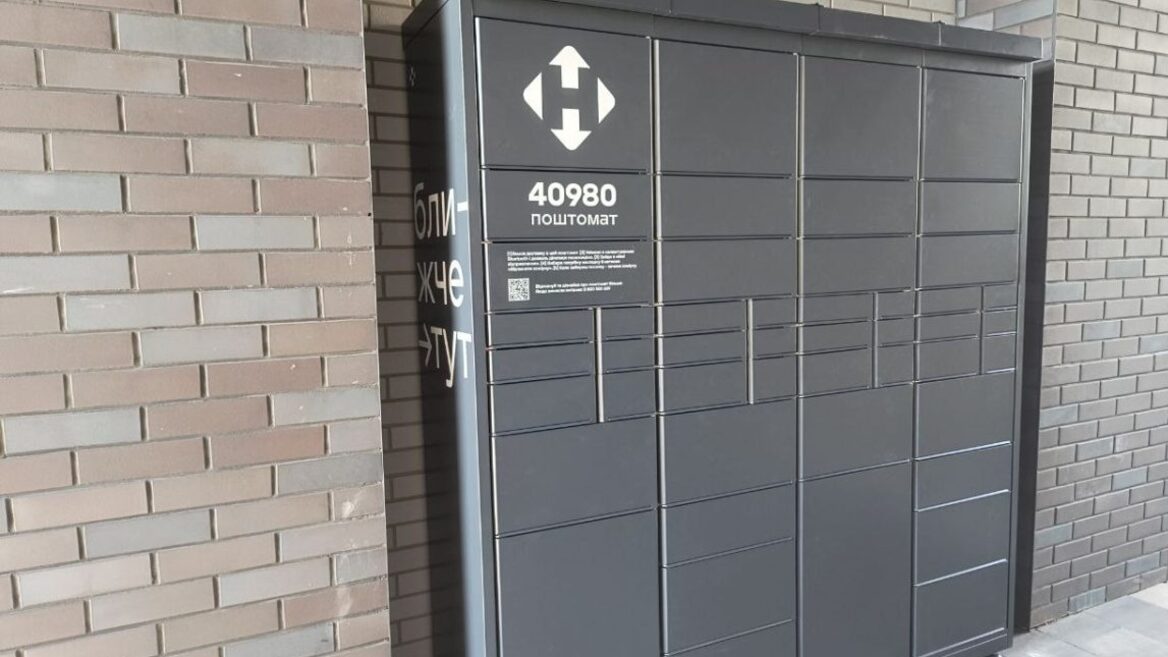
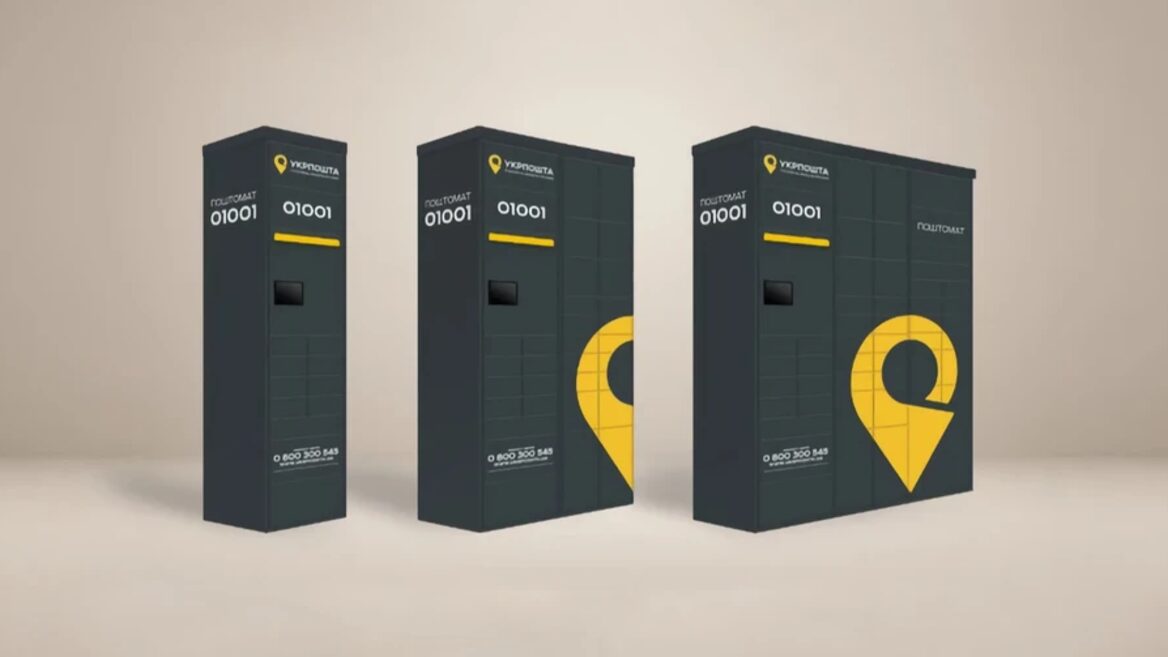
Зараз, щоб отримати чи відправити посилку навіть не потрібно йти до відділення служби доставки, чекати довгі черги та витрачати купу часу. Це можна зробити за допомогою поштоматів — автоматичних теміналів, які розташовані у місцях активних переміщень людей, магазинах, супермаркетах та навіть в житлових будинках.
dev.ua зібрав інформацію про термінали різних сервісів доставки, де вони знаходяться, чим відрізняються, як скористатись поштоматом та які особливості вони мають.
(оновлений текст від 17 листопада 2021 року)
Українці почали отримувати «листи щастя» від AliExpress. Замовлення мовчки скасовують, а гроші не повертають
Китайський інтернет-магазин AliExpress почав мовчки скасовувати замовлення клієнтів з України. Причини не пояснюються. Також невідомо, чи поверне AliExpress гроші за скасовані посилки, які клієнти оплачують перед відправленням.