Хочете будувати кар’єру в Data Science та AI? Vodafone Big Data Lab відкриває новий набір —>
Валентин ШнайдерScience Pop
15 July 2025, 14:42
2025-07-15
Glass instead of silicon: a photonic quantum computer is being created in the EU
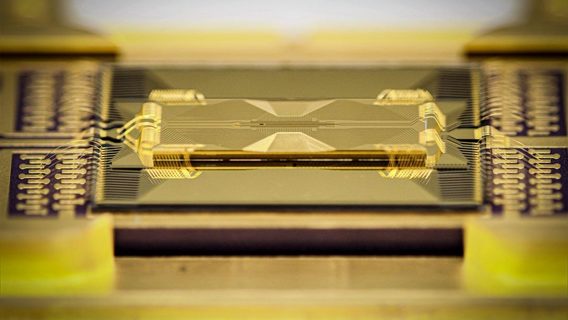
An international team of scientists from France, Italy and Germany is working on a photonic quantum computer that uses glass chips and particles of light instead of electrons. The success of the project could open up new horizons in energy, medicine and the study of the universe.
An international team of scientists from France, Italy and Germany is working on a photonic quantum computer that uses glass chips and particles of light instead of electrons. The success of the project could open up new horizons in energy, medicine and the study of the universe.
As reported by Horizon Magazine, the QLASS project is funded by the European Union and brings together more than a dozen partners: from startups and technical universities to research centers. At its center is the Italian company Ephos, which develops unique quantum chips made of glass. Unlike classical computers that work with electrons, these chips transmit information using photons — particles of light.
Engineers use up to 200 optical modules that can be reconfigured in real time. The key challenge is to keep the photons within the chip without being absorbed: losing even one light pulse means losing information.
One of the team’s breakthroughs is laser «engraving» glass, which allows for the creation of precise light channels. Several countries are working on creating a full-fledged machine: in Germany, Pixel Photonics is developing sensors to detect photons, Schott AG is supplying glass plates, and in Rome, they are generating single photons. Meanwhile, in France, open-source software is being created, and in Italy, a team from the Politecnico di Milano is integrating all this with modern electronics.
The first full-scale installation is planned to be launched at Sapienza University by 2026. Its first practical task is to optimize the design of lithium-ion batteries to improve energy storage for transportation and renewable energy.
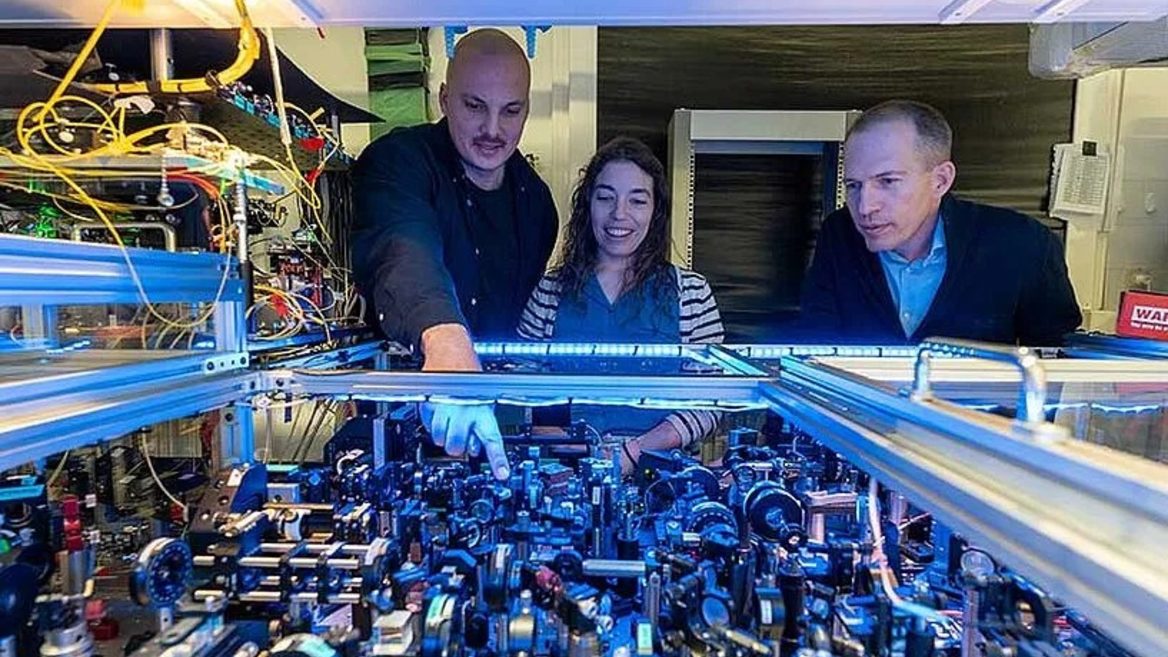
The developers expect the new technology to accelerate the search for new materials, help model battery chemistry, and open up new ways to monitor the health of batteries. According to project coordinator Julia Acconcia, this fits perfectly with her interest in «green technologies» and demonstrates that fundamental research is already very close to practical application.
In the longer term, a photonic quantum computer could be able to simulate quantum processes, opening up new possibilities for pharmaceuticals, chemistry and even studying the nature of the universe. This is where Ephos co-founder Andrea Roccetto sees the technology’s main value: «It will allow us to learn more about the universe itself. That’s why we have to build these machines.»
The QLASS project is part of a broader EU strategy, including the €1 billion Quantum Technologies Flagship initiative. It aims to ensure Europe’s technological independence in the quantum industry and launch the first European quantum-accelerated supercomputer by 2025.
As we’ve already reported, IBM announced the construction of the world’s first scalable quantum computer with 200 logical qubits. The system, called IBM Quantum Starling, will be able to perform up to 100 million quantum operations and will become the basis for the further development of quantum computing.