Хочете будувати кар’єру в Data Science та AI? Vodafone Big Data Lab відкриває новий набір —>
Олег ОнопрієнкоGameDev Eng
27 October 2026, 09:00
2026-10-27
"Slopecolypse Festival". What Ukrainian developers think about the influx of AI games on Steam
October's Steam Next Fest, traditionally the main event for indie game developers and gamers looking for new unique projects, was remembered not only for its loud hits, but also for a scandal that shook the game development community. Instead of a celebration of independent creativity, the platform faced an unprecedented influx of so-called "AI-slop" - low-quality, unimaginative games, mostly or completely generated using generative artificial intelligence tools.
We talked to Ukrainian game development experts about the use of AI in development, whether the situation is really so catastrophic, and what Valve needs to do to avoid hate in the future.
What happened?
According to a recent analysis of SteamDB statistics , 7,145 new and upcoming titles were announced at this year’s October Demo Festival. However, if you filter out games whose developers have not officially declared the use of AI, that number drops sharply to 4,549. This means that at least 2,595 projects, or over 36% of the total, used generative AI at some stage in production.
To understand the scale and speed of the technology’s spread, it’s worth remembering that back during the Steam Next Fest in June, this figure was just over 19%. In just four months, the presence of AI content among indie games has increased by a staggering 17 percentage points.
The gaming community on Reddit and the social network X (formerly Twitter) is actively expressing its indignation at the dominance of AI-slop. Users complain about the lack of strict moderation in the Valve store and demand the addition of a separate tool that would allow them to permanently hide games with AI elements from their recommendations. It has come to the point that third-party browser extensions, the sole purpose of which is to label projects created with the participation of neural networks, have begun to rapidly gain popularity among players.
But how do game creators themselves view this situation? Is AI the killer of true indie, or is it just a new tool that democratizes development, and is the problem of lag exaggerated?
"Slopocalypse" is here
The situation at October's Next Fest has become a catalyst for active discussion in the Ukrainian game development community. Kyrylo Vesna, the creator of the Ukrainian indie game Chumaki, aptly dubbed the current event a "slopocalypse festival."
There's a Slopecalypse Festival (next fest) on Steam right now and 8,000 demos are participating. So it's a good thing I skipped it (there will be 16,000 at the next one)
According to him, the first days at the festival work purely as a collection of metrics: if the game shows good results, Steam's algorithms start pushing it from Wednesday, but "you shouldn't put too much hope in it."
The head of the 12 July games studio and the developer of the game Tailgate joined the discussion with Kirill. He agreed that the situation was difficult, noting that he himself had decided to go to the next festival with an extended demo, although he had no illusions about the algorithms: "And it's already too late, and then either we won't make it at all, or it will simply be closed and there won't even be this boost."
However, the position of the developer Tailgate on the very nature of the AI slop and the response to it is much more pragmatic and tough. He believes that the problem lies not so much in generative games, but in speculation on this topic. According to him, the discourse around the slop is being inflated by “parasite” accounts trying to gain coverage on hype. He emphasizes that hoping for intervention from Valve management is an infantile position.
"It's more about the fact that a full person is no friend to a hungry person, and there's no point in discussing that Gabe Newell should do something there because it would be better that way. It's like seriously thinking and discussing that it would be cool if Putin shot himself today," the head of the 12 July games studio comments for dev.ua.
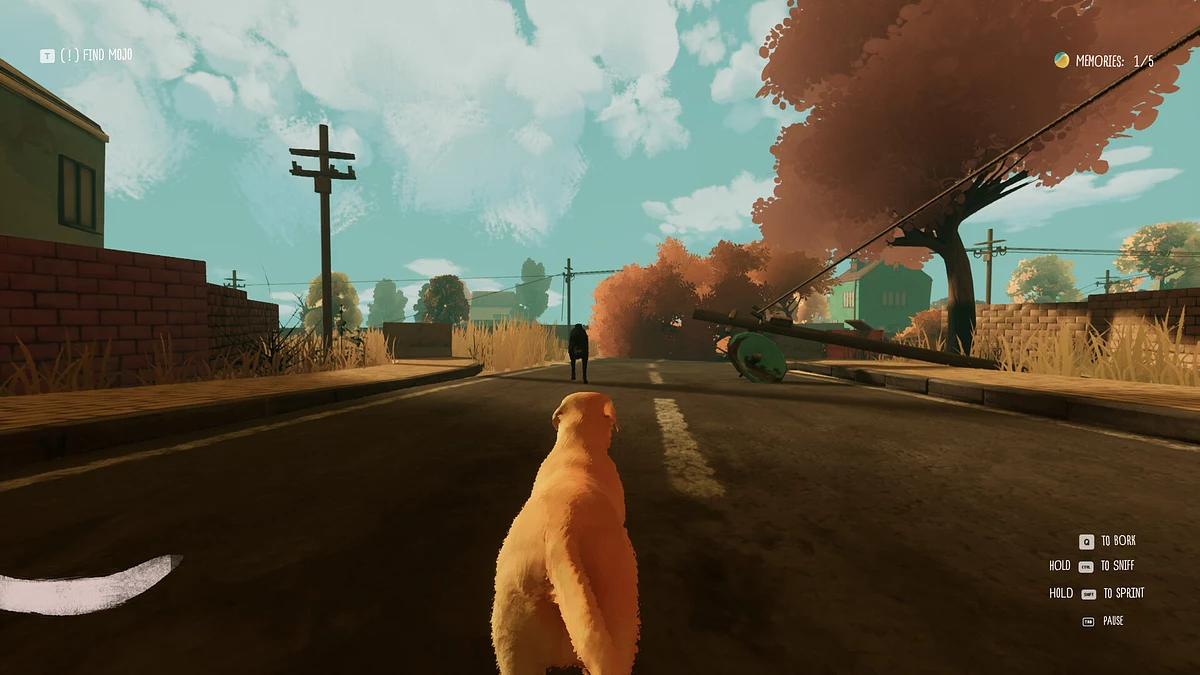
Screenshot from Tailgate
My friend, my enemy
The opinion that the platform should not be demonized is partly shared by Andriy Bychkovsky, a well-known Ukrainian indie developer, creator of games such as Super Loco World, the economic strategy about the colonization of Mars Farlanders, and the recently announced space adventure Saturn 94. For him, artificial intelligence has become an integral part of the workflow.
"I've been using AI for code for almost a year now, before that I wrote by hand. Sometimes I can also consult with AI on issues I don't understand well (for example, some physics in space)," Bychkovsky told dev.ua.
The developer did not criticize Valve for flooding the store with AI content, and reminded us of the historical context of the platform. According to him, the philosophy of Gabe Newell's company has always been maximum openness.
"I don't blame Valve for the store being overcrowded. If this is really a problem, then they need time to weigh everything and rebuild the rules/systems in the store, because it's a huge mechanism and rushing here is definitely a bad idea. In general, Valve's policy is to open the doors to everyone as much as possible, ever since they removed Greenlight and replaced it with a $100 fee for one game. And I don't think anything will fundamentally change here," the indie developer noted.
Bychkovsky has no illusions that the platform will stand up for "handcraft" if the generated games start to bring real income.
"If AI-slop games really start making good money someday, they will accept it without any problems, just like other platforms."
At the same time, the developer notes that Steam is now doing a pretty good job of weeding out "shovelware" (trash games), which were abundant even before the AI boom.
However, Andriy offers a very specific and effective solution that could relieve the burden on Steam Next Fest.
"If I were to change anything, I would simply add some minimum threshold of wishlists for participation in the next fest. Something around 1-2 thousand, this would allow us to radically reduce the number of games at the festival," Bychkovsky concluded.
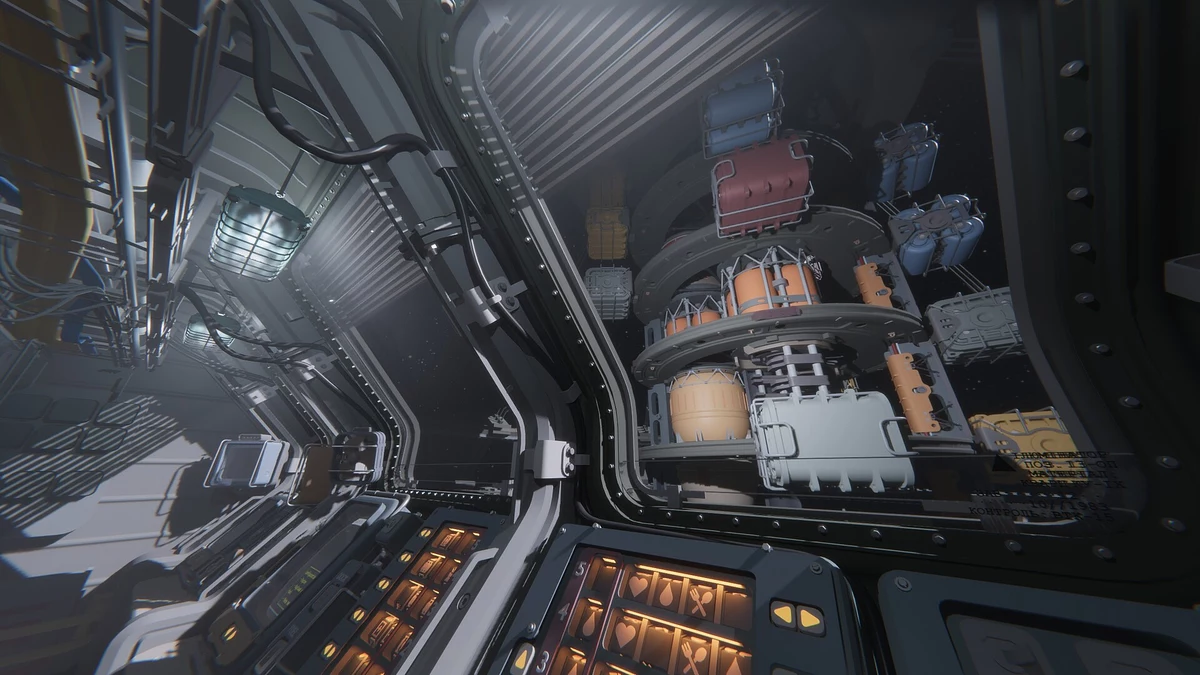
Screenshot from the game Saturn 94
Ukrainian indie developer and active military serviceman Stas Shostak has a completely different view on the penetration of artificial intelligence into game development. In a recent interview for dev.ua, he already talked about his attitude towards AI and his disappointment with projects that tastelessly nullify a good toolkit.
Commenting on the crisis of slop at festivals, Stas expresses hope for technological intervention by the platform itself: "I believe that Gaben (Gabe Newell) will come up with an algorithm that will weed out this slop before the next festival and place it in a separate AI gulag."
Shostak's main complaint is that generative technologies are often used to create a beautiful but completely soulless wrapper. As an example, he mentions one of the games from the Ukrainian festival.
"There were a few projects that disappointed. For example, the one that is similar to The Banner Saga (talking about Sal Terrae: in search of SALT). It looks awesome in static. I wouldn't even bother using AI if it wasn't overused and stopped at that slow vibe, where there are beautiful landscapes with some constructions, if there were interesting texts and plots. But the way they developed this theme... I was actually a little upset that, having such cool style elements, you can approach their further development so tastelessly," Shostak said in an interview for dev.ua
AI-slope as the evolution of plagiarism
Another perspective on the crisis is offered by Ukrainian developer Oleksiy Furman. In his team’s Dream Operator project “Tukoni: Guardians of the Forest,” generative AI was used minimally — only for technical advice on specific problems (such as bugs with Steam achievements) and assistance with rough localization. According to him, all other key elements: art, animations, sound, game design, and actual programming were created by the team exclusively by hand.
"Players will have to be more attentive and literate about what is in front of us, an original product or plagiarism."
Furman believes that today's panic around 36% of AI games at Steam Next Fest is somewhat exaggerated, because the gaming industry, as a young art, is simply encountering for the first time a phenomenon that has long been known in traditional media as banal plagiarism.
He suggests looking at the gaming ecosystem from inspiration to theft. For example, the release of the cult Disco Elysium spawned a wave of games inspired by it, such as Esoteric Ebb, which take the formula of the original source but add unique ingredients to it, which Furman believes is a completely normal creative process. The next level is “minimal change” games, if a book sorting simulator is successfully shot, someone is sure to make clones about sorting potions, toys, or goods in a supermarket.
"Currently, we have come to complete plagiarism. This happened due to, on the one hand, the cheapening and accessibility of production means, and on the other hand, the desire of people who are actually far from game development to get, as they think, an easy and quick profit. This can be compared to copies of Van Gogh that try to pass off as originals , or don't even try, and are simply sold for pennies to tourists on the streets," commented the creative director of "Tukoni: Guardians of the Forest."
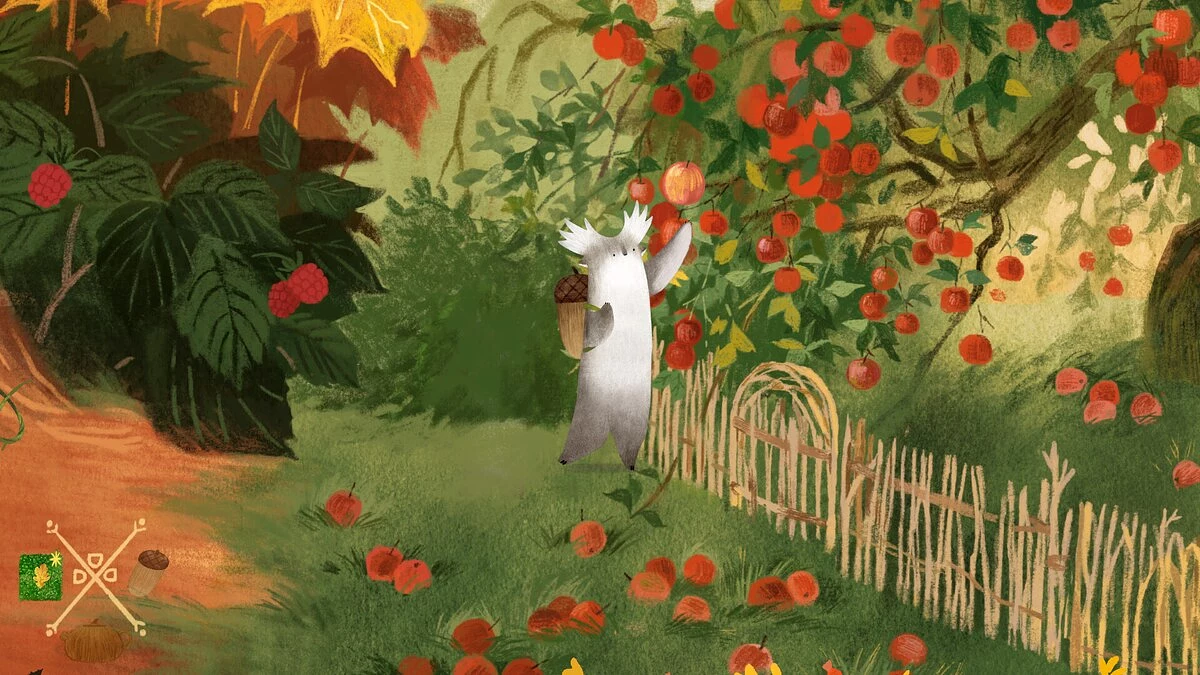
Screenshot from the game "Tukoni: Guardians of the Forest"
Alexey Furman is sure that the developers of such an AI scam simply haven't yet realized that their efforts (low effort) will bring the same low income (low reward), because you can build a crooked fence in a few hours and sell it for a dollar, or you can spend years building a house for a hundred thousand.
Responding to Valve's criticism, Furman points out that the PC gaming market has historically been more democratized than consoles. Before the advent of the internet, developers faced strict gatekeeping, as in order to release a game, they had to convince publishers who controlled the printing of discs and store shelves. Now Valve has removed this gate, setting only a minimum financial barrier of $100 for publishing a game, allowing indie teams from all over the world to enter the market.
"I periodically see proposals that say, let's raise this price to $1,000, and there will be less AI slop. But where is the line at which we start making success impossible for real small developers? This would be a return to a kind of "gatekeeping," the developer noted, adding that AI slop is already making its way onto consoles, despite the high cost of their devkits.
Oleksiy sees the solution to the problem not in bans, but in transparent communication. Over time, Steam may introduce built-in fact-checking tools (similar to those found in social networks) that will automatically flag AI elements, such as generated game capsules.
"Just as we navigate hundreds of thousands of pages on social networks, we will navigate game pages. And here too there will be both "millionaire bloggers" and those who have a small but loyal audience. At the same time, there will be profiles (and there will be a lot of them) that are filled with AI videos, because someone somewhere in the world is trying to sell you a PDF generated in half a day on how to effectively lose weight in 14 days," concluded Oleksiy Furman.
"It didn't get any easier for us, but we don't want it to." How the Ukrainian Games Festival gathered 73 announcements of Ukrainian games and why the current format has exhausted itself — an interview with Stepan Prokhorenko
Without leveling, but with spatial puzzles. Stas Shostak about the new game Hear My Light, everyday life in the Armed Forces of Ukraine and the perfect development "under the palm tree"
“You need to come to publishers now in the middle of production.” Oleksiy Furman on the development of the game “Tukoni: Guardians of the Forest,” an Asian publisher, and 75,000 wishlist members
У Steam розпочався фестиваль українських ігор. Зібрали цікаві знижки на ньому
На платформі Steam розпочався фестиваль українських ігор (Ukrainian Games Festival), який покликаний привернути увагу до ігор від українців. Організовано його за ініціативи фестивалю інді-ігор Indie Cup. Під час нього до 28 серпня знижки отримали багато хороших відеоігор. А найголовніше, що придбавши їх, ви зможете підтримати український геймдев.
Зібрали для вас список цікавих та вигідних знижок на українському фестивалі ігор у Steam.
Чатбот від Google заявив інженеру, що живий, а той повірив. Чи загрожує нам повстання роботів
Інженер Блейк Лемуан, що працював у відділі відповідального штучного інтелекту Google і розмовляв з чатботами каже, що одна із систем штучного інтелекту компанії — мовна модель The Language Model for Dialogue Applications (LaMDA) — може мати власні почуття. У червні про це з’явилась стаття у Washington Post.
Have important news to share? Message our Telegram bot
Key events and useful links in our Telegram channel