Хочете будувати кар’єру в Data Science та AI? Vodafone Big Data Lab відкриває новий набір —>
Марія Бровінська
31 October 2026, 10:00
2026-10-31
When digitalization is no longer a luxury, but a matter of survival: the experience of MHP, Visa and Philip Morris
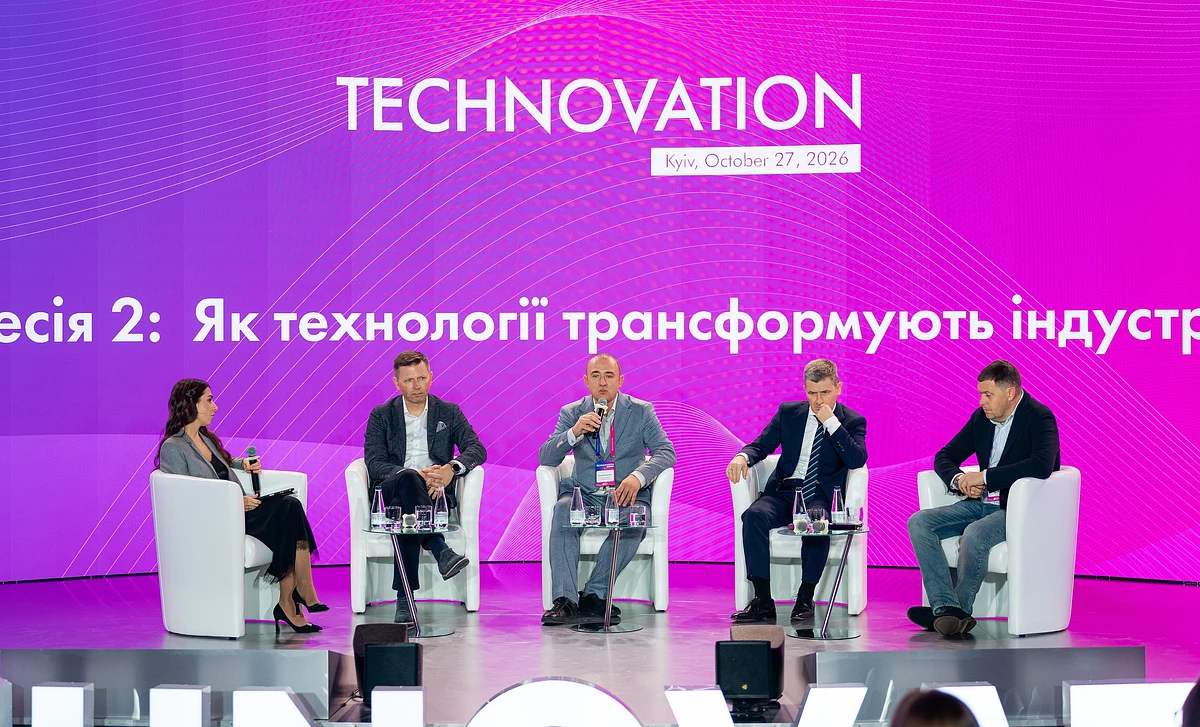
The full-scale war has changed not only the working conditions for Ukrainian businesses, but also the very price of mistakes. Damaged warehouses, shortages of workers, logistics disruptions, or new types of fraud are forcing companies to quickly review their processes and look for technological solutions. At the TECHNOVATION forum, held on October 27 in Kyiv, Oleksandr Zakusylo, Deputy Minister of Digital Transformation of Ukraine, Serhiy Martynchuk from Visa, Artem Konik, General Director of Philip Morris Ukraine, and Taras Goshovsky, Director of Information and Digital Technologies of MHP, explained how digital tools are helping them adapt to the new reality.
Their speeches shared a common view: digital transformation has long ceased to be a buzzword for AI or digitalization for the sake of digitalization. For businesses, it is a question of efficiency, resilience, and the ability to quickly adapt to new conditions. Especially in Ukraine, where a full-scale war has forced companies to reconsider their priorities and learn to work in a reality that no one could have predicted just a few years ago.
MHP: from precision agriculture to production line automation
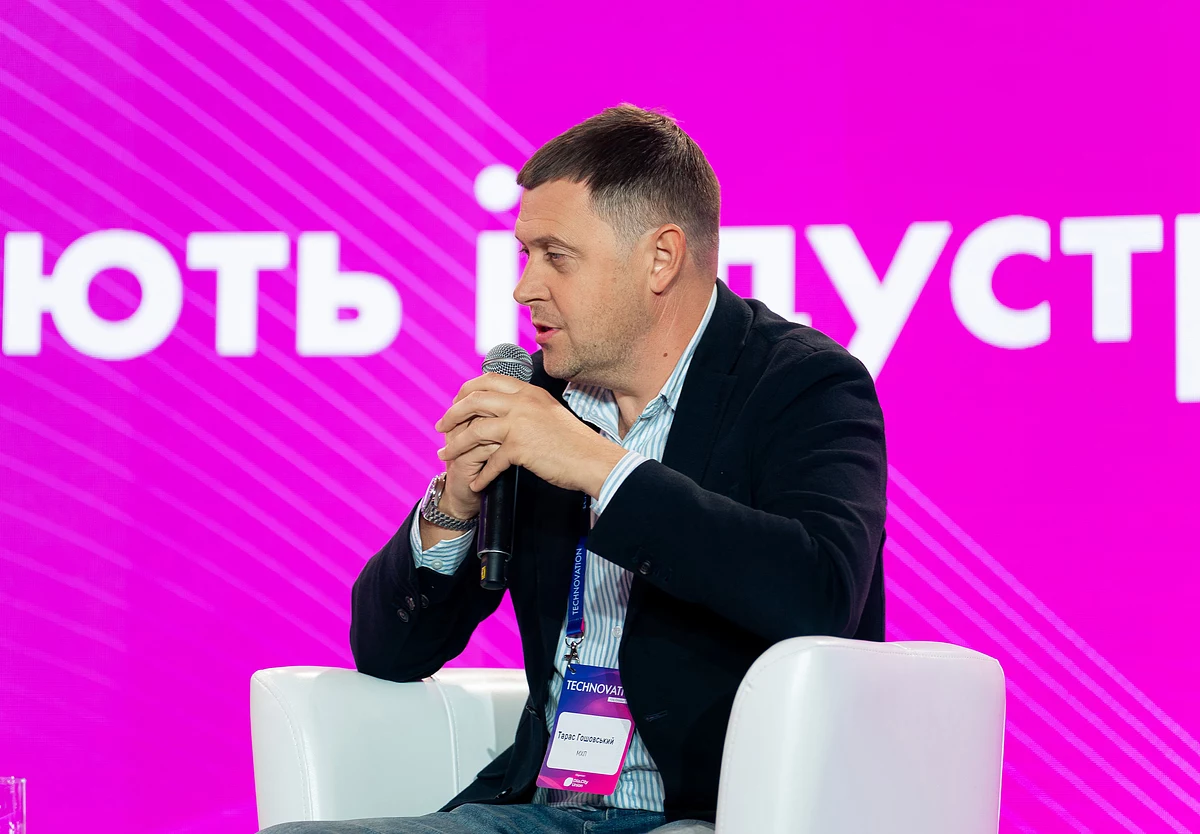
Taras Hoshovsky, Director of Information and Digital Technologies, MHP
Taras Hoshovsky, Director of Information and Digital Technologies at MHP, suggests looking at the digital transformation of big business through the prism of a full-scale war. In his opinion, by 2022, companies could have implemented automation, first of all checking its economic feasibility. Now other criteria have been added to this: sustainability, flexibility, and reducing dependence on human resources.
"Are we sure that whatever we are automating, robotizing, implementing now answers the question of economic efficiency, cost reduction? Even now, perhaps, reducing dependence on labor is more relevant," said Goshovsky.
He gave the example of warehouse management and logistics. While previously a company could develop a certain warehouse management system (WMS) template and scale it to different facilities, now it is important to be able to quickly rebuild these processes. For example, if a distribution center is affected, the business must quickly organize work at another site and change delivery routes.
"No one will give it away. We need to respond to this only, exclusively, by changing the information solution," he explained.
Digital technologies are changing more than just logistics. Goshovsky described several levels of automation in agro-industrial business — from the field to the processing of finished products.
The first is precision farming. According to him, the company has been using drones to survey fields even before they became a common tool of war. When you’re talking about hundreds of thousands of hectares, it’s physically difficult to cultivate such areas without automation and big data.
The next stage is the production of compound feed. This is no longer just a simple mixing of several ingredients, but a complex recipe process that must take into account the needs of the subsequent stages of production. Meat processing plants also operate a whole system of solutions: production lines, SCADA systems, cameras and other data collection tools. They help to configure equipment and optimize the output of finished products.
Goshovsky focused on artificial intelligence separately. He noted that MHP has accumulated a large array of structured data — both on agribusiness and meat processing. Based on this, the company is developing solutions that help optimize production processes.
In particular, in the production of chicken wings and thigh fillets, such tools, according to the speaker, allow to significantly increase the meat yield. The economic effect of this can be measured in hundreds of thousands and even millions of dollars.
At the same time, the head of digital direction of MHP warns against automation for the sake of automation. He recalled a case when the company prematurely embarked on automatic processing of invoices. At a certain stage, this solution was more expensive than manual work. Over time, the pricing policy of the software manufacturer changed, and the project became economically justified.
Therefore, according to Goshovsky, businesses need to evaluate each technological solution from the point of view of real benefit. And it is not necessary to go through the entire path of trial and error on their own: companies can exchange experience through professional communities, tell not only about successes, but also about unsuccessful implementations.
"Not all of these AI solutions need to go through their own mistakes and failures. It’s better to group together and gain experience, because the market is now moving and technology is changing so quickly that it’s easier to draw on it from the community," he said.
Visa: payments become invisible, and AI agents will be able to pay instead of people
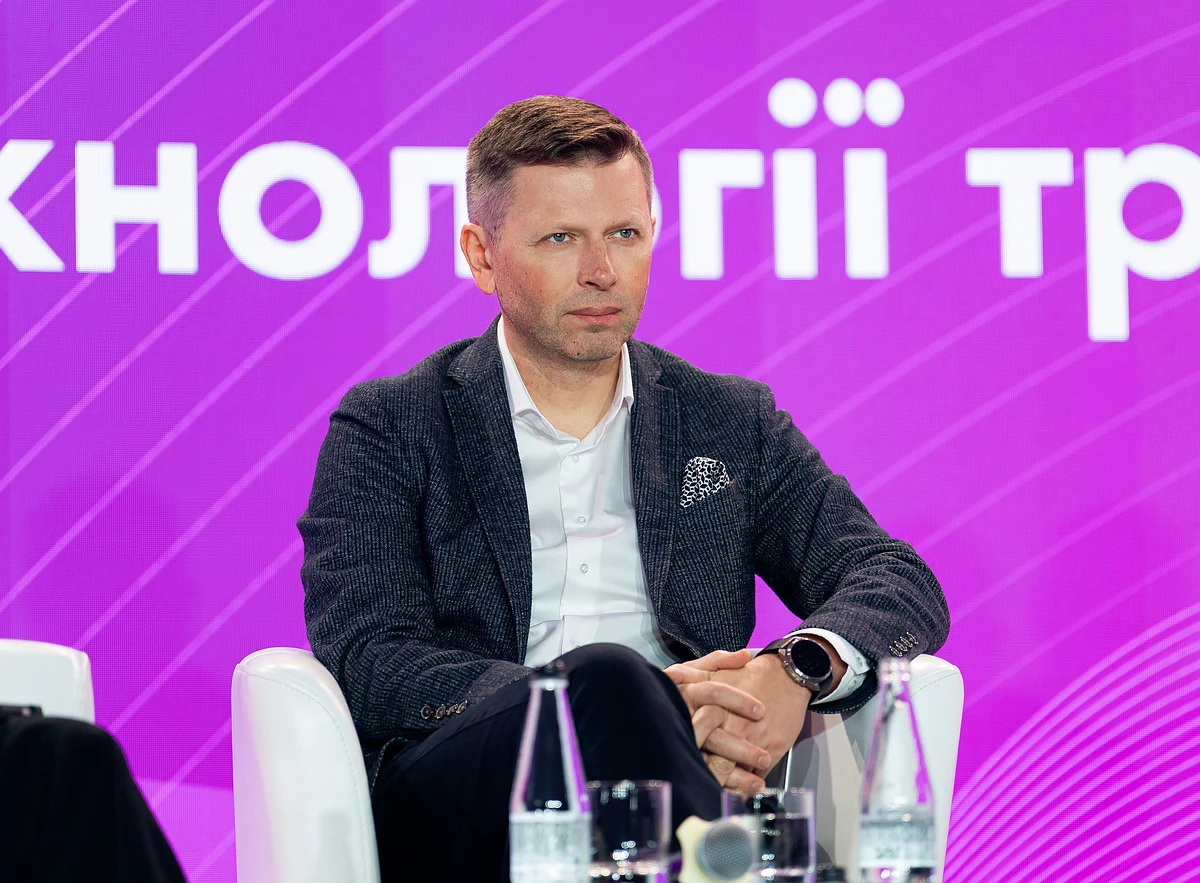
Serhiy Martynchuk, Senior Vice President and Regional Manager of Visa in Ukraine, Moldova, Southeastern Europe, Central Asia and the Caucasus
If in agribusiness, digitalization is changing production and logistics, then in the financial industry, it is changing the very interaction between a person and money. Serhiy Martynchuk believes that the main direction of payment development is to make them as simple as possible for the user.
He calls this invisible payments. A person does not need to switch from one application to another, enter card details or go through unnecessary authorization steps. Payment should be available in the environment where the user decided to purchase a product or service.
Explaining this idea, Martynchuk joked that you shouldn’t have to do 25 sit-ups to pay. The only caveat you’ll have to remember is that you need to have money in your account.
According to a Visa representative, Ukraine has already become a platform for launching certain payment innovations. As an example, he cited biometric payment authorization, which the company launched together with a partner. According to him, this solution was launched for the first time in the world in Ukraine. The name of the partner and product in the transcript is incorrectly recognized, so they should be clarified before publication.
Another trend is programmable payments that can be performed by AI agents. In such a scenario, instead of a person carrying out each transaction themselves, the agent is given rules and permissions. The agent can then perform payments on their behalf within these conditions.
The third area that Martynchuk called promising for business is stablecoins. They are often perceived primarily as a tool for storing funds in cryptocurrency, but companies are increasingly considering them for payments.
One of the advantages of such a tool is the ability to conduct transactions around the clock. Traditional international transfers can depend on the working hours of banks and payment infrastructure, while transactions with stablecoins are available 24/7. Martynchuk also mentioned Visa cards tied to stablecoins: in this case, during payment, funds are debited from the corresponding cryptocurrency account.
He also spoke about a consortium of international companies, which Visa has joined, and the launch of a stablecoin for cross-border payments. In the transcript, its name is given as OpenUSD, but it needs to be verified with Visa materials or with the speaker himself.
The development of digital payments, according to Serhiy, is also changing approaches to security. Previously, users were primarily urged not to disclose their card number, CVV code, and PIN. But more and more often, people pay through Google Pay and other digital wallets without manually entering card details.
According to Martynchuk, the problem is shifting to another plane: scammers are trying not to steal payment details, but to convince the person to transfer money to them on their own.
To do this, they use social engineering, fake messages, and a sense of urgency. The person is made to believe that a certain action must be taken immediately, and they personally confirm the message.
"The biggest problem is that crimes are now committed with a certain, one might say, desire of the client. Criminals use artificial intelligence in such a way that they force the victim to pay. Moreover, the victim does it voluntarily," explained a Visa representative.
For financial institutions, this is a more complex scenario than a simple data theft: the customer presses the confirmation button themselves. Therefore, security systems need to analyze not only the transaction parameters, but also human behavior.
Martynchuk talked about two tools that Visa uses for this. The first is FeatureSpace, a behavioral analytics product that analyzes a client’s financial activity: what transactions they usually make, how they use cards and accounts. If a new transaction is not typical for a particular person, the system can block it or run additional checks. For example, the bank can contact the client and find out whether he really initiated the payment himself and whether he understands its purpose.
The second tool is BioCatch. It analyzes how a person interacts with a banking application: which hand they use to hold the device, how they tap the screen, how quickly they perform actions, and whether this behavior matches their usual pattern.
Such signals can help detect a situation where a user is behaving unusually — for example, due to stress or under the influence of a stranger.
Martynchuk emphasized that technological protection does not eliminate the need for financial and cyber hygiene. Fraudulent scenarios are changing, so it is important for users to be critical of urgent messages, take their time with transfers, and check who exactly they are sending money to.
Philip Morris: Digital Infrastructure for a New Business Model
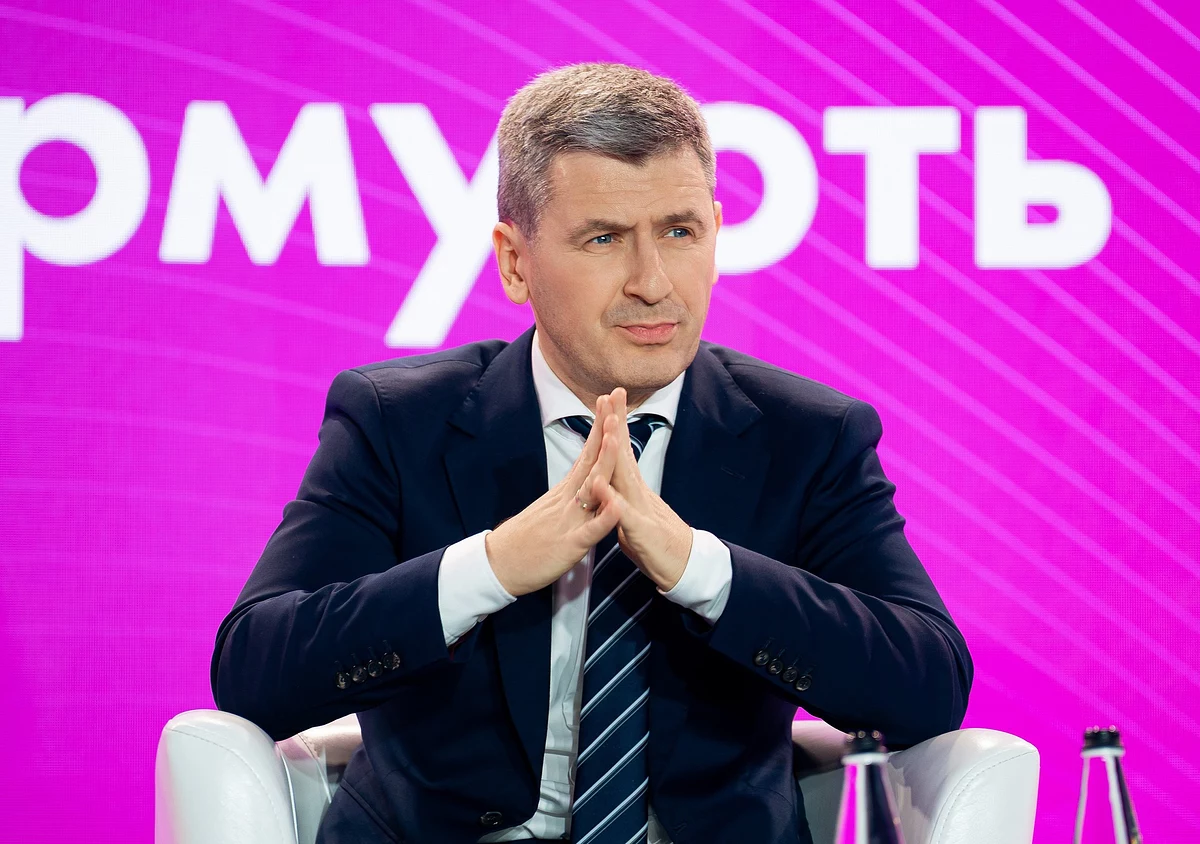
Artem Konik, CEO of Philip Morris Ukraine
Artem Konik, CEO of Philip Morris Ukraine, describes the company’s digital transformation as a result of changes in the product itself and the business model. Historically, the tobacco industry has focused on production and distribution: the main task was to ensure the availability of the product on the shelf. But the company has taken a course to develop categories beyond traditional cigarettes. This, according to Konik, has also changed the requirements for service.
New products have electronic devices that need to be serviced, repaired, and supported under warranty. This means that it is no longer enough for a company to simply deliver the product to a retail outlet—it needs to build ongoing communication with the person after the purchase.
Connick compared the scale of such a strategic decision to Apple’s hypothetical announcement that in a decade the company plans to stop selling the iPhone as one of its core products. That’s how big a transformation Philip Morris is, he said, as the company sees its future in categories beyond cigarettes.
To support this model, Ukraine has been building a digital infrastructure from scratch over the past seven years. Konik cited a figure of 2.8 million consumer calls per year. This is one-to-one communication, when the company interacts with each client and can provide them with the necessary information and service.
According to the manager, digital systems also help predict consumer needs: for example, understanding when a device may need to be replaced or a problem may arise with it. This way, the company can not only respond to requests, but also prepare in advance for possible requests.
A separate area is work with retail partners. The company has created a digital ecosystem and an application through which it maintains contact with more than 25-30 thousand retail outlets. According to Konik, this allows you to send messages almost instantly, inform partners and provide them with service.
The importance of such infrastructure is especially noticeable during wartime. The operating conditions of a retail outlet in the Kharkiv region near the front and in Lviv may differ significantly, but digital channels allow partners to access the same communication and services.
Another example is cameras in individual retail outlets, which allow the company to remotely view the condition of the windows and understand what needs to be addressed. Previously, a representative had to physically visit the store to do this. Now, some issues can be identified and addressed remotely. Thus, digitalization for Philip Morris is not only the automation of internal processes, but also a tool for managing all interactions with consumers and trading partners.
Why business digitalization also starts with government processes
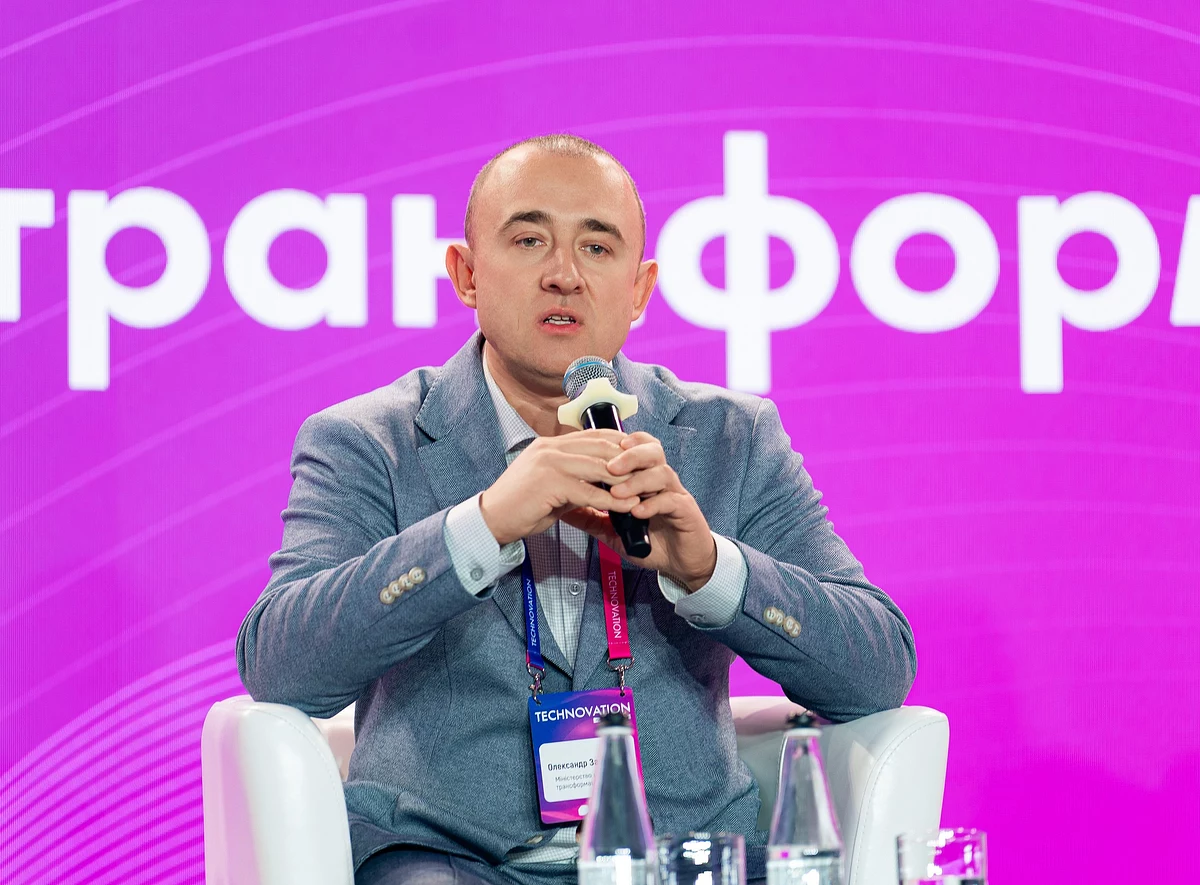
Oleksandr Zakusylo, Deputy Minister of Digital Transformation of Ukraine
Oleksandr Zakusylo, Deputy Minister of Digital Transformation of Ukraine, reminded that the Ministry of Digital Affairs works with three groups at once: citizens, business, and the state. And digital changes are needed in all three directions.
According to him, technologies make it possible to analyze processes, find inefficient stages, automate routine operations or even abandon those that are no longer needed. For example, instead of paper documents and manual transfer of information, government systems can exchange data with each other.
"You always have to calculate everything. If the process works perfectly, it may live on paper for a while. But if we are talking about speed, about decision-making, about the need to be innovative first, we cannot ignore the challenges and changes that changing technological approaches bring," Zakusylo noted.
Among the specific projects that are important for business, he named eExcise. The launch of the system was not easy, but during the first six months of piloting, the Ministry of Digital Affairs received a significant amount of feedback from companies. Some of it was critical, but these comments were processed and used to improve the system.
A separate challenge is small retail businesses. For small retail outlets, the transition to digital tools may be more difficult, in particular due to the need for appropriate equipment. Zakusylo noted that the ministry plans to work on this issue together with large businesses and the tax service to help entrepreneurs overcome the technological barrier.
Another direction is the use of artificial intelligence in the judicial system. The Ministry of Digital Affairs wants to offer assistance in preparing draft court decisions for one type of violation. The idea is to automate part of the typical work, reduce the burden on judges and give them more time for complex cases. Zakusylo emphasized that in this process the ministry acts as a consultant, because the judicial system is a rather conservative sphere.
At the same time, the digitalization of the state requires basic infrastructure. Among such areas, the speaker named "Trembita" — a data exchange system between state information systems, the development of electronic identification, and ensuring the reliable operation of state registers.
Zakusylo also focused on web accessibility, a direction that applies not only to government websites, but also to commercial services and platforms. It is about ensuring that digital services can be used by people with various disabilities, including vision.
According to a representative of the Ministry of Digital Affairs, five years ago, only one state website met the minimum web accessibility requirements. Now, 29 out of 100 sites have good indicators, and another 50 are sufficient. The ministry is preparing a bill related to the implementation of two European directives in this area, and also seeks to establish accessibility requirements at the design stage of digital products.
Zakusylo also noted that Ukraine can already share its experience with European partners in certain areas of digitalization. In particular, this concerns state services and work in wartime.
Digitalization is not a competition in the number of AI projects
The stories of MHP, Visa, and Philip Morris show that digital transformation does not have a universal scenario. For agribusiness, it is an opportunity to automate production, work more accurately with data, and quickly restructure logistics. For the payment industry, it is an opportunity to simplify financial transactions and learn to recognize new types of fraud. For the manufacturer, it is an opportunity to build digital interaction with consumers and trading partners.
The state, for its part, must create an infrastructure that will allow these changes to scale: digitalize administrative processes, ensure data exchange between systems, and make online services accessible to everyone.
At the same time, none of these cases prove that businesses need to implement AI for AI’s sake. On the contrary, the speakers emphasize the need to calculate the economic effect, check the feasibility of automation, and not be afraid to admit unsuccessful decisions.
“Digitalization without process change only automates chaos.” The first digital officer spoke about the implementation of the IT vertical in the military
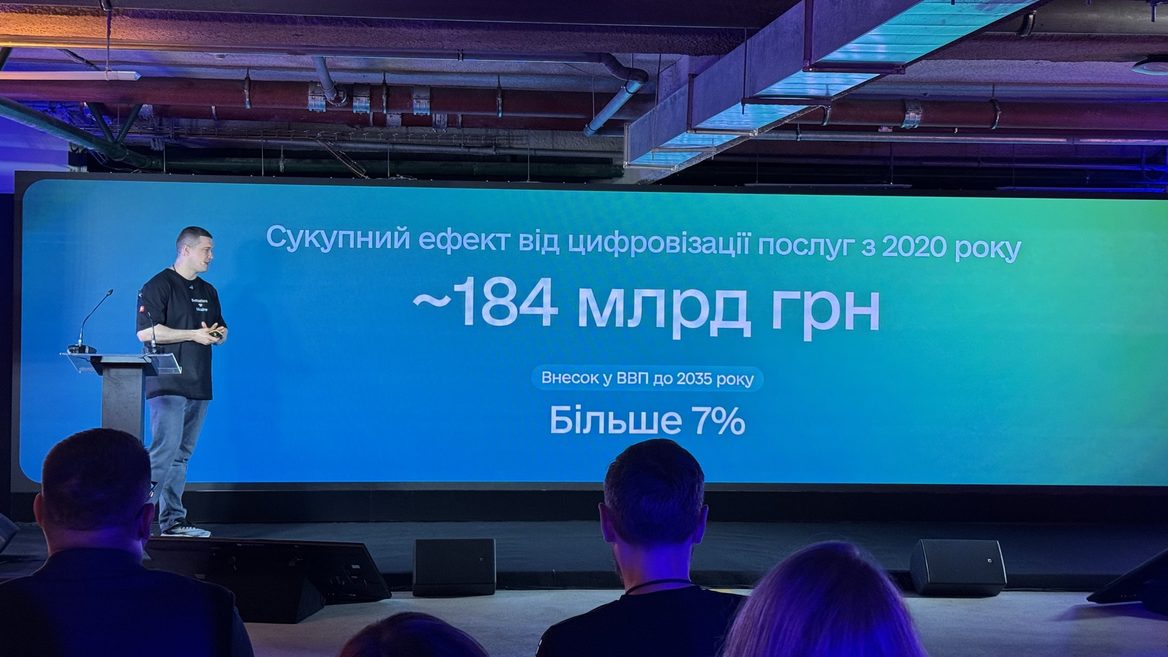
"The average cost of an offline service is 1,583 UAH. In "Diya" it is 242 UAH, 6 times less." Fedorov told how many billions a year digitalization allows saving
"After the recent cyberattacks, we have taken unprecedented measures." CDTO of the Ministry of Justice — on cybersecurity, AI, IT specialists in the civil service and why digitalization cannot be paperless for the sake of paperless