Хочете будувати кар’єру в Data Science та AI? Vodafone Big Data Lab відкриває новий набір —>
Марія БровінськаWork
16 October 2026, 09:00
2026-10-16
Why is it more difficult to find a client than a specialist, and AI does not replace engineering, but changes the price of work? Heads of IT companies on the main challenges for business at the end of 2026
The caution of foreign customers due to the war, the mobilization of employees, preparation for a difficult winter, and changing customer expectations due to the development of artificial intelligence are among the challenges that the heads of Ukrainian IT companies name in 2026. At the same time, AI is changing not only the development process, but also the very model of cooperation: instead of a team of specialists, customers are increasingly expecting a specific result, and budgets and project durations are being revised.
We asked representatives of Levi9 Ukraine, Ciklum, and Railsware about what is affecting their business the most, how demand from foreign customers has changed, and what risks they see in the second half of 2026.
The caution of foreign customers due to the war, the mobilization of employees, preparation for a difficult winter, and changing customer expectations due to the development of artificial intelligence are among the challenges that the heads of Ukrainian IT companies name in 2026. At the same time, AI is changing not only the development process, but also the very model of cooperation: instead of a team of specialists, customers are increasingly expecting a specific result, and budgets and project durations are being revised.
We asked representatives of Levi9 Ukraine, Ciklum, and Railsware about what is affecting their business the most, how demand from foreign customers has changed, and what risks they see in the second half of 2026.
AI is changing development and customer expectations
For Ciklum, the key challenges include the security situation in Ukraine, the transformation of development through AI, and new customer expectations. Vitaliy Nuzhny, Regional Delivery Head for Central and Eastern Europe, told dev.ua. The company is preparing for the winter period, ensuring energy independence of its locations, uninterrupted communication, and safety of specialists. At the same time, the development of AI is changing the requirements for engineers' competencies, working tools, and development processes.
Vitaliy Nuzhny, Regional Delivery Head in Central and Eastern Europe
“Today, those professionals and companies that are the fastest to integrate AI tools into their daily workflow and show higher productivity will win,” notes Nuzhny.
According to him, clients are experimenting with artificial intelligence and have new expectations for development speed. They are testing different tools, including GitHub Copilot, Claude Code, and specialized models, before making decisions about scaling. Because of this, the demand for Ukrainian IT services at Ciklum now feels somewhat lower, although in key markets — the US, UK, and Israel — the company continues to open new projects.
According to Nuzhny, there is a high demand for experienced engineers who can work with AI agents, apply prompt engineering, and build complex architectural solutions. At the same time, companies are finding it difficult to attract Cloud Architects, AI/ML Engineers, Data Scientists, and cybersecurity specialists.
Levi9 Ukraine also notes that AI is becoming a part of an increasing number of projects. The company’s Country Manager, Valentyn Koryako, says that almost every new customer understands the importance of this technology. Some customers independently initiate a conversation about implementing AI, and in other cases the company offers appropriate solutions if it sees real business benefits in them.
Clients want results, not just a development team
Changes in working with AI also affect how customers formulate requests to IT companies.
Sergey Korolev, Managing Director of Railsware
Sergey Korolyov, Co-CEO of Railsware, explains that previously a typical request could involve a specific number of specialists: five engineers, two testers, a designer and a product manager. Now, clients are more likely to come with a specific problem that needs to be solved. “In the AI era, there is a perception that fewer people are needed to perform the same tasks,” Korolyov notes.
This makes it more difficult for companies to justify the composition of the team and the cost of work. At the same time, Korolev emphasizes that creating a prototype and bringing a product to a full launch are different tasks.
He gives an example from his own experience: he spent three weekends developing a single feature for Mailtrap, but was unable to bring it to production on his own. After creating a prototype, you need to work with existing code, compliance requirements, service availability, and numerous edge cases.
According to Korolev, the gap between the situation where the code runs on the developer’s computer and the product fully working for users remains a significant part of engineering work.
This also changes expectations about budgets. According to Korolev, instead of a one-year contract, clients can negotiate two to three months of work with a specific outcome metric. In response to this request, Railsware is rethinking its services, in particular, developing the direction of AI-accelerated product development.
Ciklum is also seeing a shift in budget structures. According to Nuzhny, clients expect AI to deliver faster time to market and shorter development cycles, allowing them to manage investments more flexibly and assess the business value of projects more quickly.
Levi9 Ukraine does not see a clear trend towards budget reduction: some clients are reducing expenses, while others are increasing investments, in particular in technology modernization and AI. Koryako notes that businesses are more carefully assessing what specific value they will receive from the project and how quickly the investment will yield results.
Can AI replace complex IT products?
At Railsware, competition for users has become tougher. According to Korolev, companies have to compete not only with similar products, but also with the idea of customers that they can create a similar solution themselves using AI.
At the same time, he believes that the idea of completely replacing complex SaaS products with AI is gradually changing. Such products are not just code, but also years of experience, domain expertise and understanding of different user groups.
Korolev advises considering AI as a tool, not a replacement for product and engineering thinking. He also notes that artificial intelligence can create new demand: customers initially experiment on their own, but turn to specialists when the result does not meet expectations.
At Railsware, AI is already present in all of the company’s projects in one form or another. Korolev distinguishes between products created with AI and products built on it. According to him, clients often come not just to “build AI,” but to expand the capabilities of an existing product, test an idea with an AI-accelerated MVP, or create an agent to work with data.
As an example, he cites the AI layer for the Coupler.io product. According to Korolev, his work was made possible by years of work with data infrastructure, not just adding a language model to the product.
A separate risk that Korolev sees is a change in perceptions about the cost of engineering work. According to him, the market may start to reduce prices faster than IT companies can adapt the business model. “Code generation costs almost nothing. Verification and quality assurance of the code and the final product cost the same as before,” he notes.
Korolev also draws attention to the training of future engineers. According to him, the market has stopped hiring juniors in the previous volumes, although it is from such specialists that experienced engineers responsible for product quality grow up in a few years.
He predicts that the consequences could become noticeable in 2028–2029: the industry risks reducing the influx of new specialists and at the same time increasing the burden on experienced engineers. Korolev believes that companies should think not only about adapting to AI, but also about training a new generation of specialists who will work with these technologies.
Another aspect of AI transformation that Korolev draws attention to is the distribution of technology investments. According to him, a significant part of investments is directed to data centers and infrastructure, while customers can allocate shorter periods to develop products that will use this computing power. He also refers to Gartner research published in the spring of 2026, according to which only a little more than a quarter of AI cases in the infrastructure and operations sectors achieved the expected ROI.
Finding customers remains a challenge
For Levi9 Ukraine, the main difficulty remains attracting new customers, especially those who are ready to cooperate with Ukraine despite the military risks.
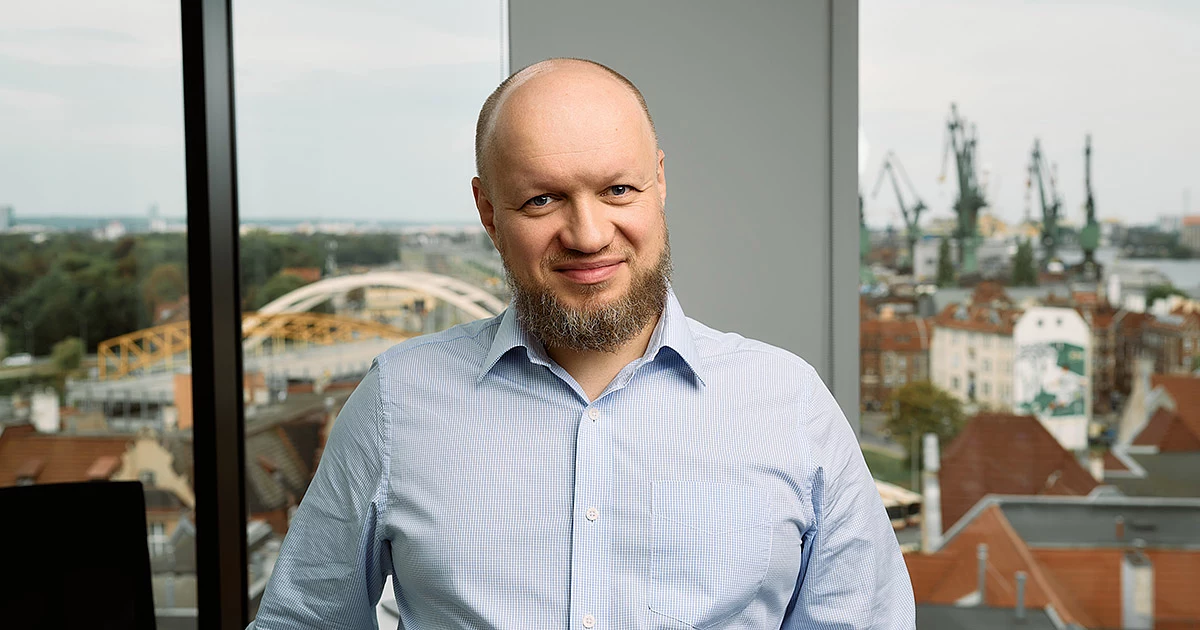
Valentin Koryako, Country Manager Levi9
“Here, Ukrainian companies often have to prove not only their technological capabilities, but also their ability to ensure stable operation under any circumstances,” says Koryako.
At the same time, the company is noticing a revival in demand in the markets where Levi9 operates. According to Koryako, there are currently many open vacancies and active recruitment is underway. However, he is cautious in his assessments and believes that it will be possible to speak more confidently about a change in the previous trend if the dynamics continue for another three to four months. He also notes that compared to last year, it has become easier to find qualified specialists.
Ciklum, on the other hand, notes a slightly lower demand. Nuzhny attributes this to the security situation in Ukraine and the fact that foreign clients are testing AI tools before scaling. At the same time, according to him, companies continue to open new projects in key markets.
At Railsware, Korolev also calls finding customers the main challenge. He notes that foreign customers assessed Ukrainian risks back in 2022–2023, and the Ukrainian industry has become more flexible. At the same time, in his opinion, AI has become one of the competitors of service IT companies, as it creates the impression among customers that they can do some of the work themselves.
Mobilization, security and winter preparation
Despite changes in technology and customer service, war risks remain among the main problems of Ukrainian IT companies.
Koryako from Levi9 Ukraine notes that over the past year or two, the main challenges for business have hardly changed. Among the external factors, he names the caution of customers due to the war and the AI-transformation of the digital industry. Among the internal ones, there are risks associated with the mobilization of employees. He also considers mobilization and a possible difficult winter, which could affect the stability of business operations, to be the main risks for the second half of 2026.
For Ciklum, the main operational risk remains the security situation, including possible power and heat outages. Nuzhny reports that all of the company’s Ukrainian locations have autonomous power sources, several independent communication channels, and shelters. "At Ciklum, we systematically prepare for any scenarios," he notes.
«Гори вчать тягнутися до результату і гамувати амбіції». Java Software Architect з Levi9 — про підкорення вершин та гірські походи, що заряджають
«Навколо IT» — нова рубрика, в якій ми збиратимемо все корисне для життя айтішника, яке не стосується його роботи. Виявляється, у айтішників найрізноманітніші хобі. Ми вже писали про айтішників-бігунів, плавців, художників, музикантів, танцівників, і навіть заводчика собак.
Герой сьогоднішнього матеріалу — айтішник-підкорювач гір Дмитро Ковальчук, що працює Java Software Architect в компанії Levi9.
«Треба вірити в себе та йти (чи хоча би лежати) в бік своєї мети». Історія бухгалтерки, яка стала розробницею та виросла до Team Lead і ментора
Немає більш слушного часу для змін, аніж сьогодні. Шлях до професії мрії може бути ретельно спланованим зі шкільної парти або тернистим і сповненим пригод. Своїм досвідом переходу з позиції бухгалтера в ІТ-компанії до frontend-розробниці на проєкті в ній же ділиться Наталія Сингаєвська, Frontend Engineer у Levi9. Вона знайшла своє призначення та за чотири роки зросла зі стажистки до Team Lead на проєкті в Лондоні.