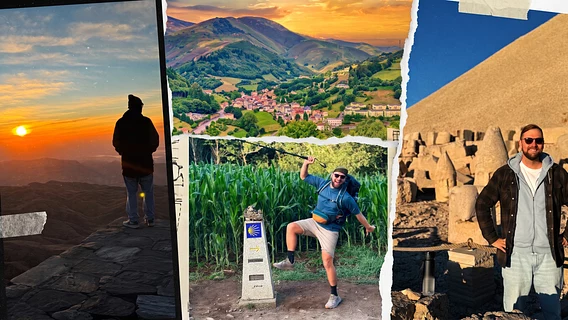
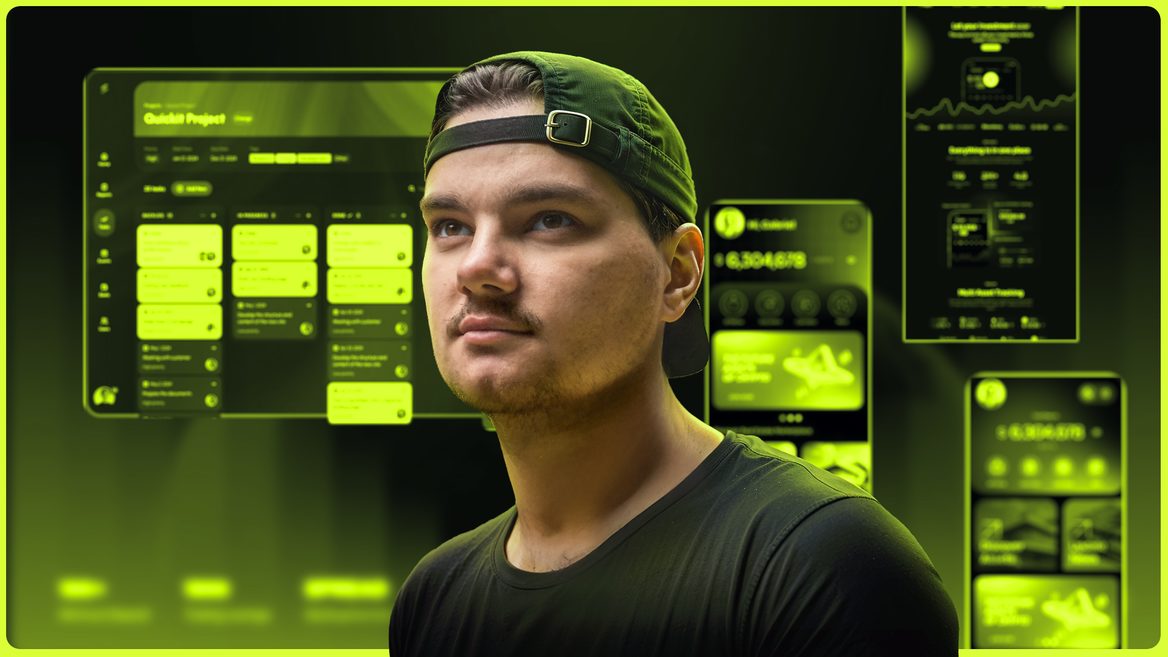
“The hardest part was stopping living in a constant productivity mode.” How a Senior Delivery Manager took a sabbatical after 11 years in IT, moved to Spain, and is preparing to return to the crisis market
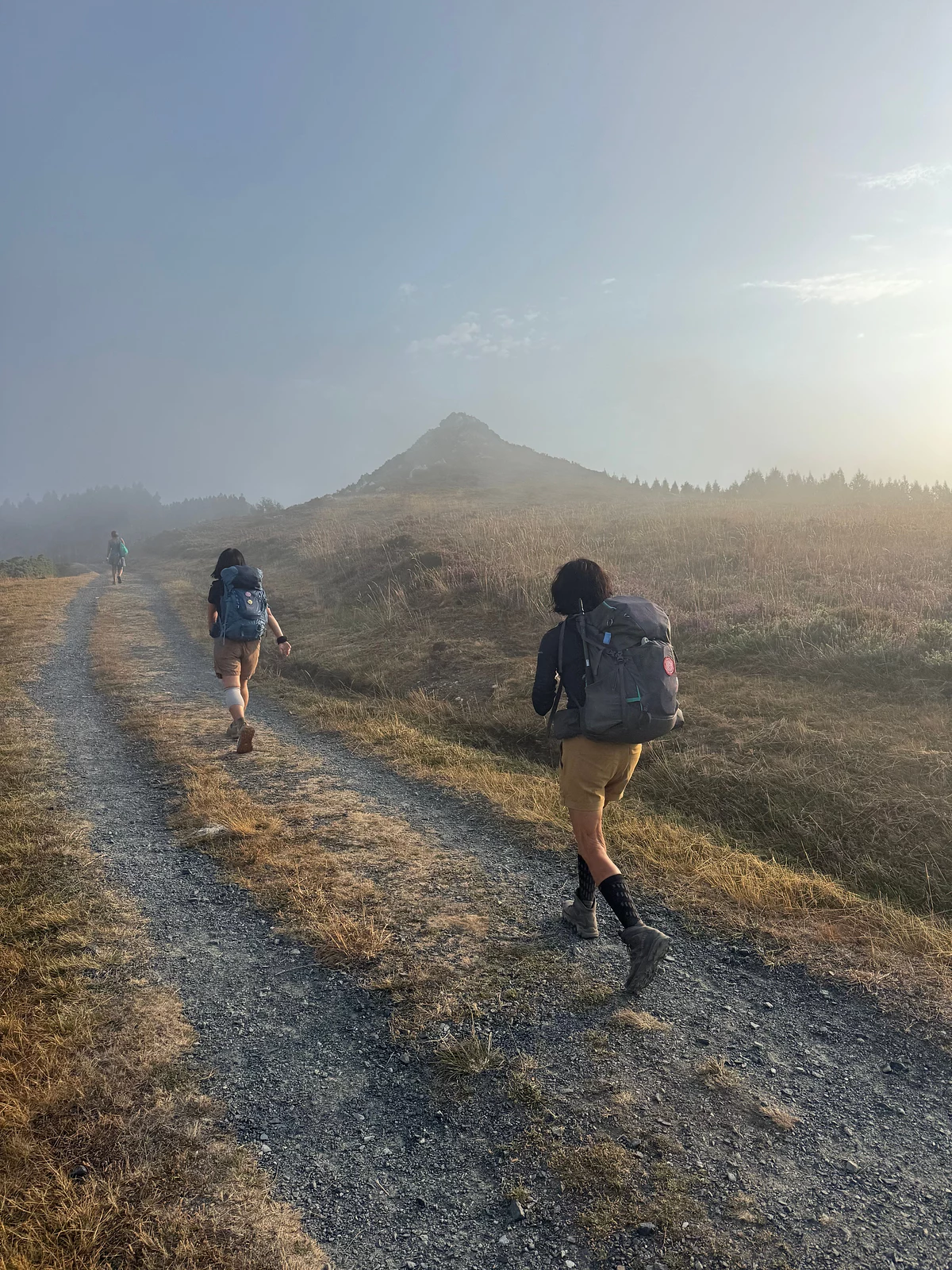
After 11 years in the tech industry, Maxim Streltsov decided to put his career on hold. Instead of another project, he chose a long sabbatical without deadlines and KPIs: he spent eight hours in a broken-down car near the Syrian border, moved to northern Spain with two suitcases, and walked the oldest pilgrim route, the Camino Primitivo.
Now that the backpack is hidden in the closet and the documents are arranged in folders, the manager is preparing to return to IT. dev.ua talked to Maksym, who shares his experience on how to dare to take such a long pause and not be afraid of the crisis market.
From the Kharkiv office to the decision to go "nowhere"
Maxim's IT career began in a small Kharkiv company Acceptic. Later, he moved to the Dev.Pro project office, where he first felt the scale of a large industry: over 400 specialists on three continents worked on the project. A year before the COVID-19 pandemic, when the remote format for managers was rather the exception, Maxim accepted an offer from an Israeli startup, and shortly before the full-scale invasion, he joined Ciklum as a Senior Delivery Manager.
Despite my love for my profession — constant learning, new challenges, and working with people — over time, the balance at work began to shift.
"In general, the work of a delivery manager is quite interesting: you constantly learn something new, work with different people, face new challenges. But there is also another side - less exciting things like bureaucracy, office politics and other organizational aspects. When there is a healthy balance between these components in work, it is great. But at some point I realized that I was spending more and more time on things that did not drive me, and less and less on things that brought me pleasure," said Maksym.
The path to the decision to take a long break took him almost two years. At first, he wanted to limit himself to a short break, but quickly realized that this was not enough. At Ciklum, he was offered a corporate sabbatical, and at first the manager agreed, but later decided to resign in order to maintain complete freedom in his further steps.
“My current situation was one of the main drivers of this decision. I have no loans, my wife and relatives do not depend on me financially, I have no children. In addition, I had an accumulated financial cushion that would be enough for about a year of independent living, not including funds set aside separately “for a rainy day”. My wife and I discussed the decision to use these savings specifically for a sabbatical, and she supported me. In addition, we planned and carried out most of the major trips together,” says Maksym.
Eight hours by the Euphrates and a Spanish quest
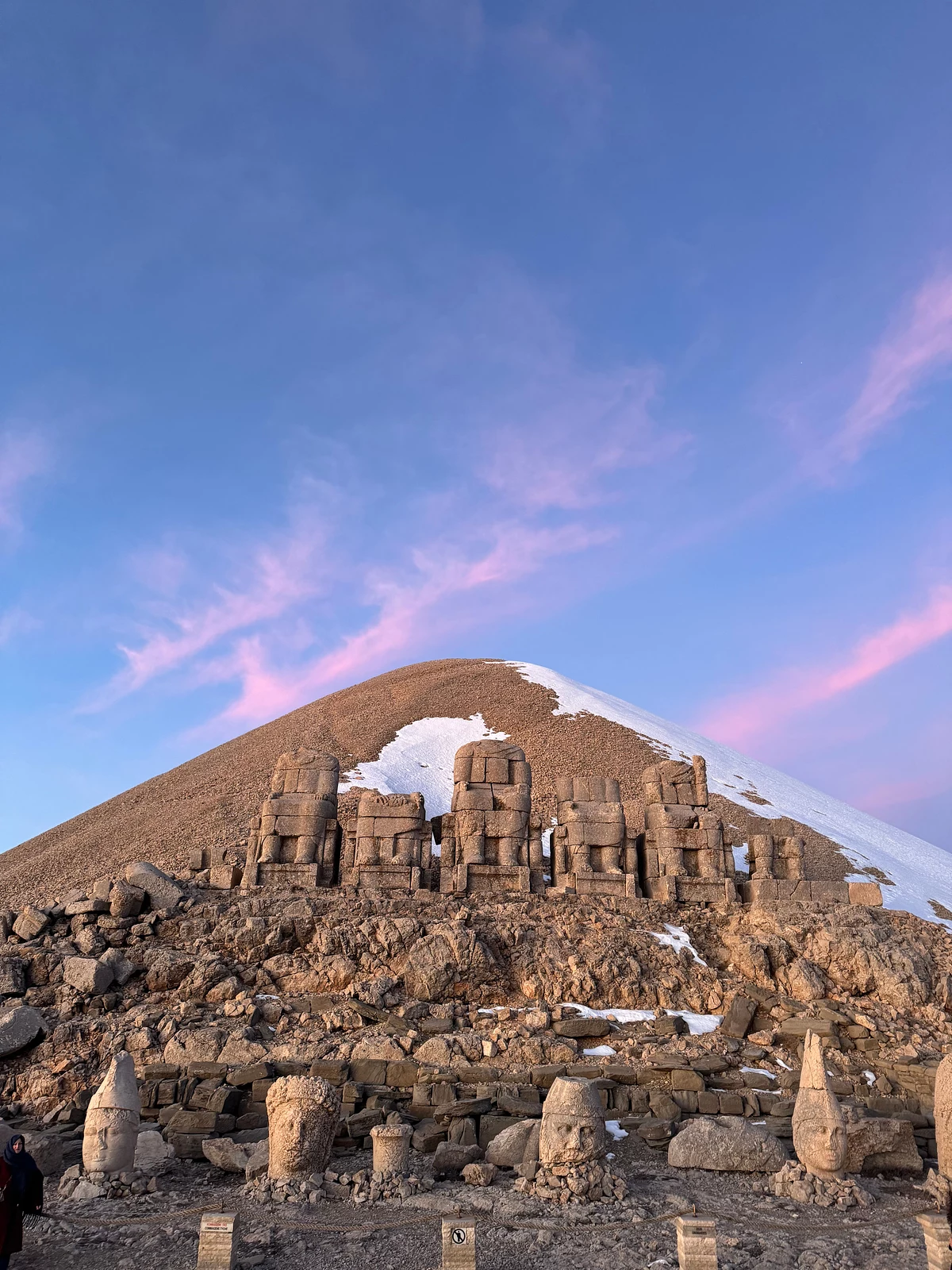
At the start of the sabbatical, Maksym had only two clear points on his itinerary: a trip to eastern Turkey, to the region of the former Mesopotamia, and a month in Asia. The rest of the plans were to be formed as they went along. However, the first weeks proved that getting out of the work rhythm is much more difficult than simply closing the laptop.
“I sat for eight hours in a broken-down car on the banks of the Euphrates, not far from the Syrian border. That’s how my sabbatical began. Sometimes the world gives you pretty clear hints that you should take a break rather than continue the race. But such signals are easy to ignore until a situation occurs that simply leaves you no other choice,” the manager recalls.
This forced stop helped him slow down and stop perceiving vacation as another business goal. According to Maksym, the most difficult thing was not to stop working, but to unlearn to live in a mode of constant productivity, painting every day and seeking the maximum benefit from each trip.
After returning from Asia, the couple decided to change their country of residence. Before that, they had lived in Turkey for almost four years, but increasingly often left for a week or a month in the workation format - they managed to live in Tbilisi, Sofia, Bratislava, and Durres, where they realized that they missed the European way of life.
When choosing a new home in Spain, they were primarily guided by the community - they had friends in both the south and north of the country, but the northern region turned out to be more realistic from a financial point of view. The couple left their car in a parking lot in Bulgaria, took two suitcases and set off for the city of Oviedo in Asturias.
Wearing jeans at the start of the Camino
Moving to Oviedo brought an unexpected discovery: it is from this city that the Camino Primitivo begins - the oldest walking pilgrimage route to Santiago de Compostela. Back in his student days, Maxim watched the film "The Way" about the Camino Frances, but back then, long before the visa-free regime in Ukraine, such a journey seemed to him something like a movie about astronauts.
With plenty of free time and living literally at the start of the trail, he decided to test at least one stage, about 25 kilometers long.
"Basically, all I had to do was leave the house. I didn't even have the right equipment: I went in jeans, a T-shirt, and a backpack that I borrowed from friends we were living with at the time. And it was real magic. From the first steps, I realized that I wanted to complete the entire route," shares Maksym.
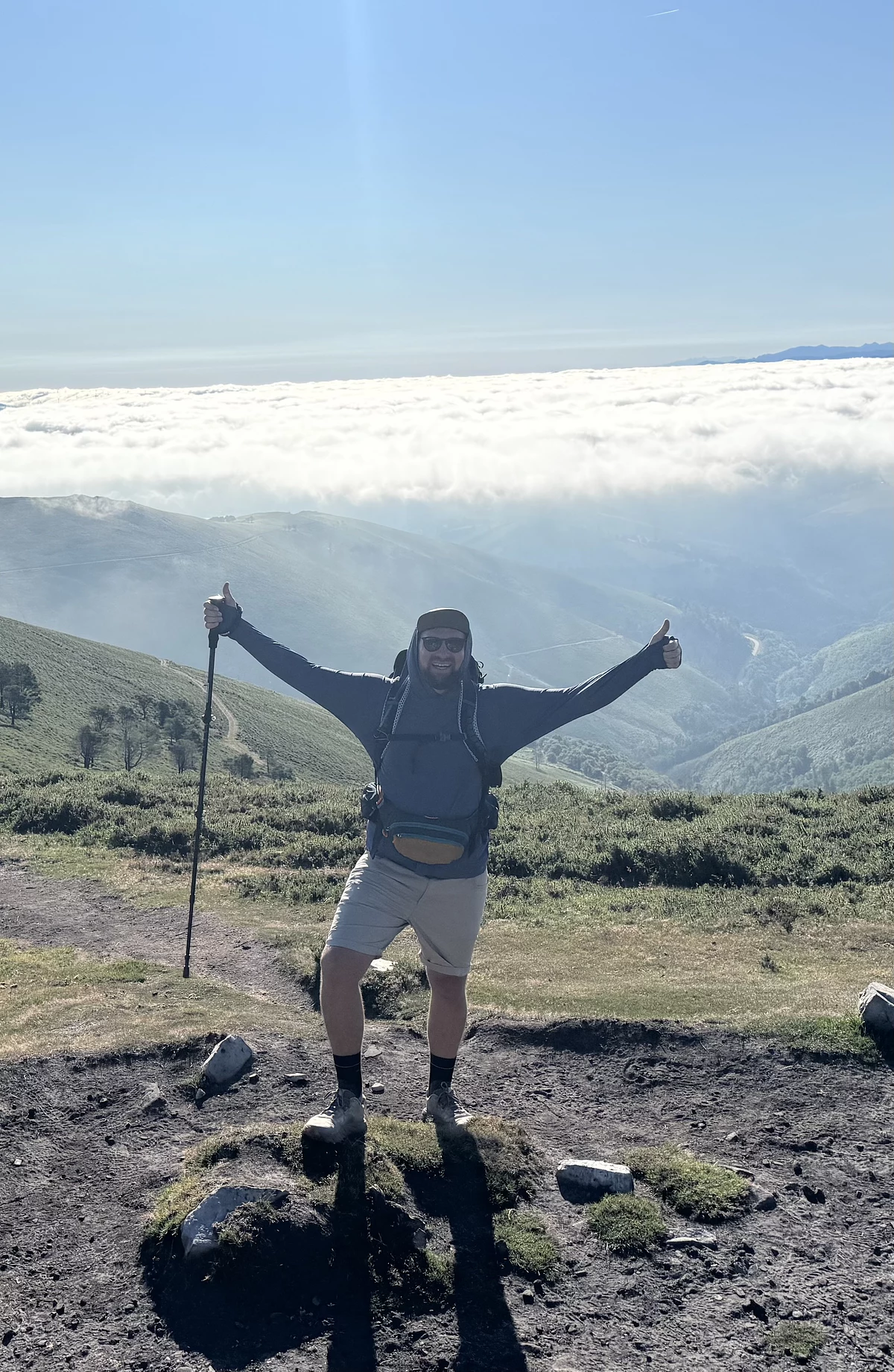
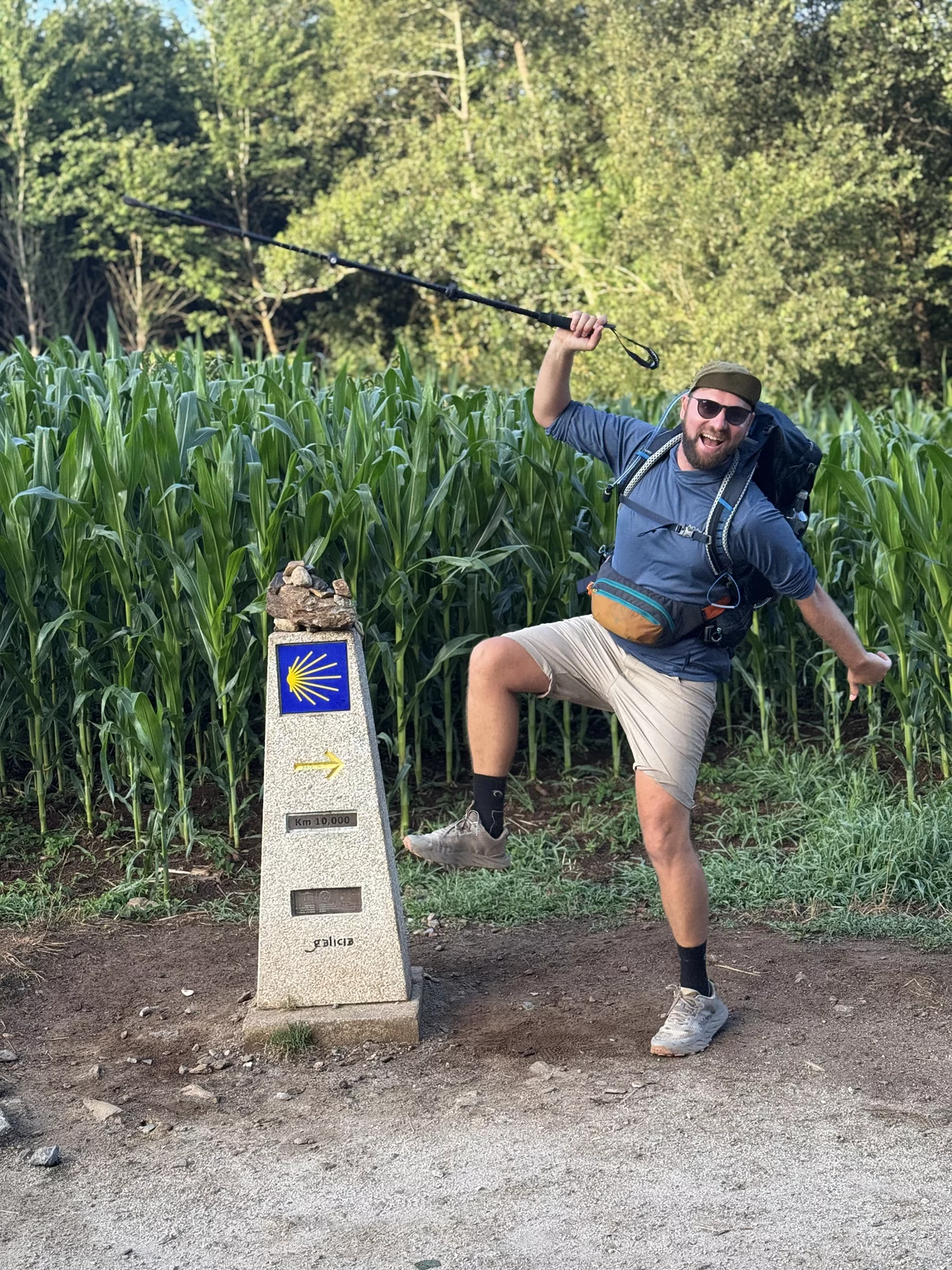
After returning home, Maksym approached the matter more thoroughly: he bought trekking shoes, a comfortable backpack and a few T-shirts, borrowed a raincoat and set off on a full-fledged journey. Unlike flat routes, the Camino Primitivo runs through the mountains: in a day he had to cover 25–35 kilometers and gain up to a thousand meters in altitude.
At first glance, the journey is filled with only everyday questions: where to get water, whether to take food with you, which albergue to spend the night in. However, the manager's main discovery was the people he met along the way: a construction company owner from Mexico, a Spanish pensioner, a student from Australia, an arthouse cinema administrator from Latvia, a pastor from Poland, and an e-sportsman from Germany.
“Each of them had their own reasons for leaving their usual lives and embarking on this journey. And each such story is like another life that you could have lived, but never will. Perhaps this is one of the most valuable experiences of the Camino — the opportunity to hear dozens of completely different life stories in a short time and see the world a little through the eyes of other people,” says Maksym.
For those who cannot take a long break but want to experience the atmosphere of a pilgrimage, Maxim advises paying attention to the Camino Ingles - this route takes only five to six days on foot and easily fits into a regular two-week vacation.
Return to IT and instructions for those who are tired
When the planned dreams came true and the move was completed, Maksym felt an inner readiness to return to work. Now he is looking for new challenges in two directions: building a predictive delivery function in a product company or managing projects with a full cycle of responsibility in outsourcing. The difficult situation on the global IT market, downsizing and high competition, does not scare him.
“I looked for my first job in IT during the Revolution of Dignity, and my last one before the start of a full-scale war. I think we have all already understood that we live in interesting times and they are not over yet. Every crisis is an opportunity, including for positive changes. I feel not fear, but curiosity. Perhaps a document is being written right now that will be commensurate with the Agile Manifesto in its magnitude, and we will become witnesses to it,” the manager reflects.
The sabbatical did not change his basic management principles, as he always valued a culture of mutual respect. However, the experience helped to more clearly outline the criteria for choosing an employer, so Maksym advises to carefully look at the company's business model and avoid those who work on the principle of "squeezing the maximum out of the team in the short term."
For IT professionals who feel deeply tired and are hesitating whether to take a long sabbatical, Maksym has formulated his own formula for preparation consisting of two components — moral and material. From a moral point of view, it is important to internally allow yourself to stop and not scold yourself for inaction — conversations with loved ones, friends, mentors, or working with a psychologist help with this. The material side requires an honest assessment of the impact of the pause on the budget and accepting the fact that in financial terms this may be a step back several years, and to calculate various scenarios, the manager advises using a financial planner or modeling them using AI.
"If the stars align, there is support from the environment, financial opportunity, and inner desire, then at this stage I would stop rationalizing and make a positive decision," concludes Maksym Streltsov.
“I lost the thrill of what used to be so inspiring.” The story of an iOS developer who left an IT startup to create his own apps and a family brand of scented candles
“I had to go on sabbatical to get back to life and not fall into a severe depression.” A project manager told dev.ua why she left IT and opened a dog shop
With a budget of over $1 billion, 600,000 animations and 200 hours of content, everything you need to know about Grand Theft Auto VI — the most expensive and most anticipated game of the decade
Tomorrow, Grand Theft Auto VI will be released on PlayStation 5 and Xbox Series X|S — a project that, after thirteen years of development, has become the most expensive entertainment product in history. Even before the servers opened, the game had collected $1.45 billion in pre-orders, and a third of Ukrainian IT professionals, according to a dev.ua survey, have already planned time off or sick leave for the release. We'll tell you the main points about the new Rockstar Games game: what to do in Leonidas State, how the six-star wanted system works, and how to start the game a day early.