Хочете будувати кар’єру в Data Science та AI? Vodafone Big Data Lab відкриває новий набір —>
Олег ОнопрієнкоGameDev Eng
28 August 2025, 09:00
2025-08-28
“Through the game, we tell the world about our war experiences.” How Hollow Home, an isometric game about the beginning of the Russian invasion, is being developed
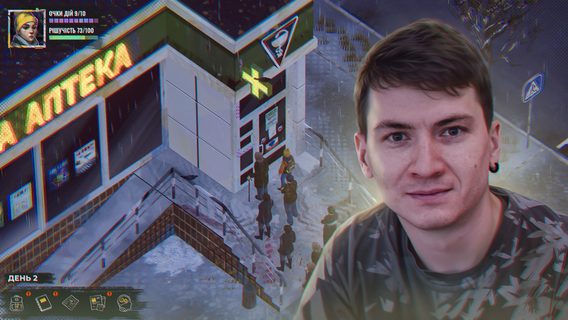
The game, based on the full-scale invasion of Hollow Home, has been in development for over two years. During this time, approximately 30,000 gamers have added the game to their Steam wishlist, but it still does not have a publisher and the studio relies entirely on its own resources. In a conversation with dev.ua, Twigames founder Valeriy Minenko spoke about the challenges of creating the game, how developers convey the horrors of war crimes, and the state of the game development industry in Ukraine.
The game, based on the full-scale invasion of Hollow Home, has been in development for over two years. During this time, approximately 30,000 gamers have added the game to their Steam wishlist, but it still does not have a publisher and the studio relies entirely on its own resources. In a conversation with dev.ua, Twigames founder Valeriy Minenko spoke about the challenges of creating the game, how developers convey the horrors of war crimes, and the state of the game development industry in Ukraine.
About the game
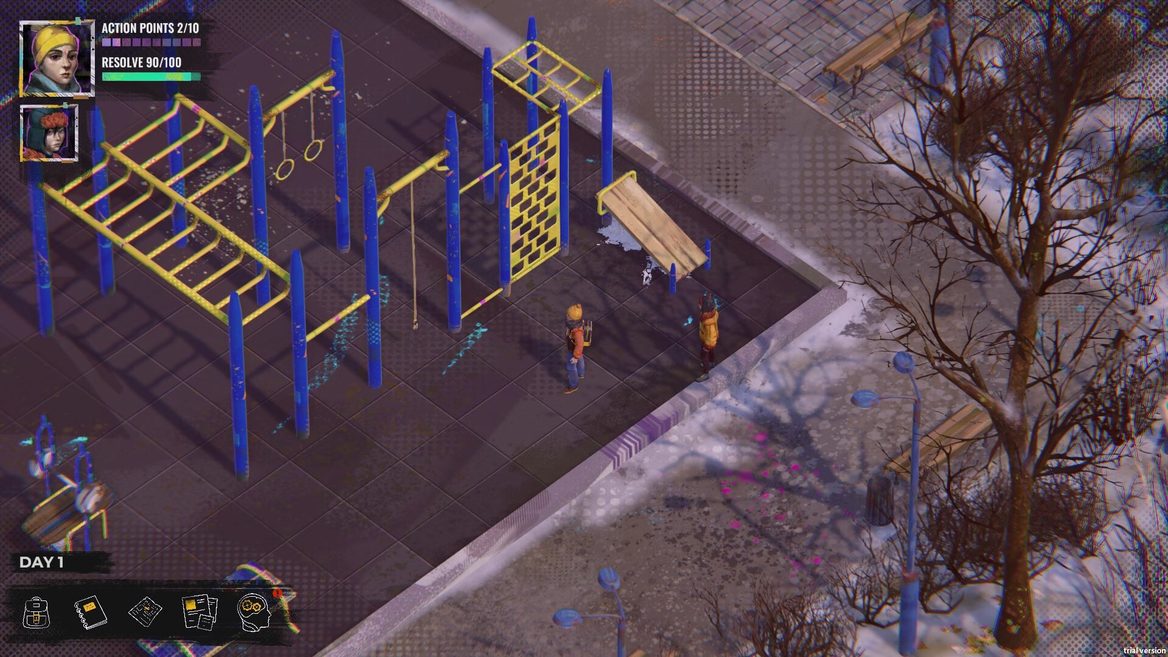
Hollow Home is an isometric narrative RPG set during the Russian invasion of Ukraine. The story of 14-year-old Maxim begins on February 23, 2022, in the final hours of his childhood. The next morning, the boy wakes up to the sound of bombs and is forced to survive in a destroyed city.
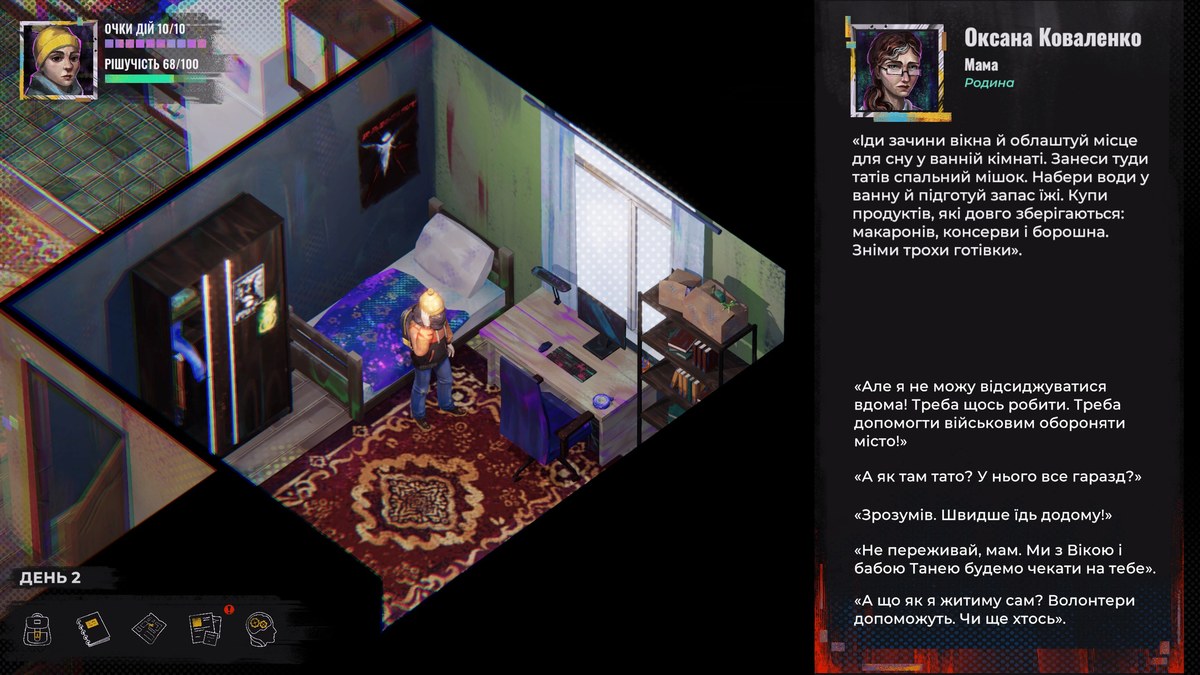
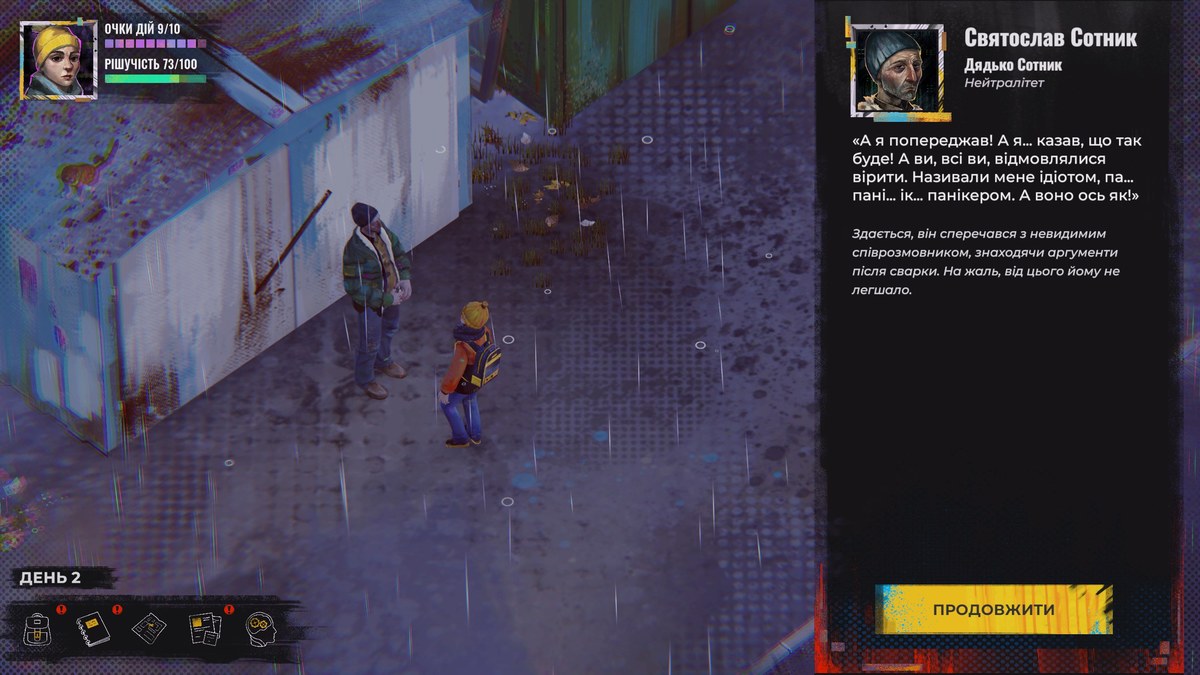
The game focuses on dialogue and branching quests: you explore the city, help its inhabitants and make moral choices every day, with a limit on time and resources. With each passing day, the city fades, areas become inaccessible, and familiar faces disappear.
The characters are fictional, but the story is real. Hollow Home is a child's look at war and a reminder of the price of right and wrong choices.
— Tell us about the core gameplay of Hollow Home. What exactly will players spend most of their time doing in the game?
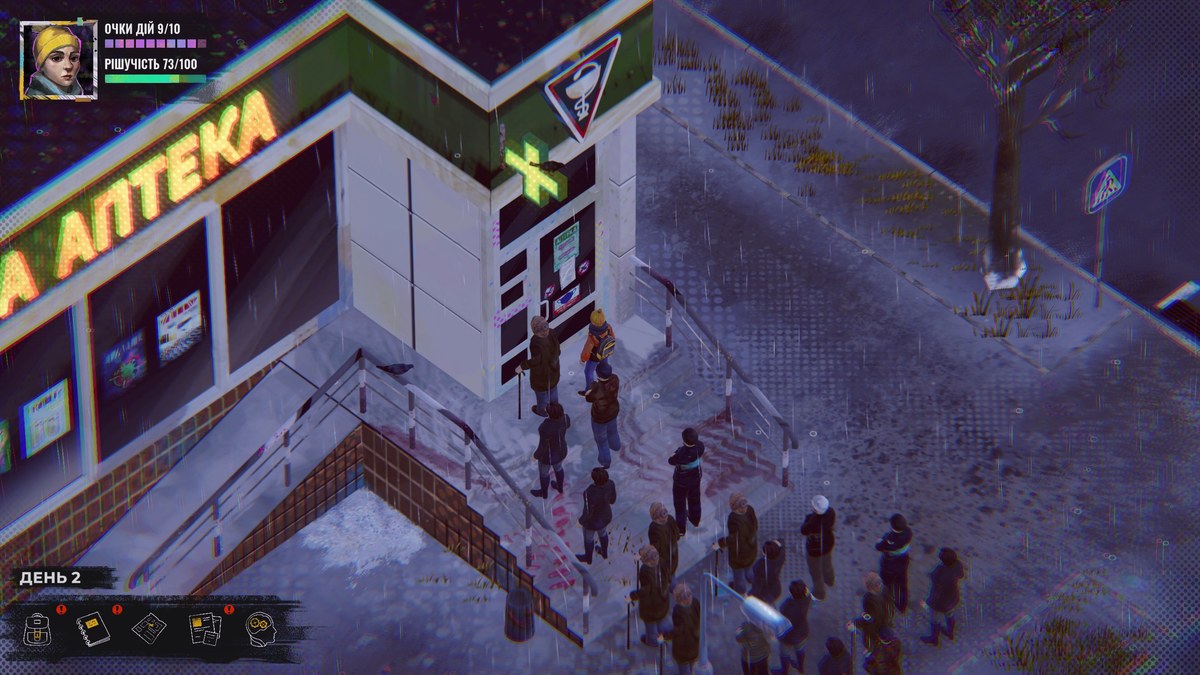
In terms of gameplay, Hollow Home is similar to Disco Elysium. The player mostly walks around locations, talks to characters, receives quests from them and completes them. For these quests, you gain experience that you can use to improve your skills and for future quests. What sets Hollow Home apart from other games is the day mechanic. The gameplay is divided into days, and each day a certain number of action points are available. At some point they end, and you have to go to sleep. The previous day ends, the next one begins. These days are connected with real events that took place during the beginning of the full-scale Russian invasion of Ukraine.
The dynamics of how the city changes are tied to how the situation in Ukraine changed at the beginning of the invasion. The city itself changes every night. You also have an inventory and item crafting mechanics.
— What stage is the game development at now?
In pre-alpha stage. A year ago, we released a limited-time demo for a week during the Ukrainian Games Festival. Then the demo was slightly improved and recently opened to public access. The project should have three chapters, and the team is currently finalizing the content for the first chapter. The game will be approximately 20 hours long.
— You have abandoned the frank depiction of violence. What other artistic techniques will you use to try to convey the horrors of war?
The story of Hollow Home itself is very traumatic. The conversations of the characters, the challenges they face, and the decisions they have to make are enough to convey the emotions of people experiencing the beginning of a great war.
We don't show the actual violence, but some characters disappear and ghosts appear in their place. I think that's exactly what helps us to be more careful about talking about such sensitive things and events.
At some point, we stopped working on collecting documented cases of war crimes in the Russian Federation ( more than 600 cases, ed. ). Simply because the information collected is enough, there is quite a lot of it. In general, we also wrote out the arc of history at some point and it has not changed for us for some time.
— After the announcement, people wrote to you offering help: diaries of those events, their own stories. Did you manage to use some of this testimony in the game?
It was a moment of emotional support. We felt that there was a reaction from society to our project, and that for some people it was important to tell about their experiences and the events they witnessed. We write the story ourselves, and it is not tied to any specific people, but we use certain things.
For example, in several diaries we read that people were taking water from heating batteries in order to get it. I'm not sure if we have this in the project, but it's an example of when an action, on the one hand, shows the drama of the situation, and on the other hand, it's not tied to any specific person or specific tragedy. That's how we work with this information.
— The game's composer, Danylo, is originally from Mariupol, where he lived and worked until February 24, 2022. How did your collaboration begin?
Danylo lived in Mariupol and left the city on the last train. He still lives in Ukraine. Danylo is a very good composer, he writes music for films, TV series, worked with at least one other Ukrainian indie developer, and also released a solo album dedicated to the Armed Forces of Ukraine. When we announced the game, he contacted us and offered to work together. We tried, and it seems like we're doing well. For Danylo, this story is personally important.
— MK Translation was responsible for the Ukrainian localization. Is the original game in English?
Yes, that's true. We immediately made Hollow Home for a global audience - this is part of the missionary meaning of this project, because we want to tell the world about our events, about our experiences that we are going through. That is why we chose English as the original language of the game. As for the Ukrainian localization, we won it a year and a half ago as an award at the Game Gathering conference in Lviv. MK Translation did it very qualitatively and quickly. So far, this cooperation only concerns the demo.
Next, we will look at how to better do localization. This issue has not been resolved yet. Localizing Hollow Home is a big problem, because almost the entire game contains a lot of text. English and Ukrainian will be released, I can promise you that.
— A year ago you said that Twigames had 20 people working on it, and four of them were working on Hollow Home. What is the situation now?
We always have a certain number of people working directly on Hollow Home, and the rest join in when they have free time from other tasks and projects. Currently, there are about eight developers working on HoloHome. The total staff has not grown, it has even decreased slightly over the past six months.
— How would you generally comment on the situation on the labor market in the game development industry?
From my subjective assessments, over the past three years, game dev has declined, both in Ukraine and in the world as a whole. If we talk about us, we have always lived off the projects we outsourced. The number of projects that come in has decreased quite significantly, the dynamics are quite negative. Five years ago, outsourcing services were provided mostly by companies from Ukraine and Asia. European companies lived more on investments, and also had various government grant programs, if they were small companies.
Now a lot of companies are offering outsourcing for sale, even those indie developers who didn't do it before. To me, this is a signal that there is less money in the industry, unfortunately, and competition has increased accordingly.
— You still don't have a publisher, even though the game was announced in March 2023. What are the difficulties?
Yes, we have neither a publisher nor external funding. Everything we do, we do with our own money. Why is that? This is quite a debatable question. To answer it briefly, I don’t know. There can be various reasons for that. When a publisher refuses, they sometimes simply don’t say why, sometimes they give some feedback, but it’s not a fact that this feedback is true. And I’ve probably never heard anyone tell us that we don’t want to publish your project because it’s about a real war. Or that we don’t want to cooperate with you, for example, because you’re in Ukraine.
On the other hand, we have been cooperating with the Polish company Galactus for a year and a half. They, in fact, do PR and marketing for us for a certain share of future sales. This company believed in us, it invested certain resources in our project. In my opinion, they are doing it quite well, showing Hollow Home at various events, including now at Gamescom. I think this is a good story of cooperation for us.
— A year ago you weren't planning to launch a Kickstarter campaign, but things have changed now. What are your expectations from Kickstarter now?
Kickstarter is a platform that is actually more about marketing than about actual funding. In order to raise a development budget on Kickstarter, you need to have a very, very viral project. For the most part, Kickstarter campaigns are still a marketing tool. There is not that much profit, but it gives some sales and additional recognition to some games. We are preparing this campaign and rolling it out little by little. It is not ready yet.
— You participated in Gamescom as part of the Ukrainian stand. How would you assess the presence of Ukrainian developers at the largest video game exhibition in Europe?
You have to understand that I haven't been to Gamescom since the beginning of the invasion, so I've only seen this stand in photos. Every year, Ukrainians find companies that cover the costs, because going to Gamescom is expensive. In addition to the stand itself, every year there is an event within Gamescom, such as a charity auction, where money is raised for the needs of the Defense Forces.
And do the organizers allow this auction?
This is not an official part of Gamescom, but the organizers do not prohibit it. It turns out so well that almost every year Gamescom falls on Ukraine's Independence Day. I think it is important to have a representation of Ukraine as a state at Gamescom. By the way, it must be said that our neighbors have never had a stand at Gamescom. And there are no companies from Russia at Gamescom. There are companies from Cyprus, conditionally or from somewhere else, but we have the opportunity to present ourselves as a state, as Ukraine, and honestly talk about it. And we have to do it, it is important.
— Hollow Home was nominated in the “Social Impact Game” category. How was the selection process and what does this nomination mean to you?
You can apply for various awards at Gamescom, for which you have to pay an entry fee. Then the jury shortlists some projects, and then someone receives an award. The award is both the result of the vote and the result of the jury's evaluations. We were submitted there by the company Galactus, with whom we cooperate. We were shortlisted in the Games for Impact nomination. I think this is a good story, because at least there will be some kind of award ceremony, and the nominees will be announced at this ceremony, and this, in turn, will draw attention to Hollow Home.
Ukrainian game about the horrors of war Hollow Home nominated in the "Game with Social Impact" category at Gamescom 2025
—Will Ukraine ever see state support for local game developers, as has been done in other countries?
It seems to me that this is all built around two issues: the first is the issue of priorities. Now, probably, the priorities are a little different, and I can explain to myself why. It doesn't cause such a direct absolute misunderstanding for me. And the second is the issue of resources. When there are more of them, at a certain point there is an opportunity to support certain things that the state considers less of a priority. I hope that in a few years Ukraine will become such a wealthy country that it will be able to afford to support the development of video games. But I also understand that as of today this is unlikely. Because now the state's priorities are a little different.
It is normal that we have to look for ways to make our own project. We have some opportunities for this that we work with and we have the opportunity to cooperate with companies from other countries. Previously, when USAID was operating in Ukraine, it was possible to work with their grant program. When Ukraine first had a stand at Gamescom 2023, as far as I know, the costs were partially covered by a grant from USAID.
Ukrainians need to realize that we are a state. We need to find ways of communication so that we can have fruitful cooperation, so that we can help each other, and on the other hand, participate in what is happening with this state and where it is heading.
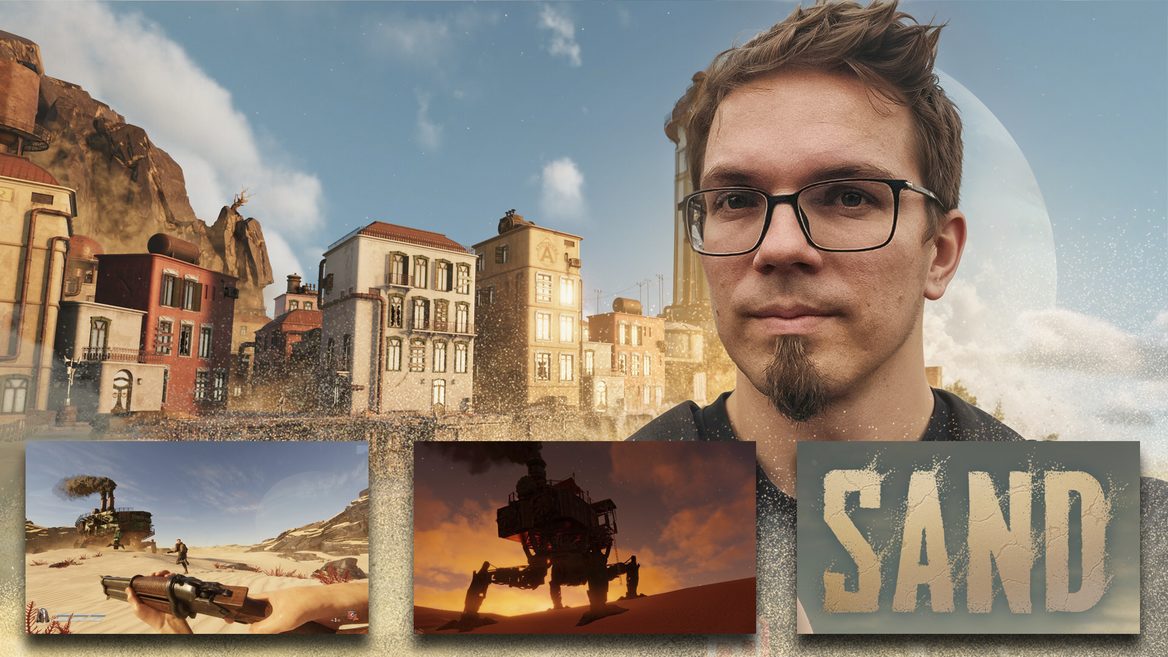
"Releasing the game in its current state is a big risk that could bury the project." Interview with Sand developers about porting the game and next steps
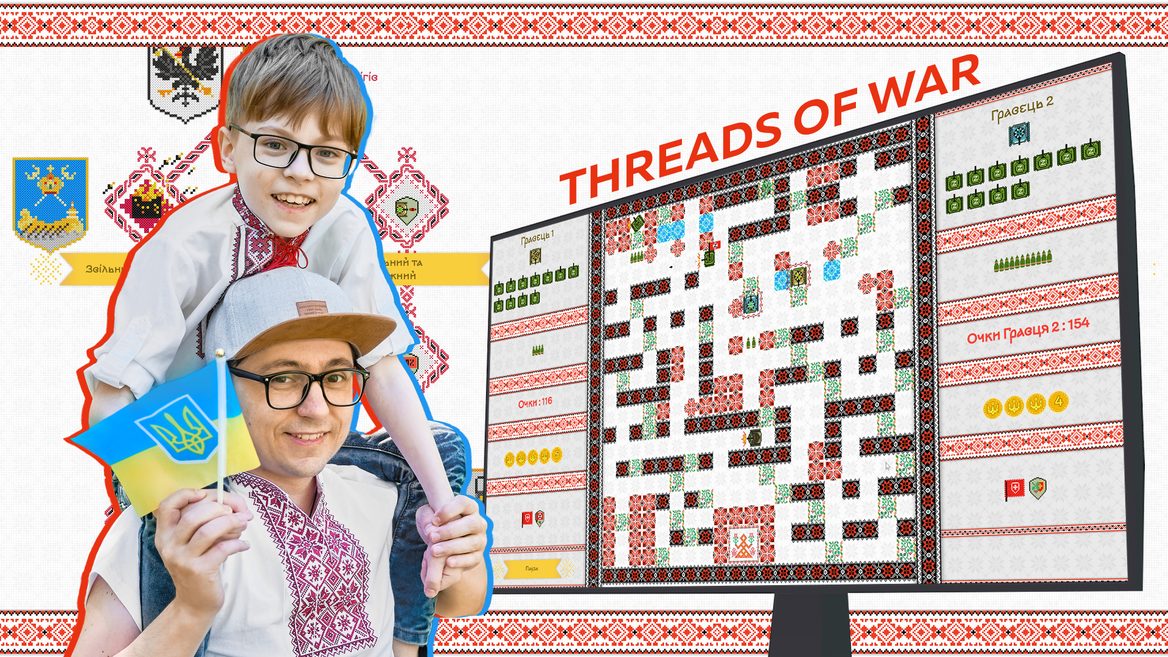
“We agreed with my dad that I would program the next game, and he would do everything else.” How 13-year-old Askold Kostyushko and his father created “embroidered tanks” — Threads of War