Top 10 Ukrainian miltech startups that attracted the most investments in 2025
This list includes Ukrainian miltech teams with the largest amount of publicly announced investments, as well as products that are already undergoing real combat use.


This list includes Ukrainian miltech teams with the largest amount of publicly announced investments, as well as products that are already undergoing real combat use.

This list includes Ukrainian miltech teams with the largest amount of publicly announced investments, as well as products that are already undergoing real combat use.
In 2025, the Ukrainian defense technology sector made a breakthrough: over $100 million in investments were attracted in a year, mass production of weapons was launched, and for the first time, Ukrainian military technologies began to be produced abroad in cooperation with allies. In this selection , dev.ua has collected ten startups that made the biggest breakthrough in 2025 in terms of attracted investments.
Ukrainian startup Swarmer has raised a record $15 million in Series A investment, the largest in the history of Ukrainian defense startups. The round was led by American funds (Broadband Capital and others) in September 2025. This funding allowed Swarmer to dramatically scale its AI development for controlling UAV swarms.
A little later, in November 2025, the startup received an investment of $500,000 from a new syndicate launched by investor Oleksandr Soroka’s Oppenheimer Acceleration Fund.
The startup’s platform allows a single operator to command dozens of drones simultaneously, translating human goals into coordinated actions by a group of drones. In 2025, Swarmer technology was tested in combat on more than 80,000 combat missions, confirming its effectiveness. Thanks to the AI platform, it was possible to reduce the number of operators required to perform swarm missions from nine to three — one to plan the mission, one to control the drone, and one to navigate. This became possible because the system autonomously coordinates the actions of the drones even without GPS and minimal communication.
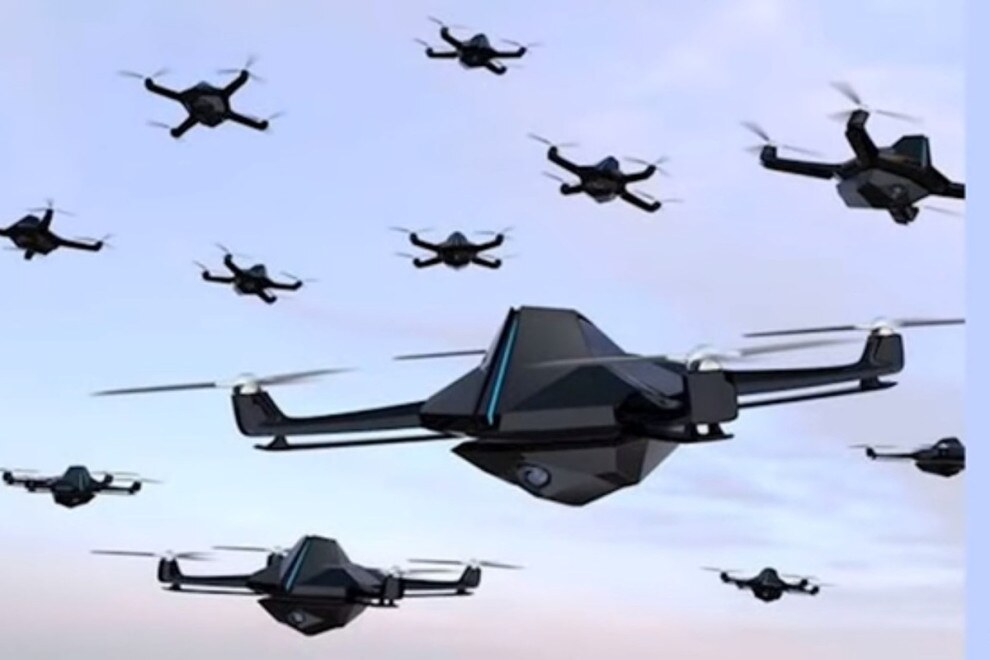
In 2025, Swarmer used the new capital to scale up: if earlier the startup demonstrated coordinated work of a swarm of 25 drones, now scenarios with more than 100 drones of various types are being designed. In June 2025, the Swarmer software successfully coordinated a massive strike of dozens of drones during the unprecedented special operation «Web» (according to some media). Importantly, the platform adheres to the principle of «man in the loop»: the final decision on the strike always remains with the operator.
The American-Ukrainian defense startup Vermeer is making navigation for drones where GPS doesn’t work due to jamming or signal substitution. Their idea is that instead of satellites, the drone «orients itself with its eyes»: it analyzes images from an optical and infrared camera, compares the terrain picture with maps and landmarks, and determines its location and route. This is necessary for war, where electronic warfare often «turns off» the usual navigation.

In October 2025, the company announced that it had raised $10 million in funding. The largest investor in this round was Draper Associates; AeroX Ventures, Boscolo Intervest, High Point Ventures, Rockaway Ventures, and the US Air Force Techstars program were also mentioned. Separately, Vermeer notes that it previously received over $7 million in non-equity funding through US government programs (SBIR/AFWERX) to prove the technology without giving a stake in the company.
Vermeer plans to use the money raised in 2025 to develop its optical navigation system and scale the product for military purposes. The company’s public materials also noted that their technology has been tested in real-world conditions, including in Ukraine, and is being developed with an eye toward stable operation in an active jamming environment.
In 2025, the Kyiv robotics startup Tencore received one of the largest publicly confirmed financings in the defense sector: $3.74 million from the American-Ukrainian fund MITS Capital. This is a seed round investment, the first of its kind made through the «Diya.City» legal regime for a defense company. Tencore used the funds received to dramatically expand R&D and production capacities. In 2025, the company increased the production of its unmanned ground platforms TerMIT from 800 units per year to the planned 2,000 per year. TerMIT is a universal tracked robot that meets NATO standards and is already fighting on the front lines. It performs dangerous tasks: transports ammunition, delivers provisions, evacuates the wounded, demines roads and provides fire support, armed with machine guns or grenade launchers.
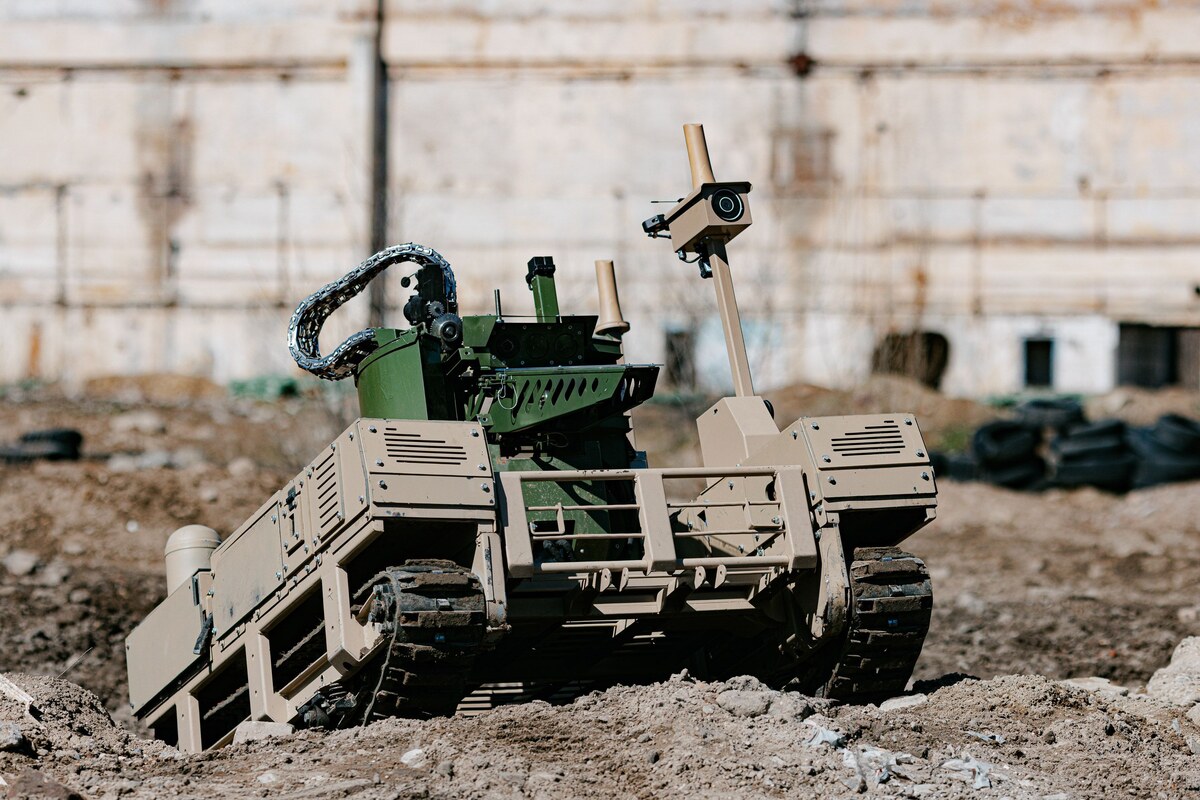
In 2025, Tencore demonstrated that the Ukrainian defense industry is capable of mass production of high-tech equipment even in wartime. The MITS investment made it possible to open a new engineering center and hire dozens of engineers. This case also became a landmark precedent: for the first time, a foreign investor entered the charter of a Ukrainian miltech company directly, using «Diya.City».
Danish-Ukrainian startup Dropla Tech focused on two deadly battlefield threats (mines and ambush-type «kamikaze» drones) in 2025 and offered AI solutions for them. The startup has attracted €2.4 million in investment from European funds, including Danish EIF and Maj Invest, to scale its front-line AI systems. Its flagship development, Blue Eyes, is an autonomous computer vision system that detects hidden mines on supply routes in real time. Uniquely, Blue Eyes works completely offline, without GPS and the Internet, meaning it is suitable for use directly in combat under the influence of enemy electronic warfare. Another product, Dropla Vision, combines data from thermal imagers, optical cameras, and other sensors into a single «smart» map that helps to quickly detect explosive threats and demine the area.

Dropla’s technologies have been tested under the Brave1 program and are already being deployed on the front lines. They have helped detect improvised explosive devices and hidden killer drones, ensuring the security of supply routes and saving the lives of soldiers. Initially, Dropla focused Blue Eyes on searching for mines using drones, but in the summer of 2025, the startup quickly adapted the AI to a new enemy tactic, namely explosive «waiter drones» that lie in wait for convoys. This flexibility in responding to new threats, multiplied by significant investor support, has made Dropla Tech one of the most interesting and successful defense AI projects of the year.
Ukrainian miltech startup HIMERA develops secure tactical communications systems for the military. These are radios and network solutions that must maintain stable encrypted communications in an area of active electronic warfare, when standard channels are jammed or become vulnerable to interception. HIMERA’s product logic is simple: to give units at the «field» level a communications tool that can be quickly deployed, networked, and used without critical dependence on civilian infrastructure.
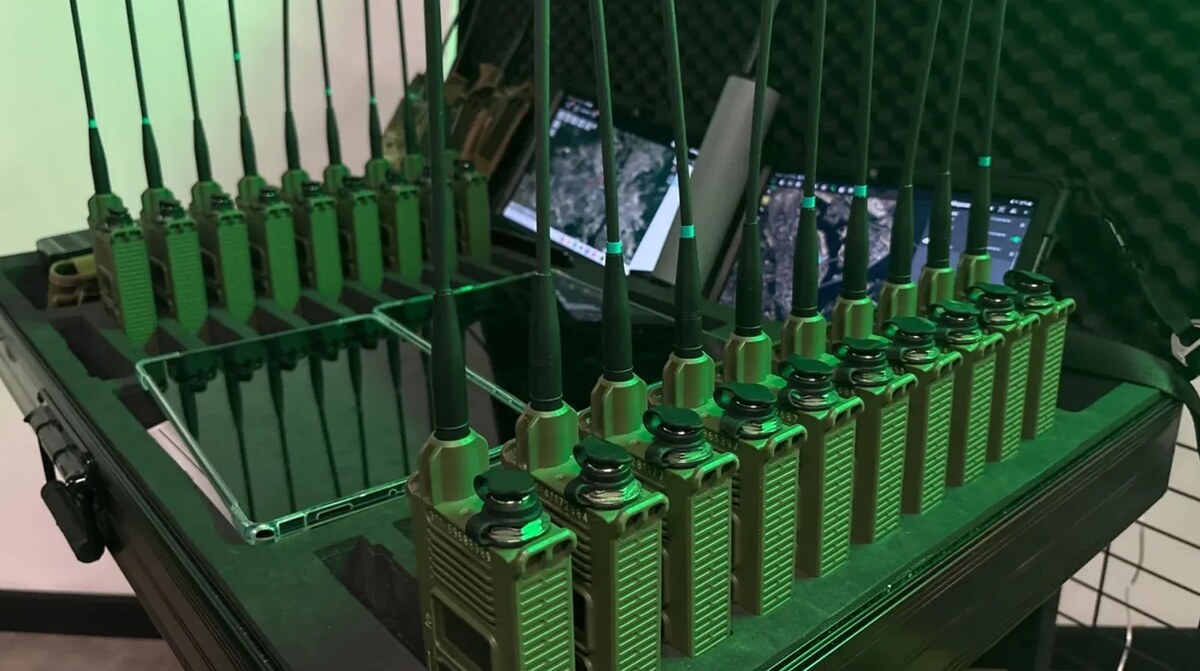
HIMERA publicly announced at least two fundraisings in 2025. In January, the startup received $150,000 from the United Angels Network, a community of private investors. This was the second round from this community: together with the previous investment in February 2024, their total support for HIMERA reached $375,000. At that time, the company had raised a total of $525,000 from private investors.
The largest investment event for HIMERA in 2025 occurred in December: the startup announced the raising of over $2.5 million for the development of military communications. The key investor in this round was the Green Flag Ventures fund, and dev.ua listed a number of Ukrainian funds and private investors among the participants, including Nezlamni, United Angels Network, Freedom Fund, Bulava Capital, UA 1, Big Defence, VYTACH, Varangians and others. The team explained that the funds would be used to scale production and R&D to increase the reliability of solutions and develop sales, including the export sector.
Ukrainian-founded defense-tech startup Sky Spy makes compact radio reconnaissance systems for drones. Their first product, Agent 001, effectively turns a small UAV into a «spectrum hunter»: the module can detect, classify, and localize radio emitters in real time and immediately provide visual confirmation from the camera. The key idea is to quickly find what is most difficult to «touch» in war: enemy drone control stations, other signal sources, and electronic warfare assets that are usually hidden and constantly changing positions.
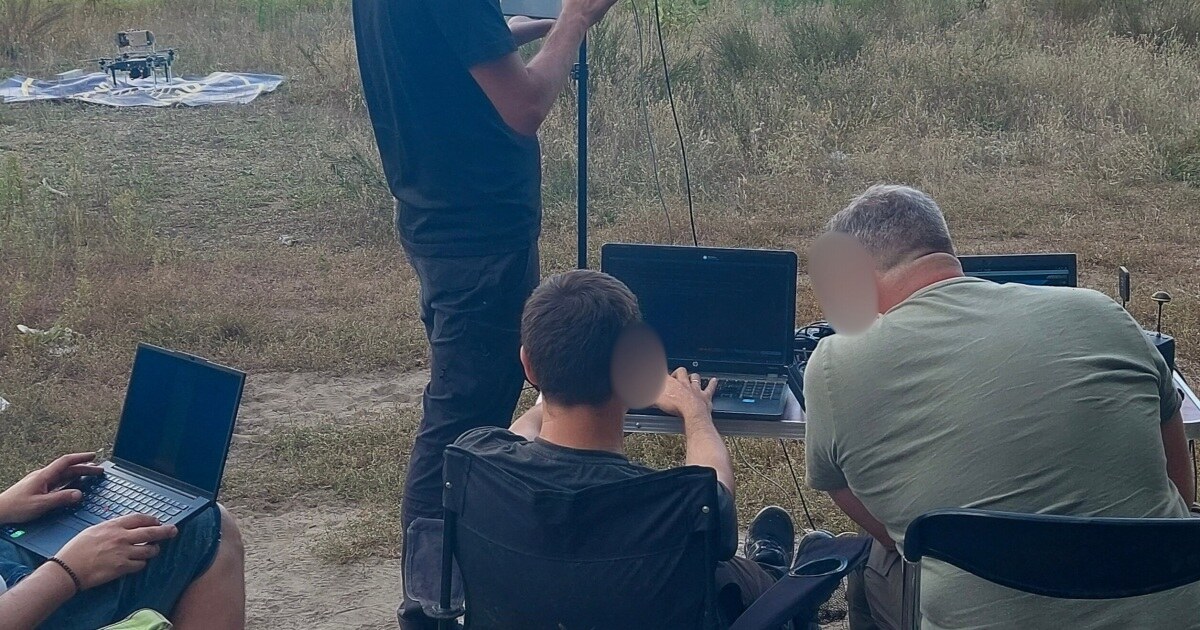
In 2025: Sky Spy publicly announced the attraction of investments of $1.6 million. The main investors were Expeditions Fund and Superangel, and they were joined by Freedom Fund, Sunfish Partners, Crosscourt Ventures and Material Ventures. The company explained that the funds raised were needed to publicly launch the product and scale production, launch production for the supply of autonomous systems with AI. An important nuance for the market: Sky Spy directly stated that their Agent 001 had already been tested on the battlefield in Ukraine and during the tests determined the geographical location of Russian UAV control points and electronic warfare equipment.
Estonian-UkrШІnian startup Teletactica develops secure communication systems for troops, capable of operating in conditions of aggressive electronic warfare. Although this direction is not as «bright» as drones or missiles, in 2025 it gained critical importance on the front. Teletactica attracted $1.5 million in investments from MITS Capital and Green Flag Ventures funds to scale the production of its tactical communication systems. The round took place in July 2025 after the startup’s successful acceleration in the MITS program. The company creates hardware and software complexes (in particular, secure modems and antennas) that provide encrypted voice and data communication even in the zone of active jamming and without GPS. In field tests, Teletactica devices confirmed their «invulnerability» to electronic warfare: the loss of data packets does not exceed approximately 1-5% even under intense radio interference.
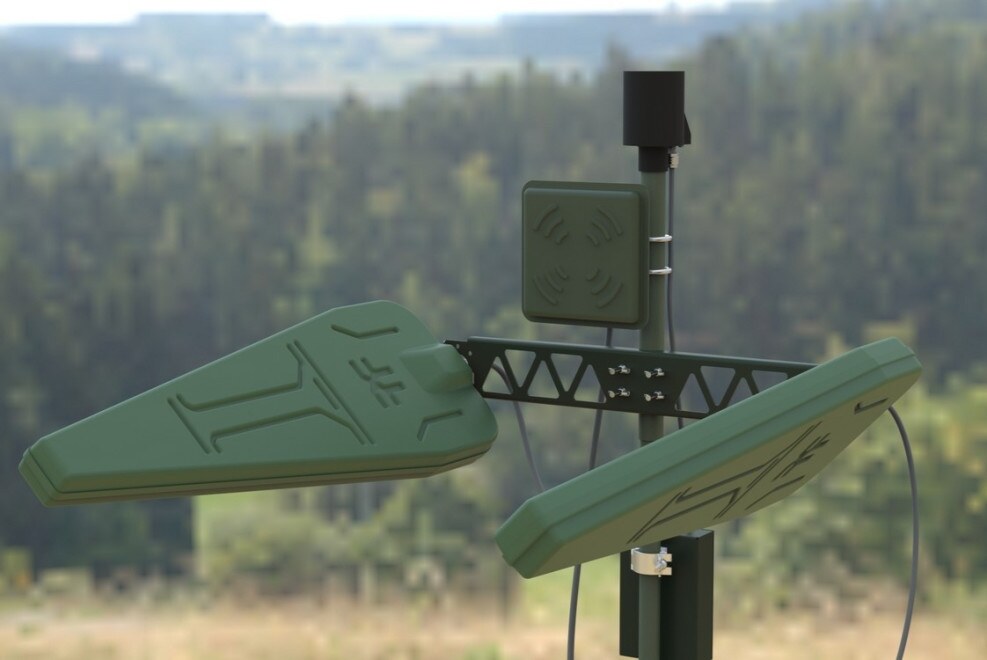
In 2025, Teletactica’s systems were put to the test in combat: they were used by Ukrainian units for secure coordination of drones and units where conventional radios «go out». The startup’s equipment is already deployed on the front lines, providing reliable communication where other means do not work. The funding received allowed it to expand the product line and begin preparations for entering EU markets.
The Kyiv-based company M-FLY is developing technologies that will actually give Ukrainian drones the ability to hit targets as accurately as guided aircraft complexes. These include laser target illuminators and semi-active guidance systems that can be installed on a drone and turn conventional shells or aerial bombs into «smart» munitions. In early 2025, M-FLY raised $1.3 million in investment from a consortium of four venture funds and business angels. Investors include Resist.UA, MITS, Freedom Fund, and private angels. The startup used the funds to complete the development of a universal laser target designator and seeker for ammunition, planning to fully introduce the technology by the end of Q2 2025. Tests at the range showed over 95% of direct hits, and the complex is resistant to enemy electronic warfare and interference (laser guidance does not depend on GPS/communication).
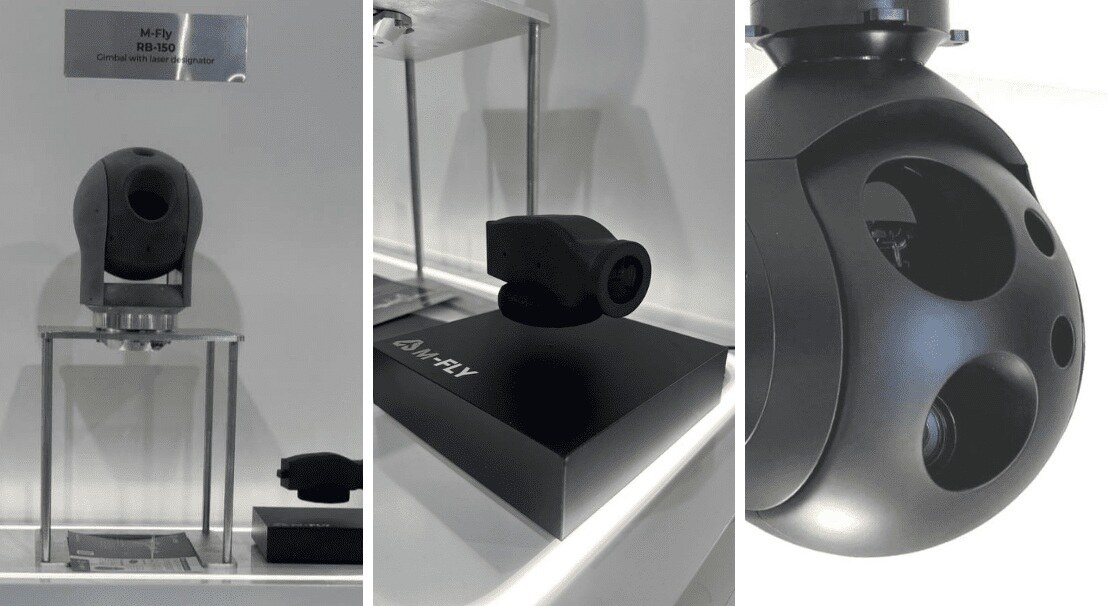
In 2025, the M-FLY team has already created working prototypes of laser kits that have been tested in the combat zone. The startup is preparing to establish mass production of such guidance systems in order to re-equip Ukrainian drones with high-precision weapons. In fact, M-FLY is bringing closer the appearance in the Armed Forces of a cheap analogue of a high-precision «bomb» that can be dropped from a drone and guided to a target with a laser. In addition, in 2025, the startup received two grants from Brave1 for $ 1.4 million and is simultaneously developing stabilized suspended gyro-stabilized modules for reconnaissance drones, as well as integrating elements of swarm AI into its guidance systems.
Huless makes «tethered» Highline-T drones that work as an aerial repeater and «high-altitude antenna» for units. Unlike conventional UAVs, this drone is connected to a ground station by a cable: through it it receives power and transmits data. Thanks to this, the Highline-T can hang over positions for a long time and raise communication above the terrain and buildings, which is especially critical where the radio channel constantly «falls» due to obstacles or the work of enemy electronic warfare. The open descriptions also mentioned that the complex has backup power and an emergency parachute, and its idea is to provide a stable «communication point» for the unit when classic solutions cannot withstand frontline conditions.
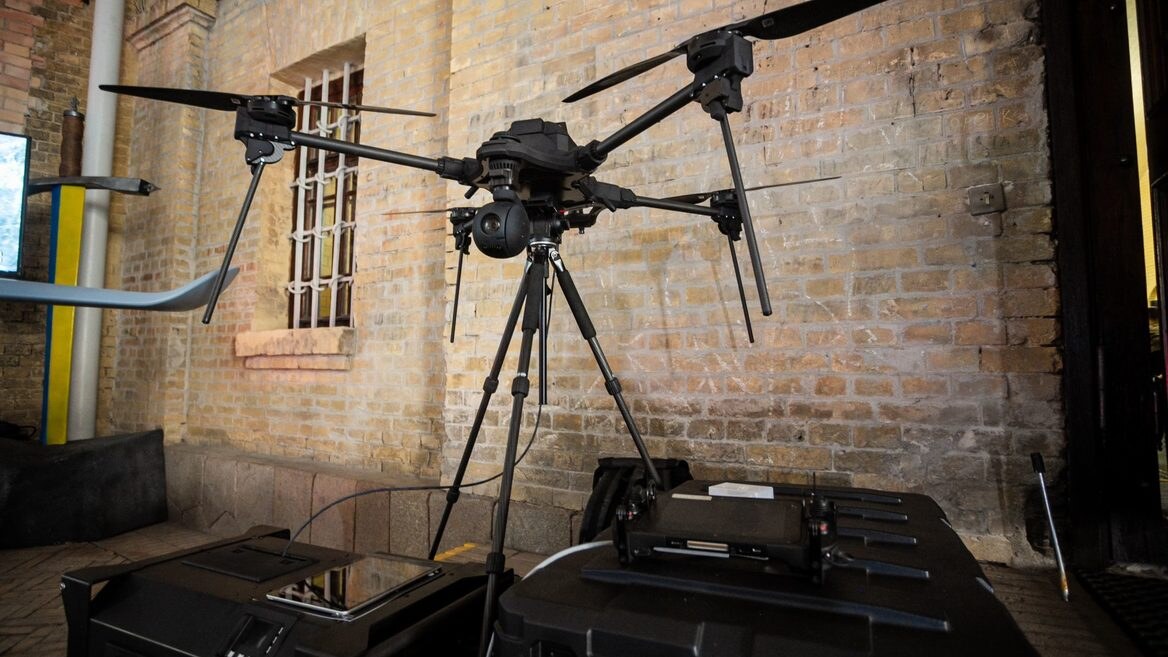
In January 2025, Huless announced that it had raised $1 million to develop Highline-T. The company explained that this was not a single transfer «from one fund,» but an amount from several sources: private defense investors (an anonymous key investor was also mentioned), a state-owned bank loan for a government contract, and a grant from the Brave1 cluster for system development. The money was planned to be used for product development and faster deployment of the complex in divisions, in particular, for scaling up production and refining the solution for real-world conditions.
Lviv- based Norda Dynamics specializes in autonomous UAV control systems in electronic warfare environments. In 2025, the startup first received $150,000 in investment from Angel One. By the end of the year, the startup had raised $1 million to accelerate the production of its autonomous modules for drones.
Norda has used the funds to scale up production and expand its engineering team. Among the company’s products are the Underdog universal on-board autonomy module and the StableLink inertial navigation system, which allow the drone to perform a mission without GPS and stable communication, even under intense jamming. In essence, a drone with such modules can maintain course and altitude and follow a given route without the participation of an operator, even if the enemy jams the signal.
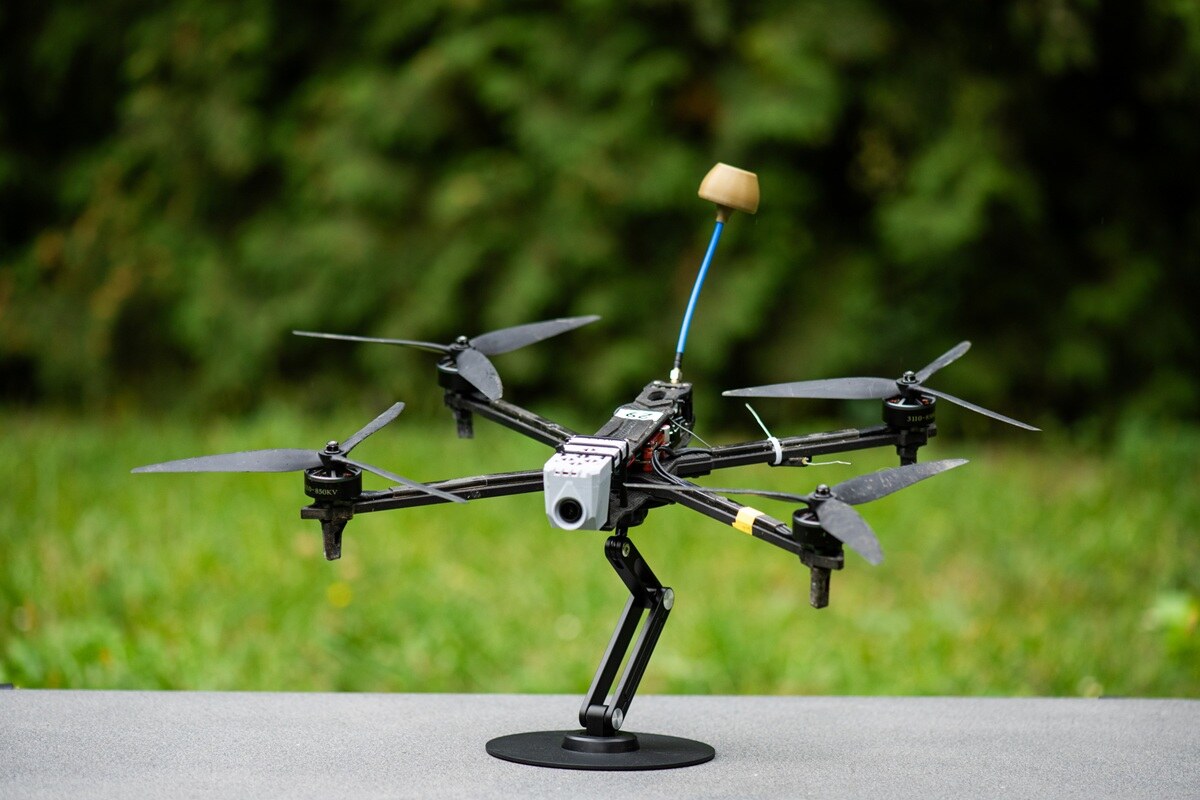
Norda solutions are integrated into many Ukrainian drones and have been tested in tens of thousands of combat missions by various units of the Armed Forces of Ukraine. Drones with Norda modules are significantly protected from electronic warfare, so the enemy’s attempts to knock them off course with radio interference are mostly futile. After receiving funding, Norda Dynamics increased its staff in 2025 and accelerated the development of new autonomous control solutions to meet the growing demand of the army. By the end of the year, Norda modules were widely used by dozens of Ukrainian units, becoming one of the most massively implemented AI solutions for drones in this war.
Previously, dev.ua wrote about how over 50 Ukrainian startups in the field of defense technologies attracted over $105 million in investments and grants in 2025. According to the Ministry of Digital Affairs, this is approximately a third of all early investments in defense tech in Europe, including the United Kingdom.