Хочете будувати кар’єру в Data Science та AI? Vodafone Big Data Lab відкриває новий набір —>
Наталя ХандусенкоWeapon
4 November 2026, 11:21
2026-11-04
Inspired by birds and insects: Switzerland creates flexible, collision-free drone (video)
For over a hundred years, quadcopters have been built on a single basic principle: four arms with propellers extending from a rigid central body. This design is ideal for precise flight, but it has a significant drawback - high sensitivity to unplanned contacts. Even the slightest impact with a wall or obstacle can destabilize or completely destroy the device.
Researchers from the Swiss Federal Institute of Technology Zurich (ETH Zurich) have proposed a solution to this problem.
For over a hundred years, quadcopters have been built on a single basic principle: four arms with propellers extending from a rigid central body. This design is ideal for precise flight, but it has a significant drawback - high sensitivity to unplanned contacts. Even the slightest impact with a wall or obstacle can destabilize or completely destroy the device.
Researchers from the Swiss Federal Institute of Technology Zurich (ETH Zurich) have proposed a solution to this problem.
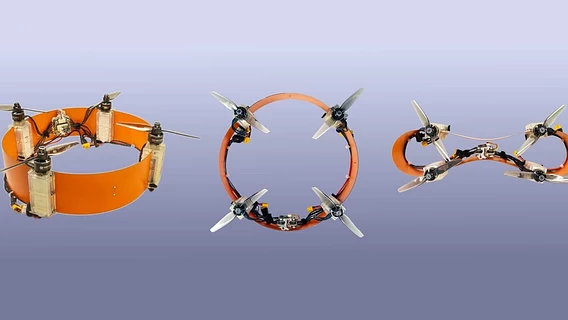
The FlexiQuad drone, created by Swiss researchers, has a soft ring-shaped frame without a central body. The rotors, batteries and control module are evenly distributed along the frame. This allows the device to deform during impact, absorbing most of the collision energy, Tech Xplore reports .
FlexiQuad was developed by Luca Girard and Stefano Minchev at the ETH Zurich Environmental Robotics Laboratory, who have already filed a patent application and have been nominated for the prestigious Spark Award.
Soft on impact, hard in flight
The FlexiQuad frame is not flexible in all directions. Girardi explains that they were inspired by birds and insects: “We were interested in how rigid their wings are and how they bend — or don’t bend — in different directions.”
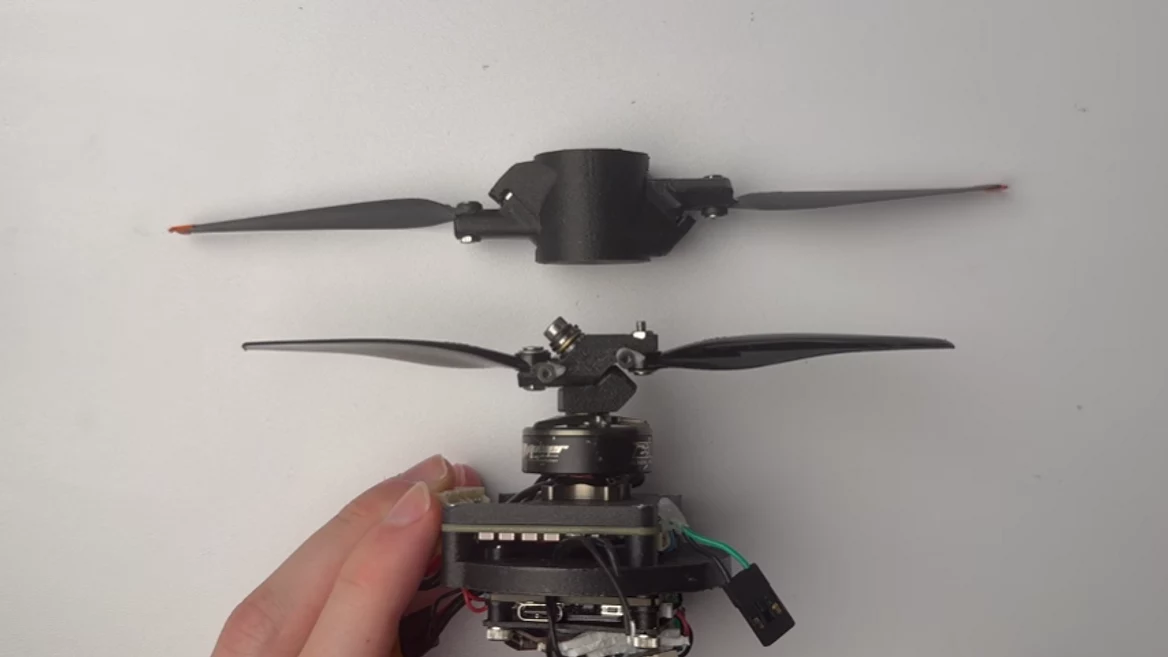
Following this principle, engineers created a frame that bends easily in the horizontal plane (where deformation is required) but remains rigid vertically, allowing the rotors to transmit thrust efficiently.
Despite its flexibility, the FlexiQuad remains fast and agile. “Our drone is very agile and can reach speeds of up to 80 km/h. It achieves linear and angular acceleration comparable to rigid drones. Soft does not mean slow,” notes Luca Girardi.
During the tests, the FlexiQuad intentionally crashed into obstacles at speeds of up to 25 km/h. The flexible frame briefly deformed, reducing the load, and the drone continued to fly. In addition, this same flexibility can be used to grab and transport loads: the drone has already successfully carried a soft first aid kit and lifted a load that weighed more than its own weight.
Search for people, inspection and interception of drones
Thanks to its design, FlexiQuad is suitable for working in difficult and confined spaces:
inspection of complex objects - inspection of ship ballast tanks or hard-to-reach structures;
search and rescue operations — reconnaissance inside collapsed buildings, where a larger drone can squeeze to fit through narrow openings;
environmental monitoring — conducting measurements in dense forests, where the risk of collision with branches is critical.
interception of enemy drones — the authors claim the possibility of installing a net in the empty center of the FlexiQuad to catch unwanted UAVs.
“If the mission requires covering long distances quickly, the sensors of a conventional rigid drone may notice an obstacle—such as a tree—too late. For a rigid structure, such an impact means the end of the mission. The FlexiQuad’s ability to withstand collisions allows it to fly at speeds that would be too risky for traditional drones,” explains Girardi.
The drone has a modular and extremely cheap design: the materials for the body cost less than 15 Swiss francs. When disassembled, the flat frame elements can be folded compactly - one of Girardi's prototypes was easily transported in a regular suitcase.
What agile drones still have to learn
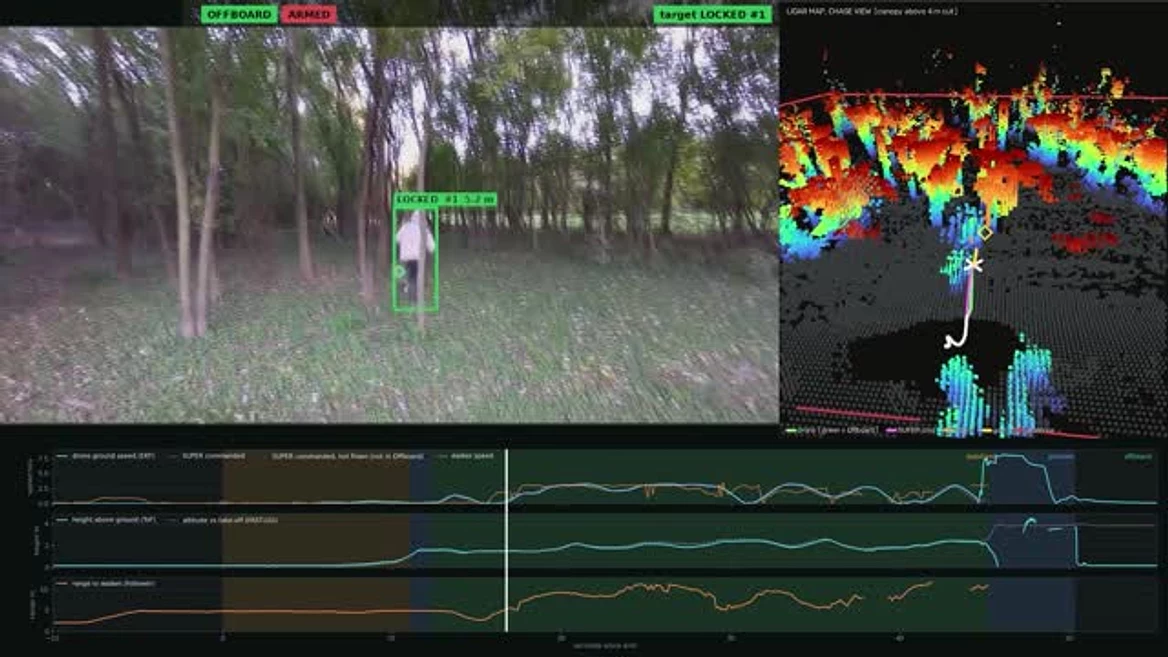
Before FlexiQuad can move beyond the lab, it needs to master a reliable orientation and autonomous navigation system. After a collision, vibrations from the flexible frame blur images from the cameras, making it difficult for the sensors to work.
To solve this problem, the researchers used deep reinforcement learning algorithms inspired by insect reflexes. FlexiQuad is currently being trained to first stabilize itself after a collision using onboard motion sensors, before returning to autonomous flight.
In addition, the team is investigating the possibility of using the frame vibrations themselves as a source of information: measuring deformations and vibrations could in the future become an additional feedback channel for the flight control system.