Хочете будувати кар’єру в Data Science та AI? Vodafone Big Data Lab відкриває новий набір —>
Олександр КузьменкоAround IT
10 March 2025, 16:35
2025-03-10
Vibe coding is becoming increasingly popular in IT — programmers simply ask AI to perform certain tasks, and do not delve into the actual code that the chatbot offers.
Andrey Karpaty, a former OpenAI researcher and now director of artificial intelligence and computer vision for autopilot at Tesla, described in February a new programming technique called «vibe coding», which involves using AI chatbots. It is now gaining popularity among programmers.
Andrey Karpaty, a former OpenAI researcher and now director of artificial intelligence and computer vision for autopilot at Tesla, described in February a new programming technique called «vibe coding», which involves using AI chatbots. It is now gaining popularity among programmers.
As Ars Technica notes, this method, based on large language models (LLMs) from companies like OpenAI and Anthropic, is gaining traction as a potential way to lower the barrier to entry into software development. But questions remain about whether the approach can reliably produce code suitable for real-world applications, even as tools like Cursor Composer, GitHub Copilot, and Replit Agent make the process increasingly accessible to people with minimal programming skills.
Unlike traditional controlled and precise programming, vibe coding works in the realm of the so-called flow.
«There’s a new kind of coding I call ‘vibe coding,’ where you completely surrender to the vibe, accept the exponent, and forget that the code even exists,» Karpaty wrote in early February on X (Twitter). He describes the process in a deliberately casual way: «I just see something, say something, run something, copy and paste something, and it mostly works.»
In vibe coding, if a bug occurs, the user provides feedback to the AI model, accepts the changes in the hope that they will work, and repeats the process. The Karpaty method contrasts sharply with traditional software development methods, which typically emphasize careful planning, testing, and understanding implementation details.
Karpaty humorously notes that this approach is for «the laziest programmers.»
«I ask for the dumbest things, like ‘halve the sidebar padding,’ because I’m too lazy to figure it out myself. I always ‘Accept All,’ I don’t read the differences anymore,» he says.
Essentially, this technique turns anyone with basic communication skills into a new type of programmer who uses natural language, at least for simple projects. Because AI models are currently constrained by the amount of code the model can digest at once (context size), there is an upper limit to how complex a vibe-coding software project can become before the human at the helm becomes a high-level project manager who manually assembles pieces of AI-generated code into a larger architecture. But as AI advances, these limitations may one day disappear.
There’s a new kind of coding I call «vibe coding», where you fully give in to the vibes, embrace exponentials, and forget that the code even exists. It’s possible because the LLMs (eg Cursor Composer w Sonnet) are getting too good. Also I just talk to Composer with SuperWhisper…
It’s impossible to know exactly how many people use the vibe coding method as a hobby or job, but Cursor reported 40,000 paid users in August 2024, and GitHub reported 1.3 million Copilot users a little over a year ago (in February 2024).
However, the approach has certainly gained particular popularity online as a fun way to quickly prototype games. Microsoft’s Peter Yang recently demonstrated vibe coding on a stream, creating a simple 3D first-person zombie shooter using dialogue prompts provided by Cursor and Claude 3.7 Sonnet. Yang even used a speech-to-text app to verbally describe what he wanted to see, refining the prototype over time.
Simon Willison, an independent software developer and AI researcher, shared his thoughts on programming with artificial intelligence. «I really like vibe coding. It’s a fun way to test an idea and prove that it can work,» he says.
Using vibe coding on the way to a production codebase is certainly risky, he said. Most of the work software engineers do is related to the development of existing systems, where the quality and clarity of the base code is crucial.
At some point, understanding at least part of the code becomes important, as AI-generated code can contain errors, misunderstandings, and confabulations—for example, cases where an AI model generates references to fictional functions or libraries.
«Vibe coding is all fun and games until you have to vibe debug,» developer Ben South quipped on X (Twitter), pointing out this fundamental problem.
But Willison believes that experiencing hallucinations through AI coding tools is not as harmful as embedding false AI-generated information into a written report, because coding tools have built-in fact-checking: if there is a «hallucination,» the code won’t work. This provides a natural limit to the reliability of vibe coding—the code either works or it doesn’t.
However, in a professional environment, the risk-reward calculation for vibe coding becomes much more difficult. While an individual developer may be willing to compromise with this programming method for personal projects, a corporate environment typically requires standards of code supportability and reliability that vibe coding solutions are difficult to meet. When code doesn’t work as expected, debugging requires understanding what the code actually does—the very knowledge that vibe coding typically bypasses.
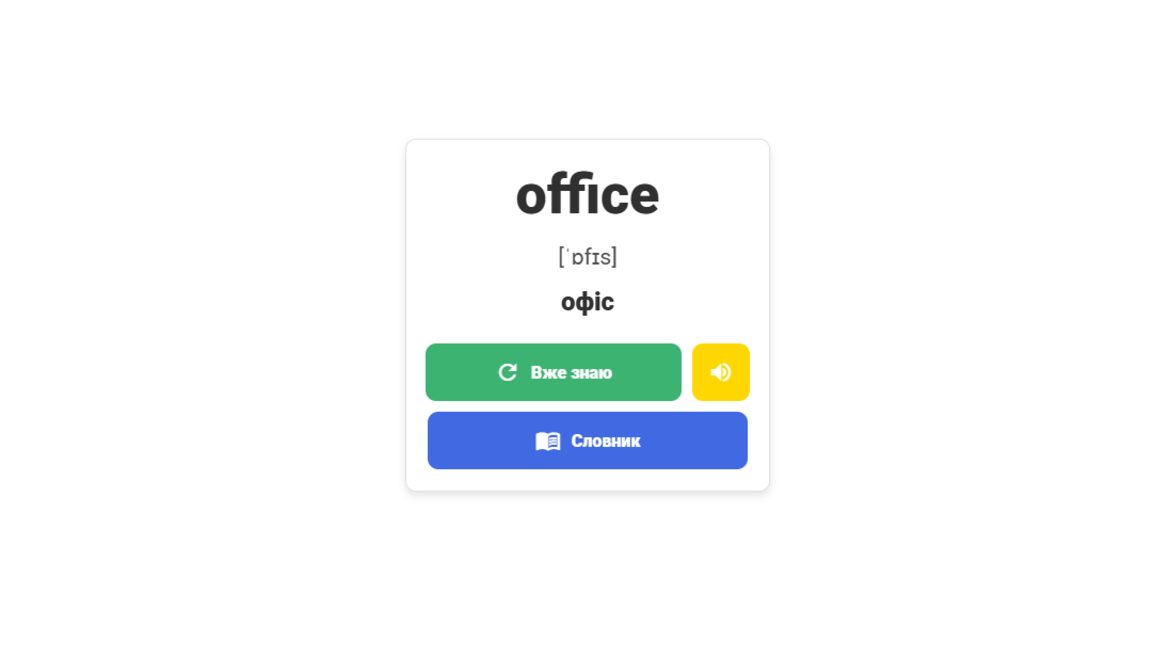
In a comment to dev.ua, the developer noted that he is not a professional programmer and wanted to do something useful for his younger brother, who is learning English. According to him, Grok 3 felt «like a smart friend who really wants to help.» Evgeny’s example shows that AI in 2025 could already help people with almost no programming skills create simple but useful personalized tools.
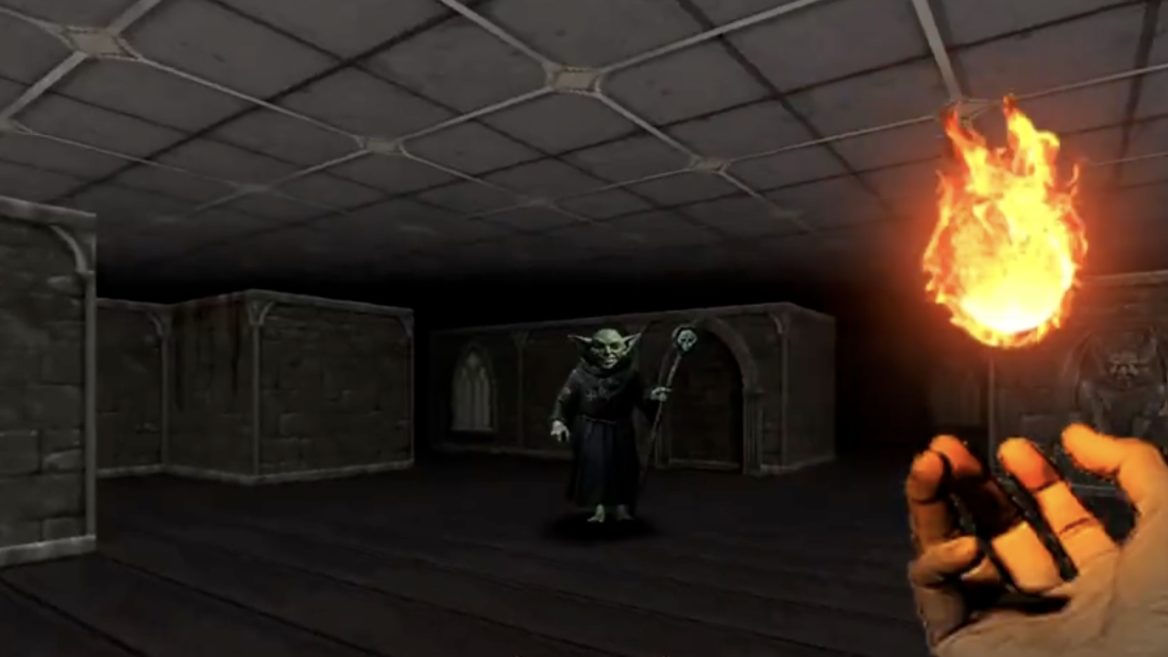
Product Designer and co-founded startup created code for a Doom-like shooter using Grok 3 from scratch in less than a day. What does he think of this tool