Хочете будувати кар’єру в Data Science та AI? Vodafone Big Data Lab відкриває новий набір —>
Наталя ХандусенкоHot News
6 March 2025, 14:05
2025-03-06
Scientists have developed a bionic hand that "understands" what it touches
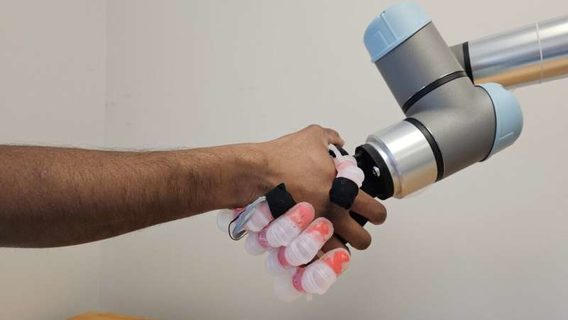
Engineers at Johns Hopkins University have developed a groundbreaking prosthetic hand that can pick up stuffed toys, water bottles and other objects like a human. That is, the bionic hand adjusts its grip depending on the texture and shape of the object, which could give people with upper limb loss the ability to safely and freely interact with their surroundings, feel and hug their loved ones without fear of hurting them. You can see how the bionic hand works in the video.
Engineers at Johns Hopkins University have developed a groundbreaking prosthetic hand that can pick up stuffed toys, water bottles and other objects like a human. That is, the bionic hand adjusts its grip depending on the texture and shape of the object, which could give people with upper limb loss the ability to safely and freely interact with their surroundings, feel and hug their loved ones without fear of hurting them. You can see how the bionic hand works in the video.
This is a development of the Laboratory of Neuroengineering and Biomedical Devices, which in 2018 created the world's first electronic "skin" with a human sense of pain. Its new device has a multi-finger system made of rubber-like polymers and a rigid internal skeleton printed on a 3D printer. Three layers of tactile sensors, inspired by the layers of human skin, allow it to not only detect touch, but also capture and distinguish objects of different shapes and surface textures, writes Tech Xplore.
Each soft, air-filled finger joint can be controlled by the muscles of the forearm, and machine learning algorithms focus signals from artificial sensory receptors to create a realistic sense of touch. Sensory information from the fingers is translated into the language of the nerves to provide naturalistic sensory feedback through electrical nerve stimulation.
In the lab, the hand identified and manipulated 15 everyday objects, including delicate soft toys, dish sponges, and cardboard boxes, as well as pineapples, metal water bottles, and other more durable objects.
During experiments, the device successfully handled objects with 99.69% accuracy, adjusting its grip as needed to prevent accidents. The best example was when the hand deftly picked up a thin, fragile plastic cup filled with water using just three fingers, without leaving a dent.
To help amputees regain the ability to feel objects when grasping, prosthetics require three key components: sensors to detect the environment, a system to convert that data into nerve signals, and a way to stimulate the nerves so the person can feel.
“We combine the strengths of both rigid and soft robotics to mimic the human hand. The human hand is not entirely rigid or entirely soft—it’s a hybrid system, with bones, soft joints, and tissues working together. That’s what we want to achieve in our prosthetic hand. This is new territory for robotics and prosthetics, which hasn’t fully embraced this hybrid technology yet. It’s the ability to give a firm handshake or pick up a soft object without fear of crushing it,” says Sriramana Sankar, a biomedical engineer at Johns Hopkins who led the work.
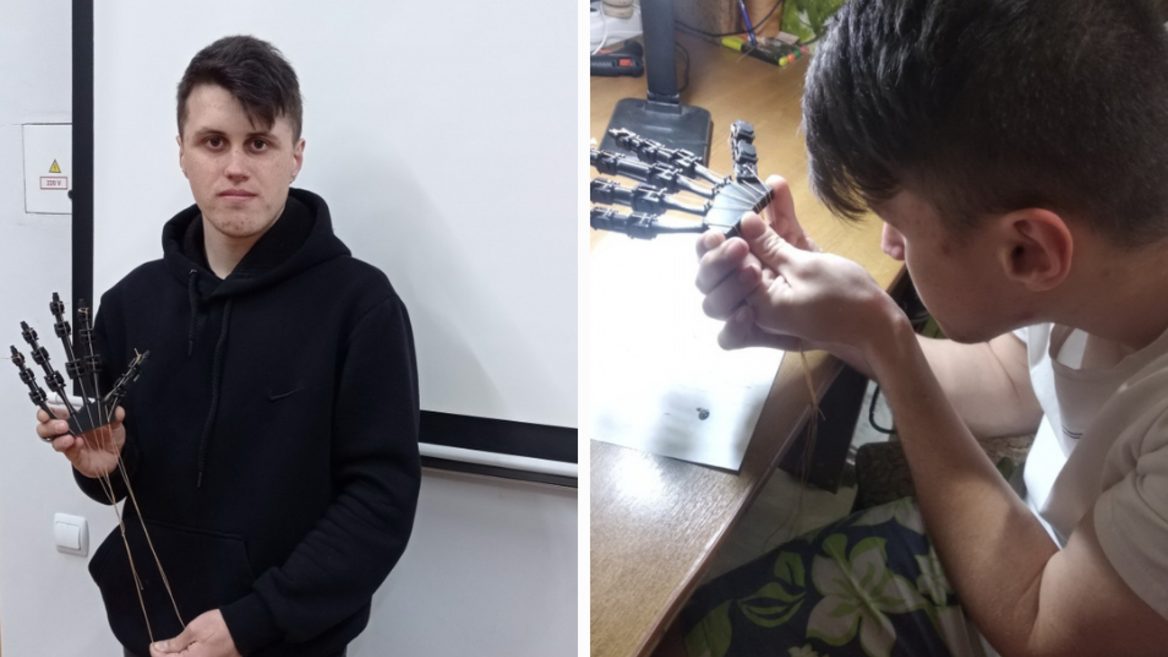
A first-year student at Lviv Polytechnic University created a model of a prosthetic hand. To do this, he independently studied hand anatomy, computer graphics, and mastered a 3D printer.
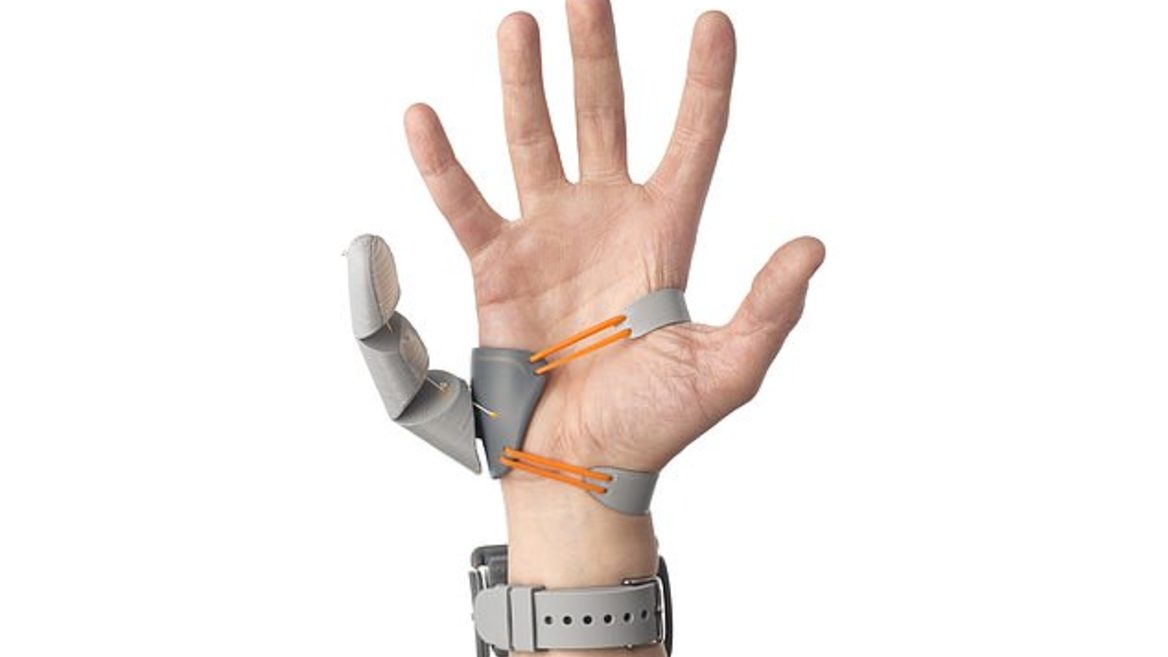
Scientists have developed a sixth finger for the hand, controlled by the human brain. Next up is an extra hand, wings, or tentacles. What is it for and who needs it?