An AI service that works well during testing should remain available to thousands of users during peak demand hours. This depends on computing power, power supply, and cooling. Let's consider how this infrastructure is designed and what Ukrainian companies need to consider.
An AI service that works well during testing should remain available to thousands of users during peak demand hours. This depends on computing power, power supply, and cooling. Let's consider how this infrastructure is designed and what Ukrainian companies need to consider.
From test service to daily work
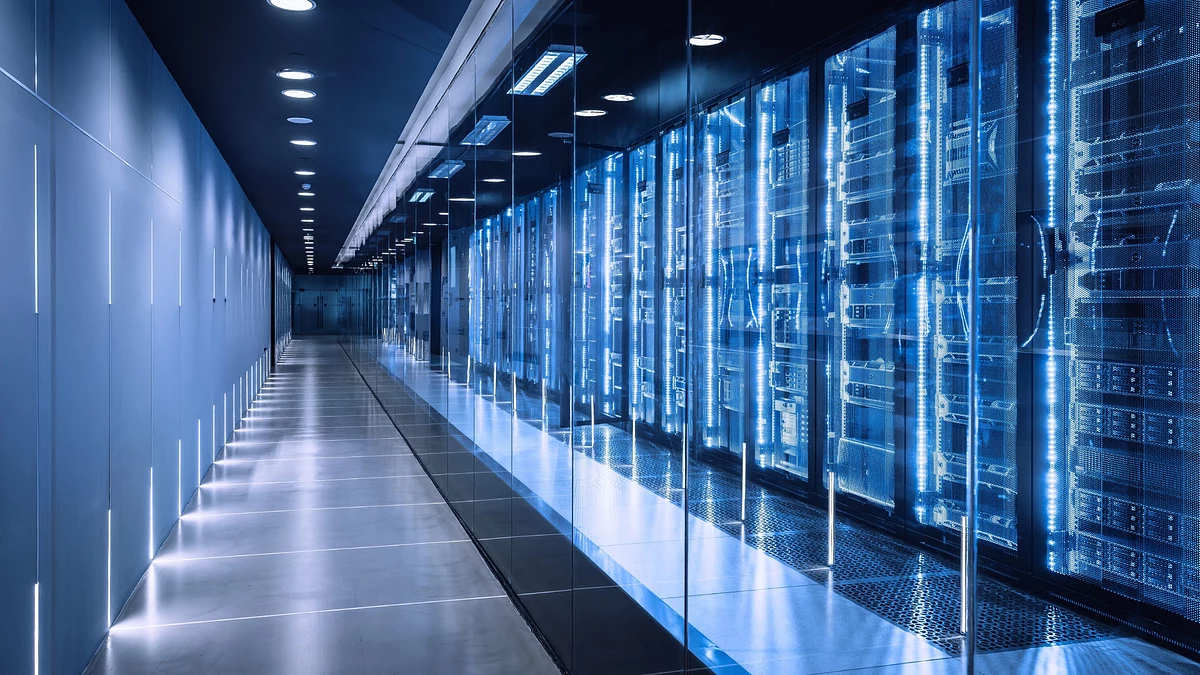
An online assistant prepares an answer to a client in a few seconds, finds information in a document, or creates an image. Behind the result on the screen are physical servers in data centers, or data centers. They are needed both for training models and for their use. The increase in the number of users and the complexity of tasks changes the requirements for equipment and engineering systems.
According to Stanford University’s AI Index 2026 , 88% of organizations surveyed reported using AI in 2025. However, the use of AI agents capable of performing sequences of tasks remained at an early stage. This gives reason to expect an increase in demand for integrating AI into workflows where the quality of the result and the expected cost of the operation are important.
Before moving on to the daily operations of the company, you need to organize your data, protect confidential information, identify human verification points, and calculate the load. Successful testing is not enough to assess the availability of the service during peak times.
What tasks does Ukrainian business automate?
More than 200 companies participated in the Top Lead study, supported by the Ministry of Digital Economy and Technology , published in January 2026. 93% of respondents reported using AI, and 62% noted a positive impact on productivity and economic performance. These shares describe the sample, not all Ukrainian enterprises.
The most common areas among respondents included data and market analysis, forecasting, marketing and sales. The next steps could be to automate the processing of requests, search in internal knowledge bases and demand forecasting. The effect can be checked by the time of task completion, the number of errors and costs.
In Ukraine , the risks of infrastructure outages are added to the technical requirements. Requirements for backup power, communication, and disaster recovery should be determined in advance. The cloud, equipment in the provider's data center, or your own server are selected taking into account the nature of the data, the required response speed, and the budget.
Why the rise of AI is changing energy consumption
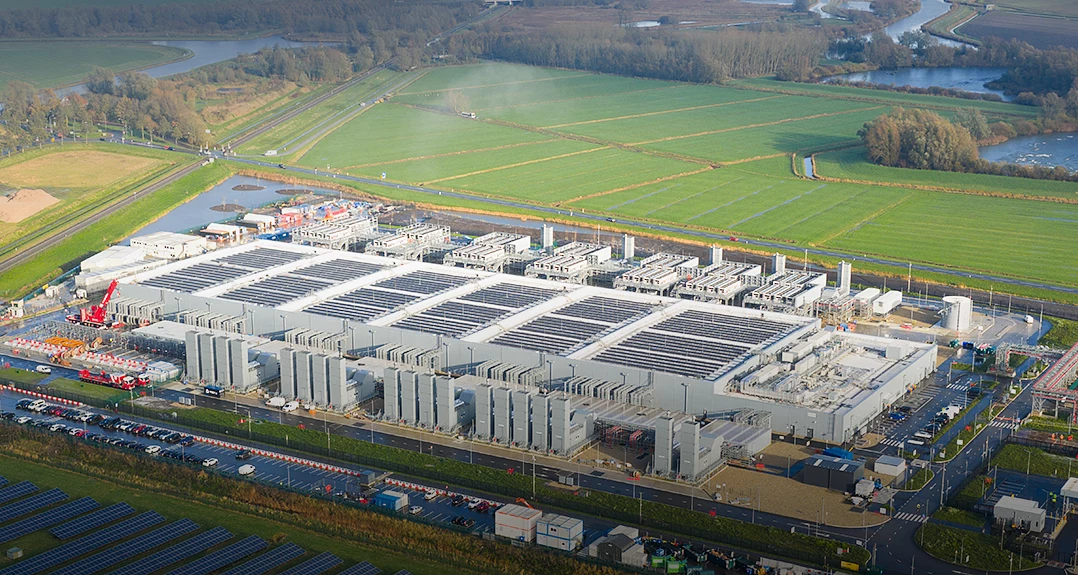
The International Energy Agency estimates in its Key Questions on Energy and AI 2026 report that the world’s data centers consumed 485 TWh of electricity in 2025. The baseline projection for 2030 is about 950 TWh, or about 3% of global electricity demand. This includes all data centers; consumption by AI-focused sites could triple over that period.
Individual AI tasks are becoming more energy efficient, but the proliferation of services, video generation, and multi-step scenarios are increasing overall demand. Available capacity and network connectivity are needed for growth. Operators should plan to expand their engineering infrastructure at the same time as they purchase servers.
What is needed for the AI factory to work?
AI factories are often called specialized complexes for training and using models. GPUs perform many operations in parallel, and their dense placement creates a high thermal load. In powerful AI configurations, the electrical power of a single server rack can exceed 100 kW.
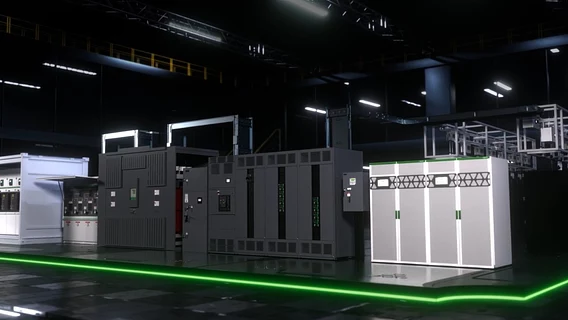
Under such a load, servers, power, and cooling must work in concert. If heat is not removed in time, equipment can slow down or shut down. Schneider Electric solutions for AI factories involve comprehensive planning: engineering infrastructure is tailored to the computing load and future expansion.
How direct liquid cooling works
Air cooling is sufficient for many server workloads. However, in racks with a large number of powerful GPUs, its capabilities become limited. Direct liquid cooling, or direct-to-chip, removes heat directly from the processors.
Cooling fins are attached to the processors. The coolant inside them absorbs heat and transfers it to the data center cooling system, moving through sealed channels and pipes. The coolant distribution unit (CDU) maintains circulation. In an architecture with a heat exchanger, it also separates the server and external circuits.
Liquid cooling can be implemented in stages, cooling the most powerful components with it, and air serving the rest of the equipment. Schneider Electric’s liquid cooling solutions allow you to choose the architecture for both new sites and modernization of existing ones. The expected energy savings should be calculated separately for the project, taking into account its load and operating conditions.
How to plan placement and monitor infrastructure
The first step for a business is to define the task, expected workload, and service availability requirements. Based on this, you can choose a hosting method and estimate the full cost of the solution. For your own equipment, you need to audit the site capacity, redundancy, and cooling. Comprehensive solutions for IT infrastructure include racks, power, cooling, software, and service.
Once launched, ongoing monitoring is required. EcoStruxure IT DCIM helps you track infrastructure health, power consumption, and temperature, identify anomalies, and plan for new equipment deployment. This data helps you estimate available capacity for growth and when to upgrade.
The practical result of AI can be a faster response time or a more accurate forecast at a reasonable cost. It should be evaluated along with the computational cost and reliability of the service. An infrastructure designed for real-world workloads helps maintain performance as the number of users increases.
AI is gradually becoming a part of everyday business processes. For Ukrainian companies, it offers opportunities for automation, increased productivity, and enhanced competitive advantage. Large-scale implementation makes computing, stable power, advanced cooling, and resource management as important for digital transformation as algorithms. The future development of models and services will depend on the ability of data centers and AI factories to support growing workloads reliably, scalable, and energy-efficiently.
Як нейромережі бачать вільну та незалежну Україну? Тест dev.ua
Нейронні мережі для генерації зображень бачать світ по-своєму, їхню логіку зрозуміти часом зовсім неможливо. Але таки хочеться. На честь Дня Незалежності України редакція dev.ua вирішила провести невеликий експеримент.
Ми задали чотирьом різним нейронним мережам п’ять однакових запитів: «прапор України», «День Незалежності України», «український Крим», «перемога України» та «українці». Отриманими результатами ми ділимося з вами нижче.
У TikTok тепер можна генерувати фон за допомогою нейромережі. Ми протестували її та ділимося результатами
У TikTok з’явилася нова функція «Розумний фон». З її допомогою як фон для тіктоків можна підставляти згенеровані нейромережею зображення. Редакція dev.ua протестувала цю технологію і ділиться своїми враженнями.