Хочете будувати кар’єру в Data Science та AI? Vodafone Big Data Lab відкриває новий набір —>
Ігор Вишневський War
18 May 2026, 09:00
2026-05-18
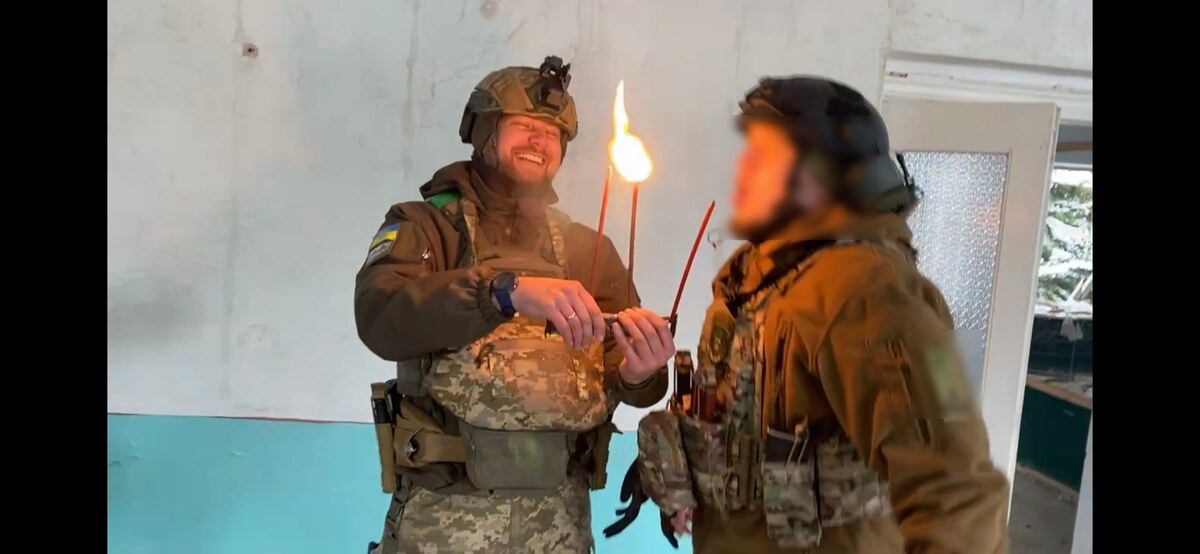
"There was a period when three people were hired a day. I have never seen such growth in IT." The story of an IT professional who, after three years of service in the Defense Forces, creates new products at miltech
Before the full-scale invasion, Lubomyr Malanchak worked as a Salesforce Developer at Avenga. He is now a product manager at a Ukrainian miltech manufacturer, the name of which the IT expert is not disclosing — this information is under NDA.
But between the classic «IT» and the transition to miltech, Lubomyr had about three years in the Defense Forces, which significantly changed his life and future career.
Before the full-scale invasion, Lubomyr Malanchak worked as a Salesforce Developer at Avenga. He is now a product manager at a Ukrainian miltech manufacturer, the name of which the IT expert is not disclosing — this information is under NDA.
But between the classic «IT» and the transition to miltech, Lubomyr had about three years in the Defense Forces, which significantly changed his life and future career.
The dev.ua journalist spoke with the IT specialist about his time in the State Border Service, combat work in eastern Ukraine, his first acquaintance with drones and the development of these technologies in the army, as well as the difference between IT and miltech, which he experienced firsthand. Next is a direct speech by Lyubomyr Malanchak.
From IT to Border Guards. The Full-Scale War That Changed Everything
In the first days of the full-scale war, my brother and I sent our children and their wives to our relatives in Poland, and we ourselves returned to Lviv. I understood that we needed to prepare for mobilization, so in early March I went to the military registration and enlistment office.
I was in a «suspended state» for about two weeks, and then they called me back and told me to pack my things. Although by that time I already had everything ready. I didn’t know which unit I would be in, there wasn’t much of a choice then. I was told that I would be a border guard and that I was going to a training center in Velyki Mosty. I had no previous service experience, I was a so-called «jacket» — a person with a military degree, but without any special skills.
To be honest, I understood that war was inevitable. That’s why I started preparing for it both morally and materially at least a few weeks, or even months before the full-scale war. During this period, I didn’t really work at all — my thoughts were far from work. Sprints were no longer going well, tasks were being performed so-so, and I was constantly distracted by Telegram channels with news.
During this time I already had enough «equipment», I bought maybe even more than I needed. I bought everything at my own expense, and I don’t regret it. As practice has shown, due to the crazy hype in the first months of full-scale operation, it was difficult to find anything. I remember that some guys were running around in body armor with the inscription «press», but by that time I already had mine, and thank God.
As a reserve officer, when I got to the training center, I didn’t go through any serious training right away. It was believed that I had it anyway. But we all understand that in reality I didn’t. No field training was held, only the so-called coordination of the combined unit took place. These were full-fledged field conditions in one of the training centers closer to the Dnieper. After that, everything somehow stopped, we were taken out to the west again, put in one of the border posts. They told us to wait for the command to advance to the east.
This went on for about a month. Then they saw that I was an IT guy, with experience in data engineering. They asked one of the units if I could be useful to them in this area. Thus, I ended up in the cybersecurity department of the Volyn Border Guard Unit, where, however, I served only a few weeks, up to a month.
The Cybersecurity Department was a natural environment for me as an IT worker, but very quickly an order came that a certain number of personnel needed to be allocated for rotation to the east. Accordingly, I went there. By the way, there was a funny story here: I was told that since everyone already had a UBD, those who did not have a UBD would be the first to go to the east.
I understood that I would go east on the first train in any case, and I was okay with that. But it was interesting to watch how the «cadres» avoided this trip with all their might.
Combat work in the east and the first acquaintance with drones
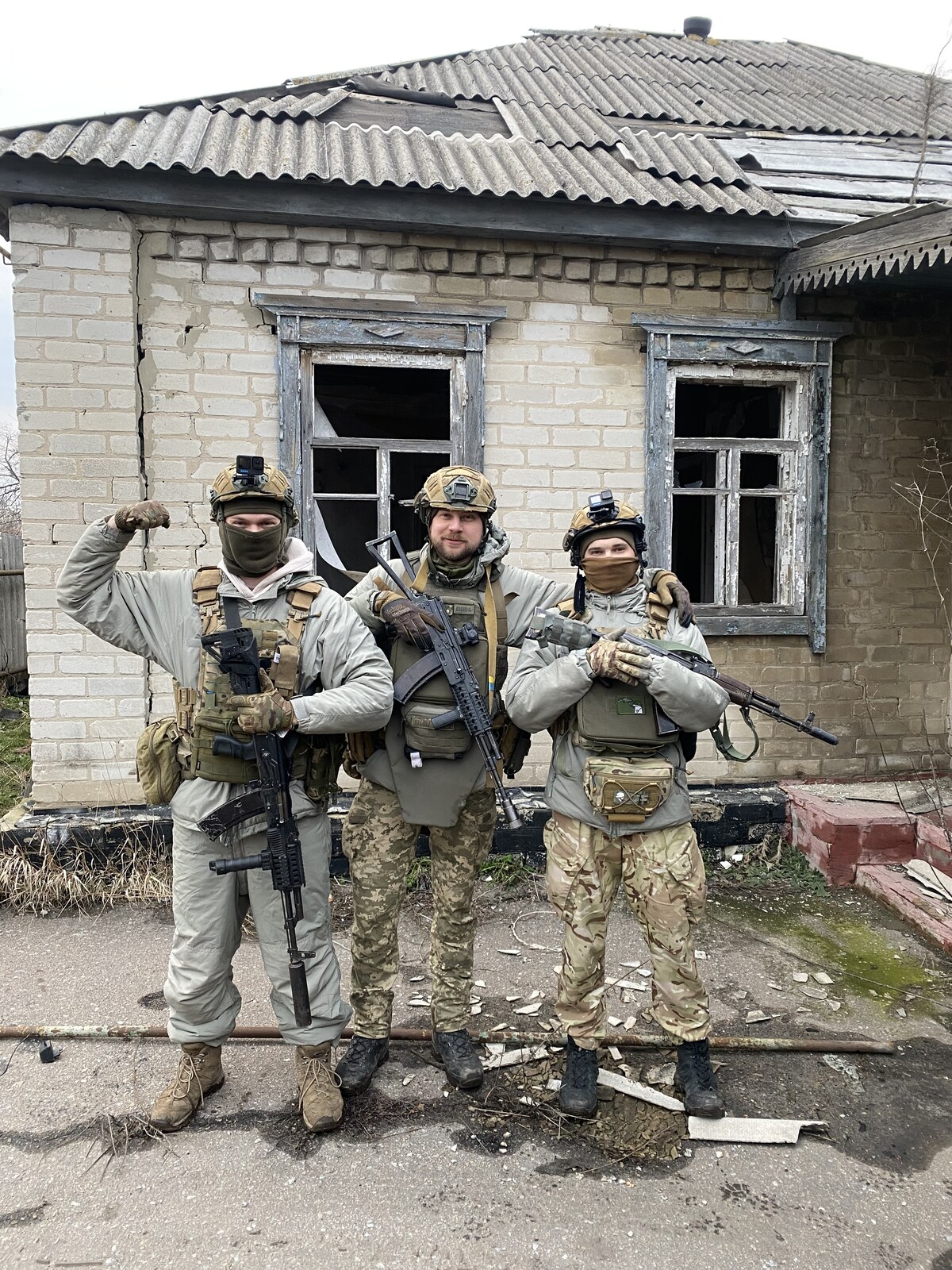
In May or early June 2022, I left for the east and by the end of the summer I was already a soldier in the Luhansk Border Guard Unit. This is actually where my service in a combat unit began, because before that I was actually in the west of the country.
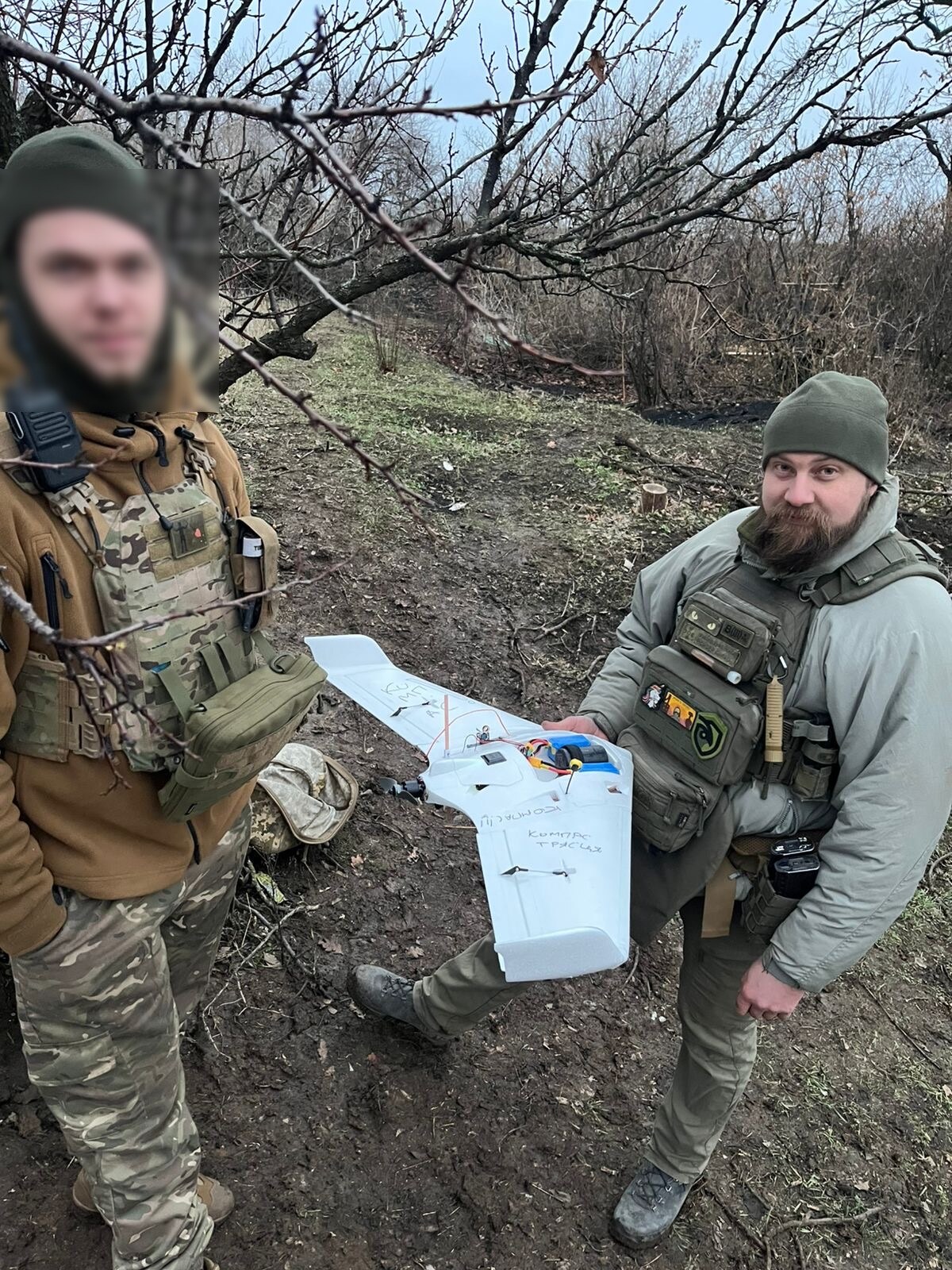
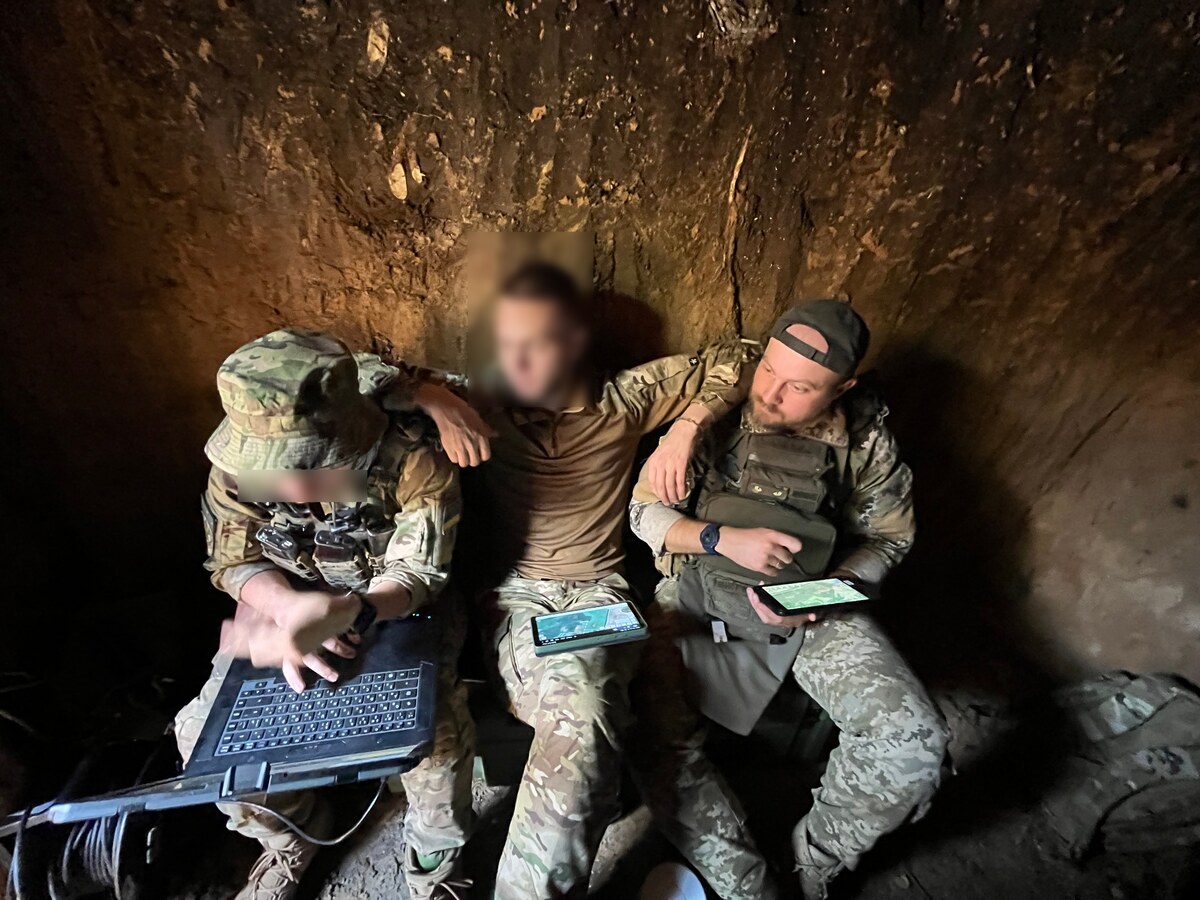
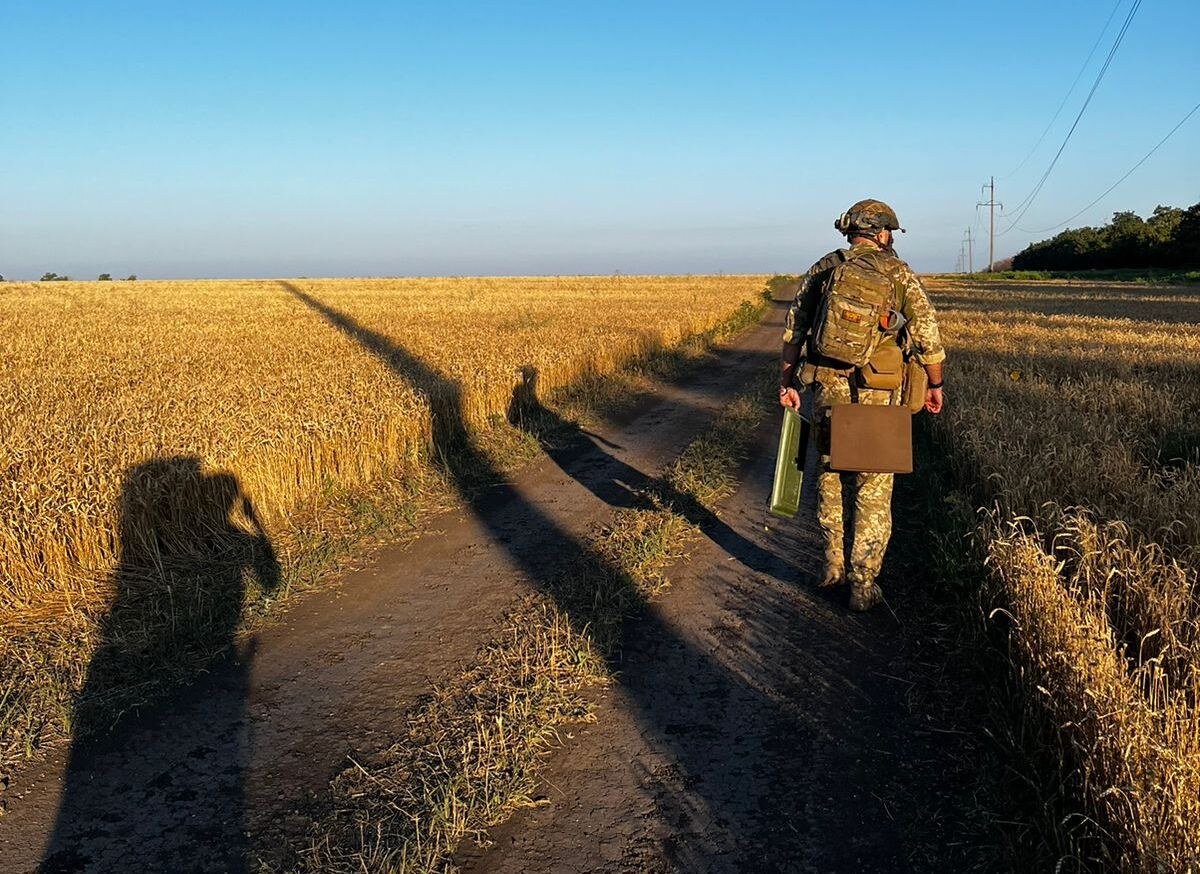
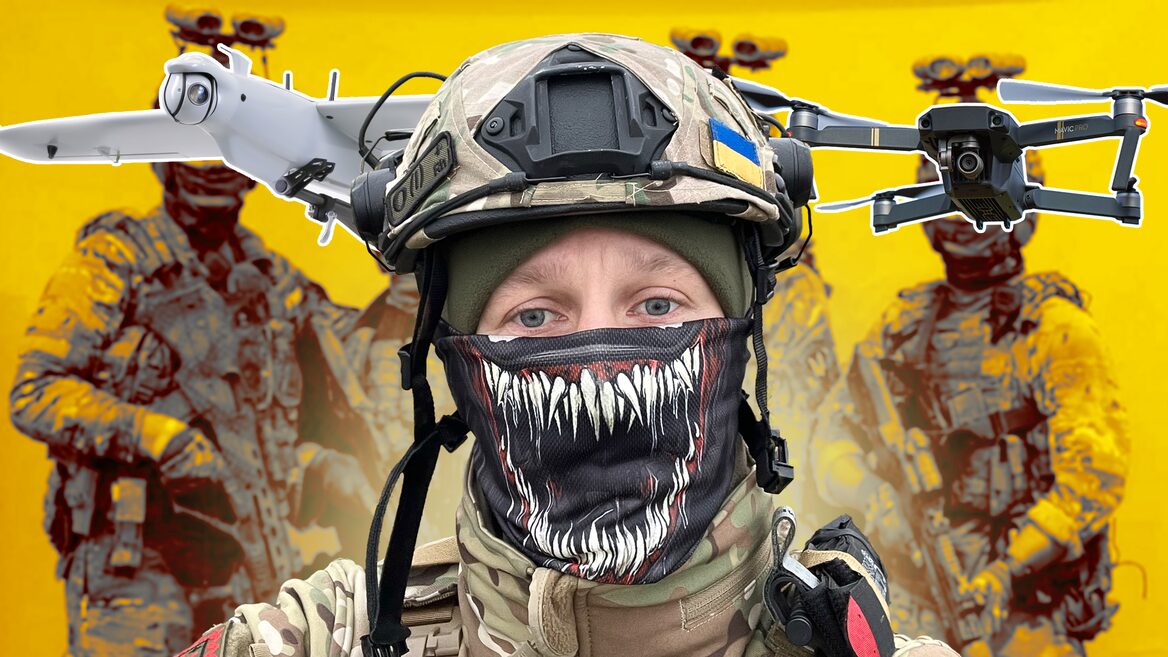
Since there were no tasks related to cybersecurity for me in the Luhansk detachment, and I heard that we were forming UAV units (the so-called «UAV application sectors»), I followed this direction. By the New Year of 2023, I was running with a «Mavik» somewhere near Cherneshchyna (a village on the border of Kharkiv and Luhansk regions — ed.), adjusting a mortar.
At that time, Mavics were our everything. Any unit would gladly accept you with your Mavic. You could provide a picture and a stream from it, and that was very much appreciated. At that time, drones of any kind were still a rarity. When I started doing this, I had no previous experience working with drones.
The Mavic itself is essentially a store-bought toy, and it’s not hard to learn. But the main thing you had to learn was how not to be visible to the enemy. Actually, it’s still relevant today.
Then there was the problem of custom firmware and so-called anonymizers. In internal chats, everyone would occasionally inform their colleagues that someone’s Mavic was not anonymized, and their position was «shining». We had to learn such things on the fly. Then we began to be faced with the task of increasing the distance — accordingly, we had to connect some boosters, we started ordering Chinese amplifiers.
Of course, no central funding was allocated for this, so this activity was carried out exclusively through horizontal connections. Someone spied on someone to see how it was done, and somewhere they collectively threw money at some components.
We were able to fly 9 km, not 4 km — and immediately felt like «wow, we did it.» And only then could you fly thanks to the remote antenna right from the dugout and feel like an uncle. But you had to come to this yourself by trial and error.
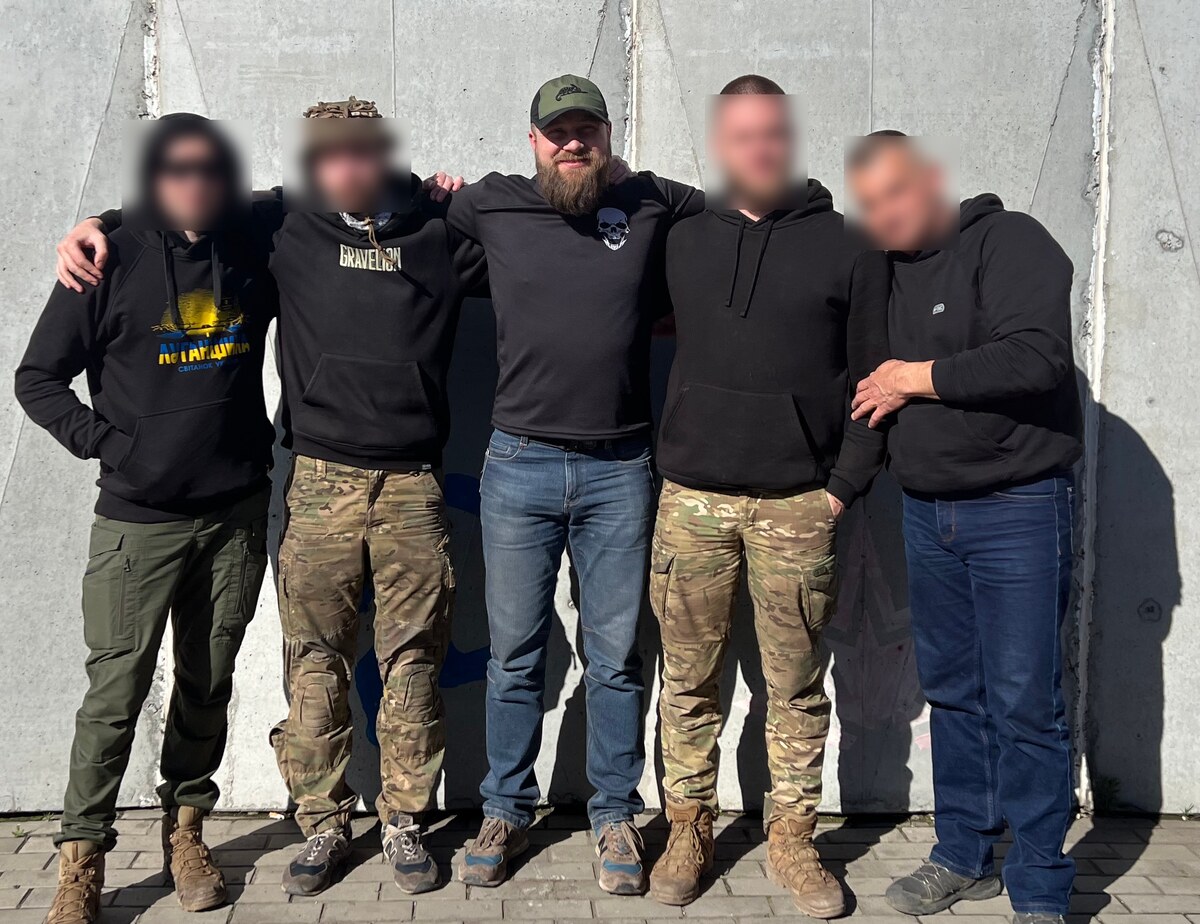
I want to say that I was very lucky with the first commander. I remember that his door was always open, which is also symbolic: you could always come in with any question.
«Viktorovich» listened to our needs and suggestions, and he himself also saw that our story with boosters and remote antennas worked, that we learned to fly better, and we began to be invited to work on some distant targets. At that time of the war, 9 km was already considered a very deep rear, where the «unwashed» walked with cigarettes and without body armor. So it was possible to find «fat» and interesting targets.
The commander gave the go-ahead for all technical experiments, helped financially, that is, he literally said: «What do you need? I will help, find volunteer funds, subsidies, and so on.» We expanded the team, and eventually I started working as the senior group leader in the calculation.
With each month, the distances between us and the enemy increased. So, if earlier you could get to your position by taxi or not, later you had to approach all maneuvers much more carefully. You had to plan your arrival «on the fly» or practice leaving on foot for a certain number of kilometers.
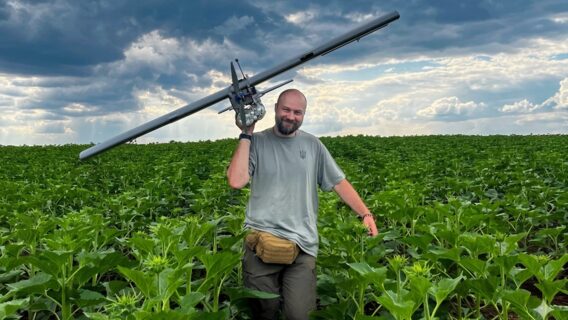
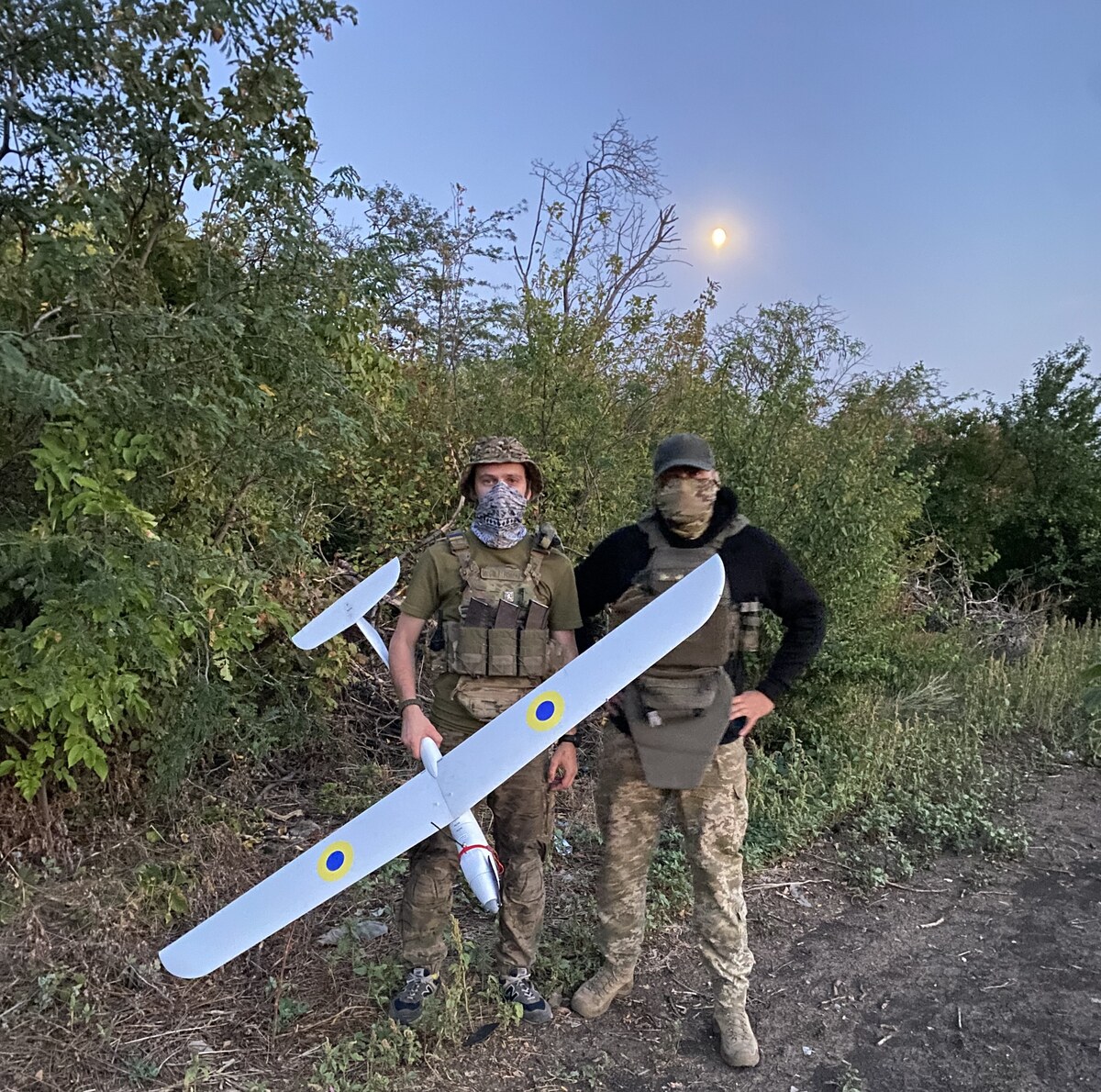
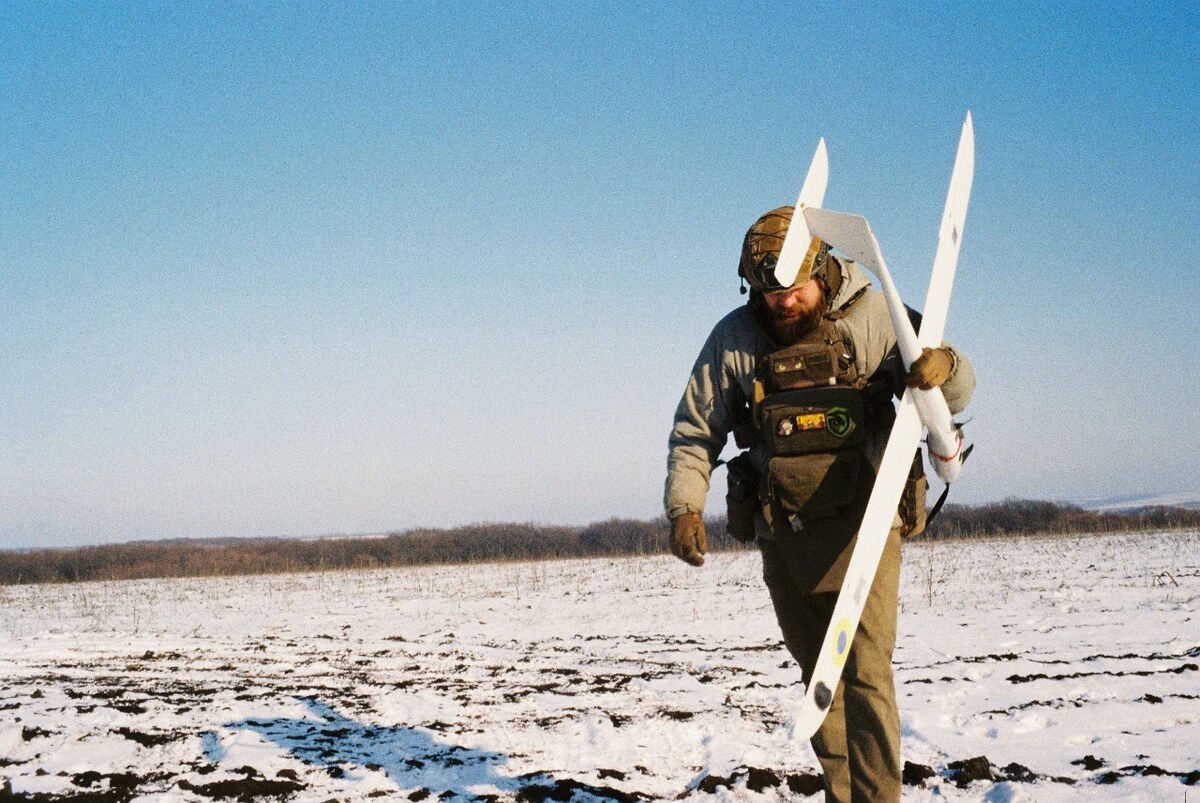
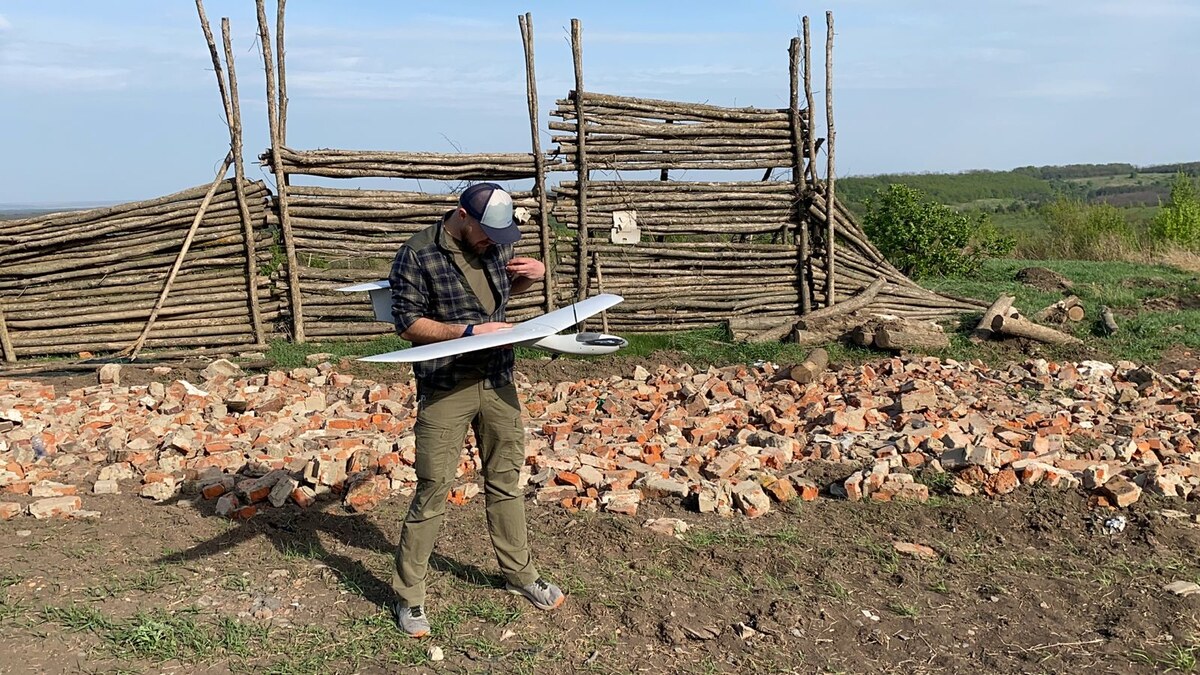
What did we start working with, besides the Maviks? We couldn’t get a Leleka because it was too expensive. But through the Lviv City Council, we managed to get a subsidy for the purchase of a Mara photo plane. In my opinion, it’s a very cool plane. And we were very lucky, so we got our first copies of Mara in the fall of 2023.
In one flight, such a drone could hit 20-25 targets — it was an unprecedented result at that time, a whole catalog.
Then the brothers took such targets and «disassembled» them overnight.
Army everyday life and «Maslow’s pyramid» in the Defense Forces
Geographically, during my time with the State Border Guard Service, I worked in various locations in the east. Border guards would come in for rotations, and we would lead them.
In addition to the border guards themselves, we managed to work with the already legendary 81st Airmobile and 54th Mechanized Brigades in the Seversk direction, the 103rd Brigade of the TRO, and later the 3rd OShB in the Kharkiv region, and the 45th Artillery Brigade as well. We entered the Serebryany Forest with the Azov in 2024, worked together with the 63rd Brigade in Yampol and Torsk.
We helped train the pilots, introduced them to the course of events, gave them landmarks. In fact, we were in the strip from Kupyansk all the way to Yampol. In Donetsk region, there were trips to the Siversk area. In particular, I remember my trip to the village of Fedorivka near Siversk, which is now occupied. They also saw Soledar as a «Mavik».
With the advent of the Unmanned Systems Forces, I think we couldn’t count on priority equipment. But we also didn’t have a situation where we had one registered Mavic left, which everyone was afraid to fly for fear of losing.
Most of the Mavics were given to us through volunteer funds, and the commander always «kept a reserve» so that we had something to work with. He encouraged us to fly even deeper, and even if we lost a «bird», it was no big deal. Seeing this attitude of the commander, all the other guys in the group tried very hard.
We had an older man from the currently occupied territories (because we had a lot of people from the Luhansk region). And he himself asked to join our group, although he could have worked as a driver at the headquarters, driving colonels to meetings. But he asked to join the combat group deliberately, because his son and wife are fighting.
In my «jacket» opinion, this was the model of a warrior, and it was a very sharp contrast to the «frames» that I saw in the rear units. A stone, not a man!
There were young guys from Luhansk region who knew the area very well, because they knew the whole area like the back of their hand. It was the same as if I were fighting in Lviv region. They knew all the exits and arrivals, knew the contacts, so if we needed some intelligence, we could always go out to interact with the adjacent units. This gave us a big advantage. I’m from Lviv region, and my only strong point is that I could understand something better technically, as an IT guy.
At that time, they were already starting to introduce certain rotations. So if someone had served a year with us, they could write a report for transfer to any border detachment. After combat work, you would be a priority for transfer. I must say that at that time it was a verbal agreement in the unit, and they tried to adhere to it, but it didn’t always work out.
Theoretically, I could also go somewhere to continue serving in the West, but I never wrote such reports. Everything suited me: I already knew everyone here, I had my own group, I had developed contacts. I didn’t see the point in moving somewhere.
Moreover, everything was quite adequate with vacations — I had the opportunity to go home twice a year for 15 days. Special thanks to the commander for this! He made sure that everyone went on vacation and had this opportunity.
At that time, I had developed a certain army «Maslow pyramid». I believed that I was bringing some benefit. The result was there, but there was no desire to change it for something else.
Yes, there was a certain sense of danger, being close to the front line, but you get used to that too. If others can do this job, then you can too.
We had a guy from the ATO days, he worked in a unit and went to combat all the time. He just did his job conscientiously, and I liked that. The main thing is not to take it lightly, and to take care of minimal security where it is needed.
So over time, they began to protect themselves with anonymizers, «Chuyks,» and before the latter appeared, there was «Tsukorok.» They learned to scan the airwaves, to understand where and on what frequencies what was flying.
Return to civilian life, but not to classic IT
At the end of 2024, my daughter was born. Thus, there was a legal basis for me to resign from the service as a father of many children, because at the time of the start of full-scale work, there were already two children. I wrote a report for dismissal, but by the time I was on the train home, about six months had passed. Unfortunately, these procedures are not instant.
At the time of joining the Defense Forces, I was working for Avenga, which, by the way, supported me financially throughout my service. This is a very correct and conscious position, because not all servicemen go to combat, and you won’t be able to make it long on a conventional salary of 20,000+ UAH in a foreign city.
Also, I have to say that HR Avenga was in touch with me and they helped us close several important meetings. So I assumed that I would return as a Salesforce Developer at Avenga and continue programming.
I must say that during my time in the IT sector, it has already become «a little tighter». I saw this because many people were even transferred from my project to other projects. It is also quite difficult to find a new project now. But, nevertheless, the company still kept me «on the bench» for quite a long time. And then they even found a project for me, but by that time I had already received an offer from another company from the miltech sector.
In addition, while this search period was ongoing, I understood that I would most likely never be able to return to classic IT.
Even after I was discharged from the service, I kept in touch with the guys, read our chats, helped them decipher something. And after that, returning to the «routine» tasks of «IT» was difficult for me from an emotional point of view.
This is probably the pain of many veterans who immediately throw themselves into work, but find it difficult to fill this «army Maslow pyramid» and continue to do something important for the defense of our country.
Personally, I didn’t try to go to work right away, I just spent a few months doing some household and family chores. During my three years of service, my family was also neglected, and it was important to make up for that a little.
I had to explain to my children why it took me so long to get discharged. My wife, in turn, also suffered a lot during this time, especially during the periods when I «disappeared from the radar» and did not respond. It was also hard for her, and we had to somehow fix all this together. I would recommend that everyone who has been discharged from the service, first of all, at least «take a breath» and give themselves time to start living a family life again.
What important experience did you bring with you to the defense sector?
The experience of being on the front line came in handy for me in the defense sector, if only because I always «try on» whether it will be convenient for any of the soldiers to use our products, whether all the little things have been calculated.
If you’ve ever jumped out of a pickup truck on the conventional «front» and quickly unloaded some equipment so as not to be in the enemy’s field of vision, you’ll have a pretty clear understanding of what it should look like and what will be convenient and what won’t.
You immediately think that some kind of conventional antenna would be mounted so that it wouldn’t break. Or how it would all look in a transport case. That is, this army experience gives an understanding of the applied aspect.
Although, of course, I’m more into software than hardware and technology, and at my current job I work in a product position, I still have to understand what a radio horizon or radio shadow is, how radio waves propagate, and know some minimal concepts in physics. I don’t have to sit down and solder a drone, but I have to set the right goals and achieve them within a certain time frame. And for this, I have to know a little bit about how what we make works.
Here, the experience of an «IT» person also helps a lot, since all young miltech startups start with a fairly small and very talented team, which then grows very quickly and explosively. The experience I gained in IT helps a lot in managing this process. It is this background that allows me to systematize work.
What is the difference between working in classic IT and miltech?
If in «IT» you have a fairly measured pace, then in miltech 80% of the tasks are for yesterday, and the remaining 20% for the day after yesterday. At my current job, there were times when eight active projects were going on at the same time.
You work in «turnstile mode,» meaning you have to do everything very quickly. You run around and try to put out fires, but there are so many tasks that you can just get lost in it all.
This is not comparable to the pace of a classic «IT» project, when you have a conditional sprint, you have planned it in hundred points, you have collected tasks and you are gradually doing your scope for a week or two. In miltech, everything is much more dynamic, and the problems are much more complex.
That is, you just need to go to the military, talk to them, and get some feedback from them. And based on that, understand where to go next.
I would make an analogy — if you mix some muddy water in a glass, you need some time for it all to settle and separate. Something similar happens in miltech teams — there, too, everyone will take their place, and everyone will know their processes. But for this to happen, time must pass.
The same, in fact, is true of those military units that are currently being significantly scaled up.
By the way, the main department of unmanned aircraft systems «Phoenix» was created on the basis of the Luhansk Border Detachment. It is currently one of the best units of the Unmanned Systems Forces.
When a unit scales so quickly, people who were platoon commanders yesterday become company commanders. The structure grows quickly, which creates a long period of chaos. But until this water settles, you have to stay focused as much as possible, and it’s very difficult to do so. Because everyone is pulling in different directions, everyone has their own ideas. This is a long answer to the question, but the short answer is that the dynamism in miltech is an order of magnitude higher than in IT.
I recently had a call with one of the major Ukrainian manufacturers, and on Friday evening he said: «Okay, let’s do some more tests and then we’ll go to sleep again on Saturday.» Aren’t we at war on Saturday?» And everyone understood — okay, we’ll go to sleep on Saturday, no problem. If you really want a result — you need to move a little more actively.
Plus, it seems to me that even from the right point of view, if you work for the defense industry, have such an opportunity, and also have, for example, a reservation, then you can give your all even more. Nothing terrible will happen, and work-life balance will come later.
Regarding the current «entry threshold» in IT and miltech, it seems to me that it is much easier for an IT professional to find a job in the defense industry simply due to the number of vacancies that exist in the industry.
In my bubble, IT professionals with military service experience also end up in miltech, and after discharge, most veterans move in this direction.
Miltech is scaling at a fantastic rate. For example, there was a period in our company where we were hiring three people a day for quite a long time. I have never seen such growth in IT.
PS The war continues…
I am sincerely convinced that this was the first of my mobilizations. Everyone already understands that the war will not end quickly. The main thing is that when the time comes to go again, not to find myself in the situation in which I, unfortunately, found myself in 2022.
I also recommend everyone to look into their future place in the Defense Forces. We already have units whose combat path will be described in books, some are already being made into films. The situation is radically different than it was in 2022, it is important to understand this. At least I know exactly where I will continue my service if this question arises again.
«I’d heard about ‘meat storms,’ but I didn’t really believe it until I saw them with my own eyes.» The honest story of an AIT veteran who managed to return to work in IT despite a serious injury
«Without technical specialists, the army begins to crumble.» The head of unmanned systems of the Third Army Corps — why 3AK IT workers are needed and how to get there
«The instructor asked: 'Are you lying that you’ve never flown on wings?'» A native of Aiti and a veteran — about his journey in aerial reconnaissance, the liberation of the Kherson region, and how society deceives itself about the war