Хочете будувати кар’єру в Data Science та AI? Vodafone Big Data Lab відкриває новий набір —>
Марія БровінськаІсторії
9 April 2025, 09:00
2025-04-09
From intensive care to EPAM. A pediatric anesthesiologist from Lviv left medicine for IT, and now dreams of a major medical project based on Big Data: the story of switching during the war
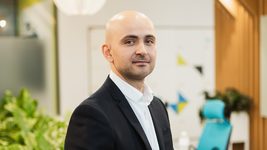
The full-scale invasion was not only a test for Pavel Oleksyn, but also the moment when he made one of the most important decisions in his life — to leave medicine and move to IT. A few years ago, he worked as an anesthesiologist in the neonatal intensive care unit. The transition to a new field was not easy. He had to overcome doubts, find time to study, and adapt to a completely different work environment.
The full-scale invasion was not only a test for Pavel Oleksyn, but also the moment when he made one of the most important decisions in his life — to leave medicine and move to IT. A few years ago, he worked as an anesthesiologist in the neonatal intensive care unit. The transition to a new field was not easy. He had to overcome doubts, find time to study, and adapt to a completely different work environment.
What do IT and medicine have in common, what challenges had to be overcome, and how technologies can change the work of medical institutions — Pavlo told dev.ua about this. What follows is his direct speech.
Why I decided to change my profession
Even while studying at university, I doubted whether medicine was my life’s work. But then I rejected these thoughts — I had already put a lot of effort into my studies, and I didn’t want to disappoint my family. I was born in Lviv, and in 2017 I graduated from the Lviv National Medical University named after Danylo Halytsky.
Having received a referral, I moved to Lutsk, where I completed an internship in pediatric anesthesiology for two years. After that, I continued to work as an anesthesiologist at the Volyn Regional Children’s Clinical Hospital for more than four years, saving newborns, often premature babies in critical condition. These were cases when a baby is born with complications and is immediately transferred to the intensive care unit. They are usually only available in regional centers or large district hospitals, and there are very few specialists working there. These departments are closed to outsiders, so little is known about their work.
While on duty, there was almost always a situation that forced me to raise my cortisol levels to the limit. Night shifts, high levels of responsibility and stress — all of this requires maximum concentration, endurance, and dedication.
In 2020, I first became interested in IT and started learning programming in my free time.
I tried Frontend, but quickly realized that it was not for me. Then a friend, also a switcher, recommended a course from EPAM Campus. And already in 2021 I applied for a program with Python. However, the material turned out to be quite difficult for me, I decided not to go through an interview for the project and continue studying.
The turning point
I planned to quit my job in March 2022, because I had a terrible lack of time for my studies. I remember walking to the hospital on February 24, 2022, thinking that it was better to do something than just sit at home in the dark. On the one hand, I was grateful that I could help people and be useful, but on the other hand, I felt disappointed because my desire to change my profession had been postponed indefinitely. In addition, it became known that the situation in IT was experiencing difficulties.
After about half a year, I returned to my studies. In 2023, I tried the program at EPAM Campus for the second time, this time in Data Engineering. The lecture materials were clearly structured, which helped not only during the course, but also in my further work. In addition, I already had small projects for the city council on my way.
I was involved in analyzing indicators for primary health care in the Lviv region according to WHO indicators, and also created dashboards for the Lviv Region Center for Disease Control.
It took me about 6 months to complete my studies, pass the interview, and join the company. I am currently 30 years old and working with EPAM Ukraine as a Junior Software Engineer.
Behind the scenes of a data engineer
One of the biggest challenges when transitioning to IT was understanding how things work in real-world environments. The Lead Specialist on our team helped me a lot. He developed basic level tasks for newbies, gradually increasing their complexity. During the first few months of work, I began to better understand what was expected of me on the project and what tasks needed to be performed.
I am currently working on data migration between repositories within the Amazon Web Services platform. On the current project, my work is not about writing code from scratch, but about making changes to it.
What connects medicine and IT?
In both medicine and IT, teamwork is critically important. Each member has a clear role, where everyone works as a single mechanism. However, in IT, in my opinion, the contribution of each specialist is more valued. If you do your job well, even being in the position of a junior specialist, it will be noticed and celebrated. In medicine, unfortunately, this is often lacking, especially for junior medical staff, for example, nurses, who play a large role in treating patients.
And also, the importance of visionary thinking. In medicine, it is necessary to clearly understand each next step, because any mistake can have serious consequences.
In IT, it is also important not to disrupt the system. However, the main difference is that in IT there is always the opportunity to test, make changes and correct the error. In medicine, there is no right to make a mistake, and the price of it can be very high.
My goal is to join a medical project in the future and develop the data engineering direction in Ukraine. I see the solution in creating a unified system that would unite all medical institutions in the country, allowing for centralized data collection and analysis.
What helped me and might be useful to you
Code as much as possible. I’ve used training platforms like Codewars and LeetCode. There are dozens of online trainers for SQL that you can find with a simple search.
Don’t ignore online courses. Useful materials can be found on Coursera and Udemy.
Create your own pet project. You can come up with a specific problem and try to solve it using the technologies that the developer works with. For example, model the process of collecting, cleaning, aggregating, analyzing, and visualizing data for an online store.
Use ChatGPT as a mentor. It can explain complex topics, review code, and help with learning.
«The job market for programmers is like a black hole in which you can lose not only time, but also hopes.» Developer — about the realities of the IT market and advice for switchers and junkies
«Don’t give up after the first unsuccessful interview. And don’t give up even after the tenth.» The story of a tester at Sigma Software who shined in IT after eight years at customs, and rose from an intern to a manager
«Моя фінансова мета — накопичити $1 000 000, щоб мати пасивний дохід і жити на нього». Як айтішники витрачають гроші та в що інвестують
Зарплата айтішників в Україні — одна з найвищих. І ІТ-галузь під час війни — єдина галузь, яка зростає, попри війну. А айтішники — серед тих, хто найактивніше підтримують армію. Середній місячний донат айтішника становить 10% від зарплати, або $270. dev.ua вирішив розпитати айтішників, куди вони витрачають гроші й у що інвестують під час війни.
Не Патроном єдиним. Айтішник з EPAM шиє військову амуніцію для собак: історія диво-стартапу для чотирилапих захисників України
Максим Лісович, Interior Designer в ЕРАМ Україна, поза роботою допомагає амуніцією українським військовим… собакам. Так, службові пси носять унікальні жилетки та нашийники, мають спеціальні аптечки та турнікети. Чотирилапі в такому «одязі» більш захищені та впізнавані.
За словами Максима, тільки на заході країни нас захищають сотні військових собак. Айтівець допомагає військовим кінологам нести цю службу гідно, забезпечуючи відповідною амуніцією, спеціальними аптечками та турнікетами. Нещодавно він провів три дні поспіль, власноруч відшиваючи нашийники та повідці. А ще два роки тому шити він не вмів узагалі. Ось історія диво-стартапу.
Австралійське задзеркалля. Історія Delivery Director EPAM, який через війну релокувався із сім'єю до Австралії: як адаптуватися та вижити за океаном?
Григорій Клімов — директор з делівері і керівник великої Platform Engineering-практики в EPAM. Понад 10 років він будував свою кар’єру в українському офісі, але війна змусила його з родиною кардинально змінити життя. В березні Григорій з дружиною і трьома дітьми поїхали з рідного Харкова, деякий час провели в ЄС, а згодом — вирушили до Австралії. «Я мріяв жити в цій країні, коли піду на пенсію. Але війна підштовхнула до того, щоб прийняти рішення значно швидше», — каже Григорій.
Ось його історія.
Очільник EPAM Ukraine: «Було б класно мати якісь прозорі, відкриті механізми виїзду за кордон для обмеженої кількості людей»
Керівник EPAM Ukraine Степан Мітіш, який до призначення відповідав за київський та вінницький офіси компанії, дав велике інтерв’ю AIN. В компанії він працює вже 16 років, тобто знає про український IT-аутсорс багато, якщо не все.
dev.ua обрав найцікавіше з розмови.















Прийміть вітання від хірурга > js девелопера😁