Ukrainian developers have launched a beta test of the Reon service, which saves streams during power outages
Ukrainian esports streaming studio OBLOGA Media Group has opened a closed beta testing of its cloud-based restreaming service Reon. The solution allows for simultaneous broadcasts on multiple platforms and prevents broadcast interruptions if the streamer suddenly loses power or internet.
Ukrainian esports streaming studio OBLOGA Media Group has opened a closed beta testing of its cloud-based restreaming service Reon. The solution allows for simultaneous broadcasts on multiple platforms and prevents broadcast interruptions if the streamer suddenly loses power or internet.
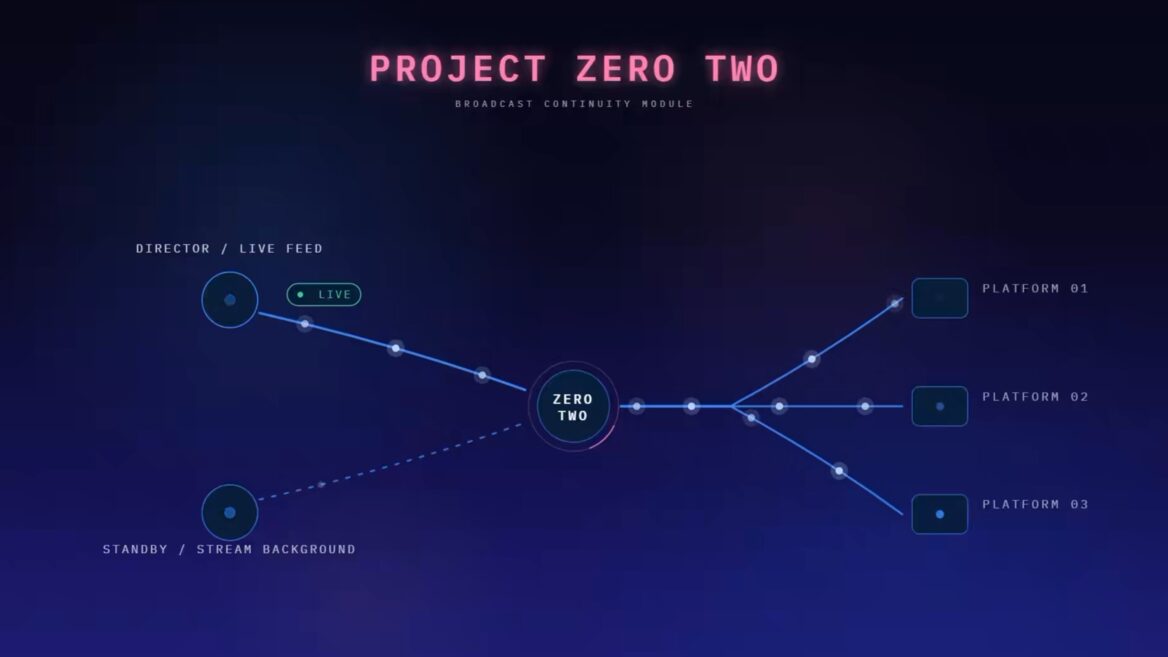
The Reon service grew out of an internal tool called Project Zero Two. Details of the updated project were shared with dev.ua by the initiative’s co-founder, Oleksandr Samoilenko.
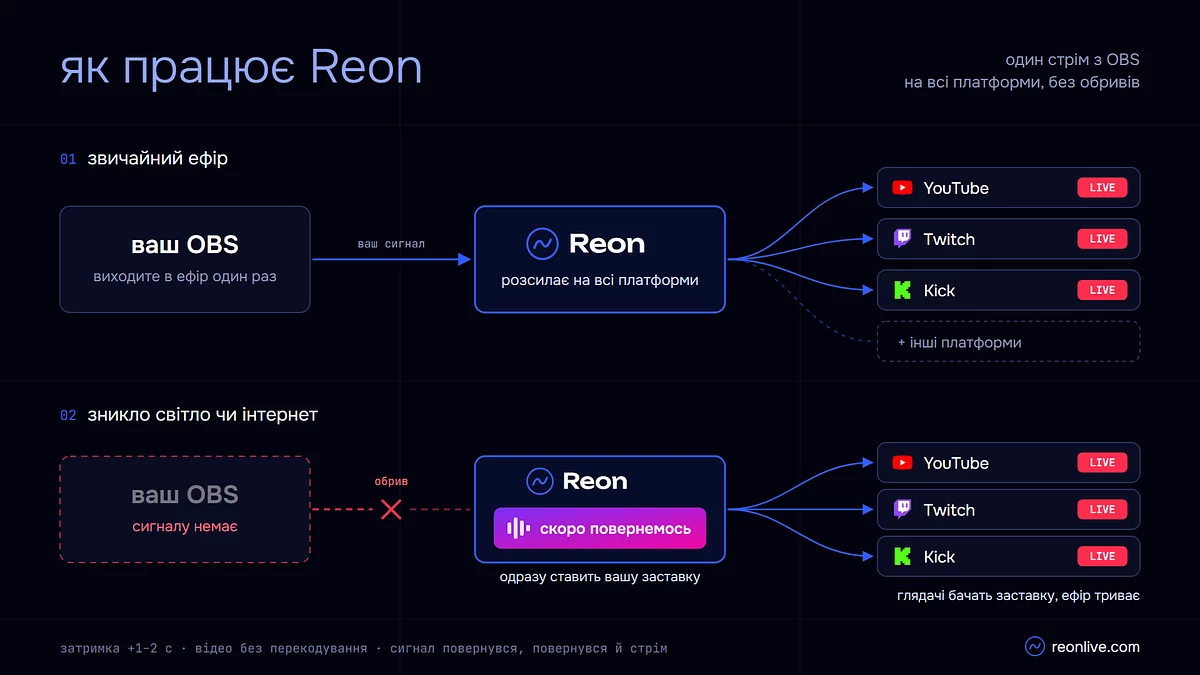
Reon works as an intermediate link between the OBS program and streaming platforms, receiving the signal via servers in Germany. The streamer starts the broadcast once, after which the system duplicates it on Twitch, YouTube, Kick, TikTok and X (Twitter). In the event of a loss of connection on the author’s side, viewers see a pre-prepared splash screen, and the broadcast itself on the platforms is not interrupted. After the signal is restored, the broadcast continues within the same recording (VOD), without the need to create a new stream.
According to the developers, using the service adds about 1–2 seconds to the standard platform latency. The video stream is transmitted without recoding, so the original image quality is preserved, and technical limits on bitrate or resolution are determined only by the rules of the platforms themselves. Authorization for YouTube, Twitch and Kick occurs via the official OAuth protocol without transferring passwords, while encrypted broadcast keys are used for other platforms.
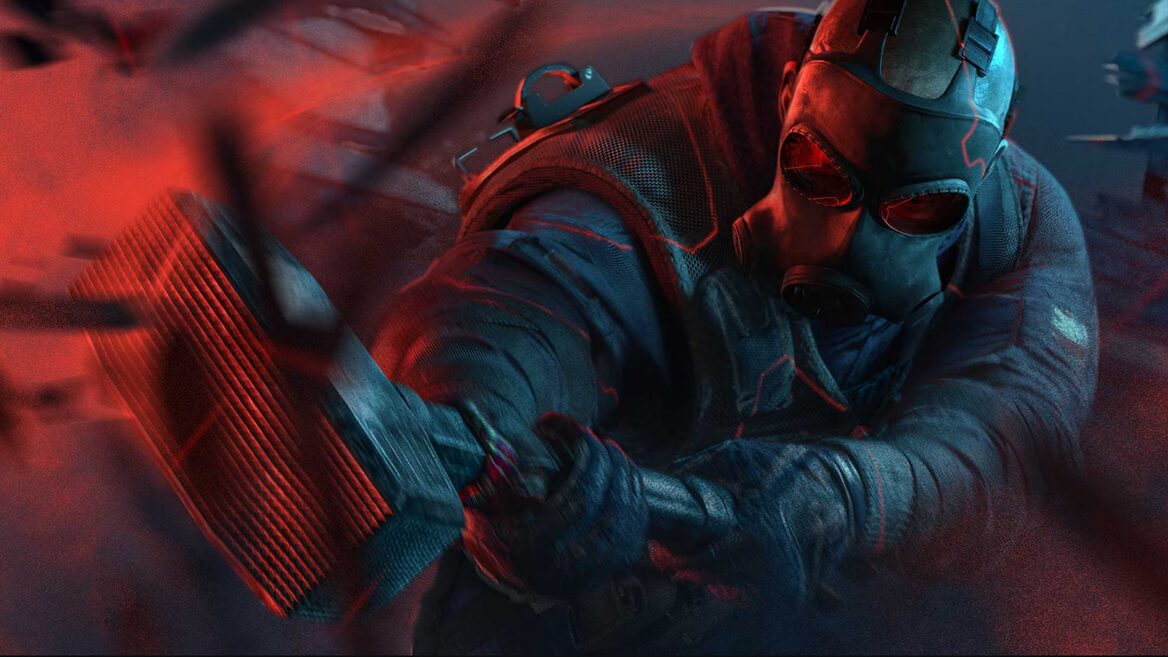
Image: OBLOGA Media Group
In addition to restreaming, users can change the name of the broadcast on multiple platforms at once from a single account, moderate the unified chat, and display its transparent version in OBS. By the full release, the team plans to integrate a notification system, Twitch raid processing, a backup server, and its own moderation bot.
"We do broadcasts, and the lights are often turned off in our directors' cities. A break means lost viewers and two recordings instead of one whole broadcast. That’s why we first made a tool for ourselves, and now we’re opening it up to everyone who streams," said Oleksandr Samoilenko.
The closed beta test began on November 18 and will last about a month. 10 streamers from Ukraine and Europe are participating in the first wave for free, and you can apply for testing on the project website. The full release is scheduled for the end of December 2026. It is expected that the basic tariff with the restream and protective screensaver functions will cost approximately $15 per month, but the final cost will be formed based on the results of testing.
The Ministry of Digital Transformation is preparing to increase salaries for cyber specialists to the market level and is launching its own landing page with vacancies