Хочете будувати кар’єру в Data Science та AI? Vodafone Big Data Lab відкриває новий набір —>
Наталя ХандусенкоAI Eng
15 June 2026, 10:56
2026-06-15
A $200 ChatGPT subscription could cost OpenAI $14,000 if used to its full potential
A fixed monthly fee helped popularize ChatGPT and Claude, but a recent analysis shows that it does not cover the costs of active use, as users increasingly load the systems with complex tasks.
A fixed monthly fee helped popularize ChatGPT and Claude, but a recent analysis shows that it does not cover the costs of active use, as users increasingly load the systems with complex tasks.
SemiAnalysis, a research firm, tested premium subscriptions from OpenAI and Anthropic, running long coding processes and AI agent tasks until the weekly limits were completely exhausted. The result was that the cost of theoretically maxing out these plans at standard API rates far exceeds what users actually pay, TechSpot reports .
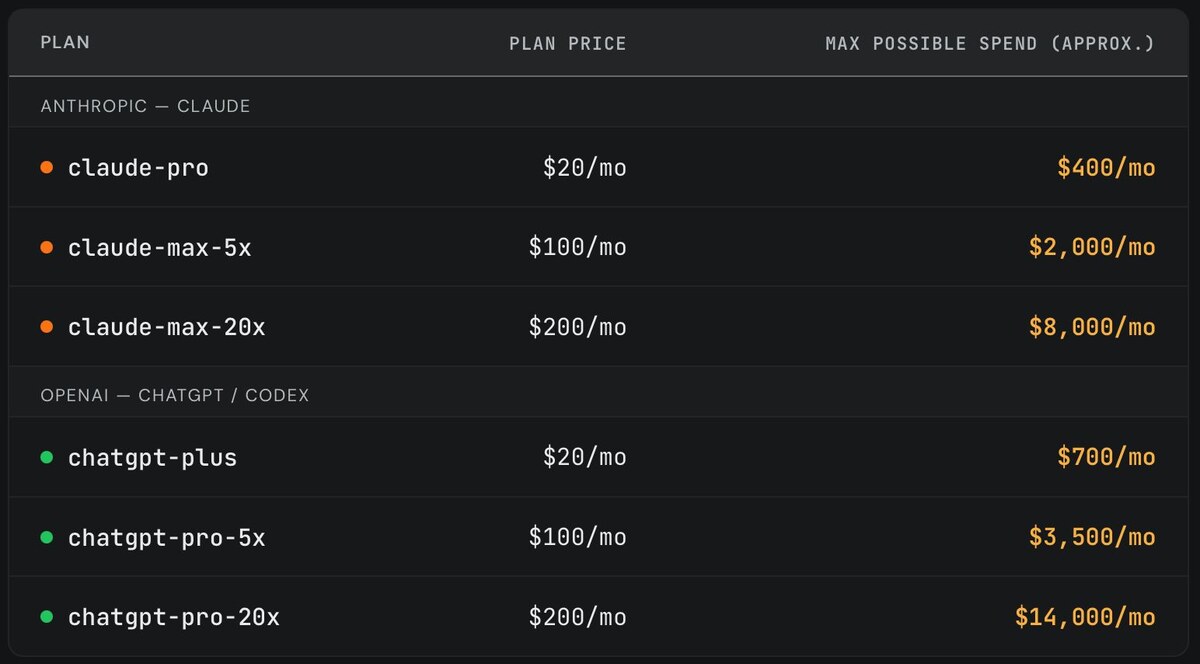
A $200 ChatGPT Pro subscription (with 20x caps) could cost $14,000 at API rates if maxed out. Anthropic’s Claude Max plan, also $200 per month, has a similar cap: under potential load, token costs could reach around $8,000.
These numbers help explain why cap utilization is so important to AI companies. According to SemiAnalysis, Anthropic breaks even on its Claude Pro and Claude Max 5x plans when a user uses about 20% of their cap. OpenAI’s margin is even smaller, with the company starting to lose money on its ChatGPT Plus and ChatGPT Pro 5x subscriptions once usage exceeds 11.4%.
At the most expensive plans, the economics get even tougher. Anthropic breaks even at around 10% usage on its premium plans, while OpenAI breaks even at just 5.7%. So these subscriptions don’t need to be under extreme load to become unprofitable for companies.
Adjusting prices or restricting access is far from the easiest solution. The subscription model has been a key driver of user growth, and any rollback risks slowing the pace of development in a market where technical capabilities remain the main competitive advantage.
Part of this pressure is driven by how AI is currently being used. Token consumption is growing rapidly, especially for autonomous AI agents, which can require up to 1,000 times more tokens than a typical text query. This level of demand is already forcing large organizations to rethink how freely they should implement these tools.
Microsoft, Meta, and Amazon have already reportedly scaled back some internal initiatives that encouraged the use of AI after costs skyrocketed. In one high-profile example, a company burned through $500 million in just one month using Anthropic’s Claude model—largely because it didn’t set limits on access for its employees.
Як нейромережі бачать вільну та незалежну Україну? Тест dev.ua
Нейронні мережі для генерації зображень бачать світ по-своєму, їхню логіку зрозуміти часом зовсім неможливо. Але таки хочеться. На честь Дня Незалежності України редакція dev.ua вирішила провести невеликий експеримент.
Ми задали чотирьом різним нейронним мережам п’ять однакових запитів: «прапор України», «День Незалежності України», «український Крим», «перемога України» та «українці». Отриманими результатами ми ділимося з вами нижче.
У TikTok тепер можна генерувати фон за допомогою нейромережі. Ми протестували її та ділимося результатами
У TikTok з’явилася нова функція «Розумний фон». З її допомогою як фон для тіктоків можна підставляти згенеровані нейромережею зображення. Редакція dev.ua протестувала цю технологію і ділиться своїми враженнями.