Хочете будувати кар’єру в Data Science та AI? Vodafone Big Data Lab відкриває новий набір —>
Марія БровінськаWork
12 May 2025, 10:00
2025-05-12
“We don’t see anything wrong with test tasks being based on real projects.” Frankivsk-based Heaven Soft, which was the scene of a scandal over test and unpaid work by design specialists, commented on each incident in detail.
Ivano-Frankivsk IT company Heaven Soft, which was accused of giving candidates test tasks that are part of real projects when selecting specialists, commented on the incidents voiced by two candidates for the position of designer.
Ivano-Frankivsk IT company Heaven Soft, which was accused of giving candidates test tasks that are part of real projects when selecting specialists, commented on the incidents voiced by two candidates for the position of designer.
As a reminder, UI/UX Designer Valeria Tynok shared a strange experience performing a test task. The employer, the girl claims, actually admitted that her test was part of a real project. The company denied this information.
However, Valeria’s experience was not unique — designer Lyudmila Zyuzkova said that she also had a similar experience with Heaven Soft.
«In March, I applied for a UI/UX Designer position at the company Heaven Soft via the Djinni.co platform. And on April 3, they contacted me via Telegram, asked me a few clarifying questions, and asked me to review my work in Figma. I provided a link, and in response I received a message that my work met the company’s requirements, that everything was clear and structured (unfortunately, there is no screenshot). As a result, I received an invitation for an interview. I was not offered a test task, because I was told that my work, which was reviewed in Figma, met their requirements and the owner was satisfied with everything,» the specialist shared.
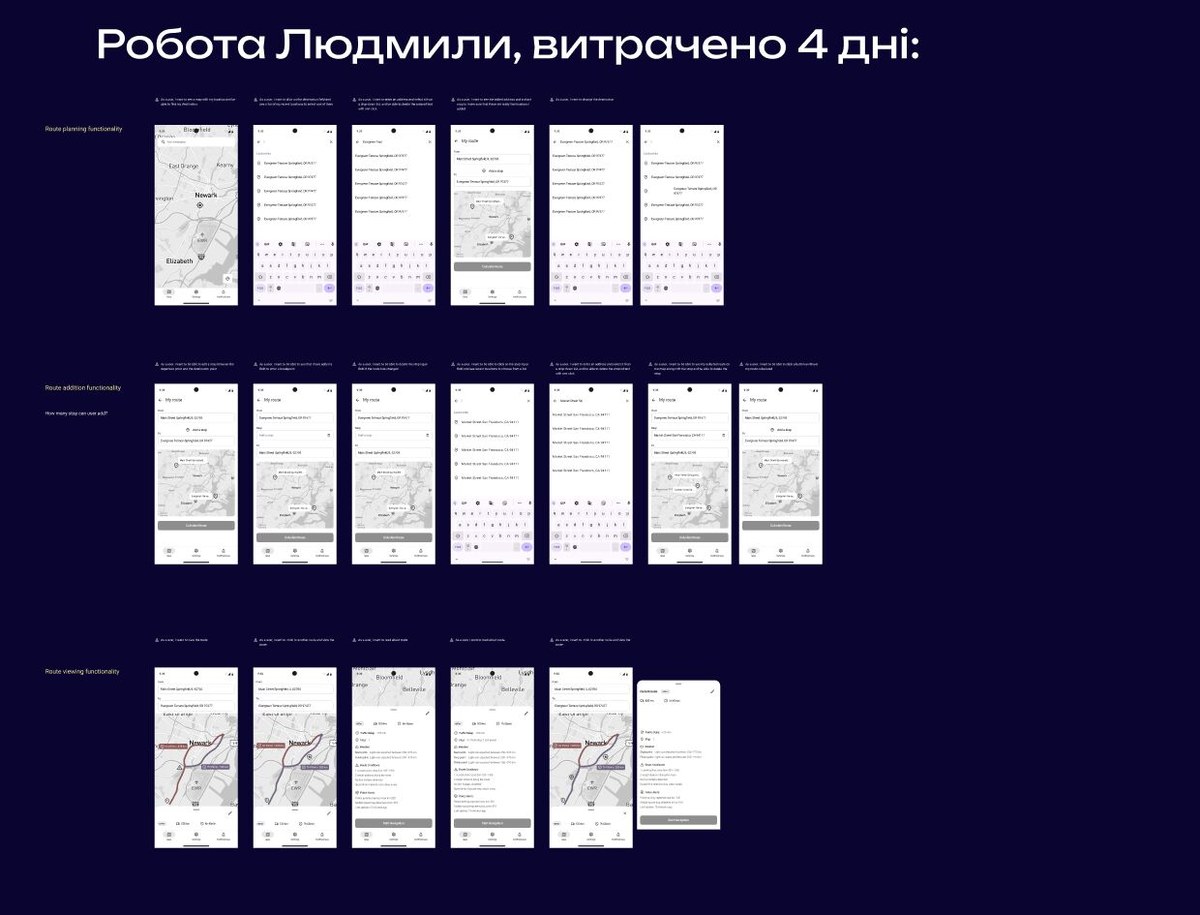
According to Lyudmila, on the fourth day of her work, she received a message that the collaboration had been terminated. «I had previously provided a link to my own Figma file, in which I performed tasks, which both the owner and their designer, Karolina, had access to. So, I asked if they had managed to copy my work — and I was removed from Slack,» the designer said.
Lyudmila assures that she was not paid for the work she did. «You ask, what about the payment? It’s 4 working days… That message didn’t mention it. It turns out that I did work that didn’t meet their requirements, I’m not officially registered anywhere, I didn’t sign anything, what else is the money,» the designer said.
Valeria also published screenshots of correspondence with her employer.
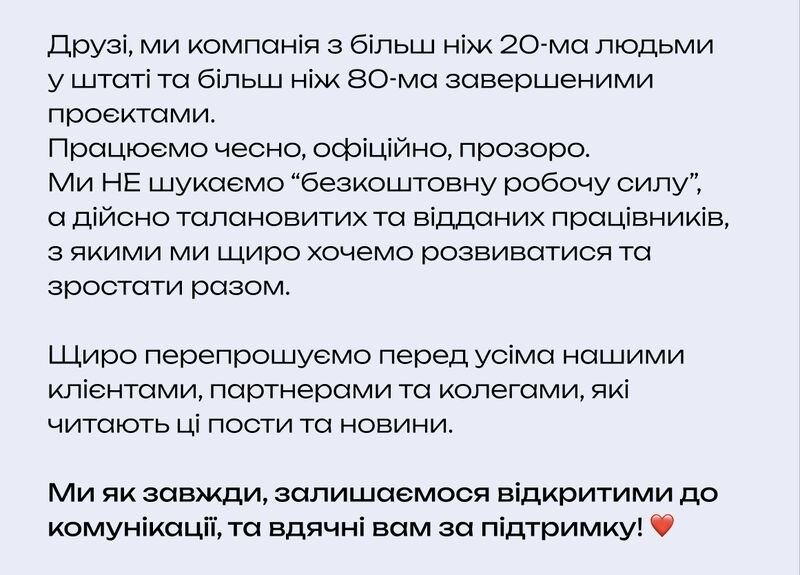
A few days after the incident, Heaven Soft’s response to each of the incidents appeared on the company’s page. Here is the company’s position verbatim.
«In the last few days, we have been observing an active wave of negativity towards our company, and we want to respond — we are publishing this post not for conflict, but to convey our position — with facts and evidence. We are talking about public posts by Valeria Tynok and Lyudmila Zyuzkova, who passed test tasks for the position of UI/UX designer and who later, unfortunately, accused us of dishonesty and the use of unpaid labor.
We officially declare:
if the candidate is not selected, we DO NOT use their work in commercial projects;
We honestly inform you in advance that test tasks are unpaid;
Our company is responsible to our clients and team, so we demand a certain level of quality.
Now the situation with the girls.
We gave Valeria Tynok a test task: to create a UI design for a minimal mobile application on several screens, and honestly explained that the task was unpaid, but if the result was positive, she would receive an offer. Importantly, this project was developed as a potential product, so that if the client liked the design, we could offer cooperation and involve Valeria in work on a permanent basis. No one received any money for this project.
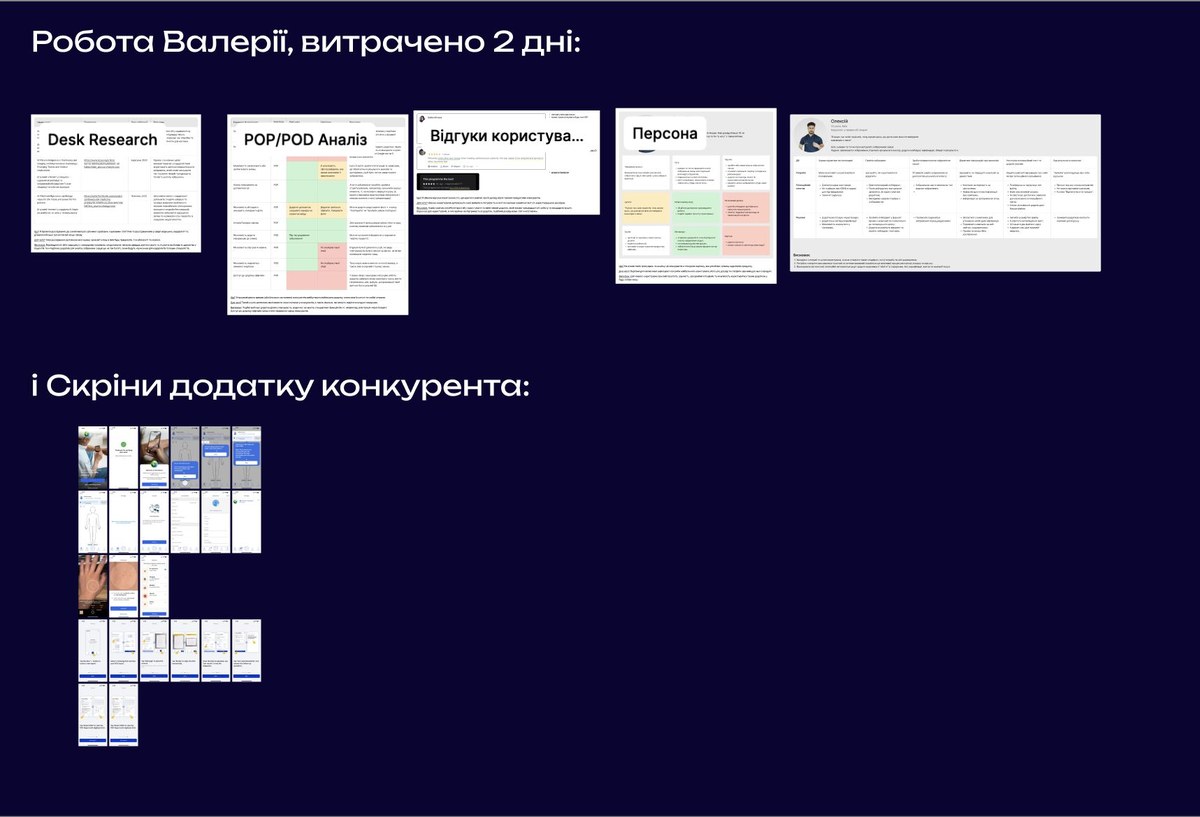
So, after two days of work, we got: 1 — basic UX research 2 — screenshots from a competing application
After receiving the first feedback and clarifying that the project was real, she herself decided to end the collaboration. We respected her decision, but we want to show screenshots of her work to make it clear that there is nothing to use there and we did not intend to do so.
Lyudmila Zyuzkova’s portfolio made a better impression than the actual work, and we sincerely hoped to cooperate with her. Lyudmila was notified about working on a commercial project and added to our work chats with the team.
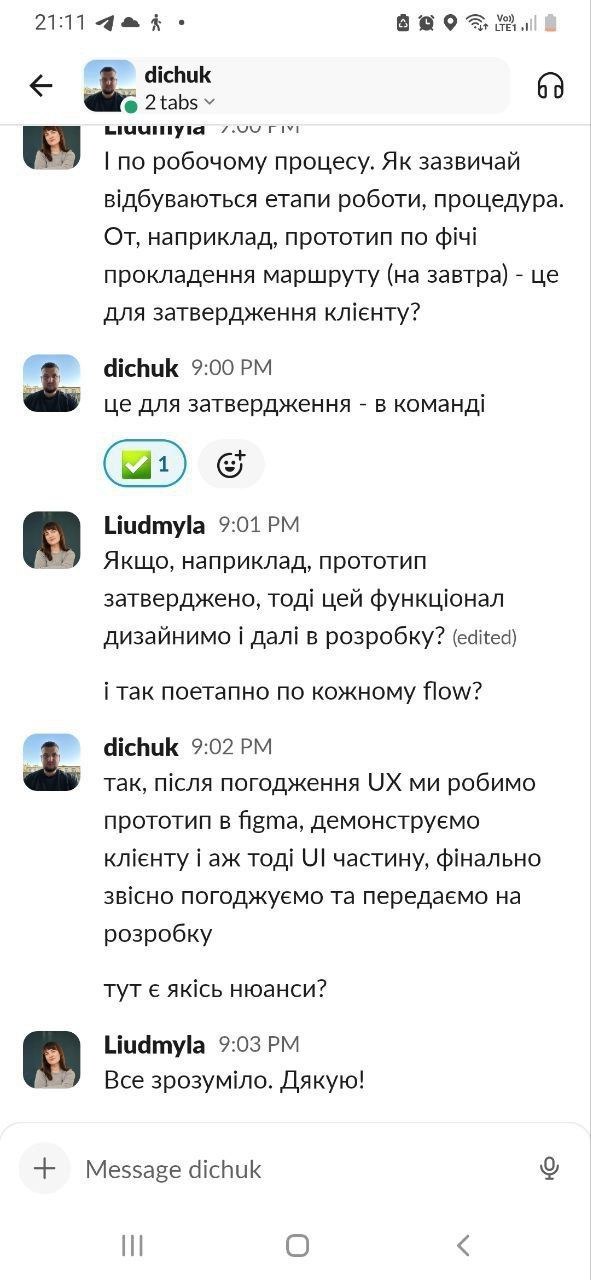
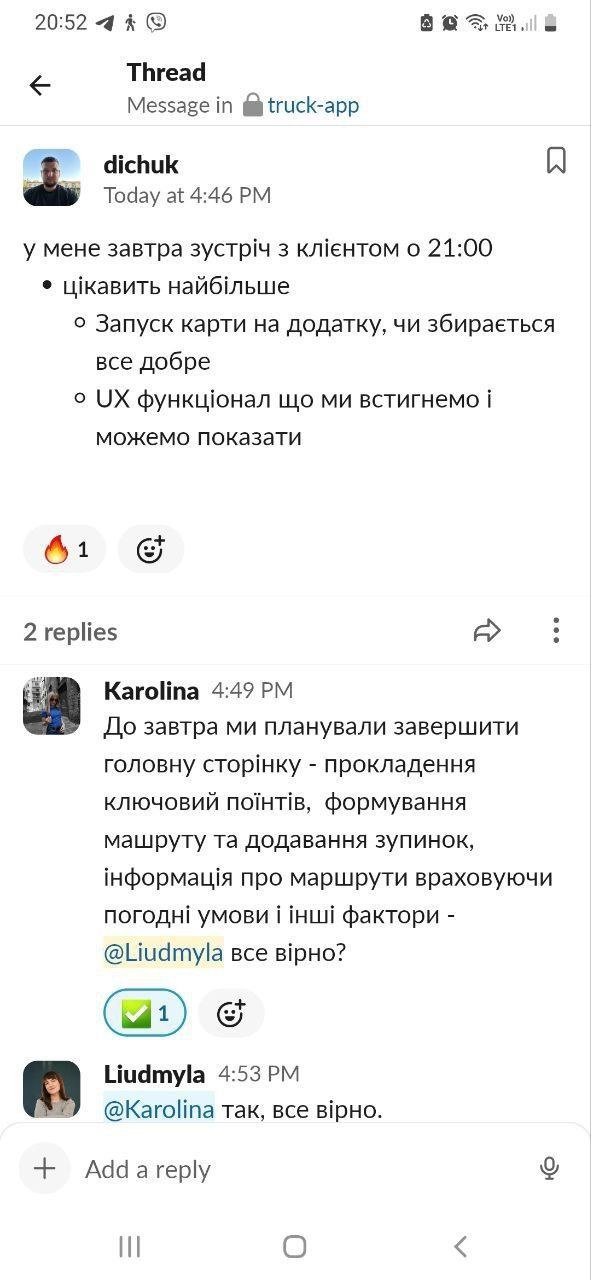
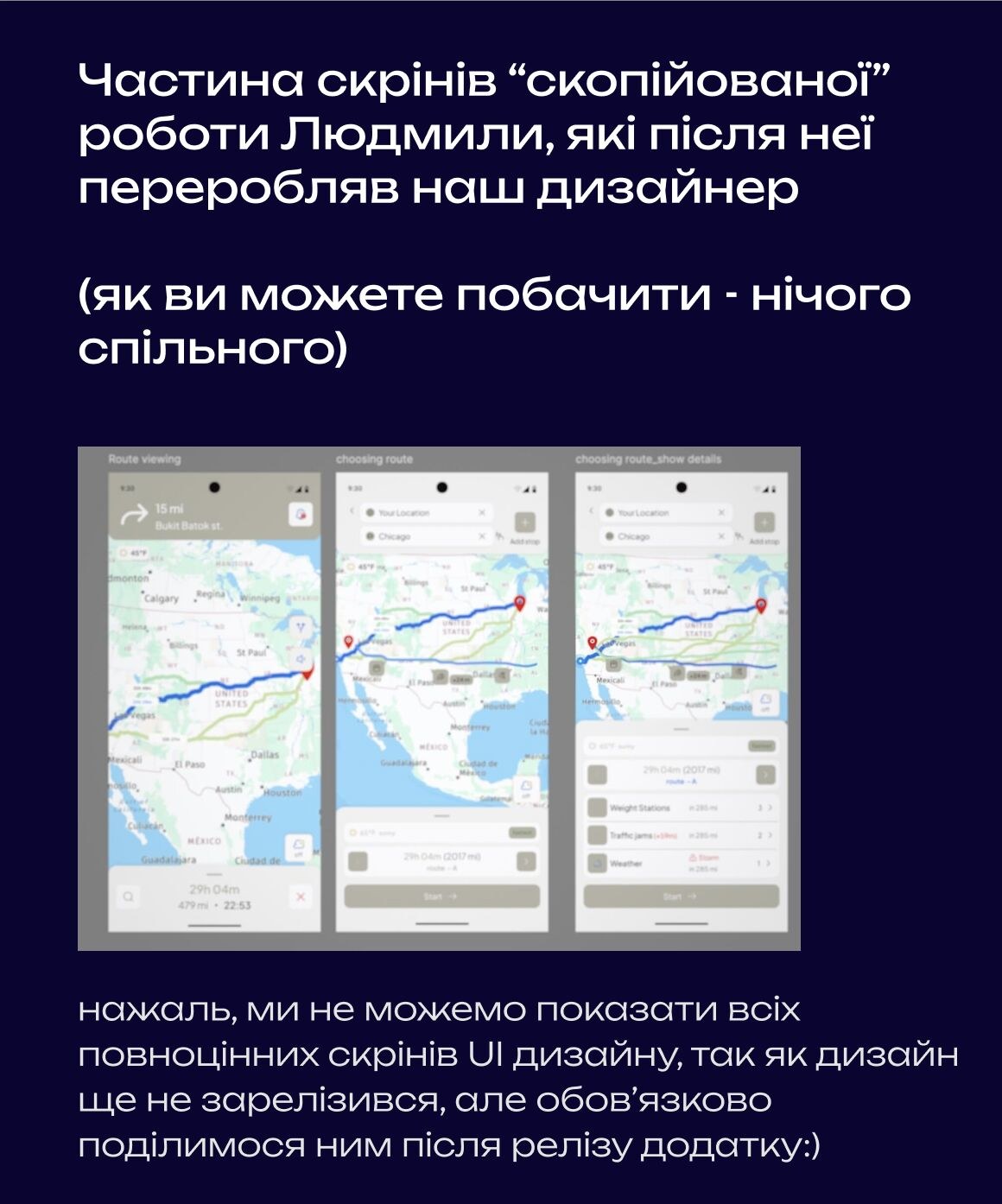
For four days, after receiving the finished User Flow from our designer, she created screens that we ultimately could not show to the client (we attach the screens so you understand why).
We are attaching a screenshot from the work chat, where we explain to the team that the result does not meet expectations, as well as the final layouts created by our current designer, which are significantly different.
We repeat — Lyudmila’s works are NOT used in the project in any way.
Our position on test cases:
We believe that testers shouldn’t always be paid — especially in junior positions. Why? We also spend time on review, feedback, and mentoring from our designer;
If a candidate has no commercial experience, a test is the only way to assess the approach to work.
We always warn that the test is unpaid, but if the results are good, the candidate receives an offer.
Works that do not meet our standards do not go into production and do not bring any benefit to the company.
We also want to emphasize: we see nothing wrong with test tasks being based on real projects. On the contrary, this gives candidates the opportunity to work with a clear structure and real tasks and prove themselves in a working environment.
UPD. «My test is a real project that I would have to work on if I got the offer.» The designer believes that her employer offered her the test as part of a commercial project. The company explained what happened and why it was wrong
To pay or not. Product Manager told about a case where a candidate passed the test with 3 out of 5 and he wants money for the revision. And what do the IT community think?
Професії у геймдеві. Хто такий левел-дизайнер і як ним стати?
Ми продовжуємо нашу рубрику, присвячену професіям у геймдеві. Тема нового матеріалу в ній — левел-дизайн. Його вважають підвидом геймдизайну, але все-таки практично кожна студія хоче окрему людину на позицію левел-дизайнера. Адже у цій спеціальності вистачає своїх нюансів та особливостей.
Розібратися з ними всіма нам допоміг досвідчений левел-дизайнер зі студії Fractured Byte Дмитро Нестеренко. Також він веде свій блог Game Designer Notes про геймдизайн в цілому, в якому розбирає багато цікавих нюансів розробки ігор.