Хочете будувати кар’єру в Data Science та AI? Vodafone Big Data Lab відкриває новий набір —>
Олександр КузьменкоGameDev Eng
1 November 2026, 09:00
2026-11-01
The Fall of the Normandy. How the “magic” of the legendary Bioware studio, which gave players Baldur’s Gate, Mass Effect and Dragon Age, faded
In the world of AAA development, disasters rarely happen suddenly. When Electronic Arts announced in October 2026 that it was shutting down BioWare and canceling the next Mass Effect, it came as a shock to gamers. But for those who had been following the studio for years, the publisher’s decision came as no surprise. It was the culmination of a slow decline that had been going on for over a decade.
BioWare’s journey is a story about how Canadian doctors with Ukrainian roots created the gold standard of role-playing games, how the internal "let’s get by on crunches" culture turned into poison, and how technological experiments, combined with the publisher’s financial debts, finally put an end to the studio’s 31-year history.
Content
Doctors who decided to heal the world with games
BioWare’s story began not in Silicon Valley, but in the medical classrooms of the University of Alberta in Edmonton. In February 1995, three young internists—Ray Muzyka, Greg Zeschuk, and Augustine Yip—joined programmers Trent Oster, Brent Oster, and Marcel Zubrzycki to form a new company.
Initially working in Greg’s basement and calling themselves BioWare (a name of medical origin: from the Greek "Bio", meaning "life", and "Ware" — short for "software"), they later set about creating a company that would later become one of the most influential in the RPG genre.
The founders' initial plan was quite pragmatic — to develop medical educational software and simulators for medical students. However, Muzyka and Zeschuk were passionate fans of the Dungeons & Dragons tabletop role-playing game, so they decided to take a risk and invest the money they earned from medical software in developing their first video game.
Edmonton, Alberta, played a special role in this story. This city has traditionally been a center of the Canadian-Ukrainian diaspora. Ray Muzyka and Greg Zeschuk have Ukrainian ancestry, which is reflected in their surnames. They grew up in an environment where Ukrainian traditions and family ties were a natural part of everyday life.
Later, another key architect of BioWare’s future worlds joined the team — Canadian writer and game designer of Ukrainian origin Drew Karpyshyn, who was born in Edmonton in 1971. It was Karpyshyn who formed what would later be called the studio’s "narrative DNA": sharp moral dilemmas, branching dialogues, elaborate companions, and cinematic scale.
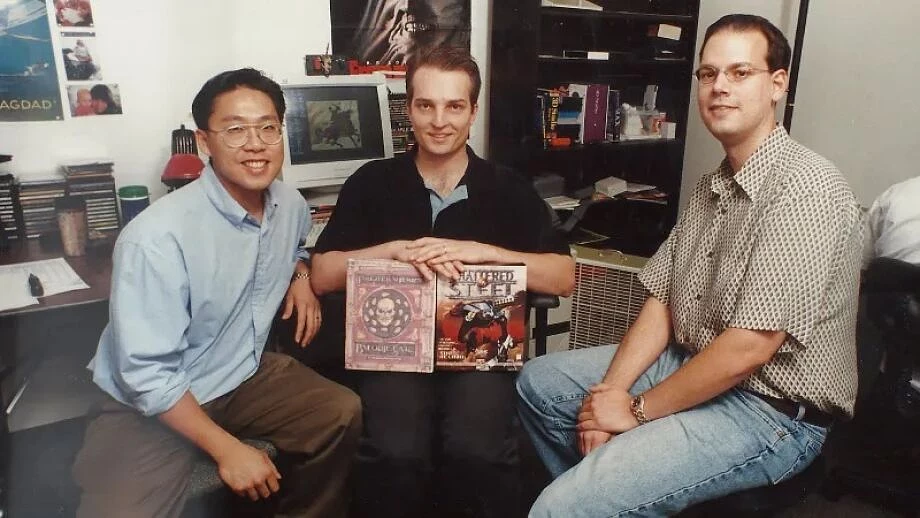
BioWare founders Augustine Yip, Greg Zeschuk, and Ray Musica show off their first two games: Baldur’s Gate and Shattered Steel. Photo: GameInformer
From dungeons to stars: what games were made at BioWare
The studio’s debut in 1996 was the experimental mech battle simulator Shattered Steel, created in collaboration with Pyrotek. The game was far from the RPG genre, but it allowed the young team to raise their first serious money, attract the attention of publisher Interplay, and receive carte blanche for their dream project.
Baldur’s Gate and the birth of the formula
The real breakthrough was Baldur’s Gate (1998). By developing its own Infinity Engine, BioWare saved isometric computer RPGs from decline, combining an adapted AD&D system, tactical pausing, and a scalable story.
The studio had developed a formula that it had been refining for decades: depth of companions, moral choices, and personal responsibility for the fate of the world. In 2000, the sequel Baldur’s Gate II: Shadows of Amn solidified their status as the leading storytellers in the gaming industry. It was during this period that Drew Karpyshyn joined the team as a full-time writer.
This was followed by a successful transition to 3D with Neverwinter Nights (2002) on the Aurora Engine, where the main asset was the Aurora Toolset editor, which turned the game into a platform for tabletop sessions with the Dungeon Master.
The Golden Age: KOTOR, Jade Empire, and the Birth of Mass Effect
In 2003, BioWare conquered the console market with Star Wars: Knights of the Old Republic on the Odyssey Engine. Head writer Drew Karpyshyn created one of the most famous plot twists in gaming history (the story of Darth Revan) and the iconic droid HK-47.
This was followed by Jade Empire (2005), a bold original experiment in the setting of ancient Chinese mythology, martial arts, and the philosophical system of morality "Open Palm / Closed Fist".
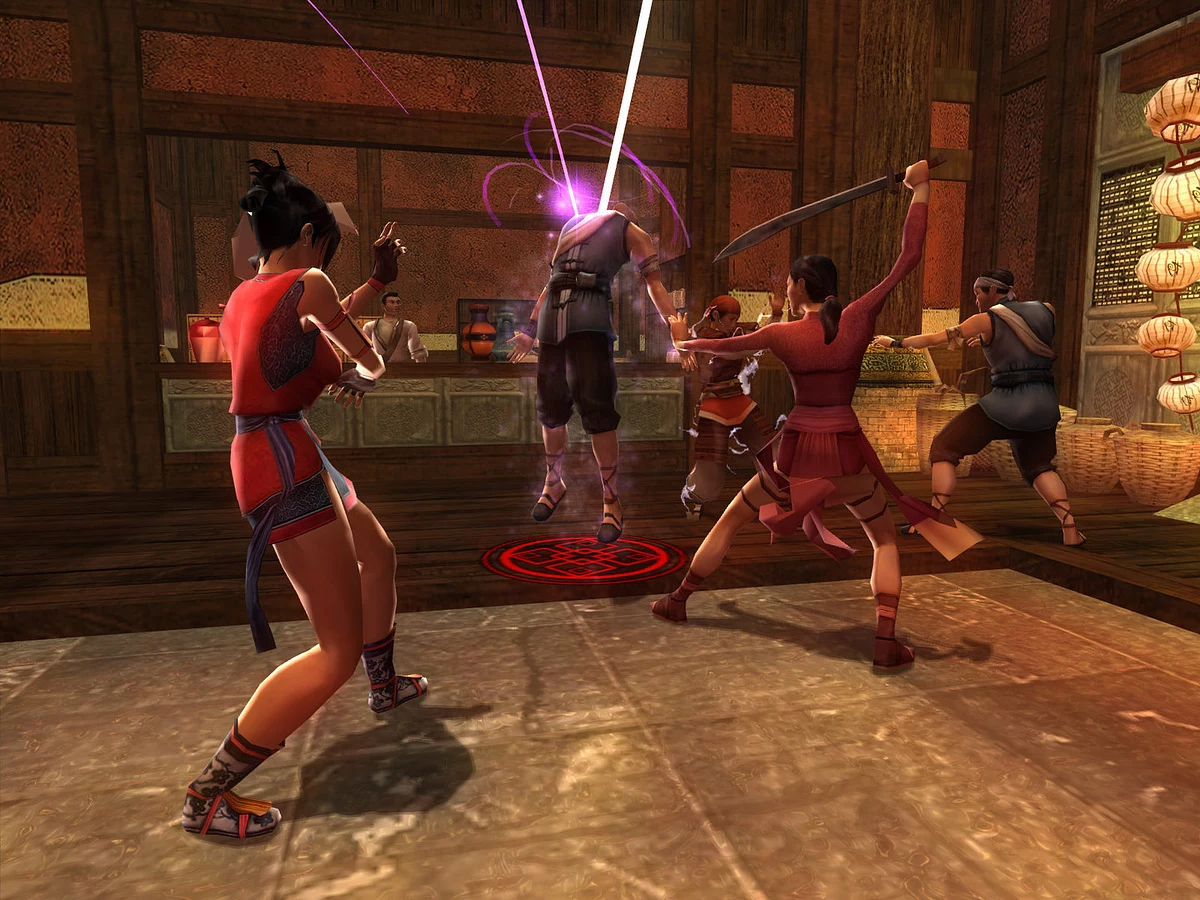
Screenshot from Jade Empire
But the real revolution came in 2007 with the release of the space opera Mass Effect on Unreal Engine 3. Instead of text blocks, a dialogue wheel appeared, and for the first time, the player’s decisions were guaranteed to carry over between parts of the trilogy. The textual foundation of the first part and its sequel was again managed by Karpyshyn.
Dark fantasy, peak under EA’s wing and the first cracks
In 2009, the studio released Dragon Age: Origins, a spiritual successor to Baldur’s Gate, on its own Eclipse Engine, which had been in development for over 6 years. The bleak world of Thedas and 6 unique prequels ensured over 3.2 million copies shipped in its first months.
The acquisition of the studio by Electronic Arts Corporation in late 2007 for $775 million initially bore golden fruits. Mass Effect 2 (2010), with its iconic "Suicide Mission", is still considered by the developers to be the pinnacle of BioWare’s drama.
However, compromises were inevitable. Created at the request of EA in just 14 months, Dragon Age II (2011) suffered from massive repetition of locations and haste. The gigantic MMO Star Wars: The Old Republic (2011) with a budget of over $200 million turned out to be too expensive to maintain, although it gave fans hundreds of hours of quality plot from Karpyshin.
The conclusion of the Mass Effect trilogy, Mass Effect 3 (2012), was met with disappointment from players due to its superficial "colorful" ending, which forced the studio to spend free time reworking the Extended Cut to make a decent ending. In the fall of that year, founders Ray Music and Greg Zeschuk permanently left BioWare and the gaming industry.
The imposed engine and the "magic of BioWare"
The next stage was a test of strength. Dragon Age: Inquisition (2014) was the studio’s first game to use the Frostbite Engine, which was designed for first-person shooters. Its use was imposed by EA, which decided to unify the work of its studios, which worked on games in completely different genres — from shooters, sports simulators and racing to large-scale RPGs.
Despite its chaotic development, Dragon Age: Inquisition won the title of "Game of the Year 2014" and sold over 12 million copies. This instilled in the company’s management a belief in the so-called "Bioware magic" — that any problems can be solved in the final stages of development.
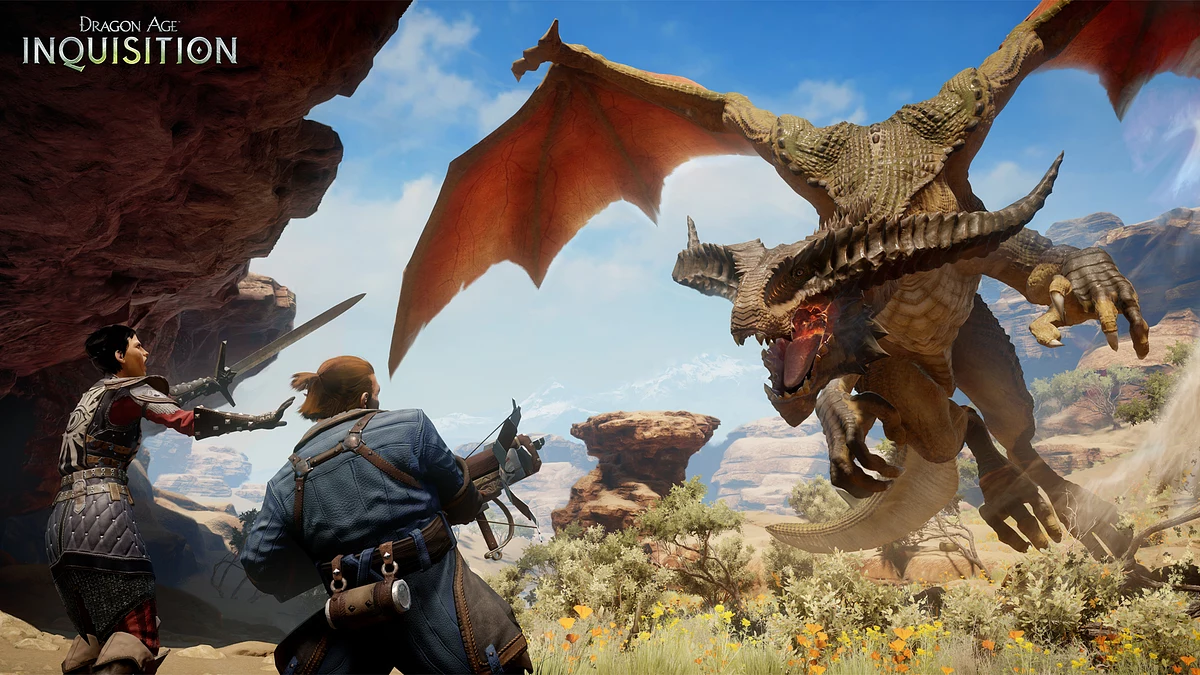
Images from Dragon Age: Inquisition
This illusion was shattered with Mass Effect: Andromeda (2017). The project by BioWare Montreal subsidiary spent 3.5 years in futile experiments with procedural generation on Frostbite and was hastily assembled in 18 months, releasing with broken animations and numerous other problems.
Anthem (2019) was an absolute disaster, a cooperative looter shooter that had been lacking a clear concept for years. Actual production lasted less than a year in a grueling crunch mode. The game quickly lost its audience and was shut down.
The remastered Mass Effect Legendary Edition (2021), which ported the first Mass Effect game to the popular Unreal Engine 4, was more warmly received by players. However, this did not save the studio from financial failure. Dragon Age: The Veilguard — a project that spent 10 years changing its vector (from a single-player RPG to a service game and back) showed sales of ~1.5 million copies — which was almost 50% lower than EA’s expectations.
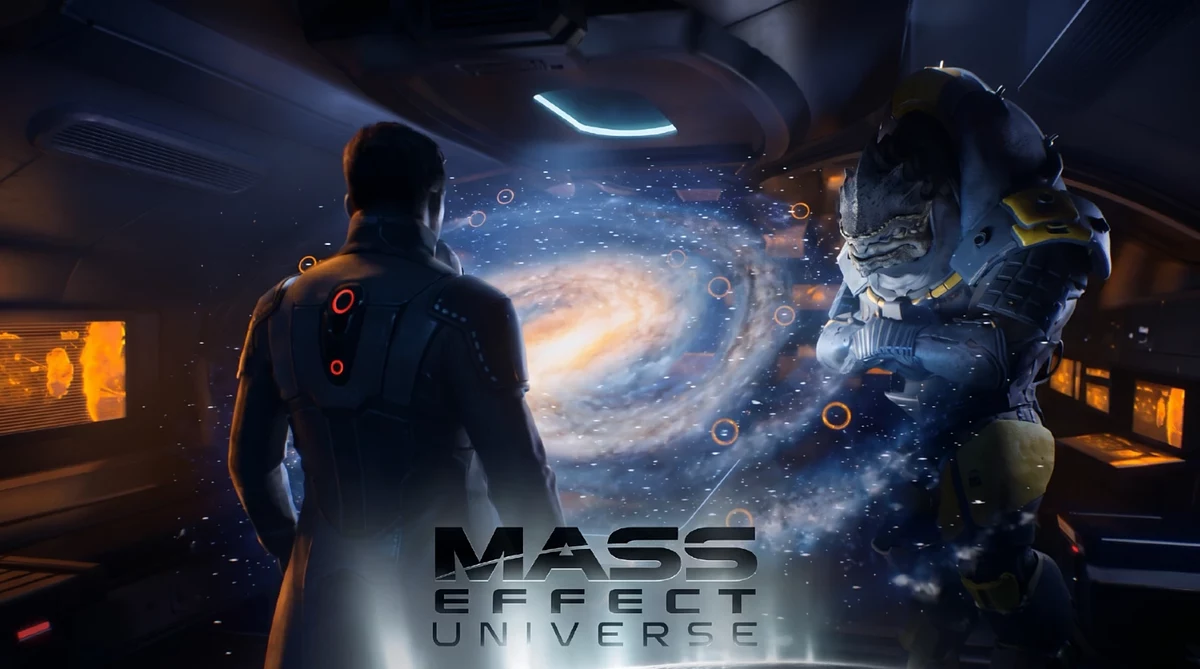
The final nail in the coffin was the canceled Mass Effect Universe (Mass Effect 5) in October 2026, which was developed on Unreal Engine 5. The project never left the pre-production stage.
The Frostbite Curse and the Myth of "BioWare Magic"
Behind the scenes of official press releases, two systemic problems had been brewing at BioWare for years, which were later described in detail in the investigations of game journalist Jason Schreier.
The first is the forced transition to the Frostbite Engine. Former EA CEO Patrick Soderlund promoted the idea of unification: all the corporation’s studios were to work on an internal engine from the developers of Battlefield. But Frostbite was created for network shooters. It did not have the tools to create RPG logic: there were no inventory systems, branched dialogue trees, save mechanics and artificial intelligence of companions. The developers of Inquisition, Andromeda and Anthem were forced to create basic tools from scratch for years, instead of making the game itself.
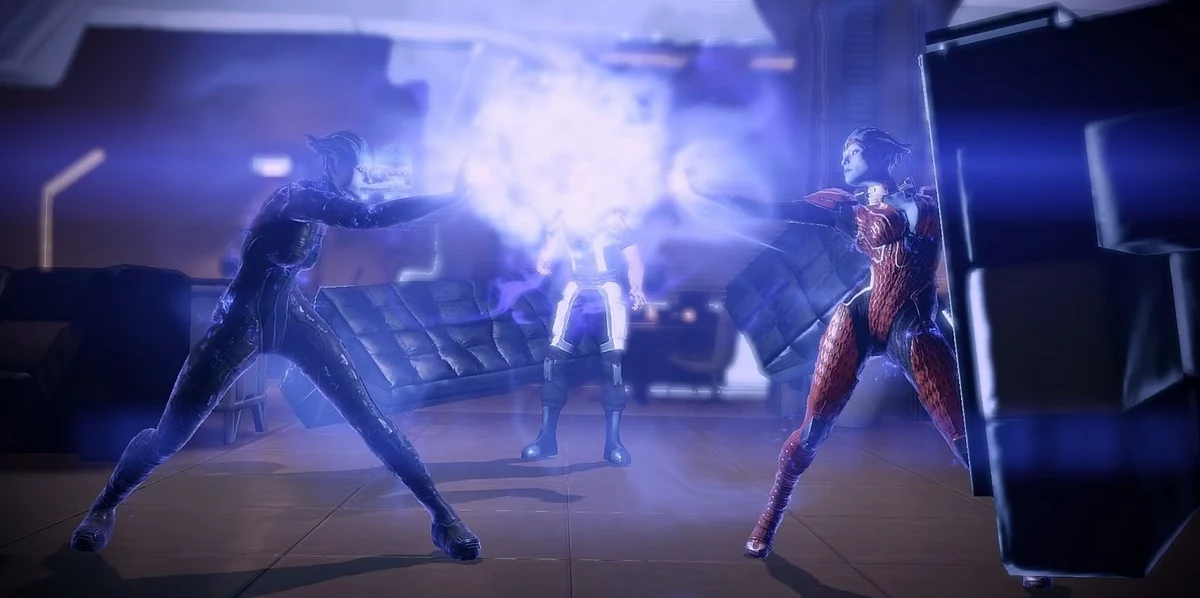
Screenshot from Mass Effect
The second is the myth of the magic of "BioWare". A dangerous belief has taken root in the studio’s management: no matter how chaotic the pre-production is and how many years are lost in disputes, in the end the "BioWare magic" will definitely work, the team will rally in crunches and release a masterpiece. This happened with Dragon Age: Origins and Inquisition. But when the development process is so broken, the magic sooner or later ends. The result was mass burnout, the dismissal of veterans and the final failure of Andromeda and Anthem.
How EA’s debts and Saudi billions buried BioWare
Why did BioWare close in October 2026? The answer lies in the realm of Electronic Arts' corporate finances and fierce intra-corporate competition for resources.
In early 2026, a large-scale deal took place: a consortium of investors led by the Saudi Arabian Sovereign Wealth Fund (PIF) and private funds bought out Electronic Arts for $55 billion, taking the corporation into private ownership. The deal was a leveraged buyout (LBO) — a buyout with borrowed capital. The renewed EA was saddled with a gigantic debt of about $18 billion. Interest payments alone on this obligation required the publisher to pay more than $1.8 billion per year, which created a serious operating deficit.
As Bloomberg notes, in the face of debt pressure, EA’s management set itself a strict framework limit: the company could no longer finance two expensive fantasy AAA projects at the same time. The publisher could afford to allocate hundreds of millions of dollars for only one major action game — the choice was between Mass Effect 5 and the new part of Star Wars: Battlefront 3.
Mass Effect 5 canceled
Despite the fact that full production of Star Wars: Battlefront 3 had not even begun, EA’s top management considered the Star Wars project to be much less risky and financially predictable. BioWare’s position in this internal struggle was critically weakened by a series of commercial failures: Mass Effect: Andromeda, Anthem, and the latest financial blow in the form of Dragon Age: The Veilguard.
The situation was aggravated by long-standing internal conflicts within EA’s management and the weakening of BioWare’s lobbying positions on the board of directors. Spending 4–5 years of development and hundreds of millions of dollars on Mass Effect 5 for a studio with a tarnished reputation in conditions of strict economy was considered an unacceptable risk by the publisher. As a result, EA’s management made the final choice in favor of investing in Battlefront 3 and stable sports simulators, and BioWare with its 50 employees was liquidated.
Is there hope for a BioWare revival?
The news of BioWare’s closure has caused a strong resonance not only in the gaming industry, but also at the political level. Canadian politician Evie Lewis publicly appealed to the government to provide federal support for the studio’s laid-off employees. Lewis proposed providing government funding to the developers and giving them the first opportunity to buy out the studio to run it independently as a collective. He sharply criticized private equity funds, stating that such capitalism amounts to "buying up businesses, running them into the ground and destroying them for short-term profit."
The gaming community has also been active. Large-scale campaigns have erupted on social media and Reddit, and online petitions demanding that Mass Effect be saved have begun to gather tens of thousands of votes. One of the largest petitions collected more than 43,000 signatures in just the first 24 hours after BioWare’s closure was announced, and is now approaching the 300,000 mark. Supporters hope that the public outcry and the threat of a boycott will force EA to reconsider its decision to cancel the project or transfer the rights to third-party developers.
A telling summary of the whole story about the closure of BioWare was the comment of Mark Darrah, the studio’s former executive producer. In his YouTube video, Darrah noted that the publisher’s decision did not come as a surprise to him after EA was bought by the Saudi PIF fund. According to him, the closure of the Edmonton office was also due to the lack of tax breaks for the gaming industry in the province of Alberta (unlike Vancouver), which made it much more expensive to maintain staff.
BioWare developers working on Anthem. Photo: BioWare
Darrah stressed that he sees no signs of BioWare employees being transferred to other EA divisions. Regarding the fate of the Dragon Age, Mass Effect, and Jade Empire franchises, the former producer noted that after the final liquidation of BioWare, Electronic Arts is more likely to agree to sell intellectual property to third-party studios than it was before. However, he remains skeptical and warns that with the same success, EA could simply freeze these brands in its archives.
"I think we still have to wait a bit before we see if EA has any interest in selling some of their frozen IP. Right now they seem to be in cost control mode. Maybe later they will move into revenue generation mode where selling intellectual property might be more desirable," said Mark Darrah.
He called on the community to support the laid-off professionals and their future projects.
The end of this epic was put by the studio’s co-founder Greg Zeschuk himself. In a conversation with the publication 80 Level, he shared his reflections on the closure of the company he founded more than 30 years ago. Zeschuk admitted that he experienced his own emotional farewell back in 2012, when he and Ray Muzyka left BioWare after the release of Mass Effect 3:
“I feel like I’ve been through all these emotions for a long, long time. You have to take a step back and say, ‘Okay, I’ve been through my emotions.’ I’m just at a point in my life where I have my other business — my brewing business is doing really well. I have a whole bunch of other things going on, and I’m not into sentimentality or nostalgia. I think that chapter is closed.”
However, Zeschuk does not hide the sadness over the impact of the closure on his home region.
"I’m not saying it doesn’t hurt or it doesn’t hurt. And I think it’s a little sad. In fact, in a way, it’s the saddest thing for the city of Edmonton, where we come from, because we were a kind of beacon of hope and enthusiasm and opportunity. We showed that you can do something really special in a place that wasn’t known for such achievements."
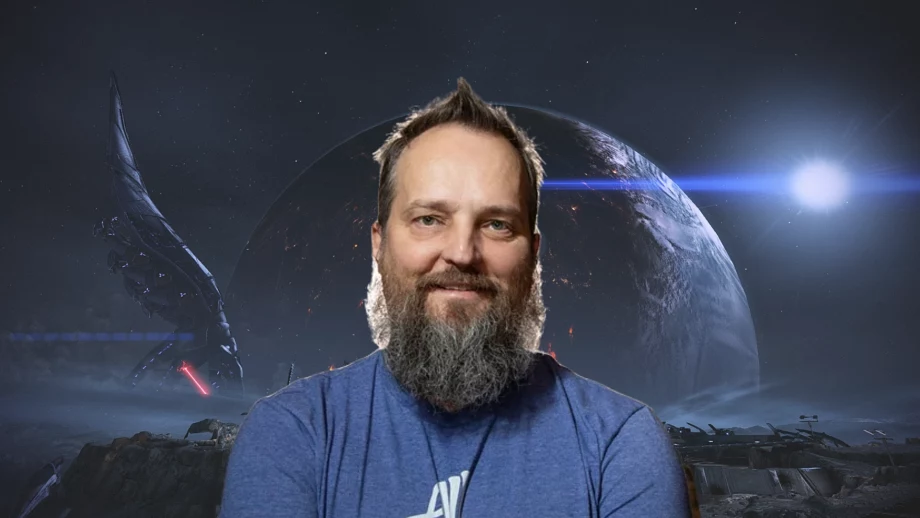
Greg Zeschuk. Photo: 80 Level
Zeschuk also criticized the $55 billion deal with the Saudi PIF and the industry’s current management, calling it “the final nail in the coffin.” He highlighted the fatal gap between top managers and actual developers:
“There’s this weird belief that you can just recreate great games with random people and AI. It doesn’t work. The harsh reality of almost all of these companies is that the people who go down the business path never actually come from the development world. Because none of these people have ever made a game — meaning, never really sat down and developed it from start to finish, even something small — they just don’t know how it works. BioWare has made complex games that take a long time to develop, so it’s easier for them to release sports sims every year — financially, it seems like a better business model for them.”
Currently, the rights to the BioWare universes remain with EA, and the only living project under the franchise is Amazon Prime Video’s Mass Effect film adaptation, which remains in development. The studio’s veterans are already working on other teams: some are creating the sci-fi RPG Exodus at Archetype Entertainment, and Casey Hudson is building his own project at Arcanaut. BioWare as a studio is no more, but its legacy is forever etched in video game history.
Electronic Arts is stopping development of a new Mass Effect and closing the legendary BioWare studio. A whole generation of gamers grew up on its games, CD Projekt Red and Mariana Bezugla
“Now you’re using technology to take away our ability to feed our children.” The actress who voiced the female version of Shepard in Mass Effect spoke out against the use of AI
«Навіть для виробників трун і пам’ятників я писав тексти». Як стати game-тестувальником під час війни: історія колишнього металурга, страховика, копірайтера
34-річний Андрій Зубков під час війни увійшов в IT, докорінно змінивши свою кар'єру і буденне життя. Тепер він QA Engineer у компанії Pingle Game Studio — тестує ігри. А до цього працював на металургійному комбінаті, в страхуванні та навіть копірайтером. Свою історію про вхід в нове життя Андрій розповів dev.ua.
Хто такий Unity Developer: основні задачі, обов’язки та зона відповідальності. Огляд професії від Team Lead Unity у Pingle Game Studio
Продовжуємо цикл матеріалів про ІТ-спеціальності. Кожну описує «типовий представник» — досвідчений фахівець і просто авторитетний колега, та сама людина, яка знає всі таємні куточки своєї професії. Ми сподіваємося, ці матеріали допоможуть школярам, студентам, перекваліфікантам, студентам і всім тим, хто зацікавлений у виборі ІТ-спеціальності. Цикл не тільки допоможе оцінити перспективи, а й дасть можливість краще зрозуміти індустрію і особливості професії зсередини. Обговорюйте і доповнюйте матеріал в коментарях, щоб зробити його ще корисніше.
Про професію Unity Developer розповідає Володимир Мельничук, Team Lead Unity у Pingle Game Studio.