Хочете будувати кар’єру в Data Science та AI? Vodafone Big Data Lab відкриває новий набір —>
Олександр КузьменкоGameDev Eng
11 August 2025, 09:00
2025-08-11
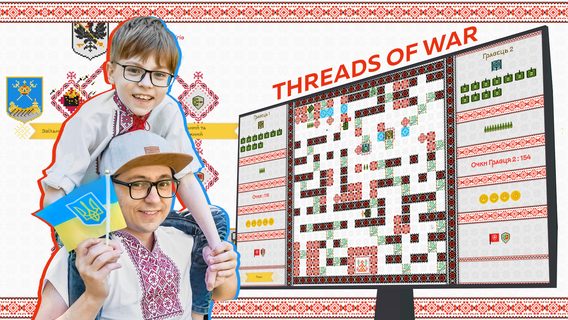
“We agreed with my dad that I would program the next game, and he would do everything else.” How 13-year-old Askold Kostyushko and his father created “embroidered tanks” — Threads of War
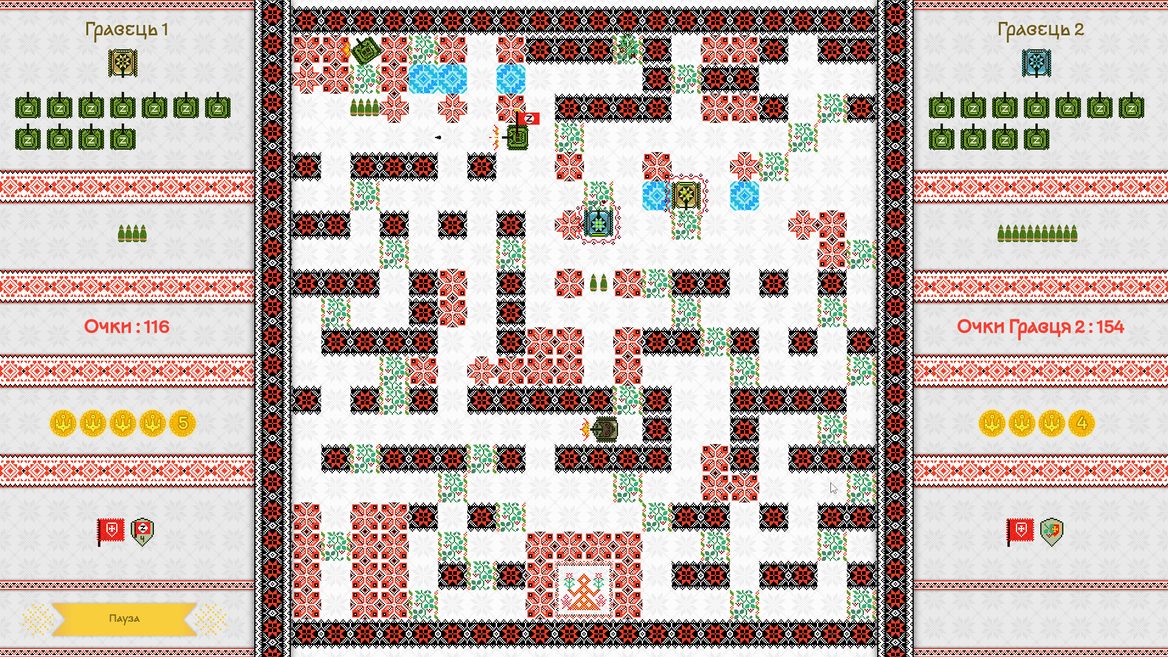
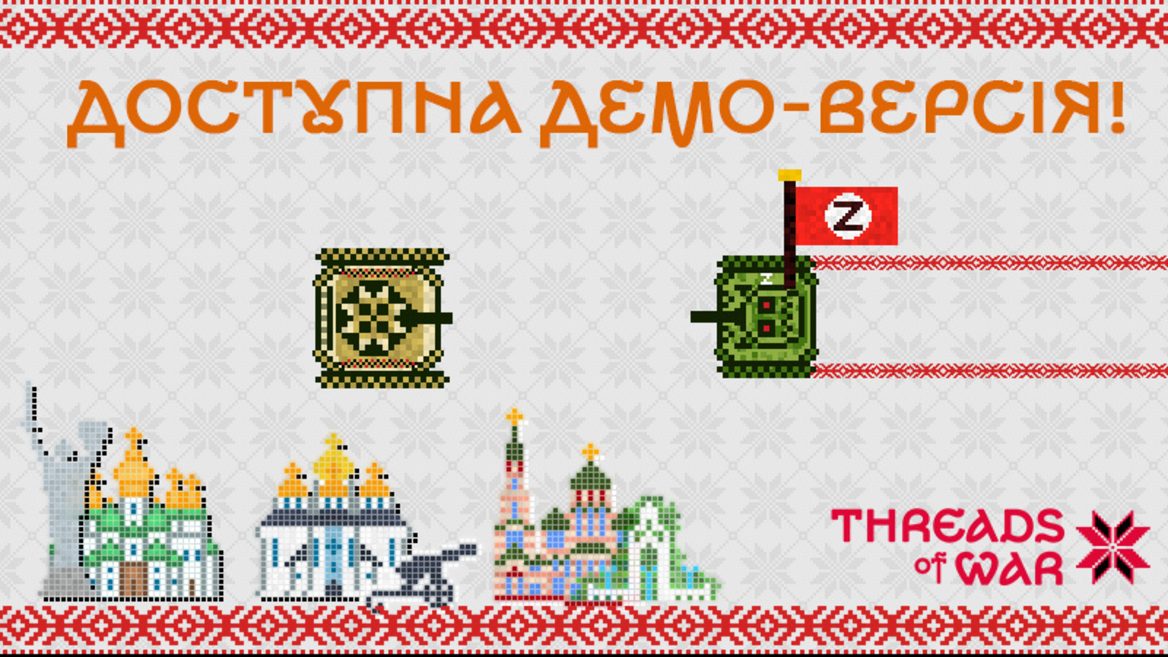
The Ukrainian game Threads of War, created by game designer Andriy Kostyushko of Creoteam studio and his 13-year-old son Askold, is preparing to be released on Steam on August 14. It combines the mechanics of the classic NES era game Battle City and roguelite mechanics with pixel graphics in the spirit of Ukrainian embroidery and tells the story of a full-scale Russian invasion.
dev.ua talked to the developers and learned about how they set up the workflow, created the graphics and soundtrack for «Threads of War,» and why the game will have Japanese localization at release.
The Ukrainian game Threads of War, created by game designer Andriy Kostyushko of Creoteam studio and his 13-year-old son Askold, is preparing to be released on Steam on August 14. It combines the mechanics of the classic NES era game Battle City and roguelite mechanics with pixel graphics in the spirit of Ukrainian embroidery and tells the story of a full-scale Russian invasion.
dev.ua talked to the developers and learned about how they set up the workflow, created the graphics and soundtrack for «Threads of War,» and why the game will have Japanese localization at release.
— You are far from new to game development and have been creating games since 2006. In particular, at the Creoteam studio you worked on one of the most famous Ukrainian games — Collapse, about apocalyptic Kyiv. Tell us how things are going at Creoteam now, what is it working on now?
Andriy: I joined Creoteam in 2008 for the Collapse 2 project, which later transformed into Collapse: The Rage. At that time, the company had about 20 people. Since then, only 6 have remained, each of whom is an excellent specialist. We understand each other well and have well-established processes. This allows the company to implement complex or risky concepts.
Current affairs are as follows: our turn-based football strategy game Football, Tactics & Glory has been purchased by 100,000 players on Steam alone, excluding the console version and DLC. And now we are working on a sequel — Football, Tactics & Glory: World (FTGW), in which, among other things, we want to introduce an innovative animation system that has never been seen in turn-based tile games.
— You are creating the game Threads of War not as a Creoteam project, but as your own. Why did you decide to make it separately?
Andriy: First of all, I wanted to support my son Askold, who was passionate about game development.
He was curious about how to create a game that would be fun to play for, say, 5 hours, not 5 minutes. So I decided to use my free time to make a game with him that would be compact enough for two people to create, but deep enough to be fun to play for at least 5 hours, or even more.
— How did the idea of combining Ukrainian embroidery with classic Threads of War dances come about? Why did it become a central element of the game’s UI/art?
Andriy: Several points came together here. On the one hand, I don’t like to talk about things directly in my games. I like to use images and metaphors. On the other hand, I wanted our game to be recognizable — to look interesting and stand out from the rest. And finally, we wanted to convey the atmosphere of those same dances, so we knew from the very beginning that the game would be pixelated. Therefore, we had to look for a style that would be metaphorical, interesting, and pixelated at the same time.
When I was thinking about metaphors of the Ukrainian liberation struggle, the Ukrainian spirit, the fate of man, I realized that vyshyvanka is something that conveys all these ideas. And I also realized that using vyshyvanka meets my other needs: uniqueness and pixelation.
So I bought books about Ukrainian graphic design and Ukrainian embroidery, trying to create our own unique image that would be authentic, Ukrainian, and pixelated at the same time. And after many experiments, we settled on what we have now.
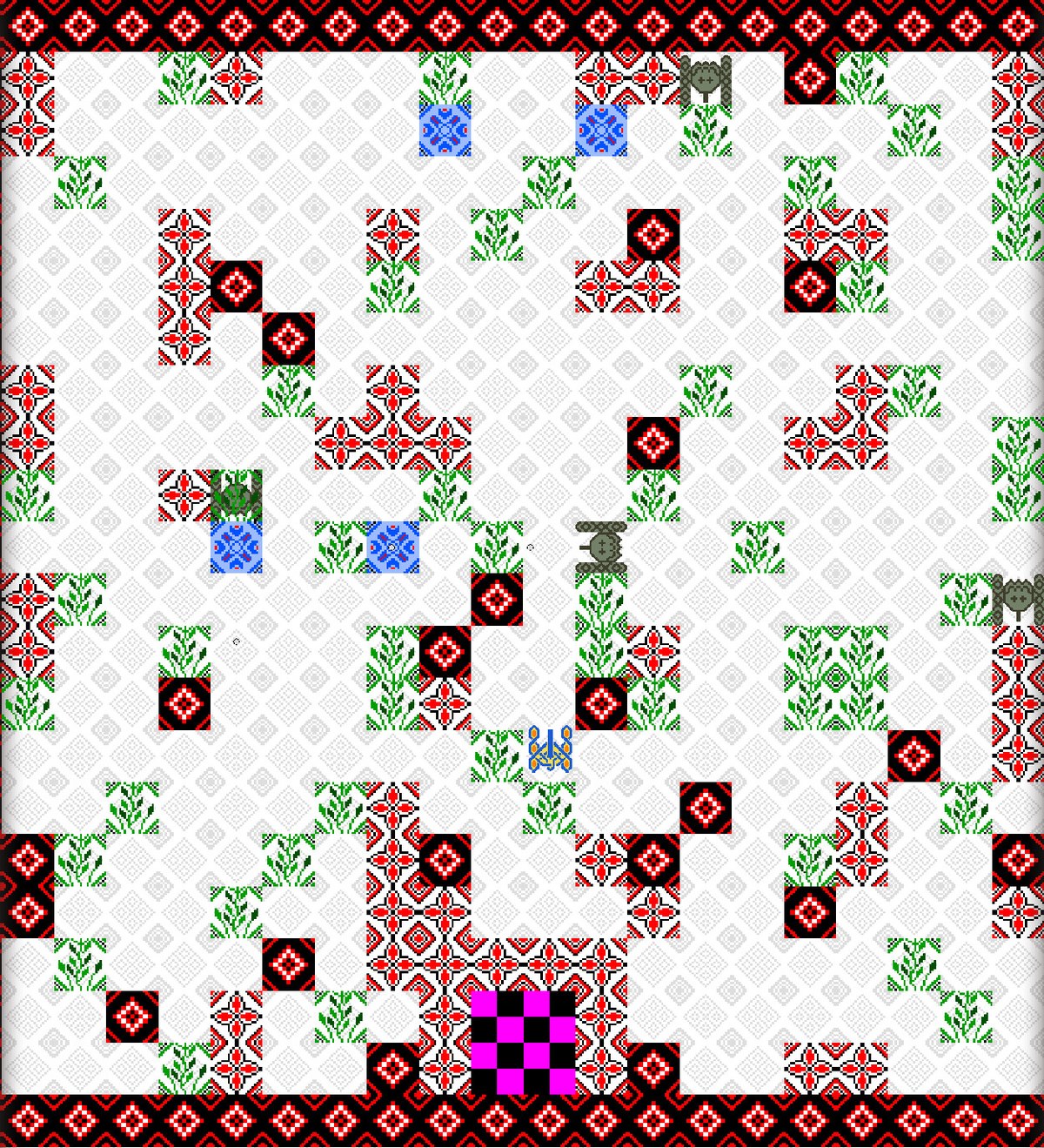
One of the early Threads of War prototypes from 2023
— «Threads of War» quite frankly talks about the Russian full-scale invasion and the liberation of Ukrainian cities from occupation. How do the gameplay decisions convey the theme of the Russian-Ukrainian war?
Andriy: Some tanks shoot at others — there is nothing unique to our war. Put random flags on the tanks — and it already looks like some other war. However, I surrounded the gameplay with a large number of images that reveal the true context of the game world.
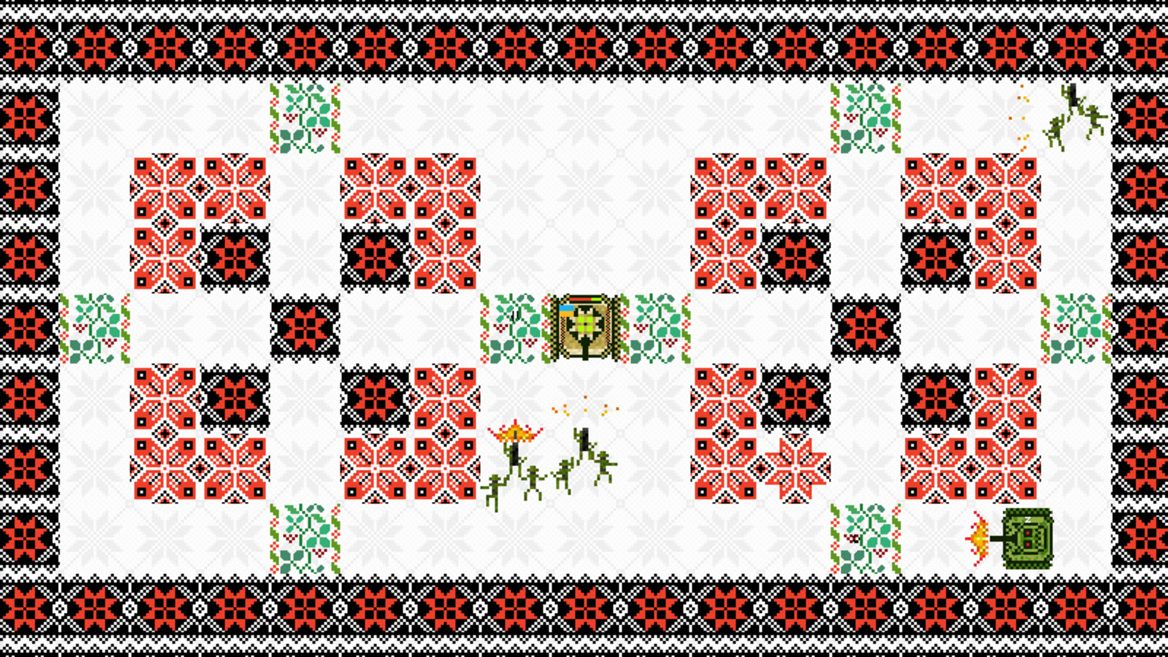
For example, on the game map we travel not between abstract locations, but specifically those Ukrainian cities that were occupied or repelled by an enemy invasion. We added several unique types of enemies that reflect modern warfare: MLRS, FPV drones, small groups of soldiers. On each enemy tank we depicted a small letter «Z». Perhaps this is a controversial decision, but I depict «headquarters» in the game as «rear» — the place and people for which we fight in the first place.
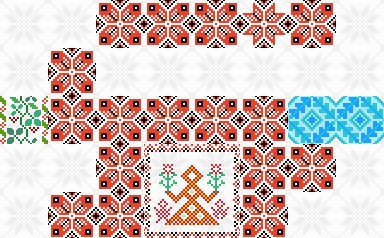
Therefore, this place looks like Berehynia with two children and flowers:
The place that players need to defend in Threads of War
However, there is something that does not directly refer to our war, but is an important theme that I wanted to convey through our game. This is that each pixel tank, which is so fun to control, symbolizes the fate of a person who lived, dreamed, raised children, loved, worked. At the beginning of the game, we show what the fate of this person was, generate a Ukrainian first and last name. If the player wins, this person becomes a war hero. And if he loses, this person is displayed in the military cemetery.
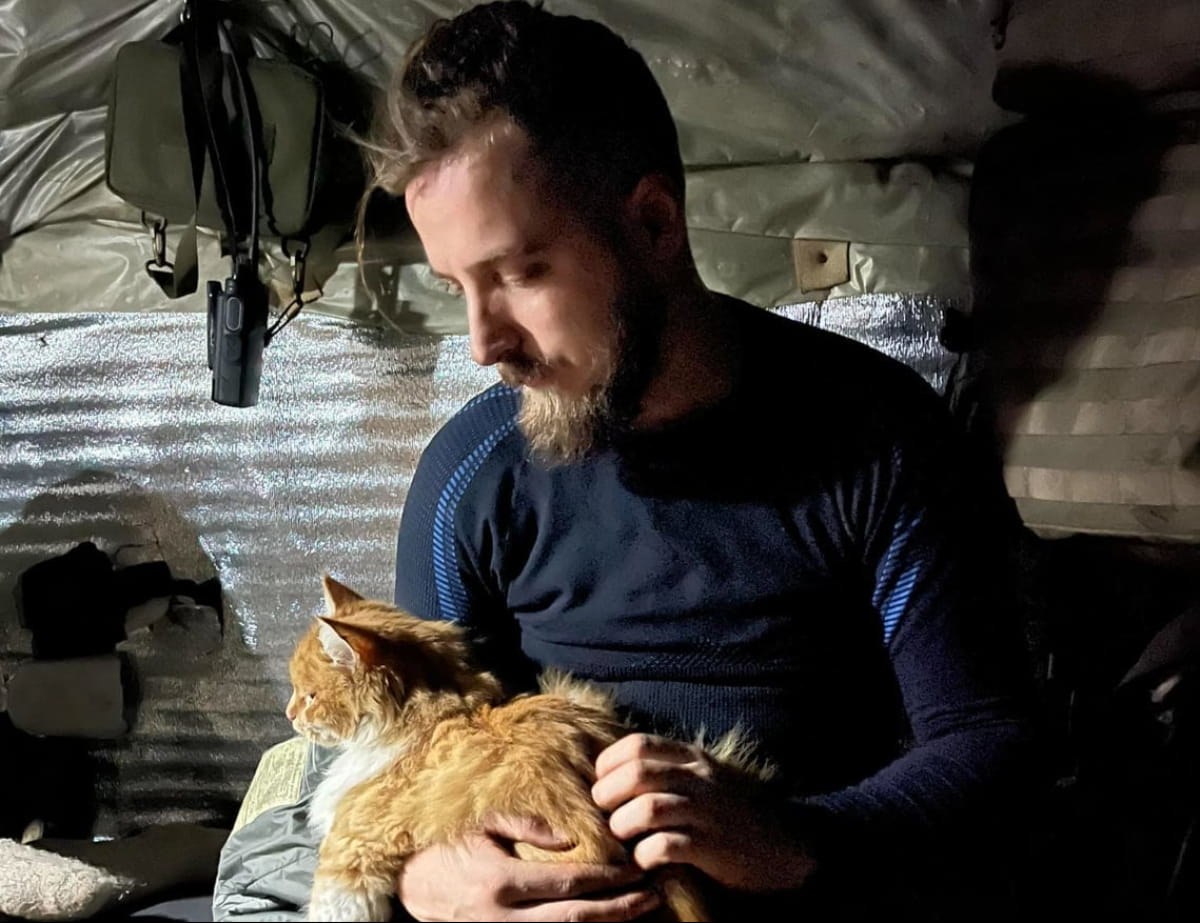
I don’t take this lightly — it’s not a joke or a joke. These mechanics are part of a single message that the game carries, which can be expressed in the words of the poet Maxim Kryvtsov, who died in the war:
When I am asked, What is war? I will answer without hesitation: Names.
Maksym Kryvtsov, a Ukrainian poet, junior sergeant in the Armed Forces of Ukraine, and his ginger cat, to whom he dedicated a poem. They died together in the Kharkiv region from Russian artillery fire.
By the way, with this game we want to thank the Armed Forces of Ukraine for allowing us to develop it. Therefore, we plan to donate 25% of the income to the needs of the army.
You are developing the game together with your son. How did Askold get involved in the project and what is he working on at Threads of War?
Askold: My dad taught me to program from the age of 5 using Scratch. Then I became interested in Python myself. I tried to make games in C++ as well, although I later returned to Python. But when I got acquainted with the free Godot engine, I started making my games only using it.
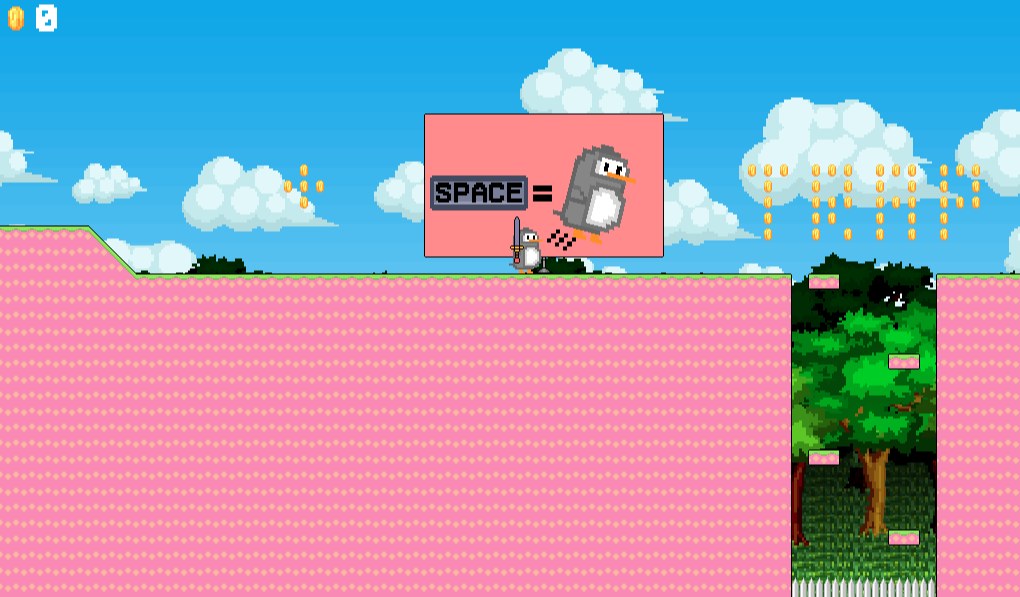
At the age of 10, I released several of my own games on itch.io: the platformer Pihona The Penguin and the online 2D shooter Pihona-Strike:
Screenshot from the game Pihona The Penguin
I bought some of the graphics on the Humble Bundle sale, and I drew some myself. That’s when I realized that it’s really hard to make games yourself.
I wanted my games to be playable for a long time and big enough to be released on Steam, so my dad and I agreed that I would code the next game and he would do the rest.
We started development right after my 11th birthday. I recently turned 13, so we’ve been making this game for 2 years now.
My dad is not a programmer, but he does understand it a little. So I wrote 100% of the code myself.
— How do you organize your workflow, do you consult on game mechanics and features? How do you implement your ideas in the game?
Andriy: We clearly divided our areas of activity: he programs, and I do everything else. My main profession is a game designer. However, I also have experience in writing works, creating music, and drawing. Therefore, I used all my skills in this game.
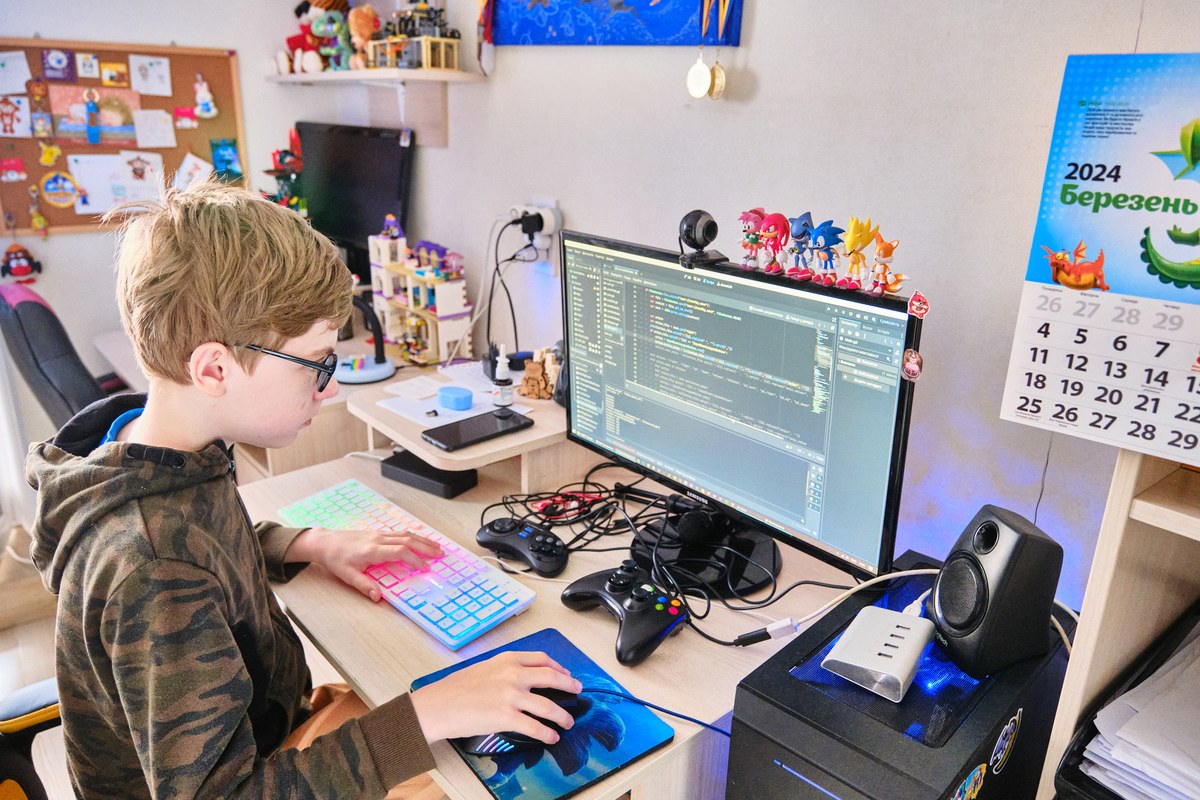
We work in our free time. I work on weekends and on weekdays for an hour or two after work. Askold works similarly: about one or two hours a day.
The process is largely structured, just like in Creoteam: there is a task tracker where I enter tasks for myself and Askold. There is documentation. So we move from task to task.
It takes a lot of discipline to work on one project for so long and bring it to a release. It’s especially difficult for a teenager who, in addition to school, also wants to play games or chat with friends. But Askold did it.
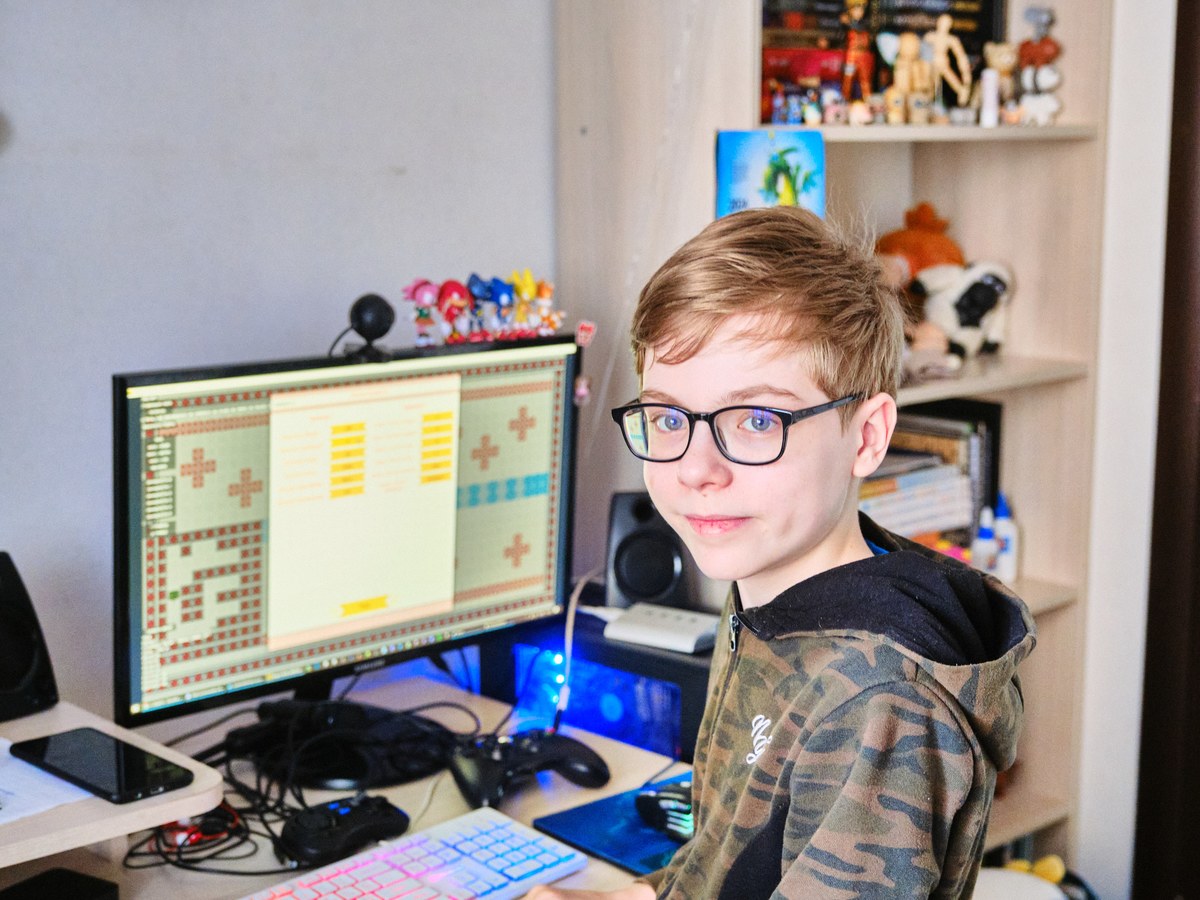
Threads of War developer Askold Kosciuszko
Askold: Although my dad comes up with all the main mechanics of the game, he always consults with me. And I can offer my ideas, many of which ended up in the game. We test the game together, discuss balance, I can criticize my dad’s ideas, and he listens to me. My dad and I play in different styles: the bonuses that he likes, I may not like — and vice versa. This allows us to look at the game from different angles and make the bonuses more balanced.
I like to add interesting little things, even if Dad didn’t fit them into the tasks. For example, I made it so that when the player picks up items in battle, they animate.
I love when games allow you to compete with others. That’s why I added a leaderboard to the game and connected it to Steam. I also experimented with some other elements that didn’t make it into the game because they were difficult to implement. For example, a daily level system, like in my favorite game Geometry Dash.
—What are Askold’s favorite games? Did he play Creoteam projects?
Askold: I love playing Geometry Dash the most. I like to improve my skills and share my achievements in the game community. I have a special device — a keypad, which has minimal input lag and the smallest error, which allows me to be more efficient in the game.
I also love Counter-Strike 2.
I didn’t play my dad’s games because I don’t like football, and Collapse is a very old game.
— How did the idea of implementing a cooperative mode in «Threads of War» come about? Were there any difficulties with adding it to the project?
Andriy: We knew from the very beginning that we would make a cooperative mode. We understood that it would not be easy, but we believed that a game in the style of Battle City could not exist without this mode.
We are proud to have made a cooperative playthrough in the style of rogue-lite. That is, two players go through level by level together, compete for what bonuses they will receive, and have a long playthrough. Moreover, the next playthrough will be different due to the random generation of levels and bonuses.
Askold: Co-op was very difficult to make. The most difficult thing was not that players fight simultaneously during the battle, but that there are several different states on the game map, during which each player chooses a bonus. It was also necessary to take into account that in co-op the same bonuses are used as in the single-player game, which could lead to certain conflicts.
— How does the experience gained from working on Collapse and Football, Tactics & Glory help you when developing Threads of War?
Andriy: With each released project, I became more experienced, better understood how game mechanics interact with each other, how to convey information to the player, etc. So, of course, my previous experience helped me a lot.
In general, strangely enough, in Threads of War I used more of my experience from Collapse: The Rage. Let me give you an example: in Collapse: The Rage I worked a lot with the «feel of combat». In Threads of War, it helped me a lot to understand that this is an important element that needs to be paid attention to. Because, for example, for turn-based games it doesn’t have such a big impact.
Askold and I spent a lot of time making sure that the control of the tank felt as comfortable as possible, while at the same time being as close in spirit to the original game. «Little things» like the logic of the tank’s turn, the speed of movement, the feeling of the bullet contacting the tank, and the overall feel of the shot — all of these elements needed a lot of attention.
— Was it difficult to combine the game mechanics from Battle City with rogue-lite elements?
Andriy: There were difficulties, but thanks to experience, I knew from the very beginning how to refine the Battle City mechanics to make it easier to combine them with rogue-lite elements.
Askold: But it was hard for me. Because it’s not enough to just program a bonus. Many elements of the game have synergies with different bonuses, which leads to interesting combinations that need to be taken into account in the code.
I often had to go back and make corrections to a bonus I had already made because it didn’t work properly with a certain combination of the player’s other bonuses. The game’s code is already very complex, and any new combination only adds to the complexity.
But I’m always very happy when I see that certain combinations of effects that I hadn’t thought of worked automatically because their code was written correctly.
— You said earlier that for the musical accompaniment you decided to take famous Ukrainian songs and rework them for the game in an 8-bit style. How many similar melodies will players hear in Threads of War? Did you enjoy working on the music for the project?
Andriy: When Askold and I started experimenting with where the music would be in the game, we realized that music was inappropriate in battle, and the player doesn’t spend much time on the game map. So we decided that there would be four tracks:
«Oh in the Meadow» symbolizes the victory over the enemies near Kyiv and in general in northern Ukraine. I called my variation «Oh in the Meadow, Tank Battle» because in the sound of the melody I tried to convey the chaos of the first days of the war and the sound of a tank.
I called «A Cossack rode for the Danube» «A Cossack rode for the Oskil,» because I dedicated this variation to the Slobozhansk counteroffensive operation. By the way, I also added «Hey, Falcons» to this melody, because, as it turned out, these songs are very similar. They probably have the same roots.
«Cossack March» dedicated to the liberation of Kherson. This melody conveys the positive mood that prevailed in Ukraine at the end of 2022.
» What a Moonlit Night» was written to convey the emotion of the beginning of the war.
I wanted the sound and music to create an atmosphere of the 8-bit era, but with a Ukrainian flavor. So I decided that, firstly, I would write the melodies the way they were written for 8-bit consoles, without using additional effects, chords, polyphony, etc. And secondly, I would add something of myself to the melodies: something that has echoes of war and my sense of melody.
I graduated from music school, wrote songs and played in a band, so I have experience in creating music. However, I never had the opportunity to use this experience in my own games. Therefore, I really enjoyed working on the melodies of Threads of War. It was interesting not only to write the music, but also to explore the history of these songs and the existing variations.
— Three localizations have been announced for «Threads of War» — Ukrainian and English look expected, but Japanese is somewhat surprising. Why did you decide to add it as well?
Andriy: I wanted to add Japanese to pay homage to the progenitor game Battle City, made in Japan.
However, I would like to translate the game into as many languages as possible. Because I want elements of Ukrainian culture to become more and more familiar to people around the world. Therefore, I hope that by the release I will have time to find volunteers to help me with the translation.
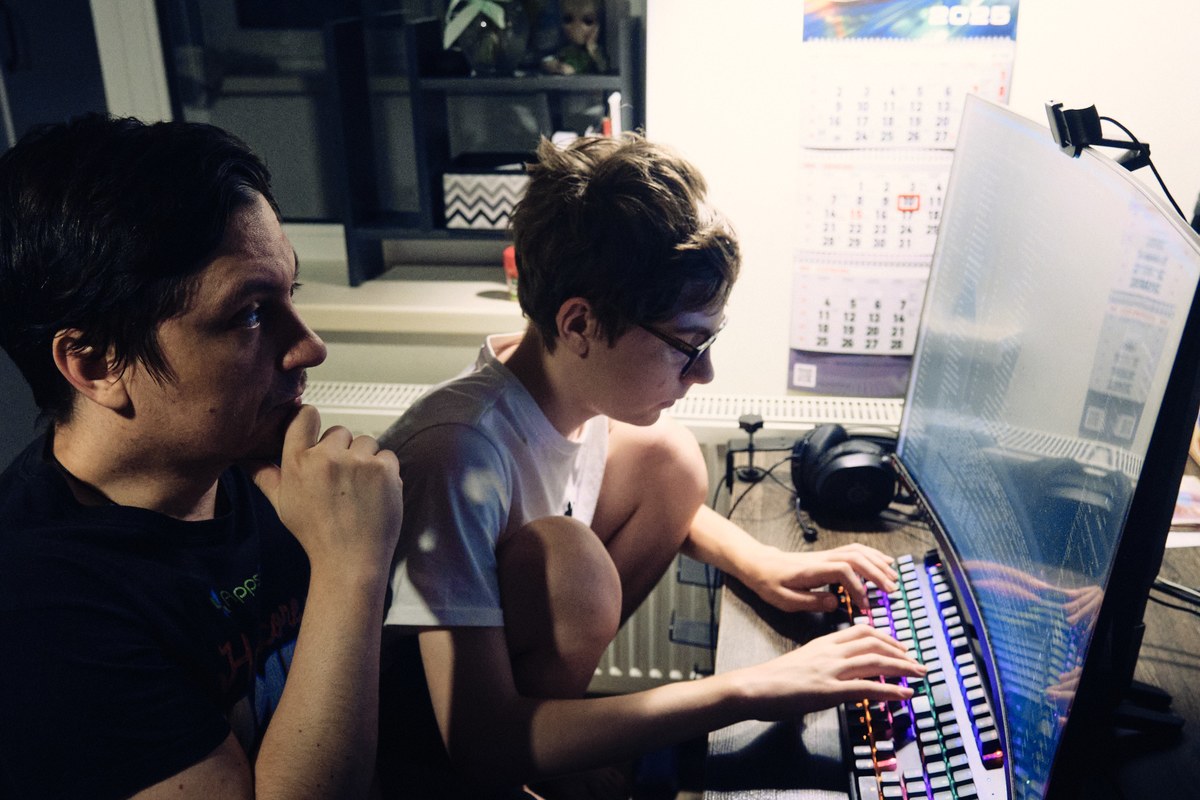
Andriy and Askold Kosciuszko during the development of Threads of War
— You wanted to release Threads of War at the end of 2024. What influenced the postponement of the release to August 2025?
Andriy: We didn’t have time to finish the game because we were working in our free time, and as it turned out, it wasn’t enough for me to prepare all the necessary content, and for Askold to program all the mechanics.
Both in Creoteam and in my work with my son, I try to avoid rework, because a temporary acceleration of work later leads to burnout. Therefore, when it turned out that we were running out of time, I decided not to rush the horses, but to continue development at our usual pace.
— Do you plan to support Threads of War with content updates after release? Could the game get an add-on or even a sequel?
Andriy: It all depends on whether the game will attract the attention of players. If we see that the game has found its audience, then of course we will continue to add something interesting to the game.
Атлас зброї: Німеччина передає захисникам чергові MARS II. Які ще РСЗВ отримала Україна від західних партнерів та як вони працюють
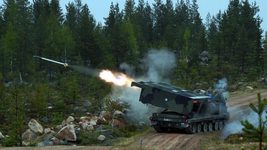
Федеральне міністерство оборони Німеччини повідомило у Twitter, що у найближчі кілька тижнів Україні будуть передані чергові системи залпового вогню MARS II.
Раніше ми розповідали про те, які РСЗВ партнери надіслали на допомогу українським воїнам. Нагадуємо про це знову.
(Текст від 26 липня)
Краса та меланхолія кінця світу. За що світ полюбив The Last of Us?
2 вересня 2022 — дата виходу ремейку The Last of Us, який отримав назву The Last of Us Part I. Доцільність випуску повного ремейку, який робили з нуля для не настільки старої гри ще стоїть під питанням. Але заслуг першоджерела він не зменшує.
Адже 2013 року The Last of Us стала справжнім одкровенням для ігрової індустрії. Один із останніх ексклюзивів для PlayStation 3 остаточно вивів студію Naughty Dog у «вищу лігу», заодно продемонструвавши всьому світу, як можна робити ігри з акцентом на наратив. І на честь релізу рімейку ми вирішили згадати оригінал, який назавжди залишив слід у ігровій індустрії.
Професії у геймдеві. Хто такий левел-дизайнер і як ним стати?
Ми продовжуємо нашу рубрику, присвячену професіям у геймдеві. Тема нового матеріалу в ній — левел-дизайн. Його вважають підвидом геймдизайну, але все-таки практично кожна студія хоче окрему людину на позицію левел-дизайнера. Адже у цій спеціальності вистачає своїх нюансів та особливостей.
Розібратися з ними всіма нам допоміг досвідчений левел-дизайнер зі студії Fractured Byte Дмитро Нестеренко. Також він веде свій блог Game Designer Notes про геймдизайн в цілому, в якому розбирає багато цікавих нюансів розробки ігор.