Ігор Вишневський Історії
15 October 2026, 09:00
2026-10-15
He made websites at 14, worked as a programmer at 16, and founded a startup in the US at 19. How a guy from Lviv region pursued his "American dream" in IT and what came of it
Can you imagine a guy who, at 14, independently creates websites for a small local business in the Lviv region, at 16, works as a programmer in the Czech Republic, and at 19, already has his own successful startup in the USA and is a judge at the HackHarvard hackathon at Harvard University?
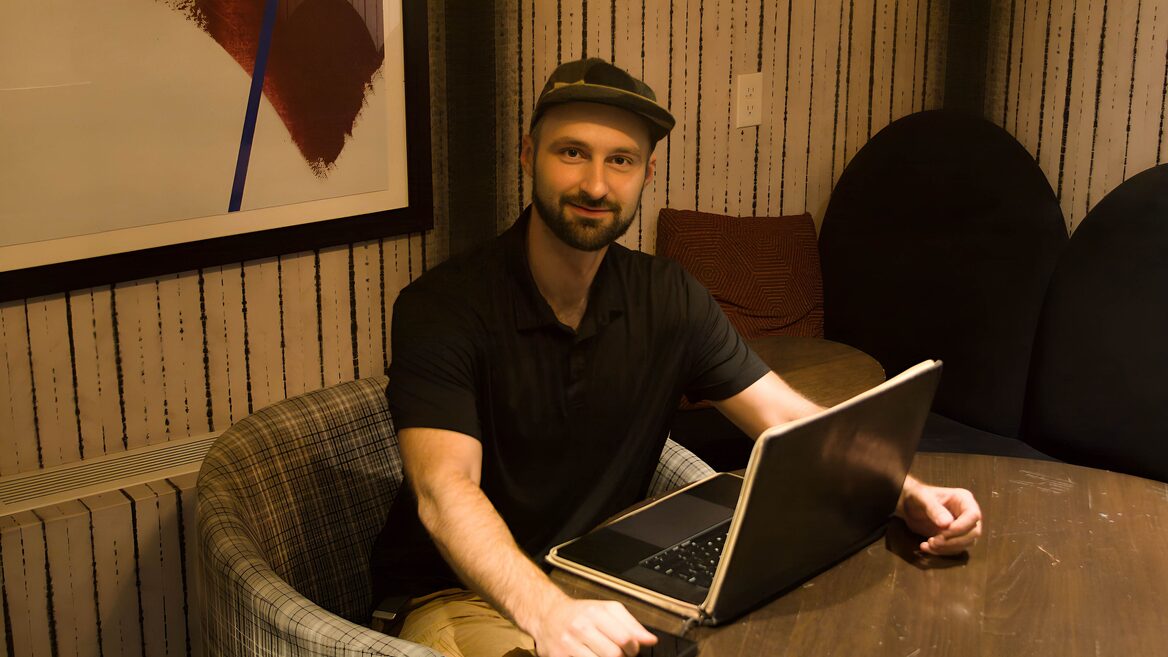
Can you imagine? And now you can meet him — this is Yuriy Tovarnytsky, who managed to go from the first laptop given to him by his parents to a successful startuper and programmer in just six young years. However, it took him a lot of effort to do this.
Can you imagine a guy who, at 14, independently creates websites for a small local business in the Lviv region, at 16, works as a programmer in the Czech Republic, and at 19, already has his own successful startup in the USA and is a judge at the HackHarvard hackathon at Harvard University?
Can you imagine? And now you can meet him — this is Yuriy Tovarnytsky, who managed to go from the first laptop given to him by his parents to a successful startuper and programmer in just six young years. However, it took him a lot of effort to do this.
dev.ua spoke with Yuriy to tell his readers his story. How he started programming as a schoolboy and looked for his first clients; how he moved with his parents to the Czech Republic and started working on commercial IT projects; and how he went towards his American dream, which seemed impossible to his parents. And also about the main thing — how he is realizing his dream now.
From the first laptop given by parents to developing websites for local businesses
According to Yuriy Tovarnytsky, at the age of 13, his parents bought him his first laptop, and, like all teenagers, he became interested in video games. But in parallel with just playing, Yuriy became interested in how it all works and works? From that moment on, he began to take a serious interest in programming, first studying general information on his own, then asking a programmer friend for advice, and even later enrolling in the IT Creator Academy in Sambir.
This and other photos in the article were provided by Yuriy Tovarnytskyi
“When I wrote my first lines of code, I was thrilled. I remember that we made something like Wikipedia back then — a prototype. It was really cool to see that I could create websites myself, which I didn’t know much about until recently, and they worked,” Yuriy recalls.
However, studying at IT courses would hardly have played its role without self-education and constant development in this area. Not everyone in his group had a passion for learning, so out of 12 teenagers, only 4 remained on the courses by the end. In parallel with this, Yuriy spent 4-6 hours a day studying programming at home, watching countless YouTube videos on this topic, while his classmates indulged in youthful entertainment. If earlier Yuriy could afford half a day to play football and volleyball with his friends (especially the latter), then with his passion for programming, the amount of time spent with friends steadily decreased.
“I don’t know why it was like that. All teenagers my age played in the yard, and for me the biggest thrill was to create something. My first independent project was monobank. Well, as a monobank, I tried to make a similar prototype of online banking, where you can make transactions and transfer money from one bank to another,” Yuriy Tovarnytsky told dev.ua.
The guy quickly realized that what he was doing could be useful and had commercial value. So he simply started going around to local businesses in Stary Sambir — pizzerias, clinics, stores — and offering them to create a website or improve an existing one.
“The websites of our various local pizzerias were either very bad or nonexistent. So I would leave home, take public transportation to various pizzerias and shops, and try to offer them my services to improve their websites,” he shared.
Such a pitch usually failed, as most small business owners did not believe in the teenager’s technological capabilities or simply believed that they did not need it.
“At first, nothing worked out and I was very discouraged. I was small, they didn’t believe me, and the first 10 potential clients simply refused. But later I changed my messaging and started joking about my age. People were amused and interested, they said: “Let’s talk, show us what you’ve done.” That’s how we managed to create the first website for a local clinic,” Yuriy Tovarnytsky recalled.
After that, Yuriy switched to finding clients on Instagram, offering his services to businesses and various organizations.
“I started writing cold texts to various organizations on Instagram, and that’s how I got in touch with Green Shelter. This is a volunteer organization, they have their own dog shelter. And they wanted to make a website to collect donations. I also participated in the development of the website of the IT Creator Academy — my IT academy, but I didn’t do it alone, but together with a mentor. So these were my first projects,” the IT guy said. In addition, among the young programmer’s other projects was the redesign of the website of the Yantarne FM radio station from Novoyavorivsk.
First commercial experience in IT
With the outbreak of full-scale war, Yuriy’s family moved to the Czech Republic, and he began adapting to the new country, not giving up active attempts to make himself known. He got this opportunity at one of the hackathons, which involved participating in a government project to redesign a website for obtaining local citizenship.
“It was a fairly large, prestigious hackathon, to which the CEOs of the best Internet agencies from Prague and other cities were invited. There were eight teams, and we won first place. After this event, I received several offers from these agencies. I showed them my portfolio, and we started working together,” Yuriy recalls the moment when he moved from his first occasional freelance projects in Ukraine to a full-time job in IT.
According to Yuriy, it was in the Czech Republic that he gained the most commercial experience, starting to work with the Feedyou agency, which implements AI solutions for business.
“The CEO gave me a lot of tasks. There was a moment when he said, Yuriy, we can have a project for 500,000 crowns. If you make this AI agent well, we have a contract, and if it’s bad, we don’t have a contract. Can you do it?”, the IT worker recounted a conversation with his then-manager. Overcoming his fear, he took on this task, even though the deadline was very short and the responsibility was great. “I slept very little then to do all this,” Yuriy adds.
Tovarnytskyi calls his collaboration with another agency, Highlight, which provided communication, PR, and design services for top clients in the US, including Airbnb, Western Union, and other major brands, a turning point.
At Highlight, Yuriy served as a Design Engineer and created several internal software solutions for the company, as well as working with external clients.
“Their teams had 6 different software, and I made them a portal where they could do it all with the help of artificial intelligence in one place — mockups, posters, logos, etc.,” says the Ukrainian IT professional.
However, after some time, working for a third-party agency and being clearly subordinated as an employee began to demotivate Yuriy — he began to dream of his own startup, where he would have complete freedom of action and be able to develop his product.
“Over time, I realized that working in agencies, of course, gave me the opportunity to gain experience, but it’s not what I would have dreamed of doing. You don’t have enough freedom, you carry out tasks assigned by management or the client — and that’s normal, because the client is always right. But those who are senior in title always promote their own ideas, and your opinion is not always taken into account, even if it is more progressive,” Tovarnytskyi said.
First unrealized ideas
While living in the Czech Republic, Yuriy had already worked for a while as a Design Engineer at the TaskGrip startup, but he was motivated to implement one of his own ideas.
“I really enjoyed working at TaskGrip — I liked this startup culture and the great impact it had on people. So later I started studying the history of Uber, Apple, Spotify and said to myself: "That’s it, I want to start my own startup," the IT guy said.
According to the young startuper, his first few ideas were never fully implemented, although one of them is still in development, but without his participation — it is being developed by Czech co-founders.
Yuriy’s first unrealized startup was a system for dormitories, which was designed to control various operational processes of their business activities, and through which it would be possible to collect payments from students.
One of the directors of such a hostel was even interested in this project and was ready to implement it, but Yuriy considered that the market for such a product in the Czech Republic would be too small, so he did not pursue the implementation of this idea to the end.
“Firstly, there was already competition with another product. Secondly, some hostels simply said that we didn’t need this. And, thirdly, even if we imagine that we would have received 70% of this market in the Czech Republic, the market there was still too small to continue this business,” Yuriy shared the story of the failed startup.
Another unfulfilled idea of the startup was “Airbnb for Footballers,” which would connect professional football players and clubs, and the next “big thing” was a marketplace that could connect creators and different brands to fulfill advertising orders. Another project involved selling videos online, and it is still “staying afloat,” but it is being developed by Czech co-founders.
“I didn’t start it myself, there were two other co-founders. There is a Patreon platform, and you buy a subscription there. We realized that many people don’t want to buy a subscription, but would like to watch one video from a creator, paying not $20, but, conditionally, $1. Our solution solves this problem, but I left this project, it is continued by the Czech co-founders,” the startuper noted.
As Yuriy Tovarnytskyi says, at some point he began thinking about moving to the “mecca of all startups” — the USA.
“I asked myself where the best place for startups was. The Czech Republic was too small when it came to Capital Allocation and development opportunities. I realized that I wanted to be in a country where these opportunities were much greater. America was the best fit for this, so I decided to enter an American university,” says the IT guy. However, to do this, I had to overcome several significant obstacles — find money, master English, and convince my parents, who thought the idea was too fantastic.
The first steps towards the American dream
According to Yuri, tuition prices at American universities start at $50,000-100,000, so his parents were not enthusiastic about his idea.
"When I told my parents this, they didn’t believe me. I remember even crying. They didn’t have that kind of money, so they tried to prove that it was impossible," Tovarnytsky recalled.
In the end, his parents did not object to their son at least trying to enter the US, although they still did not take it completely seriously. Instead, Yuriy already faced barriers in learning English, the level of which did not meet the requirements.
“I prepared for the exams myself, ordered a 1,000-page book to prepare for the SAT exam. I spent about three or four hours a day on it, and accordingly, there was less time left for programming. After the SAT, I started preparing for the IELTS exam. My parents didn’t take it seriously until I asked my mom to find me an IELTS tutor,” the guy shared.
Since Yuri needed a C1 level certificate, and at the time of starting classes with a tutor, he estimated his level at A2, the task seemed unrealistic to many, because there was not much time left before the exams.
“I realized that I needed to speed up, and all summer I spent about 10 hours just studying English. I was already dreaming about it, and it was terrible,” says the IT guy.
At the same time, Yuriy failed the first test, not gaining the required number of points. “It was almost the end of the world, but I understood that I still had a month to change something, and I started to prepare even more. At that time, I had B1, and I had to jump up two levels at once,” adds the IT specialist. In the end, Yuriy managed to gain the minimum passing score required for admission to the university.
Further activities were not so stressful, but still required a lot of involvement and effort: collecting documents and recommendations, writing essays, and a lot of research.
Yuriy says that the issue of funding for his studies was partially resolved due to the fact that he had already managed to earn something, and the main financial support was the scholarship provided by the university.
“They already wanted me, and they gave me a good scholarship. That helped a lot,” says the student at DePaul University in Chicago. Yuriy is a sophomore at this institution, majoring in two programs at once: computer science and economics.
“Everything is very flexible here, and I really like their mindset — everyone strives for success and wants to achieve something,” the guy says.
First acquaintance with America
After the first months of getting to know the university and the new country, Yuriy, of course, returned to participating in numerous hackathons and programming competitions.
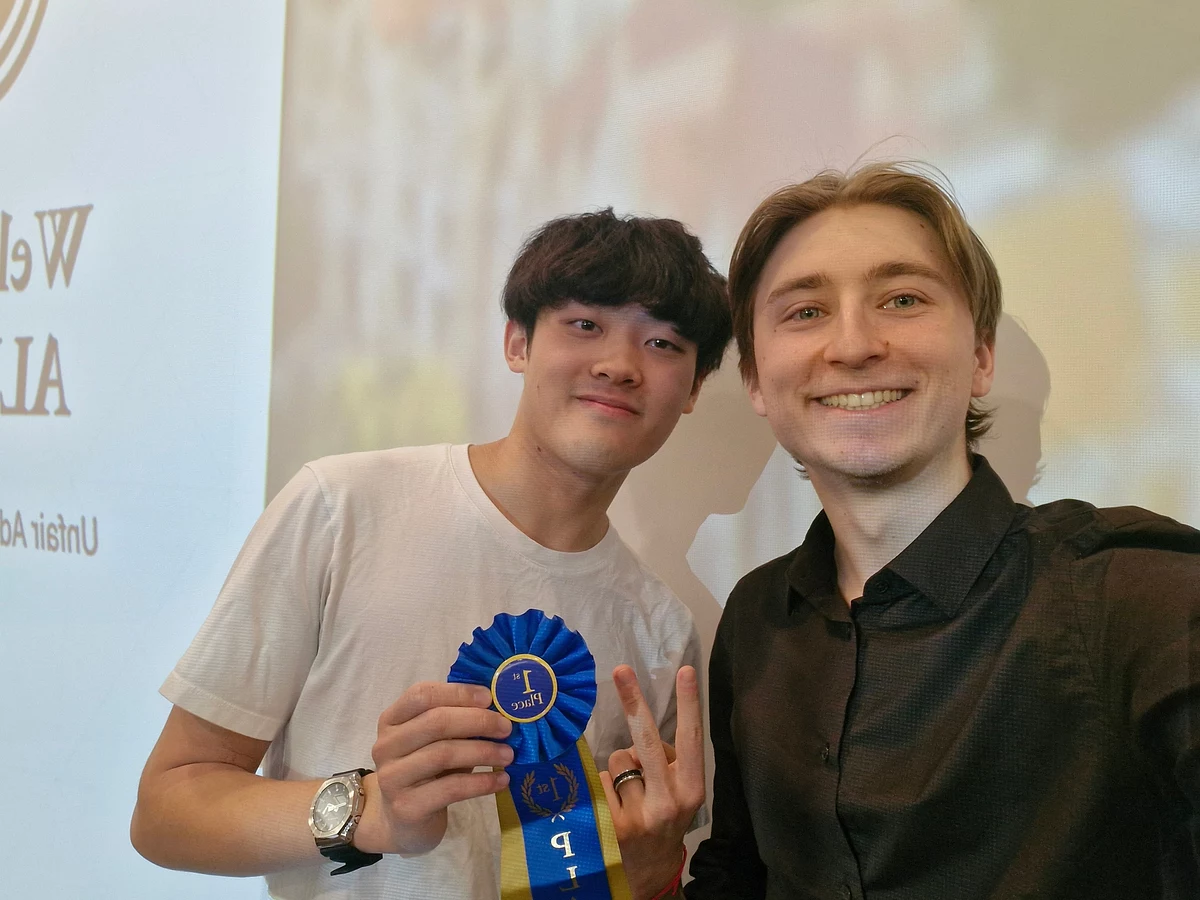
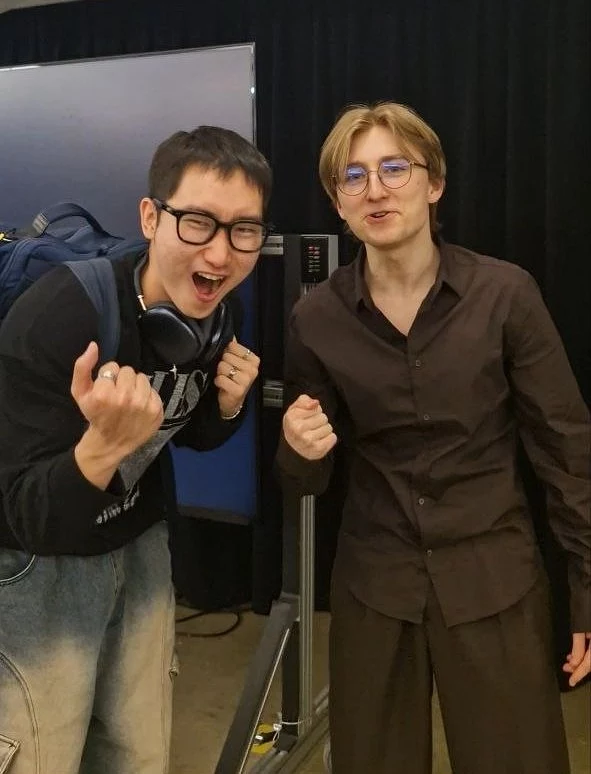
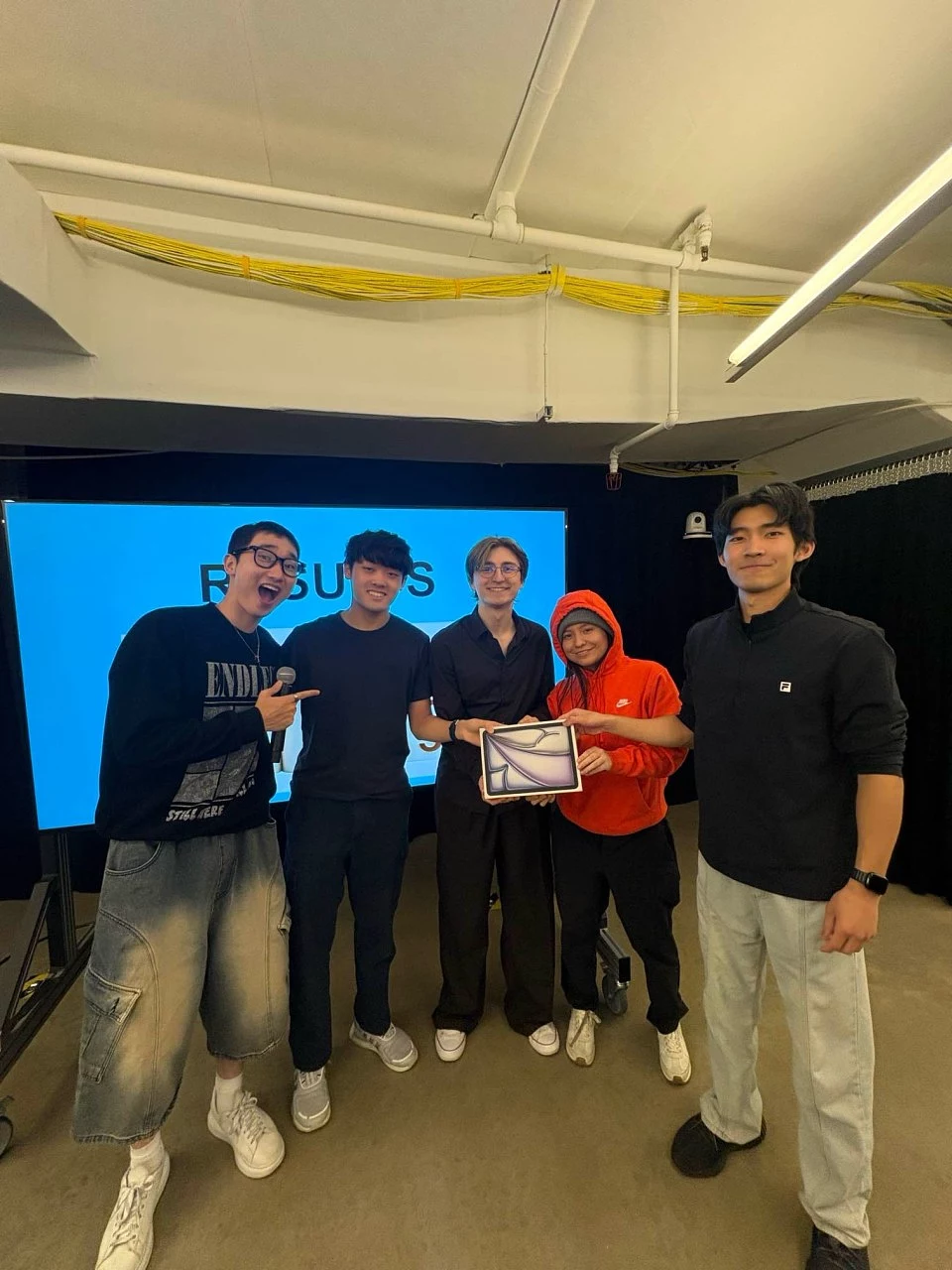
“Later, I started going to various hackathons, because there were much fewer such opportunities in the Czech Republic. My team and I won first place at a hackathon at Brown University, and later at another university in Chicago. At such events, you meet people who study in New York, Los Angeles, San Francisco, and they work with you in a team. Just yesterday you didn’t know them, and today you win first place with them. It’s a really cool feeling,” Yuriy shared.
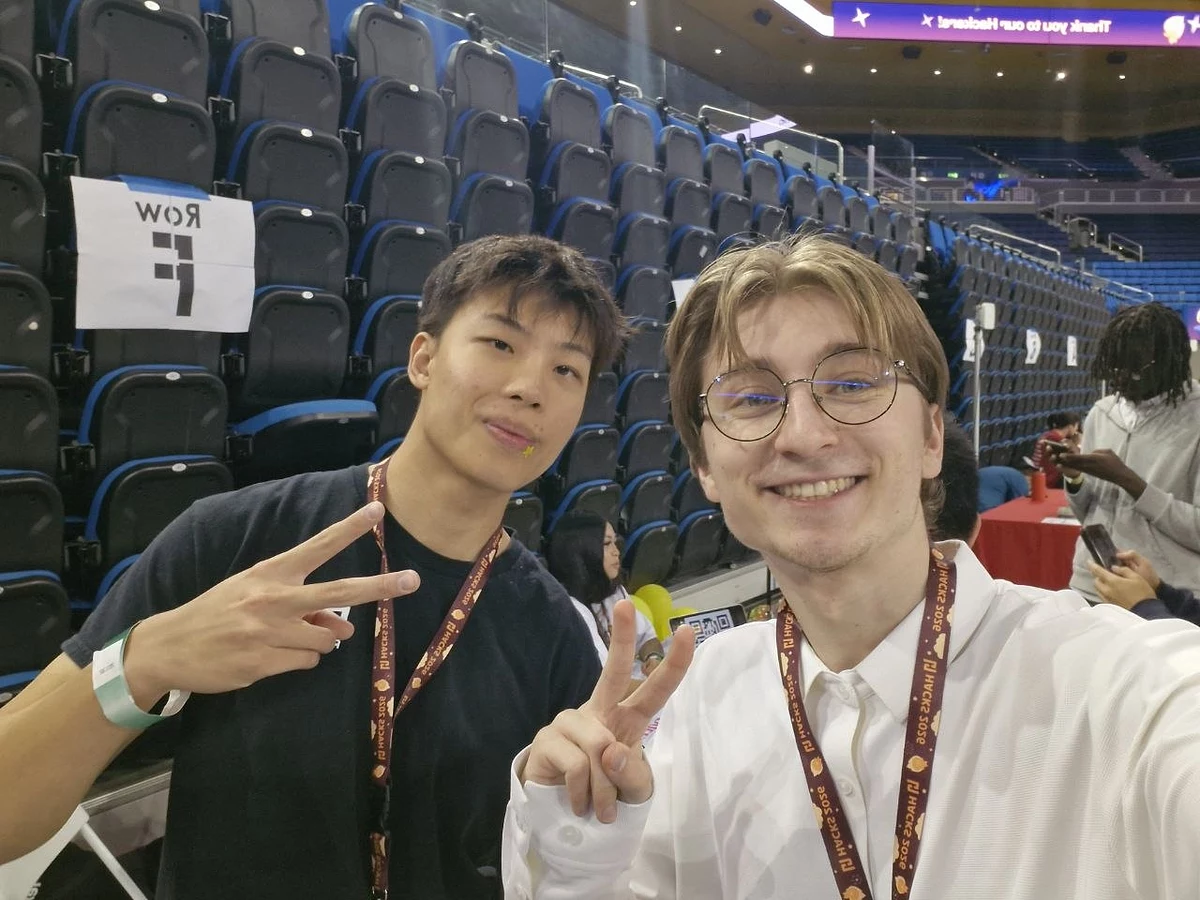
The next step for the young IT startup guy was not just participating in hackathons, but being on their jury as a judge. Of course, at the beginning he was met with several rejections, but in the end it worked. In October of this year, Yuri was invited to be on the jury of the prestigious HackHarvard at Harvard University, and as of now he has already been a judge and mentor at several major US student hackathons: HackIllinois at UIUC, WildHacks at Northwestern, and LA Hacks at UCLA.
Yuriy managed to make the leap from a participant in prestigious hackathons to a member of their jury thanks to having over 20 projects on his CV and working with well-known brands at the Highlight studio. He also started this path with more local events, gradually raising their level.
“For the first time, I judged a more local hackathon at Northwestern. The university itself is very prestigious, but the requirements there are not so high, and it was easier to get judging roles. After that, it was much easier to apply for other competitions, because I already had this experience,” explained Yuriy Tovarnytsky.
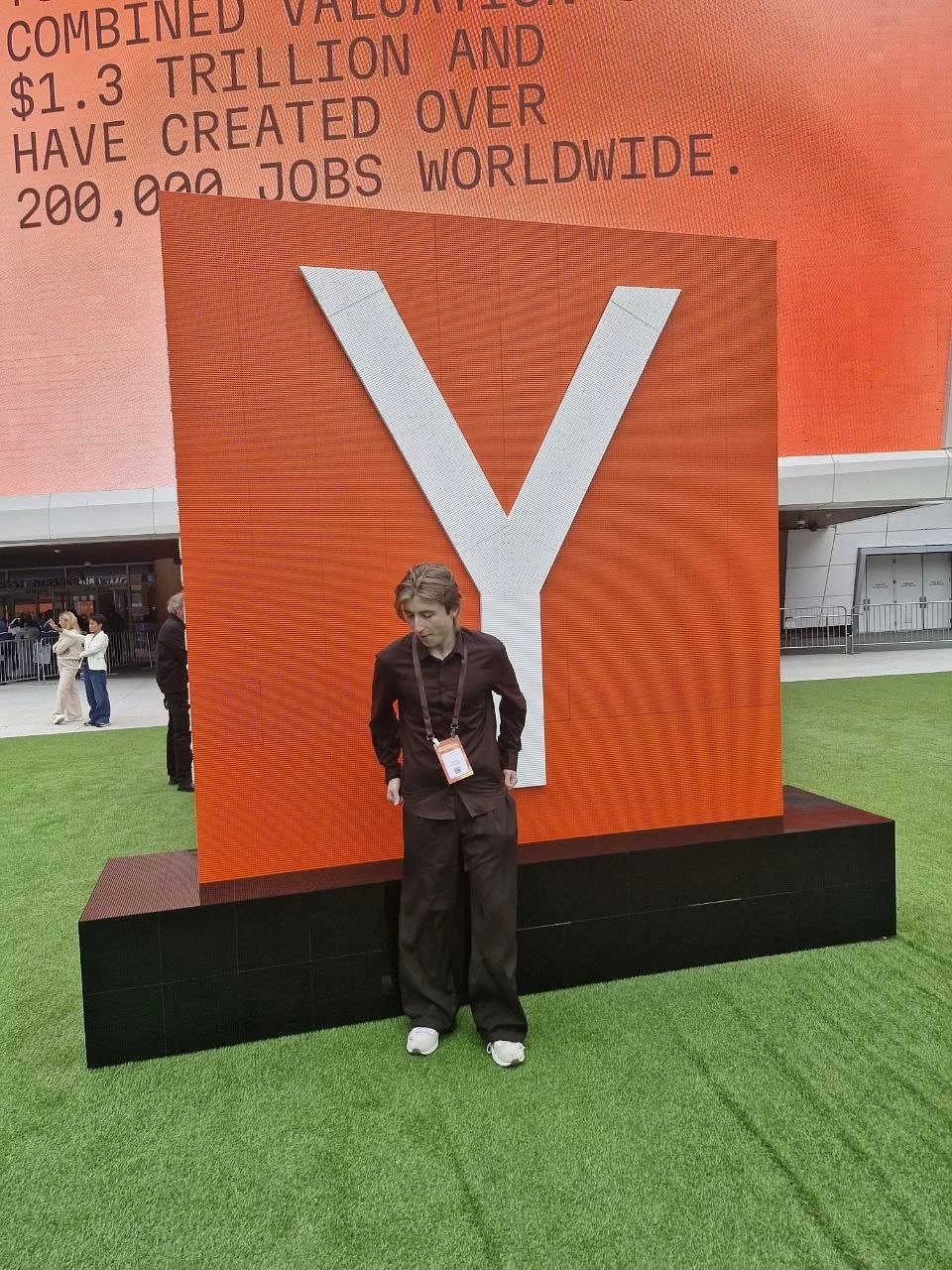
Instead, HackHarvard, where Yuriy will soon be a judge, is one of the largest events of its kind. Every year, more than 500 participants from dozens of universities in different countries take part in the hackathon.
First pivot
After moving to America, despite all the endless possibilities, Yuriy somehow felt like a 14-year-old teenager again, trying to “sell a website” to a pizzeria owner. Only this time, as a startup owner looking for the first customers for his product. The scale is different, of course, but the feelings are the same. This time, Yuriy and his co-founder also had to use all their ingenuity. Together, they launched Aximon, an AI platform for analyzing commercial real estate transactions. One of their clients is a company with a portfolio of $116 million. However, not everything along the way was cloudless.
“It was a slightly similar format, but also a bit different,” Yuriy compares the current self to the guy who was just starting to get interested in programming and knocked on the doors of various companies with his “commercial proposals.”
Before launching a commercial real estate solution, Yuriy applied to the Antler accelerator in San Francisco with a completely different idea. He created an AI mentor that teaches people how to program step by step from scratch.
“It was a volunteer project that didn’t give me anything, but I was very passionate about learning and created an agent that teaches programming to people who have no skills in this profession at all. He shows you the first lesson, writes the code, and you repeat after him. So step by step, there are a lot of levels,” the IT guy said.
According to the programmer, this solution developed by Yuriy had already had almost 2,000 downloads, so he decided to apply with it to the prestigious Antler accelerator, which selects only 2% of applications. “I was accepted, and I went to San Francisco. But there I pivoted to RealEstate, because I found a co-founder and everything in general was changing very quickly,” the startuper shared.
Yuriy abandoned the initial idea of creating an AI tutor for programming, because he feels that in the current conditions his idea may be unviable: people who write prompts in an AI chatbot will be much more productive than those who write code themselves, and there is nothing you can do about it.
“If I can already see that the business will die in six months, it’s better to kill it myself and start something else. It’s like sending a person to a math tournament who calculates everything in his head, and I have a calculator with me. Everyone thinks — why calculate everything in his head if I have a calculator? This is a similar example,” the co-founder of the Aximon startup expressed his opinion.
The first success of a startup
As Yuriy Tovarnytskyi said, there were several prerequisites for launching a startup in the commercial real estate sector. The first is a certain experience of both Yuriy and his co-founder: the latter has previously invested in real estate and understands the market, and Yuriy previously worked on a software product for a company that worked in this field.
The second and main reason, he says, is the demand from the market, which does not have modern solutions for real estate valuation, and information is usually processed manually in Excel.
“We realized that it was worth continuing this idea when literally in the first week dozens of different people in real estate called us and talked it over with them. It is very difficult to find good real estate that will bring you money. It is also very difficult to analyze it, and companies spend 30-40 hours on one object, because it is manual work in Excel. We realized that with AI everything can be done in 10-20 minutes,” says Yuriy.
Startups have already tried to “sell” the product even before its creation, in order to assess the market’s willingness to pay for this solution. “We didn’t have a product, but we wanted to first test whether people would pay for what we were planning to do. Later, we realized that more and more people wanted to meet us and see the product. So we decided that we had to do something, because we weren’t going to sell them “water,” the startuper described the beginning of work on Aximon.
The Aximon solution takes into account a number of parameters that need to be considered when valuing commercial real estate.
“When a broker sends an offer for real estate via e-mail, there are up to ten different files in different formats — PDF, Excel, etc. These files contain statistics, some PDFs can have 30-40 pages. Buildings that have, for example, hundreds of units — individual apartments — pose particular difficulties. Because you need to show how many people live there, how much they pay, and how much this building earns so that the company can invest in this real estate,” the developer noted.
With the help of AI solutions, startups have simplified this process to automatically calculate a number of indicators. However, making does not mean selling. Along the way, young startups also sometimes had to resort to tricks.
“Emails don’t work, so we had to call company executives and pretend that we knew them and had met at some event. Sometimes it worked, sometimes it didn’t, but we could get about 5-10 minutes,” says Yuriy.
An even more sophisticated and extreme way to get into a conversation with potential customers and present your product is to pretend to be a delivery person from DoorDash (the most popular delivery service in the US — Ed.) to infiltrate an office.
“We found the offices of major companies in San Francisco, bought donuts, went through Security and said we were from DoorDash. We went into the office of the conditional John and admitted that we were not really from DoorDash, but we had a really cool product. And donuts too,” Yuri jokes.
Of course, such a trick worthy of an American blockbuster movie didn’t really work very often, but some company executives would at least let them show a demo, so the effort wasn’t in vain. However, Yuri did manage to find a large client with a $50,000 contract through a cold message on LinkedIn.
Yuriy gives advice to young Ukrainians who are trying to find themselves in the tech sector — it is important to believe in yourself and be able to set the right goal. And also — to build a system that will help achieve this goal. He tries to keep close ties with Ukraine, friends and relatives, and also joined volunteer IT projects, the purpose of which was to support Ukraine in the war with Russia.
“I resigned from an American company for the sake of a Ukrainian miltech project.” The story of a KPI graduate who saved an American healthtech startup from collapse, created a mini-competitor to Netflix, and is now preparing an AI defense system against Russian FPV
Made in Ukraine, delivered to the USA. Ukrainians launch a network of golf simulators in the States. Will the new product of the startup Remo succeed in conquering the huge American market?
“A strong engineer doesn’t ask if it’s possible. He asks how long it will take.” The story of an IT guy from Chernihiv region who builds products for a Silicon Valley company and heads the engineering of an American startup