Марія БровінськаStartup
9 October 2026, 15:05
2026-10-09
A Ukrainian developer created an application for monitoring home solar stations - 100+ stations and own hubs on ESP32 have already been connected
Development engineer Ivan Ursul, who has almost 15 years of experience and recently defended his PhD in Computer Science, told dev.ua about Svitgrid. This is an application for monitoring and controlling home solar power plants, which he develops himself. The project began as a pet-project, and now, according to the author, it already works on more than a hundred stations in Ukraine and several abroad (a map of stations can be viewed on the service’s website).
Development engineer Ivan Ursul, who has almost 15 years of experience and recently defended his PhD in Computer Science, told dev.ua about Svitgrid. This is an application for monitoring and controlling home solar power plants, which he develops himself. The project began as a pet-project, and now, according to the author, it already works on more than a hundred stations in Ukraine and several abroad (a map of stations can be viewed on the service’s website).
Why is this needed?
The idea came from the desire to make a better product than the one already on the market. Ivan himself has a Deye hybrid inverter, batteries and panels, and the "proprietary" application did not suit him: inconvenient settings, long loading of schedules and difficult transfer of access to the family. In his opinion, existing solutions such as Solarman, SolarAssistant or Home Assistant did not cover all needs either.
Ivan emphasizes that he did not invent anything radically new: he took an existing concept, improved it, and adapted it to Ukrainian realities. Among such adaptations are information about outage schedules for all regions of Ukraine and the logic of preserving battery charge during outages.
What the application can do
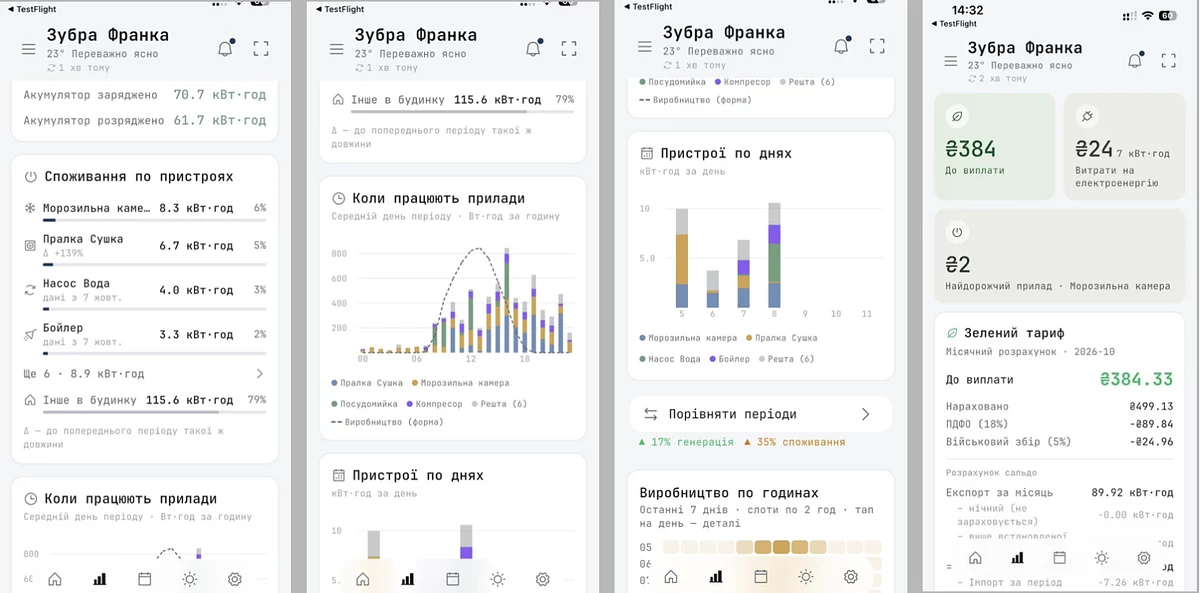
Svitgrid works on iOS, Android and the web. Deye hybrid inverters and their "relatives" (Sunsynk, Sol-Ark) are supported, as well as Victron via Modbus TCP — a total of 15+ models. Features include:
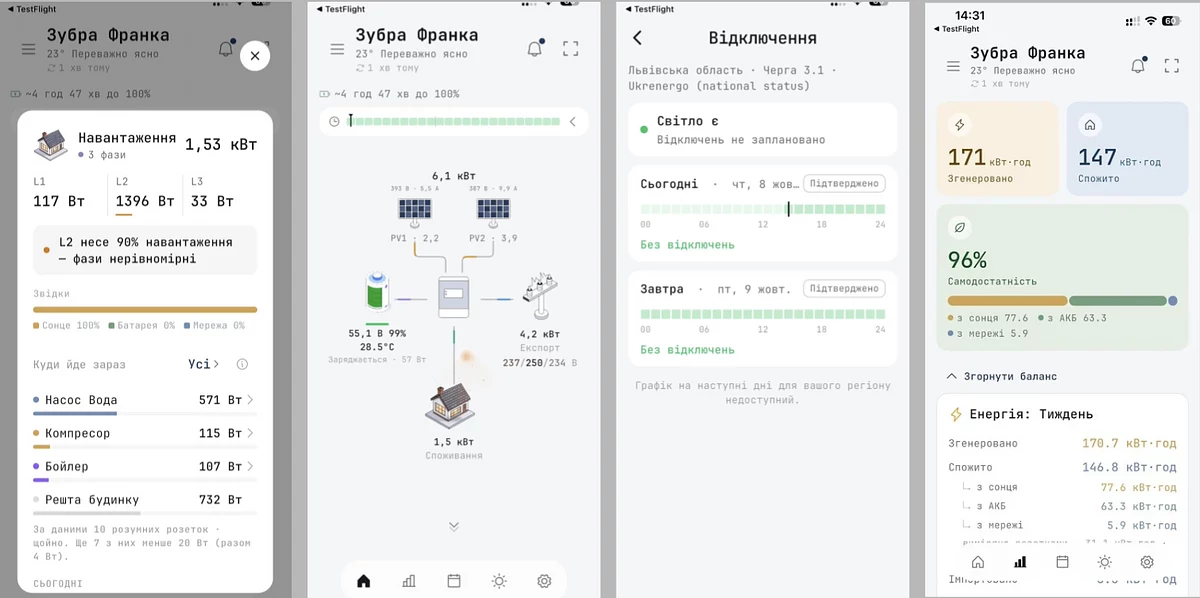
real-time graphs and energy flow diagram (panels, battery, house, grid);
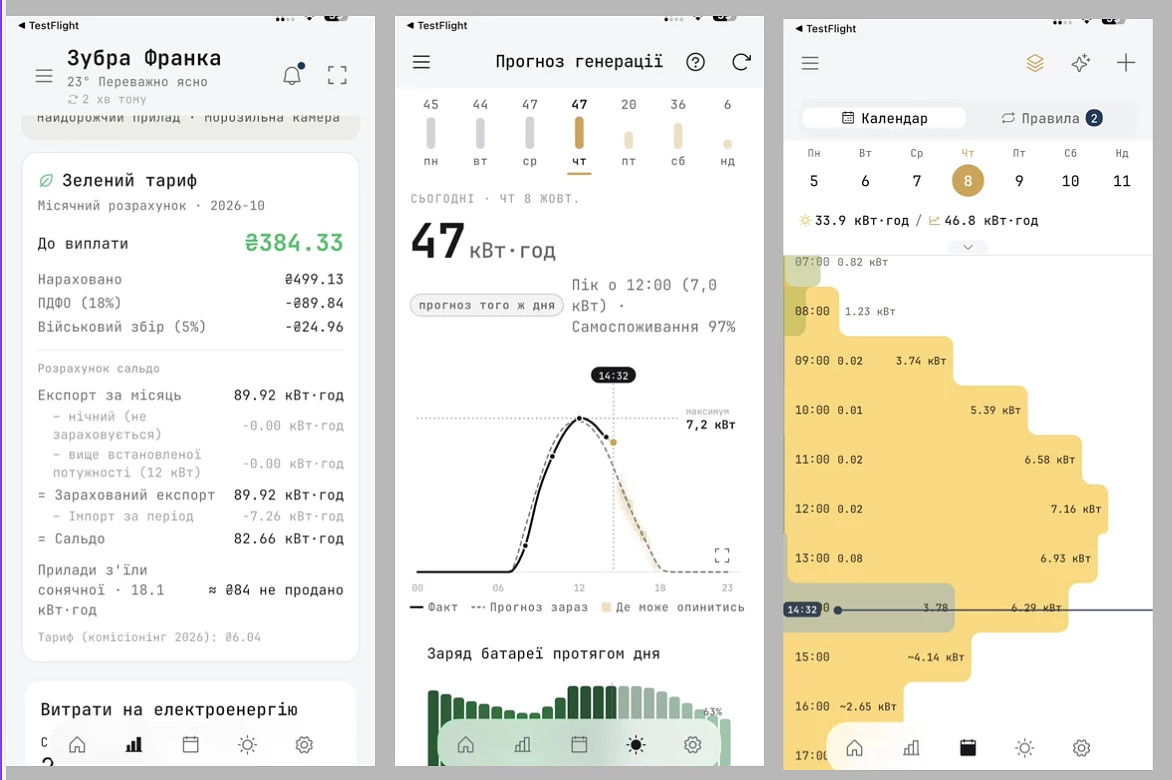
generation forecast taking into account weather and panel parameters;
calculation of payments under the green tariff, support for RDN at the level of active consumers and regular tariffs for the population;
control of Zigbee smart sockets in combination with station data: the user sees current consumption and can turn off unnecessary ones to save charge;
a calendar where you can schedule an action;
support for charging for electric vehicles;
multiple users with differentiated access rights.
The author also emphasizes the security model: each inverter command is signed with the user’s private key, which does not leave their device, so even the author of the service cannot remotely switch someone else’s inverter.
Two connection methods and custom hubs
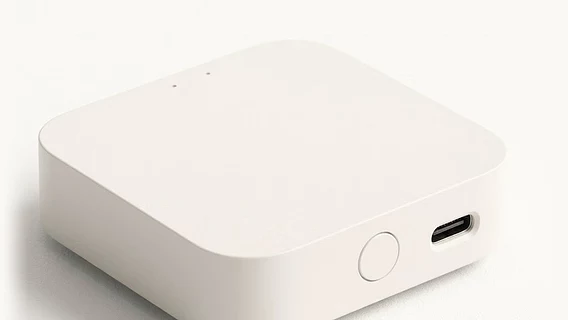
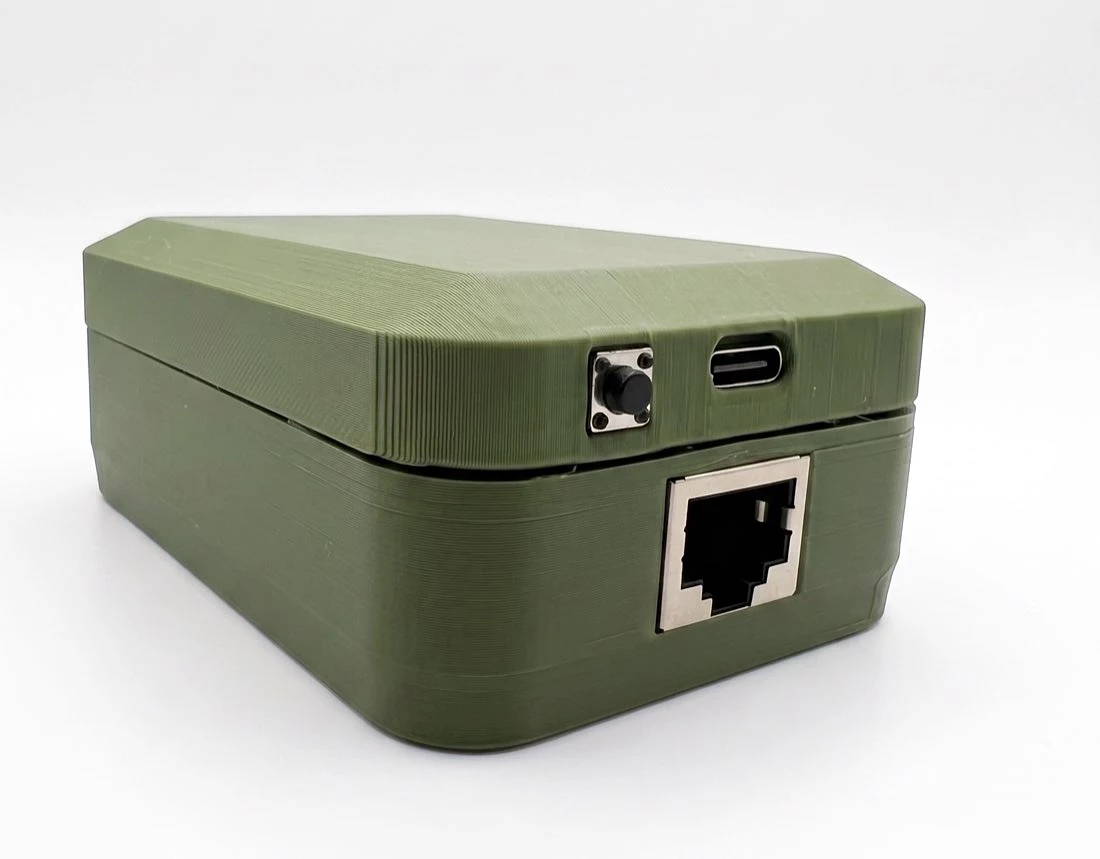
Data from the inverter can be collected in two ways. The first is Mobile Harvester: a phone in the home Wi-Fi network polls the inverter itself, without additional equipment. Ivan admits that this is more of a "crutch" for getting acquainted with the product, because mobile OSes aggressively terminate background processes and gaps appear in the graphs. The second is an edge device on ESP32-S3, which works 24/7 independently of the phone, buffers data for up to ~3 hours in the absence of the Internet and is updated over the air (OTA) with automatic rollback in case of unsuccessful firmware.
The developer currently assembles and sells such hubs himself in small batches — they connect to the inverter, and control is done through them. In parallel, he is preparing a full-fledged printed circuit board for the next, "ship-ready" version.
Solo development in the AI era
Ivan works on Svitgrid himself, and finds this topic instructive: solo development is becoming more and more common, and AI allows one person to do what previously required a team. The project stack includes: Flutter and Riverpod for the mobile application, TypeScript and Fastify for the API, Cloud Run, Firestore and Cloud Functions on GCP, and ESP-IDF for firmware.
The author estimates that the development cost up to 10 thousand, not including his own time. If you take into account time, the amount, according to him, will be from 100 thousand and above, but he definitely did not count.
Monetization and plans
Currently, the application is available without advertising, and subscriptions are being launched. The monetization model, Ivan admits, has not yet been worked out: first the plan is to launch subscriptions and break even, and only then think through the economy in more detail. The subscription, according to him, is needed to maintain the infrastructure, firmware updates, and support new inverters.
The plans include access to condominiums (in particular, to automate charging of electric vehicles in homes), work with the RDN market and aggregators, integration with Home Assistant, load management via Zigbee, and support for Huawei, Solis, and Growatt inverters.
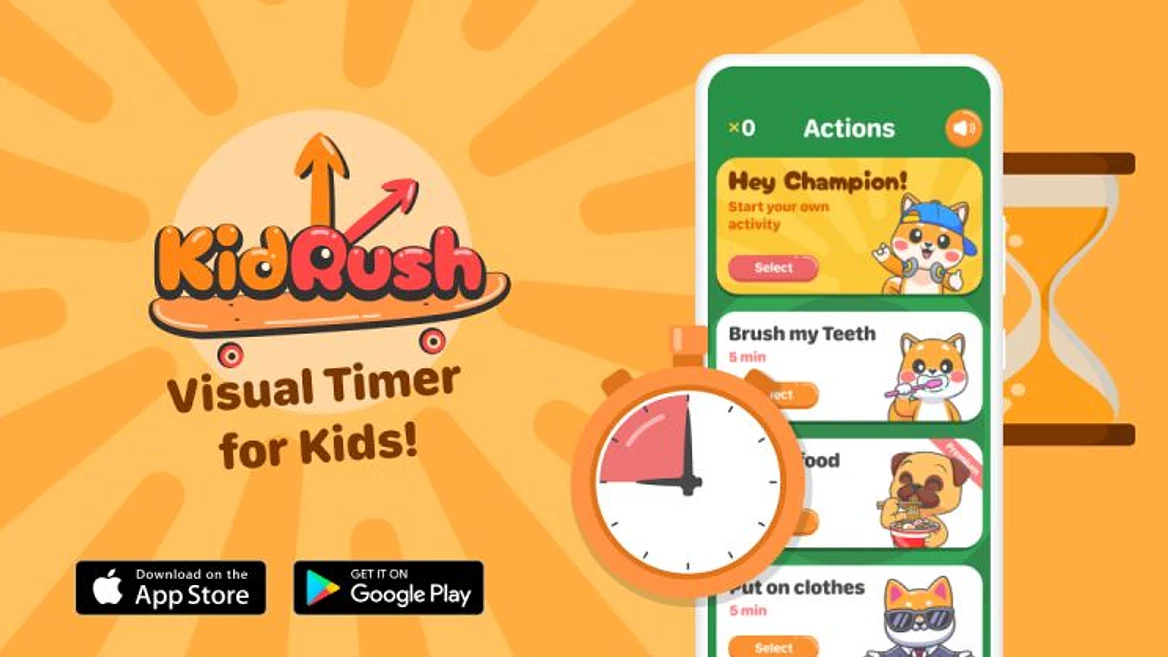
A Ukrainian designer has developed the KidRush app — a visual timer for children that will help avoid stress during school and kindergarten preparations
Вас також кусають комарі? Розповідаємо про пристрій від українських стартаперів, який може цьому зарадити
Як зауважив нещодавно один військовий, якой побажав залишитись невідомим, орки, може, й не поцілять, а комарі точно зʼїдять. І від них потерпають зараз багато українців.
Позбавитись від комарів назавжди ефективно й екологічно допоможе гаджет Mosqitter. Цей стартап заснували дві українки — Анастасія Романова та Ольга Дьячук.
Ми вирішили нагадати, що може Mosqitter, про принципи його роботи та особливості, на злобу дня.
(текст від 21 жовтня 2021 року)
Кнопка здоров'я. Українці розробили систему, яка рятує пацієнтів стаціонару від смерті. Вони - переможці IT Arena Lviv 2022
Медичний психолог, який переїхав в Україну з Москви в 2014 році, Іван Осадчий, придумав систему, яка допомагає медсестрі і пацієнтові не втратити один одного в стаціонарі. Його стартап knopka вже працює в декількох лікарнях понад три роки не лише в Україні, а й у Польщі.
Повторюємо історію стартапу-переможця IT Arena Lviv 2022. Текст від 28 вересня 2022 року.