Хочете будувати кар’єру в Data Science та AI? Vodafone Big Data Lab відкриває новий набір —>
Марія БровінськаІсторії
20 September 2025, 09:00
2025-09-20
“Customers and PMs joked that I shouldn’t rush and relax a bit.” How a developer from Lviv is building an AI-Healthcare system in the USA: an interview with a Ukrainian who conquered global IT
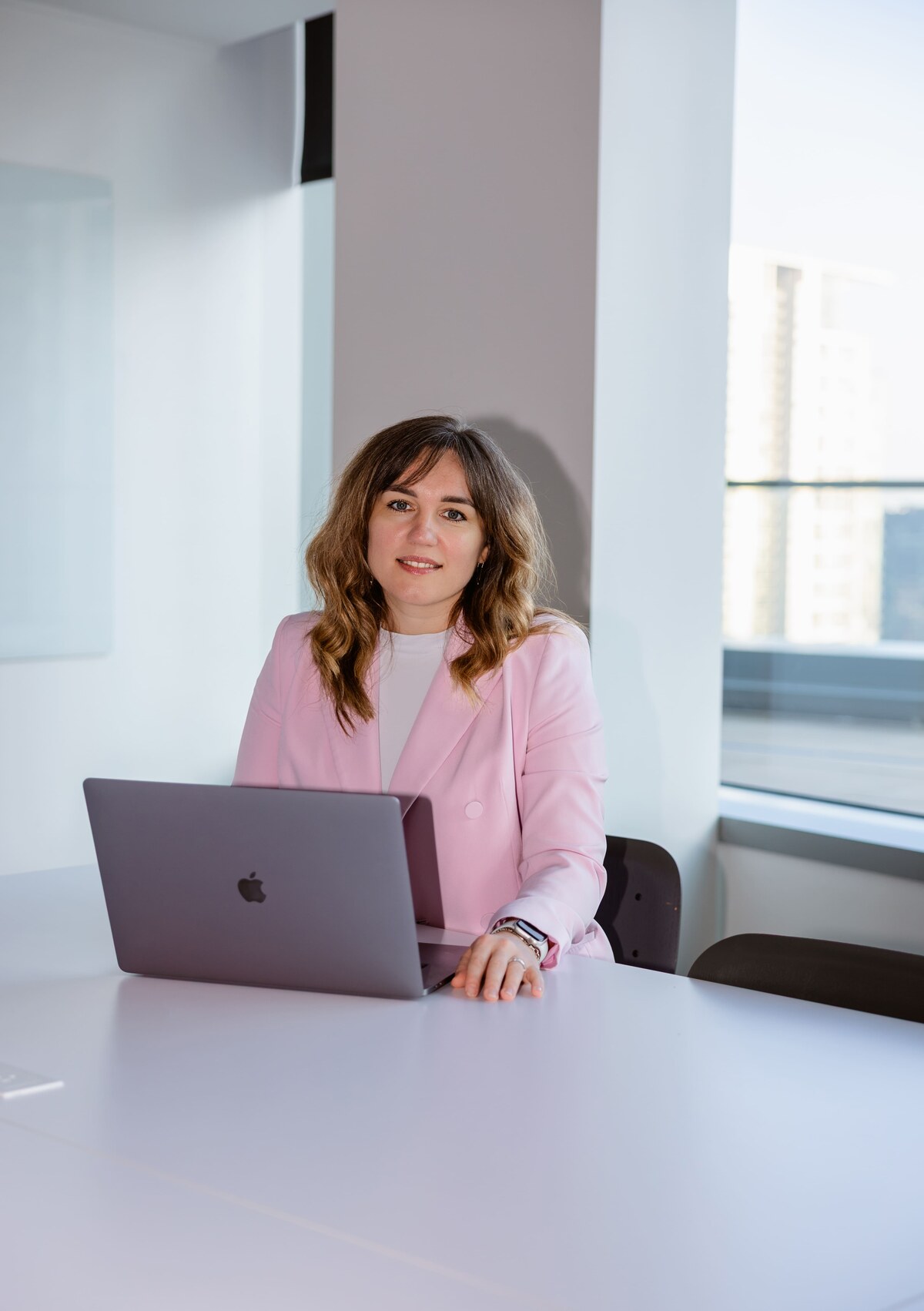
«I am inspired by creating something that really changes people’s lives and the work of teams,» says Kateryna Babiy, a 36-year-old developer from Lviv, who has been living and working in the USA for several years, where she is actively pursuing her career as an IT specialist.
According to Katya, what drives her the most is when complex technical challenges turn into effective solutions: for example, optimizing architecture or implementing new approaches that allow teams to launch features faster, and users to receive a stable and reliable product. «I get pleasure from being able to combine technology and innovation with practical benefits, I constantly learn on my own and help others develop through mentorship. Participation in hackathons and pet projects adds even more drive: here there are fast deadlines, new technologies, ideas and people — and you never know which next innovation will turn into a real product. The greatest joy is to see that your work and your experience transform the team, the product and even the industry,» says the IT professional.
In an interview with dev.ua, she told how she conquered America, what those who plan to move to the land of opportunities should prepare for, and whether American IT differs much from local Ukrainian IT. And also about mentorship, startups, and dreams. Next is Katya’s direct speech.
«I am inspired by creating something that really changes people’s lives and the work of teams,» says Kateryna Babiy, a 36-year-old developer from Lviv, who has been living and working in the USA for several years, where she is actively pursuing her career as an IT specialist.
According to Katya, what drives her the most is when complex technical challenges turn into effective solutions: for example, optimizing architecture or implementing new approaches that allow teams to launch features faster, and users to receive a stable and reliable product. «I get pleasure from being able to combine technology and innovation with practical benefits, I constantly learn on my own and help others develop through mentorship. Participation in hackathons and pet projects adds even more drive: here there are fast deadlines, new technologies, ideas and people — and you never know which next innovation will turn into a real product. The greatest joy is to see that your work and your experience transform the team, the product and even the industry,» says the IT professional.
In an interview with dev.ua, she told how she conquered America, what those who plan to move to the land of opportunities should prepare for, and whether American IT differs much from local Ukrainian IT. And also about mentorship, startups, and dreams. Next is Katya’s direct speech.
Passion for exact sciences and a move into IT
As a child, I dreamed of dancing, but at school I was most fascinated by mathematics. Algebra, geometry, physics — these were things that I really enjoyed. I remember the moment when I was preparing to enter university: I sat down to solve physics in the dark of the morning, and when I looked up from my notebook, it was already night outside. I didn’t even notice how the whole day flew by. This state of «flow» always accompanied me when I worked with the exact sciences. And to this day, I get great pleasure from when you have a difficult task, rack your brains over it, and then find a solution. This is the moment when you feel a real thrill from work.
I came to IT when this field was not as popular as it is today. I have two degrees — technical and economic, and my mother insisted that I build a career in economics. But I quickly realized that my heart was still in technology.
«I learned more than just how to write code»
My first company was ELEKS, and although I worked in IT for 14 years in other companies, over time I returned. It was a conscious decision: I realized that the company’s values coincided with mine, and here I could develop most harmoniously. Over the years, I managed to work with different domains — from finance and e-commerce to healthcare. Each new project added experience, and I always tried to look not only at my piece of code, but also at the system as a whole. I think this is what helped me grow from frontend to full-stack and further — towards architecture.
This transition happened naturally. I was never afraid of new challenges: if I needed to take on a backend task, I took it; if I needed to understand cloud infrastructure or DevOps processes, I did it.
Step by step, I grew to Senior Full-Stack Engineer, and now I’m most interested in where frontend, backend, architecture, and AI meet.
Perhaps the biggest achievement for me was that I learned not just to write code, but to propose solutions that change the work of dozens of teams and affect the product as a whole.
Hello, America!
I had been thinking about moving even before the war started, but for a long time I wasn’t sure where to go. When the opportunity arose, things turned out interestingly: I received two offers at once — one from an ongoing project with a relocation to one of the Asian countries, and the second — a relocation to the USA from my company.
I chose the USA because it was a national-level project, large-scale and complex, which allowed me to develop as a systems architect and full-stack specialist.
The choice was not easy, and the competition for relocation was serious: not only technical skills were assessed, but also the ability to adapt quickly, work in large teams, and make decisions that affect the product on a company-wide scale. This process helped me immediately understand that working in the US would be challenging, but at the same time extremely interesting and beneficial for professional growth. It showed me that it is important not only to be able to write code, but also to think systematically, take responsibility for architectural decisions, and influence the work of dozens of people at the same time.
I currently live in Chicago. It is a city that inspires with its architecture and the dynamics of life.
There is something in common here with my native Lviv: a love of detail, history, and at the same time, constant movement forward.
Professionally, I work for one of the largest and, in my opinion, the strongest health insurance companies in the US. This is a national product that millions of patients, doctors, and administrators use every day. My work covers both front-end and back-end, as well as architectural engineering. I am like a universal engineer who sees the system holistically — from the user interface to the back-end logic and scalable infrastructure. This allows me not just to perform tasks, but to build complex solutions that really work on a national scale and affect people’s lives: fast access to information, stable service operation, data security, and user comfort.
«The customer’s manager literally shouted that he was very satisfied with my work»
The most difficult thing during the adaptation period in the USA was getting used to the scale and speed of projects. In Ukraine, I worked on large products, but here everything was even more global: dozens of teams, thousands of users, high requirements for stability and security. In addition, I had never worked with the American insurance system before, and at first I had no idea how to interact with it. I had to quickly understand the new processes, tools and standards of the company, while maintaining the efficiency of my work.
Several factors helped me to integrate quickly.
First, a broad technical stack — I already had experience in frontend, backend, and architecture, so I could take on different tasks and quickly find solutions.
Secondly, flexibility and willingness to learn — I’m used to quickly mastering new technologies and approaches, so even new systems or tools weren’t scary.
Third, adaptability and communication skills — I was able to work in a team, quickly understand processes and adapt to them. In fact, I got so caught up in the work that clients and my PMs joked that I should take my time and relax a bit.
It was especially nice when, during one of the one-on-ones, my PM shared that the customer’s manager was walking down the corridor and literally shouting that he was very satisfied with my work.
Moments like these immediately boost confidence and show that your work is having a real impact on the product and people. As a result, within the first few months, I was able to start suggesting improvements that really optimized the teams’ work and increased the system’s productivity.
Bold decisions in the land of opportunity
There is a difference between Ukrainian and American IT, but not too big. The main thing that distinguishes the USA is the focus on understanding business needs and versatility: here they often value a developer who can take on tasks on both the frontend and backend, understand the product as a whole and offer optimal solutions. In the rest of the work, the processes, technologies and approaches are very similar to what we are used to in Ukraine.
My first significant achievement in the US came on my first project in healthcare insurance. When I joined, the system was built as a large monolith: all teams were working on one product, which created difficulties with releases, integrations, and scaling.
I was one of the first to propose switching to a microfrontend architecture, which allows you to divide the product into independent modules.
This solution allowed teams to work autonomously, without conflicts during releases, and significantly increased the speed of development. The idea was accepted by colleagues and quickly implemented in practice.
After the first changes, it became clear that the approach transformed the work of teams: several teams could work on different parts of the product in parallel, new features were released faster, and integration with other systems became more secure and predictable. Release times were reduced from several weeks to several days, and the speed of loading key modules increased by more than 40%. This architectural transformation became the key to scaling the product and allowed the company to quickly expand the service to new markets and implement new functionality.
This experience has shown that my work is not limited to writing code: I offer systemic, strategic solutions that change the work of dozens of specialists, optimize processes, and shape the future of the product. It is this ability to see the product holistically and implement innovative solutions that has become the driver of my further professional development and impact on the company’s projects.
After successfully implementing the microfrontend architecture, I started to participate in larger initiatives on the project. One of the results was a significant improvement in system performance: the frontend started working several times faster, which reduced the loading time of critical pages and allowed to serve many more users every day without additional resources. For example, the average loading time of critical pages decreased from 5 seconds to less than 2 seconds. The integration of new modules and services into the system allowed teams to work autonomously and release features faster.
This directly accelerated the launch of new services and features to the market, which increased user engagement and increased system efficiency.
We recently released a new feature that received recognition not only within our team but also across the company, and was recognized with an award. This success demonstrated that my solutions are not just technically effective, but also strategically impact the product: they improve the user experience, accelerate releases, and help scale the system to hundreds of thousands of users. This result shows that my solutions have a concrete and measurable effect on the company’s work and product development.
In addition to technical changes, I implemented code standardization and knowledge sharing processes that helped new teams quickly integrate and become productive. As a result, my initiatives allowed the company to significantly increase development speed, reduce errors, and prepare the product for scaling to new markets, which directly impacted users and the overall success of the product.
Without fear of AI
A few years ago, I jokingly asked myself, «Can ChatGPT do my job?» The answer is still no, but the industry has changed. In my work in the US, I actively integrate modern AI tools to improve development efficiency and product quality. For example, we use Copilot, which speeds up code writing, helps generate templates, check logic, and automate routine tasks. This allows the team to focus on complex and strategic solutions instead of wasting time on routine.
I always say: AI will not replace programmers, but those who know how to use AI effectively will always be more in demand and competitive. I apply this experience especially in our project in healthcare insurance, where the quality of solutions directly affects the lives of patients. My role includes developing architecture, integrating new modules and optimizing the product — and here AI helps to quickly test ideas, analyze data and make the system more stable and productive. This means that my actions have a real impact on security, user comfort and the speed of new features coming to the market.
Our team went from using Copilot for just autocomplete to full AI-assisted coding in just a few months.
We saw that even experienced developers need time to learn new tools, and AI does not replace human judgment—people still manage the system, control quality, and design solutions. On average, this reduced the time to develop new features by 20–30%, and the number of bugs after release decreased by 15%.
Today, the value for developers is no longer in writing every line by hand, but in being able to manage AI, build robust systems around it, and make the product secure and scalable. This approach has changed not only our processes, but also the culture of innovation within the team, allowing us to quickly implement new solutions and improve the performance of products for hundreds of thousands of users. This demonstrates the real and measurable impact of my work on the company and the industry.
A thirst to share knowledge
One of my areas of work is mentoring and developing the next generation of developers, and it’s something I really love to do. I’ve been a mentor for various organizations — including BE, Women Go Tech, HackYeah, UIC Engineering Expo, and I’m also an active mentor within the company and within my team. I always enjoy watching people grow and start taking on challenging tasks on their own.
I’ve seen a big impact investing time in the younger generation before. For example, on a project you can do a task in one hour, while working with a mentee it can take 3–4 hours. But there’s a big «but» — you invest in their training, and later your investment pays off a hundredfold: these younger developers start to implement complex features on their own, and you get the opportunity to focus on more global tasks and architectural solutions.
For me, the new generation of developers are flexible, inquisitive professionals who learn quickly and are not afraid to take responsibility for big decisions.
I regularly spend time on mentoring, combining it with my main job, and I see great value in this process. Here I also learn new approaches, technologies and methods of solving problems, which makes me stronger as a professional. I work with various specialists — not only with Ukrainians, but also with international colleagues. In particular, I am currently a speaker and mentor at Woman Go Tech, where I support women in technology, help them build a career and develop skills.
For me, mentoring is not just about transferring knowledge, but also about creating a culture of modern developers who are able to make complex decisions and have a real impact on the product and the company. This is my true passion: my mentees have already implemented complex features, lead teams, launched their own projects, and their warm reviews on LinkedIn prove that investing in the new generation has a long-term and tangible effect.
Lady Startupper
I actively participate in hackathons, and we are currently working on two applications in parallel: QuitQly, an app that helps you quit smoking, and Snovyda, a platform where you can record, explore, and understand your dreams. K
A hackathon is a unique opportunity to get acquainted with new technologies, interesting ideas, and talented people, as well as learn how to work under tight deadlines. Such experience is very valuable because you learn quickly, experiment, and you never know whether this or the next hackathon will turn into a real startup.
For me, this is a way to constantly stay at the forefront of technology, try new approaches, and find unconventional solutions that can then be applied in professional projects.
A few tips for those planning to conquer global IT
The main thing to be prepared for when moving is to adapt quickly, work as a «universal soldier» for the business and product, and at the same time remain effective in your technical expertise.
To conquer the global IT world, you need to move forward every day and not lose heart, even if the results come slower than you expect. It is very important to find like-minded people who inspire and motivate, and to be able to drive yourself and your team. For those who are just entering IT, hackathons are an incredible chance to quickly improve your skills, try new technologies and learn how to work in a team under the pressure of deadlines. It is no less critical to prepare for interviews, especially behavioral ones: Ukrainians often pass the technical stages, but it is the behavioral questions that frustrate them in the states.
Finally, self-confidence and an openness to new technologies are key. If you are willing to invest time, learn, experiment, and take responsibility, you will definitely succeed.
My ambitions have always been to combine technical prowess with impact on people. I want to continue to create large-scale, innovative products that truly improve users’ lives, especially in critical areas such as healthcare. At the same time, it is important for me to develop a new generation of developers, especially Ukrainian ones — I am truly happy when I mentor my people and see how they grow and influence the industry. Being in America gives me a unique opportunity to work on global products, implement innovative technologies, participate in hackathons and startups that can grow into something significant, and also build a network of like-minded people with whom I can implement world-class projects. My goal is not just to be a great developer, but to shape the future of IT and inspire others to develop their talents, regardless of borders.
«I hated programming and never thought IT would become my life.» The story of a developer whose career was forced to start at 16. Now 19, he is already a middle manager at his dream company and plans to found his own startup in the US
«Those who couldn’t imagine themselves outside Silicon Valley are now looking at Thailand, Europe, or Canada as ‘Plan B.’» Ukrainian IT professionals in the US — about the first two months of Trump’s rule and the consequences for the tech sector
Які візи за кордоном можуть оформити цифрові кочівники: великий гайд по Digital Nomad у 30+ країнах світу
Адвокат, старший партнер Адвокатського об’єднання OfficiumLaw, Костянтин Буяло, написав докладну статтю про те, де айтішники можуть отримати Digital Nomand — візу для фрилансерів та робітників, які працюють віддалено, що надає її власнику право на проживання у певній країні протягом тривалого періоду. Розповідаємо найважливіше зі статті Костянтина на DOU.
Половина українських IT-компаній не релокували своїх співробітників від початку війни: 5 важливих висновків з дослідження про переїзд бізнесу
У липні 2022 року Асоціація «IT Ukraine» разом із юридичною фірмою Sayenko Kharenko провели спільне дослідження «Релокація. Новий ІТ-ландшафт України». Ось найважливіші тези з його результатів.
Які податки платять за кордоном айтішники з України, змінюючи податкове резидентство. Приклади Польщі, Швеції, Литви та Хорватії
Після закінчення 6 місяців безвізового перебування в Європі релоковані IT-спеціалісти, які здебільшого не оформляли посвідку на проживання в іншій країні, або ж навіть із нею, мають змінити податкове резидентство та платити податки в країні перебування (тільки Польща зробила виняток для України за бажанням). Звісно, компанії, що мають офіси за кордоном, оформлюють працівників у свої підрозділи там. А інші? Ми запитали про це айтішників. Кілька IT-спеціалістів розповіли, які податки платять у різних країнах.
Австралійське задзеркалля. Історія Delivery Director EPAM, який через війну релокувався із сім'єю до Австралії: як адаптуватися та вижити за океаном?
Григорій Клімов — директор з делівері і керівник великої Platform Engineering-практики в EPAM. Понад 10 років він будував свою кар’єру в українському офісі, але війна змусила його з родиною кардинально змінити життя. В березні Григорій з дружиною і трьома дітьми поїхали з рідного Харкова, деякий час провели в ЄС, а згодом — вирушили до Австралії. «Я мріяв жити в цій країні, коли піду на пенсію. Але війна підштовхнула до того, щоб прийняти рішення значно швидше», — каже Григорій.
Ось його історія.
Have important news to share? Message our Telegram bot
Key events and useful links in our Telegram channel